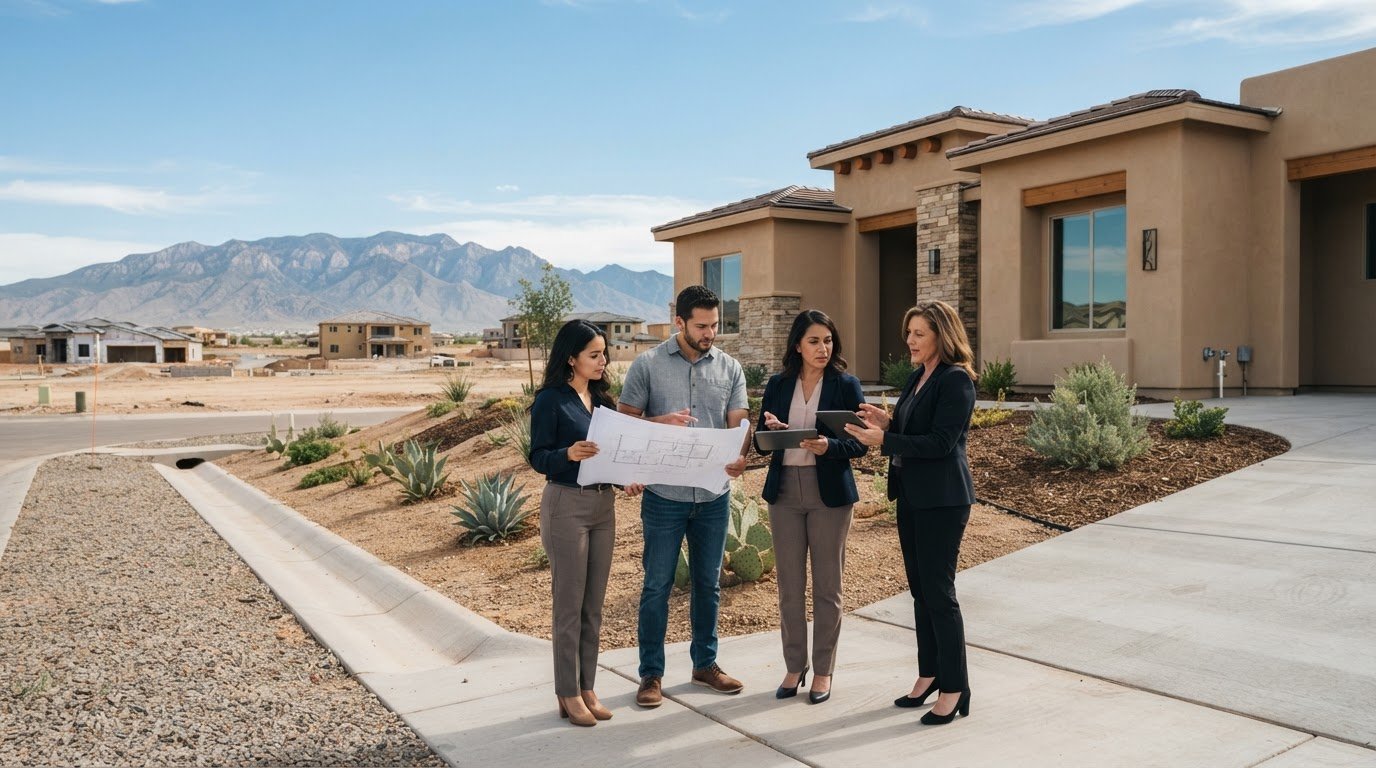
Albuquerque New Build Home Buying Guide
The most polished model home may be the least useful guide to your decision. When considering what to look for when buying a new build home, look beyond finishes to the specific lot, construction details, written specifications, and contract terms. In Albuquerque, drainage, sun exposure, and local soil conditions can also affect how a property works for you.
It’s natural to focus on features you can see, especially when comparing floor plans and upgrade packages. But a beautiful kitchen won’t tell you whether the layout will still suit your needs in a few years, what’s included in the base specifications, or what an inspection may reveal before closing.
This guide gives you a practical way to assess those trade-offs before you commit. You’ll learn what to inspect, clarify in the contract, and research about Albuquerque-area communities, from the lot itself to nearby development and everyday access. Robb Krautbauer brings 15 years of real-estate investing experience and 10 years as a licensed agent to the process, with a focus on clear choices and the fit that matters to you.
Key Takeaways
- Use the same comparison method for each home, weighing more than appearance and upgrade packages.
- To understand what to look for when buying a new build home, compare the actual lot and orientation with the model and marketing materials.
- Separate base features from optional upgrades using the written specifications and current selection documents.
- Track changes, milestones, and walkthrough findings alongside the signed agreement and plans.
- Choose the home whose documented features and trade-offs best match your needs and priorities.
What to Look for When Buying a New Build Home in the Albuquerque Area
A new-build purchase may involve a home that’s still under construction or one that’s recently completed. With a finished home, you can walk through the actual rooms and see the lot as it stands. During construction, you may need to assess plans, written specifications, and progress, then compare them with the completed work. In either case, what to look for when buying a new build home goes well beyond the model’s finishes. Consider the site, plans, contract, build quality, and how the home may fit your needs over time.
Use this framework to keep your review focused on details that can affect your decision:
What makes buying a new-build home different?
A model home helps you picture a floor plan, but its finishes may be upgrades rather than standard features. Use the contract, plans, specifications, and current selection documents to establish what applies to the home you’re considering. Builder-provided information describes the home and building process. Your own observations and advice from qualified professionals provide separate perspectives. For context on the process of constructing a house, a general overview can explain how planning and different trades contribute to a completed home.
The stage of construction matters, too. In a completed home, you can observe the finished spaces and lot directly. In an active build, access and visibility may change as work progresses. Keep those differences in mind when reviewing plans, documenting questions, and deciding which details need closer attention.
Start with your needs, budget, and daily routine
Before comparing communities or floor plans, write down what you need, where you can compromise, and what may change in your household. Consider how you’ll use each room, storage, accessibility, outdoor space, and the overall cost of the features you value. This list makes it easier to weigh practical fit against attractive but less essential finishes.
Then compare daily life using current local information. Check commute routes at the times you’d travel, nearby services, access to major roads, and the feel of the surrounding area. Loma Colorado, Lomas Encantadas, Los Diamantes, Broadmoor Heights, and Vista Montebella are examples of Albuquerque-area community names. Research the specific location and lot rather than assuming every home in a named community offers the same setting or features.
Albuquerque-area site conditions also deserve attention. Ask how the lot’s grading, drainage, orientation, and surroundings affect the home you’re considering. For long-term ownership, weigh maintenance, flexibility, and features future buyers may value. Treat these as factors to compare, not promises about future appreciation.
How to Assess the Lot, Floor Plan, and Construction Before Buying
A model home can show what a builder’s plan might feel like, but it can’t tell you everything about a particular lot or the home you’ll receive. Compare what you can observe with what the plans and written documents describe. For technical questions, rely on qualified professionals rather than trying to diagnose a condition yourself.
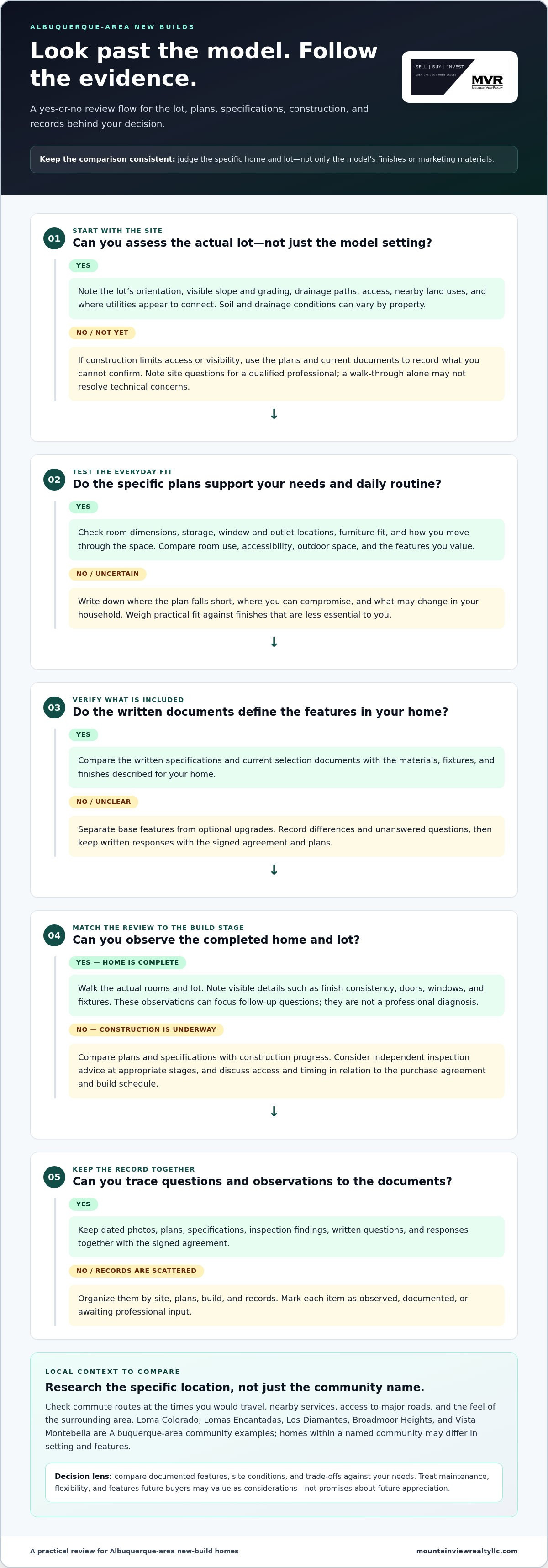
Review the lot and the plans
Start outside. Compare the actual lot with the model-home setting and marketing materials. Note the visible slope, grading, drainage paths, access, nearby land uses, and where utilities appear to connect. Soil and drainage conditions can vary by property in the Albuquerque area, so a site-specific review matters. Your observations can help identify questions; a qualified professional can assess issues that aren’t clear from a walk-through.
Next, study the plans for the home you’re considering, not just a similar model. Check room dimensions, storage, window locations, and outlet placement. Think through where your furniture will go and how you’ll move through the space. A room can look generous when staged but feel different once you account for doors, walkways, and everyday use.
Check specifications and construction progress
Use the written specifications and current selection documents to understand the materials, fixtures, and finishes described for your home. Compare those documents with what you see, and record differences or unanswered questions. During a site visit, note visible details such as finish consistency, doors, windows, and fixtures. These observations aren’t a professional diagnosis, but they can help focus follow-up discussions.
For a home under construction, consider independent inspection advice at appropriate stages. Discuss inspection access and timing in relation to the purchase agreement and build schedule. An inspector can offer a professional perspective on areas that may be hidden or difficult for a buyer to assess. A brief walkthrough alone may not give you enough information to evaluate workmanship or systems.
Keep a clear record
Organize your review so details don’t get lost as the build progresses. Keep dated photos, plans, specifications, inspection findings, written questions, and responses together. A simple checklist can help you track each item as observed, documented, or awaiting professional input:
- Site: Lot position, slope, visible drainage, access, and surroundings.
- Plans: Dimensions, storage, windows, outlets, and furniture fit.
- Build: Visible items to discuss and inspection observations.
- Records: Photos, documents, questions, and written responses.
This process makes it easier to compare the property with its documents before making decisions. For a thoughtful review of your options, explore new-build home buying guidance with Mountain View Realty LLC.
How to Compare Albuquerque New-Build Homes Beyond Upgrades
Upgrade packages can make one home feel more appealing at first glance. A fair comparison looks beyond display finishes and weighs the lot, written features, daily function, and completion status together. Use the contract and current selection documents to distinguish what’s included from what’s optional, substituted, or subject to written terms.
Compare the details that affect everyday use
Build a side-by-side record for each home. The goal isn’t to declare one community or builder the winner. It’s to see which property best matches your priorities and where each option involves a trade-off.
| Category | What to compare |
|---|---|
| Lot | Position, orientation, visible surroundings, access, and how the outdoor space meets your needs. |
| Layout | Room sizes, storage, window placement, circulation, and flexibility for household changes. |
| Written inclusions | Base specifications, selected options, substitutions, and any terms recorded in current documents. |
| Energy features | Specific equipment or features described in the documents, rather than broad efficiency claims alone. |
| Outdoor space | Usable yard area, privacy, exposure, and the maintenance the space may require. |
| Completion status | Whether the home is completed or under construction, and what remains to be selected, installed, or reviewed. |
Apply the same standard to safety and smart-home descriptions. Match claims against written specifications and selection records rather than assuming two homes offer the same features. A finish may be attractive, but function, durability, maintenance, and your household’s priorities matter just as much.
Compare community fit using current local information
Community names can help organize your search, but they don’t tell you how a particular lot will fit your routine. Loma Colorado, Lomas Encantadas, Los Diamantes, Broadmoor Heights, and Vista Montebella are examples to consider, not a guarantee of current inventory or uniform conditions. Details can vary by property, even within the same area.
For each address, review commute routes, access, nearby services, and the surrounding setting using current information. If practical, visit at different times of day to observe traffic, noise, and activity for yourself. If you’re comparing Albuquerque and Rio Rancho, or homes across Bernalillo and Sandoval Counties, assess each location on its own merits rather than assuming the broader market is uniform.
When deciding what to look for when buying a new build home, a strong comparison often comes down to documented fit: a lot and layout that work for you, clear written inclusions, and trade-offs you understand before deciding.
What to Clarify in the Builder Contract, Timeline, and Walkthrough
A new-build purchase involves more than one document. The signed agreement, plans, specifications, selection records, and written changes should tell a consistent story about the home you expect to receive. Keep current versions together, and note differences or open questions before relying on a verbal explanation.
Resolve questions from the written agreement
Review the agreement alongside the plans and specifications. Identify where the documents describe completion expectations, included features, buyer selections, and the process for recording changes. If documents appear to conflict, don’t assume which one controls. Ask for clarification in writing, and have a qualified New Mexico real-estate attorney address questions about interpretation.
Dates, remedies, and contingencies depend on the specific signed agreement. General guidance can’t determine your rights or deadlines. Before signing, make sure you understand the written terms, including what they say about updates if the schedule or selected features change.
Put timeline communication and changes in writing
A useful timeline review goes beyond a projected completion date. Clarify how the builder will communicate progress, which milestones trigger updates, and how delays or changes will be recorded. Keep a dated copy of each written update and any revised selections or specifications. A consistent record helps you compare the home’s progress with the current documents.
- What completion expectations are stated in the agreement?
- How and when will milestone updates be shared?
- How are selections, substitutions, and other changes documented?
- Which plans and specifications reflect the current agreement?
Prepare for the final walkthrough and handover
Bring the current plans, specifications, and selection documents. Walk through one room at a time, comparing visible finishes and installed features with the written records. Record questions, incomplete items, and observations without assuming that a visible concern is a defect. If an issue needs technical evaluation, rely on qualified professional advice.
A consistent room-by-room list can help you stay focused:
- Interior: Note doors, windows, fixtures, finishes, and questions about installed selections.
- Rooms and storage: Record visible differences from the plans or documented choices.
- Open items: Write down incomplete work and the response or follow-up provided.
Keep walkthrough notes and builder communications with your closing records. Save manuals, warranty documents, inspection records, and final selections in the same file so they’re easy to find after handover. For contract questions that call for legal interpretation, consult a qualified New Mexico real-estate attorney.
Choose a New Build That Fits, and Make a Confident Next Move
The strongest choice isn’t automatically the home with the most upgrades or the most impressive model. It’s the one that meets your documented needs, fits your budget, and comes with trade-offs you understand and can accept. A consistent comparison helps you reach that decision without relying on memory or first impressions.
Turn your research into a clear comparison
For each home you’re considering, score the same priorities using a simple scale, then write a brief reason for each score. Keep deal-breakers separate from preferences you could compromise on. For example, a layout that supports your daily routine may matter more than a finish you can change later. Let your priorities guide the comparison, not a generic ranking of features.
Before deciding, review the actual lot, current written specifications, inspection findings, and signed agreement together. These records can show whether a home matches your needs and your understanding of what you’re purchasing. List unanswered questions and resolve them through the appropriate written documents or professional advice before committing. Don’t let a polished model-home impression substitute for property-specific details.
- Must-haves: Identify features or conditions that are essential for your household.
- Trade-offs: Record what you’re willing to accept and why.
- Open items: Track questions about the lot, selections, inspection observations, and agreement.
- Long-term fit: Consider maintenance, flexibility, and how the home may serve changing needs.
This is the practical core of what to look for when buying a new build home: evidence that the property fits your needs, not just a list of attractive features. An investor’s perspective can also help bring future costs and resale considerations into the discussion, without assuming how a home’s value will change.
Get local guidance without pressure
Buyer representation can help you compare options, organize questions, and understand how the lot, documents, and inspection observations relate to your decision. It can support a more informed process, but it can’t guarantee a particular construction outcome or future value. Robb Krautbauer provides buyer guidance across the Albuquerque metro, drawing on 15 years of real-estate investing experience and 10 years as a licensed agent.
If you’d like to talk through your priorities and next steps, grab a time on my calendar. There’s no pressure, just a chance to make a plan that fits your move.
Make Your New-Build Decision with Clarity
A confident purchase starts with evidence, not just a polished model home. Compare the actual lot and layout with your daily needs, match upgrades and features to written specifications, and keep inspection findings and contract details in view. These steps help clarify what to look for when buying a new build home and which trade-offs make sense for you.
Robb Krautbauer brings 15 years of real-estate investing experience and 10 years as a licensed agent to buyer guidance in the Albuquerque area. Mountain View Realty LLC has helped more than 200 families and investors across the metro. That experience can help you weigh practical fit, long-term considerations, and details that deserve a closer look, without promising a particular outcome.
Take time to compare, clarify, and choose on your terms. A clear process helps you move forward feeling informed and prepared.
Frequently Asked Questions
What should I look for when buying a new-build home?
Look beyond finishes and compare the actual lot, floor plan, written specifications, construction observations, inspection findings, and purchase agreement. Consider how the home supports your daily routine and may fit your longer-term plans. In Albuquerque, research the specific property and community, including access and nearby services. Conditions can vary from lot to lot, so don’t assume nearby homes share the same site features or services.
Should I get an inspection on a newly built home?
Consider independent inspection advice, even for a new home. Being newly built doesn’t by itself show whether visible details meet your expectations or match the home’s documents. Ask a qualified inspector about suitable timing and scope for your situation. Keep inspection findings and follow-up responses in writing. For questions about contract terms or legal rights, seek guidance from an appropriate professional rather than relying on a general article.
Can I negotiate with a home builder on a new build?
Possible flexibility depends on the builder, property, market conditions, and written agreement. Rather than assume a particular feature or term can be changed, compare the specifications, selections, timing, and other terms that matter to you. Record agreed changes in the purchase documents. For guidance on a specific offer or contract, seek qualified local real-estate and legal advice. General information can help you prepare questions, but it can’t determine the terms of your agreement.
What does a new-build home warranty cover?
Coverage depends on the warranty documents and their specific terms. Read the materials for the home carefully, including what’s covered, exclusions, how to submit a claim, and any stated time limits. Don’t rely on a broad verbal summary when you need to understand a particular issue. Keep warranty documents with inspection records and closing paperwork. If a term is unclear, seek qualified advice before assuming that a repair or other item is covered.
Is buying a new-build home in Albuquerque different from buying elsewhere?
The basic evaluation steps are similar, but property and community details are local. Research the specific lot, access, nearby services, and written information for the home you’re considering. Albuquerque-area examples include Loma Colorado, Lomas Encantadas, Los Diamantes, and Broadmoor Heights or Vista Montebella. Community names don’t establish current inventory or identical conditions. Review current details for each property, including when comparing locations in Albuquerque and Rio Rancho.
What should I check during a new-construction walkthrough?
Bring the current plans, specifications, and written selections. Walk through the home room by room, noting questions, visible concerns, and items that appear incomplete. Compare installed features and finishes with the documents, not just your memory of the model home. Take organized notes and photos where permitted, then follow the builder’s written process for recording items. For concerns that require technical judgment, ask a qualified professional to assess them.
Is a model home an accurate representation of the home I will buy?
A model home can help you understand a layout and see design possibilities, but don’t assume every displayed feature is included in the home you’re buying. Compare finishes, fixtures, options, and dimensions with that property’s plans, written specifications, and selection documents. Record differences before deciding. Use the signed agreement and related written documents to understand the purchase rather than relying on an impression from a model-home tour.

Article by
Robb Krautbauer
Robb Krautbauer is the Owner and Qualifying Broker of Mountain View Realty, serving Albuquerque, Rio Rancho, Santa Fe, and surrounding New Mexico communities. With more than a decade of real estate experience, Robb specializes in luxury homes, strategic home marketing, and helping homeowners navigate important life transitions with confidence.
Known for combining luxury-level marketing, AI-powered technology, and innovative selling strategies, Robb helps clients maximize their home's value while creating a smooth, personalized selling experience. Whether assisting luxury homeowners, retirees, families downsizing, or real estate investors, his focus is always on delivering expert guidance, honest advice, and exceptional results.
When he's not helping clients achieve their real estate goals, Robb enjoys studying market trends, emerging technology, and investment strategies that keep Mountain View Realty at the forefront of the industry.
Disclaimer
**Disclaimer:** The information provided in this article is for general educational purposes only and should not be considered legal, tax, financial, or professional advice. Real estate laws, market conditions, and regulations change over time and may vary based on your individual circumstances. Before making any real estate decision, consult with qualified legal, tax, or financial professionals. If you have questions about buying or selling real estate in New Mexico, contact Mountain View Realty for guidance specific to your situation. © 2026 Mountain View Realty. All rights reserved. The content on this website may not be reproduced without written permission.


