
Buy Your Next Home Before Selling: A Practical Albuquerque Guide
What if the key to buying your next Albuquerque home before selling isn’t moving faster, but setting a clear limit on the financial overlap? If you want to buy next home before selling, it’s natural to worry about covering two housing payments, accessing your current home’s equity, or losing a property you want while coordinating both transactions.
Buying first can give you more control over your move, but it requires careful planning. The right approach depends on your available equity, financing options, timeline, and ability to manage carrying costs if your current home takes longer to sell than expected.
This guide compares common ways to purchase before selling, including equity-based financing and a Home Trade-In. It also explains how to set an overlap limit, build a timeline, and prepare a backup plan. With those decisions in place, you can pursue your next home with a clearer view of the trade-offs and a plan to protect your equity.
Key Takeaways
- Compare available cash, home equity financing, bridge financing, sale contingencies, and a Home Trade-In based on your timing and reliance on sale proceeds.
- Before you buy next home before selling, define how much financial overlap you can manage and what you’ll do if your current home takes longer to sell.
- Build your timeline in stages, from reviewing equity and financing to making an offer, moving, and preparing your current home for sale.
- Keep roles clear: a lender evaluates loan qualification, while your real estate agent helps coordinate the offer, sale strategy, and transaction timeline.
- Consider the Home Trade-In as one possible path, then weigh it against your priorities and the trade-offs of other approaches.
Buying Your Next Home Before Selling: What the Decision Really Involves
Coordinating a home purchase, a sale, and a move can feel like managing three major decisions at once. You may be weighing whether to make an offer while you still own your current home, how to access its equity, and what happens if the sale takes longer than expected. If you want to buy next home before selling, first decide what matters most: control over your moving timeline, certainty about your finances, or the ability to pursue a particular property.
Buying before selling means closing on your next home before your current home has sold. This sequence can give you more flexibility to move once, settle in, and then prepare your current home for its next owner. It can also mean overlapping housing obligations. Neither sequence is right for everyone. Feasibility depends on your financing, available equity, and comfort with that risk.
A real estate transaction involves connected steps, and coordinating two home transactions adds another layer of timing. Map the milestones that matter to you: when funds may be needed, when you could move, and how long you could manage overlapping costs.
When buying first may fit an Albuquerque-area move
Buying first may suit a move tied to a set date, changing family needs, or a specific property search. For example, you might want to secure a home in Rio Rancho before relocating, or search in Albuquerque or Corrales without arranging your move around the sale of your current home. These are planning scenarios, not guarantees that a particular sequence will work. Let your finances, priorities, and available options guide the decision.
What you are balancing before making an offer
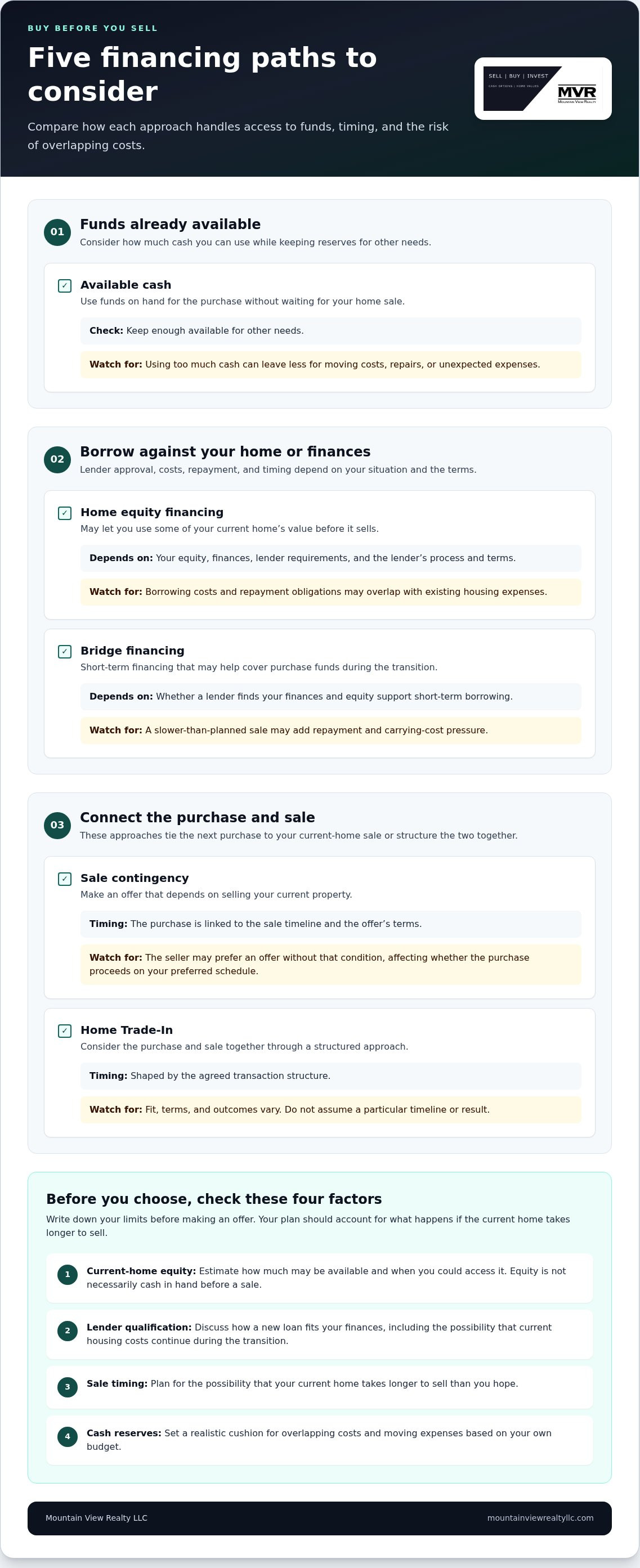
Consider four factors separately before deciding what you can manage. A lender can assess your borrowing qualifications, while your real estate agent can help map the purchase and sale timeline. Moving once may feel simpler, but that convenience doesn’t remove the financial risk of carrying overlapping obligations.
- Current-home equity: Estimate how much equity may be available and when you could access it. Equity isn’t necessarily cash in hand before a sale.
- Lender qualification: Discuss how a new loan may fit your financial picture, including the possibility that your current housing costs continue during the transition.
- Sale timing: Consider what you’ll do if your current home takes longer to sell than you hope. Build in room for delays instead of planning only around your preferred timeline.
- Cash reserves: Set a realistic cushion for overlapping costs and moving expenses based on your own budget.
Put your priorities and limits in writing before making an offer. A clear view of what you can carry, and for how long, can help you compare paths without assuming that buying first or selling first is automatically the better choice.
Financing Paths for Buying a Home Before Selling Your Current One
The right path depends on how much cash you can use, whether you can qualify for additional borrowing, and how much timing flexibility you need. Some options provide funds before your current home sells. Others make the purchase dependent on the sale or coordinate both transactions through a structured approach.
| Path | Eligibility considerations | Timing implications | Key risk |
|---|---|---|---|
| Available cash | You have funds available for the purchase while retaining reserves for other needs. | Funds may be accessible without waiting for your home sale. | Using too much cash can leave less available for moving costs, repairs, or unexpected expenses. |
| Home equity financing | Approval and available funds depend on your equity, finances, and lender requirements. | Access depends on the lender’s process and terms. | You take on borrowing costs and repayment obligations, which may overlap with existing housing expenses. |
| Bridge financing | A lender evaluates whether your finances and equity support short-term borrowing. | It may provide funds before the current home sells, subject to lender timing and approval. | If the sale takes longer than planned, repayment and carrying costs may add pressure. |
| Sale contingency | The seller must agree to an offer that depends on selling your current property. | The purchase is linked to the sale timeline and the terms in the offer. | The seller may prefer an offer without that condition, so the purchase may not proceed on your preferred schedule. |
| Home Trade-In | Fit and terms depend on the specific transaction structure. | The purchase and sale are considered together, with timing shaped by the agreed structure. | Terms and outcomes vary; don’t assume a particular timeline or result. |
How home equity and bridge financing may support the purchase
Home equity borrowing may let you use some of your current home’s value before it sells. A bridge loan is another form of short-term financing that may help cover purchase funds during the transition. Neither option means automatic approval. Costs, qualification, repayment, and timing depend on lender-specific terms. Ask a qualified lender to explain the applicable terms and how they fit your financial picture. The Consumer Financial Protection Bureau also offers general homeownership resources.
How contingencies and a Home Trade-In differ
A home-sale contingency makes your purchase offer dependent on selling your current property under the offer’s terms. A Home Trade-In is a distinct transaction path Mountain View Realty LLC offers to help coordinate a purchase and sale. The structure, conditions, and timing differ. Neither path guarantees that a purchase or sale will close on a particular schedule.
To buy next home before selling, compare the control each path offers with its financial exposure and timing limits. Mountain View Realty LLC can help you consider those trade-offs before choosing a direction. Talk through your options with Robb.
How to Compare Buy-Before-You-Sell Options and Manage the Biggest Risk
The main risk is straightforward: if your current home takes longer to sell than planned, carrying two homes can put pressure on your cash flow. That doesn’t automatically rule out buying first. It means your decision should account for a slower sale, not depend on everything happening on schedule.
Compare each path using the same questions: How much control will you have over the purchase and move dates? Do you need sale proceeds to fund the purchase? How easily can you adjust if plans change? Which costs or obligations could continue during a delay? A lender can help assess borrowing and payment assumptions. Your real estate agent can help evaluate sale timing and transaction details.
| Path | General advantages | General trade-offs | Your verified numbers to review |
|---|---|---|---|
| Available cash | Can reduce reliance on sale proceeds and provide more control over timing. | Using cash for the purchase may reduce your reserves. | Cash available, expected purchase funds, and reserves remaining. |
| Home equity or bridge financing | May provide funds before the current home sells. | Qualification, repayment, costs, and timing depend on lender terms. A delay may extend your obligations. | Approved borrowing amount, payment assumptions, and repayment plan. |
| Sale contingency | Connects the purchase to selling your current home, which may limit your exposure to overlapping ownership. | The seller may consider the condition and timing when weighing your offer. Responses vary by situation. | Expected sale proceeds, offer conditions, and the timeline in the transaction documents. |
| Home Trade-In | Provides a structured way to consider the purchase and sale together. | Terms and timing depend on the specific transaction structure; don’t assume a particular outcome. | Written terms, expected timing, and your household’s carrying-cost limit. |
What if the current home takes longer to sell?
Before making an offer, picture the sale taking longer than your preferred timeline. Decide what you could adjust, which costs you could carry, and when you would revisit the plan. Review cash-flow assumptions with your lender and financial professional. Your agent can help plan the sale strategy and identify decision points, but no timeline should be treated as certain.
How to weigh a home-sale contingency against buying without one
A contingency makes your offer dependent on selling your current home under the agreed terms. That can reduce your exposure, but some sellers may prefer offers with fewer conditions. Buying without a sale contingency can give you more flexibility to pursue a purchase, while increasing your exposure if the sale is delayed. To compare a coordinated trade-in structure with a conventional listing approach, consider the differences between a home trade-in and a traditional sale.
Set a personal overlap limit before you choose. Write down the maximum period and costs you can manage, then verify the figures with your lender and financial professional. Use your own confirmed numbers, not a general estimate, to decide which trade-off feels workable.
A Step-by-Step Plan for Coordinating Your Purchase and Sale
A coordinated move works best when the big decisions happen in the right order. Before you buy next home before selling, bring your household priorities, financing picture, and sale plan together in one timeline. Keep roles clear: your lender assesses borrowing qualifications and required documentation; your agent helps map offer terms, transaction dates, and the plan for selling your current home.
Before you make an offer on the next home
Start with the facts you can control. Write down your preferred move date, funds available for the purchase, estimated equity, and the overlap exposure your budget can handle. Then speak with a qualified lender about financing, qualification, and documentation. Your agent can use those boundaries to shape an offer strategy and coordinate it with preparation of your current home and its likely sale approach.
- Set your priorities. Decide what matters most, such as a certain move window, time to prepare your current home, or room in the budget for overlapping costs.
- Review equity and funds. Estimate what may be available from your current home and identify what you can use before it sells. Treat estimated equity and accessible funds as separate figures.
- Confirm financing. Ask your lender to assess your borrowing qualifications and explain the applicable financing terms. Don’t build an offer plan around funds or approval you haven’t verified.
- Align the sale and offer strategies. Discuss preparation for your current home, its likely selling path, and how the offer’s timing could affect your exposure.
Decision checkpoint: Before making an offer, confirm that the proposed purchase fits your lender’s guidance, available funds, and personal overlap limit. If a key assumption changes, pause and revise the plan before committing.
After the offer: prepare for both closings and the move
Once the offer is accepted, turn the plan into a shared calendar. Track key dates and responsibilities for both transactions, along with decisions that could affect your next step. Agree on who needs updates and when. Clear communication helps your lender address financing requirements while your agent coordinates transaction milestones and sale preparation.
- Map the dates. Record expected milestones for the purchase, move, and sale. Mark dates that depend on another step, and keep the schedule flexible rather than treating estimates as promises.
- Prepare the current home. Follow the selected selling path and plan needed preparation around your move. Don’t assume a set sale date when deciding how much overlap you can carry.
- Revisit the plan at key points. Before listing, review your cash-flow assumptions and readiness with the appropriate financial professionals. If circumstances change, discuss how the sale strategy or move plan may need to adjust.
A comparison of Albuquerque home-selling options can help you see how your chosen sale path fits the purchase timeline. Keep the focus on your priorities, confirmed financing, and a backup plan you can manage.
Build a no-pressure plan for your move
How Mountain View Realty LLC Helps You Choose a Buy-Before-Sell Strategy
There isn’t one right way to coordinate a purchase and sale. Mountain View Realty LLC helps Albuquerque-area homeowners compare transaction structures based on their priorities, available equity, financing discussions, and comfort with timing risk. Our Home Trade-In is one option to consider alongside other sale paths. The goal is to understand the trade-offs before choosing a direction.
Robb Krautbauer brings 15 years of real-estate investing experience and 10 years as a licensed agent to these conversations. That experience informs practical questions about equity, sale preparation, and how the transactions may fit together. Your lender evaluates borrowing qualifications; our role is to help you consider the real estate strategy and its moving parts.
A tailored plan for Albuquerque, Rio Rancho, and nearby communities
A move from Albuquerque to Rio Rancho, or a search that includes Corrales, can bring different priorities around location, property features, and timing. Local knowledge helps shape your search, prepare your current home for its selected selling path, and coordinate key transaction steps. We’ll discuss what matters to you and explain relevant trade-offs plainly, without making promises about price, demand, or sale timing.
What a first planning conversation can clarify
A useful conversation starts with your plans, not a preselected solution. We can discuss when you hope to move, what you know about your current home’s equity, what you want in the next property, and which parts of selling matter most. That context helps identify the paths worth exploring and questions to take to your lender.
Together, we can compare a Home Trade-In with other sale paths and consider how each may fit your priorities. You might value moving once, want to limit financial overlap, or prefer more control over when your current home is prepared for sale. We’ll map the practical considerations without promising approval, a specific timeline, or a particular result.
Before deciding, you should have a clearer picture of the steps, open questions, and potential trade-offs. The plan can reflect your household’s needs while leaving financing decisions with your lender and focusing real estate coordination on your next move.
Grab a time on my calendar, no pressure, just a plan for your next move
Robb Krautbauer, Owner & Qualifying Broker
Take Your Next Move One Decision at a Time
Choosing to buy next home before selling doesn’t require you to predict exactly how every step will unfold. Decide what would make you pause, reassess, or change course. For example, set a point to revisit your plan if financing terms shift, your preferred purchase timing changes, or your current home needs a different sale approach. Clear decision points can make an uncertain process feel more manageable.
Start with the questions that matter most to your household. Which trade-offs feel acceptable? What information do you still need? Which decisions belong with your lender, and which are part of coordinating the purchase and sale? You don’t have to settle every detail at once. A thoughtful conversation can help turn those questions into a practical next step, without pressure to choose a particular path.
With a clear plan and room to adjust, you can move forward at a pace that feels right for you.
Frequently Asked Questions
Can I buy a new home before my current home sells?
Yes, it may be possible if your financing, available funds, and transition plan support the purchase. Before you make an offer, consider a practical scenario: your next home is ready to close, but your current property still needs repairs or showing preparation. Decide how you would manage that gap, and discuss financing details with your lender. An Albuquerque-area agent can help coordinate the purchase and sale decisions.
Can I buy before selling if I still have a mortgage?
Possibly. An existing mortgage doesn’t automatically determine whether you can qualify for another loan. Ask a qualified lender to review your current payment alongside potential new housing costs and any sale proceeds you expect to use. If your income, debts, or available funds change during the process, share those updates with the lender before relying on earlier assumptions. A clear picture can help you choose a realistic purchase range.
What happens if my current home does not sell before I close on the next one?
You may need to manage both properties longer than planned, depending on your financing and transaction agreements. Before closing on the next home, identify which expenses could continue and what changes you could make if the sale is delayed. For example, decide in advance when you would revisit your listing plan or household budget. Discuss financing implications with your lender and coordinate real estate decisions with your agent.
Does a home-sale contingency make an offer less attractive?
It can affect how a seller views your offer, but responses vary. A seller may weigh the condition alongside timing, other offers, and the terms you propose. For example, a contingency that depends on your home selling may create uncertainty about when the purchase can proceed. An agent can help you compare that trade-off with your priorities and shape an offer without assuming the seller’s decision.
How much cash should I keep available when buying before selling?
There isn’t one reserve amount that fits every household. Your cash needs depend on your financing, current obligations, transaction timing, and the costs of holding two properties. List the expenses you expect before and after the move, then review your assumptions with your lender and financial professional. This can help you decide what level of overlap feels manageable before committing, without relying on a general rule that may not suit your situation.
Can I use the equity in my current home to buy the next one?
Home equity may be part of your purchase-funding plan, but access depends on the financing option, lender requirements, and your circumstances. Ask a qualified lender to explain the available structures, costs, repayment terms, and qualification criteria that apply to you. If you plan to buy next home before selling, discuss how the timing of your sale could affect the funds you expect to use.
Is a home trade-in the same as a traditional home sale?
No. A Home Trade-In is a different transaction path from a traditional listing, and its details depend on the specific arrangement. Compare the terms, timing, costs, and responsibilities involved with each approach before deciding. Mountain View Realty LLC offers a Home Trade-In and can discuss how it may fit alongside other sale paths, based on your priorities. It’s a planning option, not a promise of approval, timing, or outcome.

Article by
Robb Krautbauer
Robb Krautbauer is the Owner and Qualifying Broker of Mountain View Realty, serving Albuquerque, Rio Rancho, Santa Fe, and surrounding New Mexico communities. With more than a decade of real estate experience, Robb specializes in luxury homes, strategic home marketing, and helping homeowners navigate important life transitions with confidence.
Known for combining luxury-level marketing, AI-powered technology, and innovative selling strategies, Robb helps clients maximize their home's value while creating a smooth, personalized selling experience. Whether assisting luxury homeowners, retirees, families downsizing, or real estate investors, his focus is always on delivering expert guidance, honest advice, and exceptional results.
When he's not helping clients achieve their real estate goals, Robb enjoys studying market trends, emerging technology, and investment strategies that keep Mountain View Realty at the forefront of the industry.
Disclaimer
**Disclaimer:** The information provided in this article is for general educational purposes only and should not be considered legal, tax, financial, or professional advice. Real estate laws, market conditions, and regulations change over time and may vary based on your individual circumstances. Before making any real estate decision, consult with qualified legal, tax, or financial professionals. If you have questions about buying or selling real estate in New Mexico, contact Mountain View Realty for guidance specific to your situation. © 2026 Mountain View Realty. All rights reserved. The content on this website may not be reproduced without written permission.


