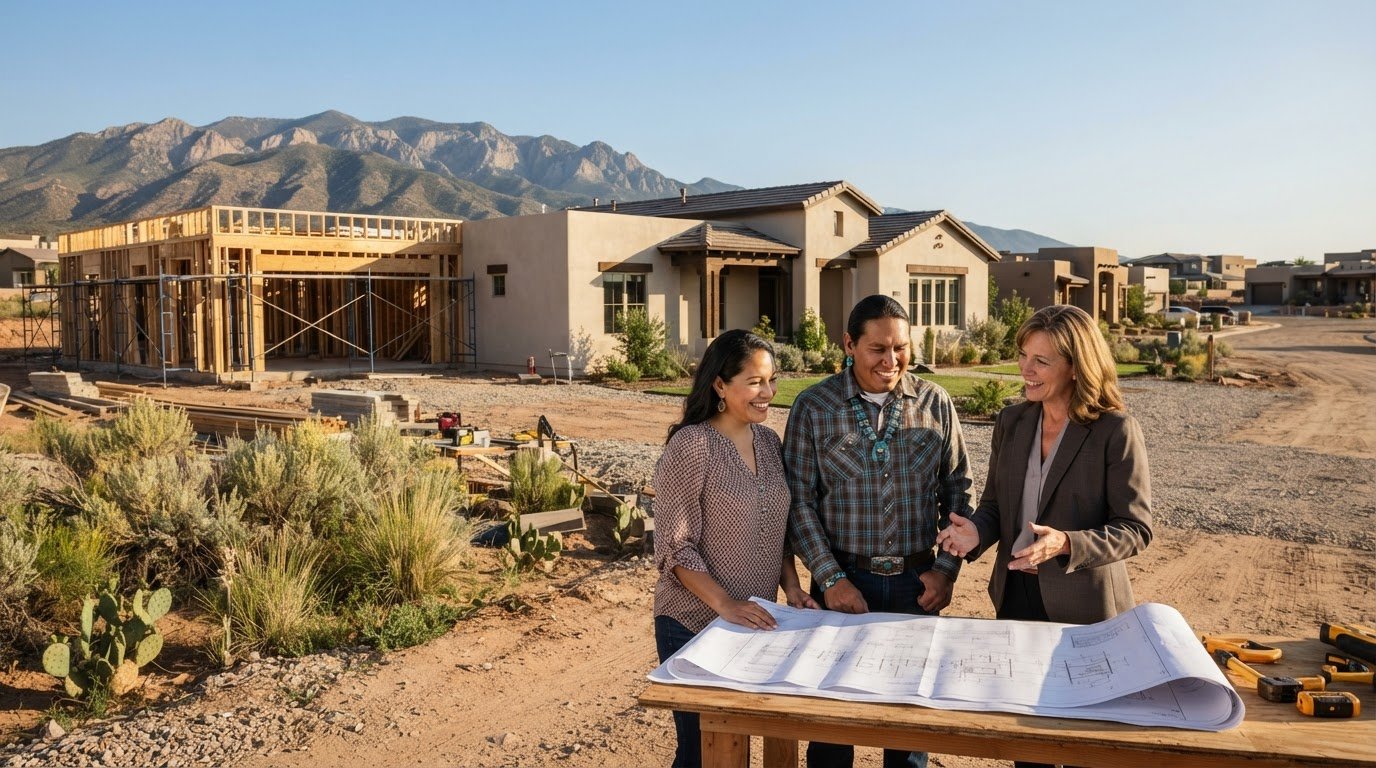
Buying New Construction in Albuquerque: How Construction-to-Permanent Loans Work
A single loan can simplify financing a new build, but it won’t make every lot or builder an easy fit. If you’re buying new construction in Albuquerque, your financing needs to align with the property, the build agreement, and the point when the home is complete.
Before construction begins, understand how your financing will work at each stage. A construction-to-permanent loan can finance the build and then transition to a standard mortgage. Separate construction and mortgage loans involve two financing arrangements. The right approach depends on the loan terms and the details of the property and project.
This guide explains the financing sequence, what to compare between loan options, and what to review before signing a build agreement. It also covers local considerations for Albuquerque and nearby communities such as Rio Rancho and Corrales. With those details in view, you can make a more informed decision about whether a new build fits your plans.
Key Takeaways
- A construction-to-permanent loan can cover a home’s build and transition to mortgage financing, but the stages and terms depend on the loan program.
- Compare combined financing with separate loans by reviewing closing arrangements, transition steps, administration, and loan terms.
- Before buying new construction in Albuquerque, organize details about the lot, plans, build agreement, budget, and project assumptions.
- Local examples such as Loma Colorado and Vista Montebella can help frame your property search, but each lot and build needs its own review.
- Coordinate your move, property decision, and financing timeline. Real-estate guidance can help you assess the purchase, while the lender explains the loan.
What Is a Construction-to-Permanent Loan for an Albuquerque New Build?
A construction-to-permanent loan is financing arranged to cover a home’s construction phase and transition to long-term mortgage financing when the home is complete. The construction portion supports the building process; the permanent portion works like a traditional mortgage loan used to finance a completed home.
The phases, closing arrangements, payment structure, and eligibility depend on the loan program and lender. Some arrangements connect both phases in one loan structure, while others involve separate steps. Don’t assume there will be one closing, a specific payment schedule, or no additional qualification review. The written loan terms explain how the transition works.
How Does Construction-to-Permanent Financing Work?
The process generally moves from project review to construction and then permanent financing. First, the lender reviews the borrower’s finances along with project documents and property details. If the loan proceeds, funds may be disbursed during construction according to the program’s process. When the home is complete, financing moves into its permanent-loan phase as described in the terms. Timing and conversion steps vary, so review them before committing to a build.
This structure connects financing to the project, but the land, plans, build agreement, and completion timeline still need to fit together. If you’re buying new construction in Albuquerque, clarifying each piece early can help you track the decisions involved as the project moves from agreement to finished home.
Is a New-Build Purchase the Same as Building a Custom Home?
No. A completed new-construction home is purchased much like other finished homes. A home that is still being built may involve construction financing, depending on the purchase arrangement and loan program. A custom build usually connects the buyer more directly to the property, plans, and construction agreement.
The signed agreement describes what you’re buying and how the project is structured. A purchase contract for a completed home differs from an agreement tied to a home that hasn’t been built yet. Those details shape the financing conversation, including which project documents are relevant and when funds are needed.
In the Albuquerque area, you might be considering a finished builder home in Rio Rancho or a home planned for a particular lot near Corrales. The community name alone doesn’t determine the financing path. Start with the home’s completion status and the agreement. Before signing, confirm whether the transaction is for a completed property or a home still under construction, and understand how that affects your financing plan.
Construction-to-Permanent Loan: Build to Mortgage Process
A construction-to-permanent loan follows the project from planning through completion, but the steps and conditions depend on the loan program. The Consumer Financial Protection Bureau’s construction loan overview is a useful starting point for understanding how construction financing may connect to mortgage financing.
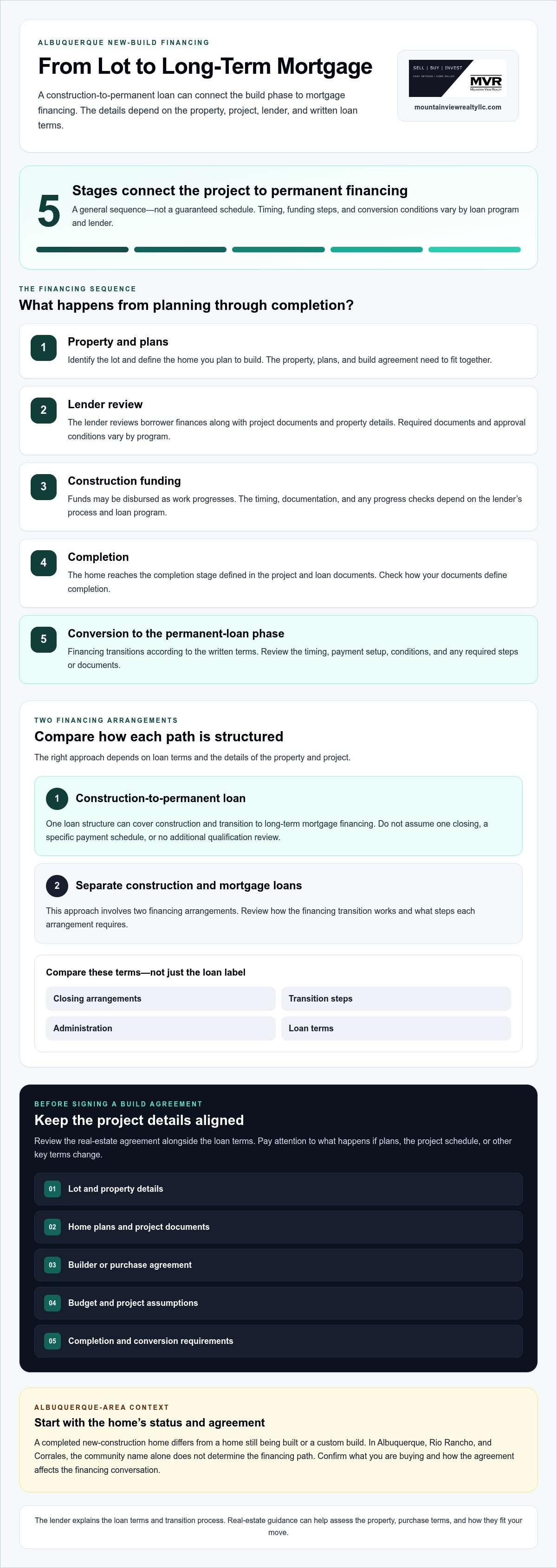
Construction financing and permanent repayment are distinct stages, each with terms that shape the buyer’s obligations. A typical sequence looks like this:
- Property and plans: Identify the lot and define the planned home.
- Loan review: The lender reviews borrower finances, project documents, and property details.
- Construction: Funds may be disbursed as work progresses, with progress checks depending on the program.
- Completion: The home reaches the completion stage set out in the project and loan documents.
- Conversion: Financing transitions to its permanent-loan phase according to the written terms.
What Happens Before Construction Begins?
Before work starts, the property, plans, budget, builder agreement, and proposed loan terms need to align. The lender reviews information about the borrower as well as the project and property. Required documents and approval conditions vary by financing program. Read the purchase or build agreement alongside the loan terms, and understand any contingencies before committing. In particular, note what the agreement says about changes to the plans, project schedule, or other key terms.
How Are Funds Disbursed During Construction?
Construction funds may be released in stages rather than all at once. Timing, documentation, and any progress checks depend on the loan program and lender’s process. Don’t assume a standard draw schedule or payment arrangement. As you plan, compare the expected funding steps with the project schedule and the obligations set out in the loan documents.
What Changes When Construction Is Complete?
At completion, the financing moves into its permanent mortgage phase. That transition may follow the original loan structure, but the timing, payment setup, and conditions depend on the written terms. Review how the loan defines completion and conversion, and note any required steps or documents. A general timeline or payment rule may not describe your specific arrangement.
For buyers considering new construction in Albuquerque, the property and builder agreement are part of the financing picture. Mountain View Realty LLC helps buyers assess the real-estate side of a purchase and how it fits their move. Explore Albuquerque-area real-estate guidance as you compare properties and purchase terms.
Construction-to-Permanent vs. Separate Loans: What Should Buyers Compare?
A combined construction-to-permanent loan links the financing for building a home with its later mortgage phase. Separate financing uses one arrangement for construction and another for the completed home. Neither structure is automatically better. For buyers buying new construction in Albuquerque, the project, property status, and written loan terms matter more than the label.
What Is the Difference Between One Combined Loan and Two Loans?
A combined loan may connect the financing phases, while separate loans create distinct arrangements and transitions. Compare the details side by side. Review how the written terms handle closing, conversion, qualification, fees, and whether you will need a new loan or refinancing when construction ends.
| What to compare | Combined financing | Separate loans |
|---|---|---|
| Structure | Construction and permanent financing are arranged as connected phases. | Construction and mortgage financing are separate arrangements. |
| Transition | Review how and when the loan moves into its permanent phase. | Review how the construction financing ends and the mortgage begins. |
| Administrative steps | Check which steps apply at the start and during conversion. | Expect distinct financing processes, as defined by each arrangement. |
| Terms to verify | Confirm fees, qualification conditions, payment structure, and conversion terms. | Confirm fees, qualification conditions, timing, and any refinancing exposure. |
This is a general comparison, not a description of every lender’s process. Fees, approval standards, closing arrangements, and timelines can vary by program. Compare the actual written terms, not just the number of loans.
Which Financing Structure Fits Your Build Plan?
Consider how defined the project is, whether the property is complete, and how you want to manage separate financing steps. A finished home built by a builder may be purchased with financing for a completed home. A home still being built can involve construction financing, depending on the agreement and loan program. The contract helps clarify which situation applies.
Before choosing a path, map the financing stages against the purchase or build agreement. Note when funds are needed, what conditions apply at transition, and how the project schedule relates to your next steps. Mountain View Realty LLC can help you assess how the property and agreement fit your broader move, while the lender explains the loan terms. This keeps the comparison grounded in your specific purchase rather than treating one structure as right for every buyer.
Albuquerque-Area New Construction: Prepare the Property and Build Details
A new-build decision starts with the specific property, not just the community name. Buyers comparing Loma Colorado, Lomas Encantadas, Los Diamantes, Broadmoor Heights, or Vista Montebella should assess the lot, access, plans, and purchase terms for the home they’re considering. These local examples don’t mean every community has the same build options or site conditions.
What Albuquerque and Rio Rancho Buyers Should Review
Location can affect how well a property supports your day-to-day needs and build priorities. Review the lot’s access, utility information, drainage, and any requirements that apply to that address. Conditions can differ from one parcel to another, even within a neighborhood. Check reliable records from the relevant local agency, using Bernalillo or Sandoval County resources when they apply to the property.
Before moving forward, organize the details that connect your property choice to the construction and financing plan:
- Lot details: Record the property location, access information, and available utility and drainage documentation.
- Plans: Gather the home plans and note the features or changes that matter to you.
- Purchase or build agreement: Review what the agreement covers, key dates, and any contingencies before committing.
- Budget assumptions: Understand what the project budget includes and which assumptions could affect your overall plan.
- Project schedule: Note expected milestones and how they relate to the purchase and financing timeline.
Which Documents and Project Details Help You Prepare?
Keep the agreement, plans, budget assumptions, and project schedule together. Reviewing them as a set helps show how the property decision relates to the financing process. Lenders may request different documents or set different conditions, so use this checklist to get organized, not as a universal list of loan requirements.
For buyers buying new construction in Albuquerque, timing matters. A change to the lot, plans, or agreement may affect project coordination, so keep property decisions aligned with the financing timeline. A real-estate advisor can help you evaluate the property and purchase terms as part of your broader move, while the lender explains financing requirements.
Plan Your Albuquerque New-Build Purchase With Clear Real-Estate Guidance
A well-planned new build brings several decisions together: the move you want to make, the property you choose, the builder agreement you sign, and the financing you arrange. Keep those pieces connected, while recognizing that property planning and loan decisions are different areas of expertise. Mountain View Realty LLC provides real-estate guidance for buyers; the lender explains and approves loan terms.
A Clear Checklist Before You Commit to a New Build
Before signing, work through the essentials and consider how each one affects the purchase:
- Define your goals: Clarify what you need from the home, location, and timing of the move.
- Assess the property: Consider whether the lot and its location align with your plans and priorities.
- Review builder documents: Read the purchase or build agreement, plans, schedule, and contingencies together.
- Compare financing structures: Understand whether construction and permanent mortgage financing are connected or arranged separately.
- Read the written terms: Review conditions for payments, closing, conversion, qualification, and required next steps. Don’t assume the same timeline or terms apply to every program.
Direct loan questions to the lender, and keep property, agreement, and transaction questions within your real-estate planning. That distinction helps you coordinate the decisions without relying on a general explanation to interpret specific loan documents.
How Local Real-Estate Guidance Can Support the Decision
Buying new construction in Albuquerque involves more than choosing a floor plan. The community, property details, agreement terms, and your broader move all shape whether a home fits your plans. Mountain View Realty LLC helps buyers evaluate those real-estate factors and keep the purchase details in view while considering financing timelines.
Robb Krautbauer brings 15 years of real-estate investing experience and 10 years as a licensed agent. Mountain View Realty LLC has helped 200+ families and investors across the Albuquerque metro. That experience informs guidance on the property and transaction; loan terms and approval remain the lender’s responsibility.
A useful next step is to discuss the property you’re considering and how it fits your plans. You don’t need to have every decision settled before starting the conversation.
Grab a time on my calendar, no pressure, just a plan for your next move
Move Forward With a Clear New-Build Plan
Buying new construction in Albuquerque is easier to approach when you understand how the property, build agreement, and financing timeline fit together. A construction-to-permanent loan connects construction financing with permanent mortgage financing, but its phases, payments, and conversion terms depend on the written loan terms. Separate loans involve distinct financing arrangements, so compare the actual conditions instead of assuming one structure is always simpler or better.
Start by defining your goals, reviewing the lot and project documents, and coordinating property decisions with the financing timeline. A real-estate advisor can help you assess the property and transaction, while the lender explains loan terms and approval. Robb Krautbauer brings 15 years of real-estate investing experience and 10 years as a licensed agent. Mountain View Realty LLC has helped 200+ families and investors across the Albuquerque metro.
With clear information and guidance for each part of the decision, you can take your next step with confidence.
Robb Krautbauer, Owner & Qualifying Broker
Frequently Asked Questions
What is a construction-to-permanent loan?
A construction-to-permanent loan is financing arranged to cover a home’s construction and then transition to long-term mortgage financing. The construction phase supports the build, while the permanent phase finances the completed home. The loan may connect these stages, but the number of closings, payment structure, eligibility, and conversion process depend on the loan program and written terms. Review those details before signing a purchase or build agreement.
Can a construction-to-permanent loan be used to build a custom home in New Mexico?
It may be an option for building a custom home in New Mexico, depending on the loan program, property, project documents, and lender requirements. The lender may review the borrower’s finances, plans, budget, builder agreement, and property details. Requirements vary, so the loan terms and approval conditions matter. Before committing, understand how the financing aligns with the lot, planned home, and build agreement.
How does a construction loan turn into a permanent mortgage?
The loan transitions from its construction phase into its permanent mortgage phase according to the written terms. The lender and program determine how completion is established, what steps or documents are required, and when the transition occurs. Some arrangements connect the phases within one financing structure; others involve separate financing steps. Don’t assume a standard completion deadline or automatic conversion applies to every loan.
Is a construction-to-permanent loan better than two separate loans?
Neither structure is best for every buyer. Combined financing may connect the construction and mortgage phases, while separate loans involve distinct arrangements and a transition between them. Compare the actual terms for closings, fees, qualification, payments, timing, and any need to arrange or qualify for later financing. Your project and property status matter, but the lender’s written terms explain how each option applies to your situation.
Do construction-to-permanent loans require payments during construction?
Payment requirements during construction depend on the loan program and its terms. Some arrangements may require payments while the home is being built, but the timing and amount aren’t universal. Review the loan documents for the payment schedule, how funds are disbursed, and what changes when the loan enters its permanent phase. The lender can explain the specific payment obligations; don’t rely on general examples to plan your budget.
What should I review before buying a new-construction home in Albuquerque?
Review the property, lot details, plans, purchase or build agreement, budget assumptions, schedule, and contingencies. Check site-specific access, utility, drainage, and applicable local information using reliable sources for the property’s location. If you’re buying new construction in Albuquerque, distinguish a completed home purchase from a home still being built, since the agreement and financing needs may differ. Keep property decisions coordinated with your financing timeline.
Can I use a construction-to-permanent loan to buy a completed new-build home?
A construction-to-permanent loan is generally structured for a project that includes a construction phase. If the builder has completed the home, the purchase may instead use financing for a completed property. The appropriate structure depends on the transaction, property status, and loan program. Review the purchase agreement and discuss financing terms with the lender to understand which stages, conditions, and payment arrangements apply.

Article by
Robb Krautbauer
Robb Krautbauer is the Owner and Qualifying Broker of Mountain View Realty, serving Albuquerque, Rio Rancho, Santa Fe, and surrounding New Mexico communities. With more than a decade of real estate experience, Robb specializes in luxury homes, strategic home marketing, and helping homeowners navigate important life transitions with confidence.
Known for combining luxury-level marketing, AI-powered technology, and innovative selling strategies, Robb helps clients maximize their home's value while creating a smooth, personalized selling experience. Whether assisting luxury homeowners, retirees, families downsizing, or real estate investors, his focus is always on delivering expert guidance, honest advice, and exceptional results.
When he's not helping clients achieve their real estate goals, Robb enjoys studying market trends, emerging technology, and investment strategies that keep Mountain View Realty at the forefront of the industry.
Disclaimer
**Disclaimer:** The information provided in this article is for general educational purposes only and should not be considered legal, tax, financial, or professional advice. Real estate laws, market conditions, and regulations change over time and may vary based on your individual circumstances. Before making any real estate decision, consult with qualified legal, tax, or financial professionals. If you have questions about buying or selling real estate in New Mexico, contact Mountain View Realty for guidance specific to your situation. © 2026 Mountain View Realty. All rights reserved. The content on this website may not be reproduced without written permission.


