
Can a Buyer Back Out of a Real Estate Contract? What Albuquerque Buyers Should Know
What if changing your mind is only part of the decision, and the contract determines what happens next? If you’re asking, “can a buyer back out of a real estate contract,” the answer depends on the agreement you signed, the circumstances, and whether you follow its terms.
It’s understandable to worry about earnest money, deadlines, and whether your reason for withdrawing is enough. A signed contract doesn’t create a blanket right to walk away without consequences, but it may provide options when specific conditions or deadlines apply. The details matter, and a missed notice requirement can affect your next steps.
This guide explains what Albuquerque buyers should review before acting, including contingencies, notice procedures, key dates, and possible financial risks. You’ll also learn how to approach the decision calmly in New Mexico, where contract terms guide your available options. A local real estate agent can help clarify transaction steps, while legal questions belong with an attorney. This is general information, not legal advice.
Key Takeaways
- Whether can a buyer back out of a real estate contract depends on the signed agreement, its conditions, and applicable law.
- Inspection, financing, and appraisal contingencies may offer a path to withdraw, depending on their wording and deadlines.
- Review the contract before acting to understand how withdrawal could affect earnest money.
- Identify key dates and follow the agreement’s communication process rather than relying on verbal assumptions.
- If the withdrawal is disputed, preserve relevant documents and use the contract terms to guide next steps.
Can a buyer back out of a real estate contract after signing?
The signed agreement, its terms, and applicable law determine a buyer’s options. So, can a buyer back out of a real estate contract? Sometimes the agreement provides a path to end the transaction, but signing does not create an automatic, penalty-free right to change your mind. The outcome depends on the completed contract and the circumstances, not simply on a buyer’s stated reason.
It helps to separate everyday language from contract terms. A buyer might say they want to “withdraw” or “cancel,” but those words alone don’t explain whether the agreement allows an exit or what happens next. A real estate contract sets out the terms of a property transaction, though the specific wording in your signed documents matters most.
For a general overview of buyer contract decisions, you can also watch this video:
What changes once both sides sign a purchase agreement?
Once both sides sign, they have made commitments described in the completed agreement. Those details may include deadlines, required actions, and conditions that affect whether the transaction proceeds. The exact terms depend on the documents, including any addenda that form part of the agreement. Before drawing conclusions, locate the full signed contract and its attachments, not just a summary or a recollection of what was discussed.
For example, a buyer may remember discussing an inspection period, but the signed paperwork controls the actual terms and dates. A verbal summary can be useful background, yet it may not reflect what the final documents say. Review the complete set of signed pages and addenda together. If a provision is unclear, avoid assuming it gives you a particular right or outcome.
Does a buyer have an automatic right to change their mind?
No general assumption should replace the contract. A change of mind alone doesn’t establish that a buyer can leave without consequences. A contractually permitted exit is different from simply stopping performance when no applicable term supports that choice. The result can vary based on the provision involved, whether its requirements were met, and the facts surrounding the decision.
These terms are related, but they aren’t interchangeable. “Withdrawal” often describes the buyer’s decision to step away. “Cancellation” may describe a request or action to undo the transaction. “Termination” describes the agreement ending, whether under a contract provision or by agreement between the parties. “Breach” may arise when a party fails to meet a contractual obligation without an applicable basis. The precise meaning and effect depend on the documents and legal context.
- Find the full signed agreement and all addenda.
- Mark relevant dates and provisions before taking action.
- Keep written communications and avoid relying on assumptions.
This section offers general education, not legal advice or a review of your specific contract. New Mexico-specific conclusions require current review by a qualified attorney. A real estate professional can help explain transaction steps, but shouldn’t be treated as a substitute for legal counsel.
Which contract contingencies may give a buyer a path to withdraw?
A contingency is a written condition in a purchase agreement that may affect whether a transaction moves forward. Inspection, financing, and appraisal terms are common examples, but they don’t guarantee a buyer can end the deal. The wording, deadlines, required steps, and facts all matter. A buyer asking “can a buyer back out of a real estate contract” should start by finding the relevant provision in the signed agreement.
Some contingencies call for action within a stated period. The contract may also specify how a buyer must communicate a decision or respond to information. Missing a deadline or relying on an informal conversation could affect the options available. Read the full provision, including any related addenda, rather than assuming a contingency works the same way in every transaction.
How can inspection terms affect a buyer’s decision?
Inspection-related terms may describe what choices a buyer has after learning about a property’s condition. Those choices depend on the agreement. A roof concern or repair estimate, for example, doesn’t automatically create a right to cancel or require a specific remedy. Before deciding, identify the inspection period, any response deadline, and the contract’s instructions for providing written notice.
Keep inspection findings and related communications organized. If the contract describes a process for raising concerns, follow its wording rather than assuming a phone call or casual message is enough. The effect of an inspection provision depends on its terms and the circumstances, so avoid treating a general example as a rule for your purchase.
What role can financing and appraisal terms play?
A written financing condition may address what happens if a buyer can’t obtain a loan on the terms described in the contract. An appraisal provision may address a valuation that differs from the purchase price. Neither a lender delay nor a low appraisal automatically gives every buyer the same right to terminate. Review the exact condition, its timeline, and any required notice or documentation.
For instance, a lender requesting more time is different from a written financing condition that sets out a particular response process. Likewise, a valuation below the agreed price may prompt a conversation, but the contract controls which options apply. Keep lender updates, appraisal information, and notices together so the timeline is clear.
Before acting, compare each relevant provision against the dates and communications in your file. Check whether the agreement requires a written notice, identifies a recipient, or sets a specific response window. If you’re uncertain about the legal effect of a term, seek current advice from a qualified New Mexico attorney. The New Mexico Real Estate Commission provides information about the state’s real estate regulatory framework, but it doesn’t replace advice about your individual contract.
- Locate the exact contingency language and any related addenda.
- Mark relevant deadlines and note how the agreement requires communication.
- Keep written records of inspection, financing, appraisal, and notice-related communications.
A local real estate agent can help you understand transaction steps and organize questions about the process. For calm, practical guidance on your next move, Grab a time on my calendar - no pressure, just a plan for your next move.
What could happen to earnest money if a buyer backs out?
Earnest money is a deposit connected to a real estate transaction. Its treatment depends on the signed agreement and applicable rules. There’s no reliable one-size-fits-all answer: who receives the deposit depends on the agreement, the circumstances, and applicable law. That distinction matters if you’re weighing whether to proceed or step away from an Albuquerque purchase.
A buyer who follows a contract condition may be in a different position from one who withdraws without a contractual basis. But neither the word “contingency” nor the buyer’s reason alone determines what happens to the deposit. The agreement may set out conditions, deadlines, and notice steps that affect the parties’ options. A general article can’t resolve how those terms apply to a particular transaction.
That’s why asking “can a buyer back out of a real estate contract” also means asking what the contract says about the deposit. Read the complete signed agreement, including addenda, and get qualified legal guidance for questions about New Mexico requirements or a dispute. An agent can help clarify transaction steps, but doesn’t provide legal advice.
When might a buyer risk losing the deposit?
A missed deadline or an attempt to withdraw without a valid contractual basis may create financial risk. That doesn’t mean the buyer will automatically lose the deposit, or that the seller will automatically receive it. The result can depend on the contract language, the parties’ actions, and applicable law.
For example, a buyer may believe a contract condition still gives them an exit, while the agreement’s stated response period has passed. Or the buyer may send a message that doesn’t follow the notice process described in the documents. These situations can raise questions about whether the buyer met the contract’s requirements. Don’t assume the deposit outcome based on a general example.
Why do deadlines and written notices matter?
Contract dates can shape the options available. A notice sent after a deadline, or delivered in a way that doesn’t meet the agreement’s terms, may affect how a condition applies. The relevant steps and methods depend on the actual documents and current requirements. Avoid relying on an informal understanding of what a notice should say or how it should be delivered.
Build a timeline from the signed agreement and its addenda. Note each relevant date, the event it relates to, and any communication already sent or received. Keep copies of messages and documents. If a deadline is approaching or the parties disagree about the deposit, consult a qualified New Mexico attorney before deciding what to do. Careful review can help you understand the issue without assuming a particular result.
- Find the agreement’s deposit and contingency language.
- Record dates and notice requirements stated in the documents.
- Save written communications and seek legal guidance if the terms or outcome are disputed.
If you’re sorting through transaction steps and want a calm plan for your next move, Grab a time on my calendar - no pressure, just a plan for your next move.
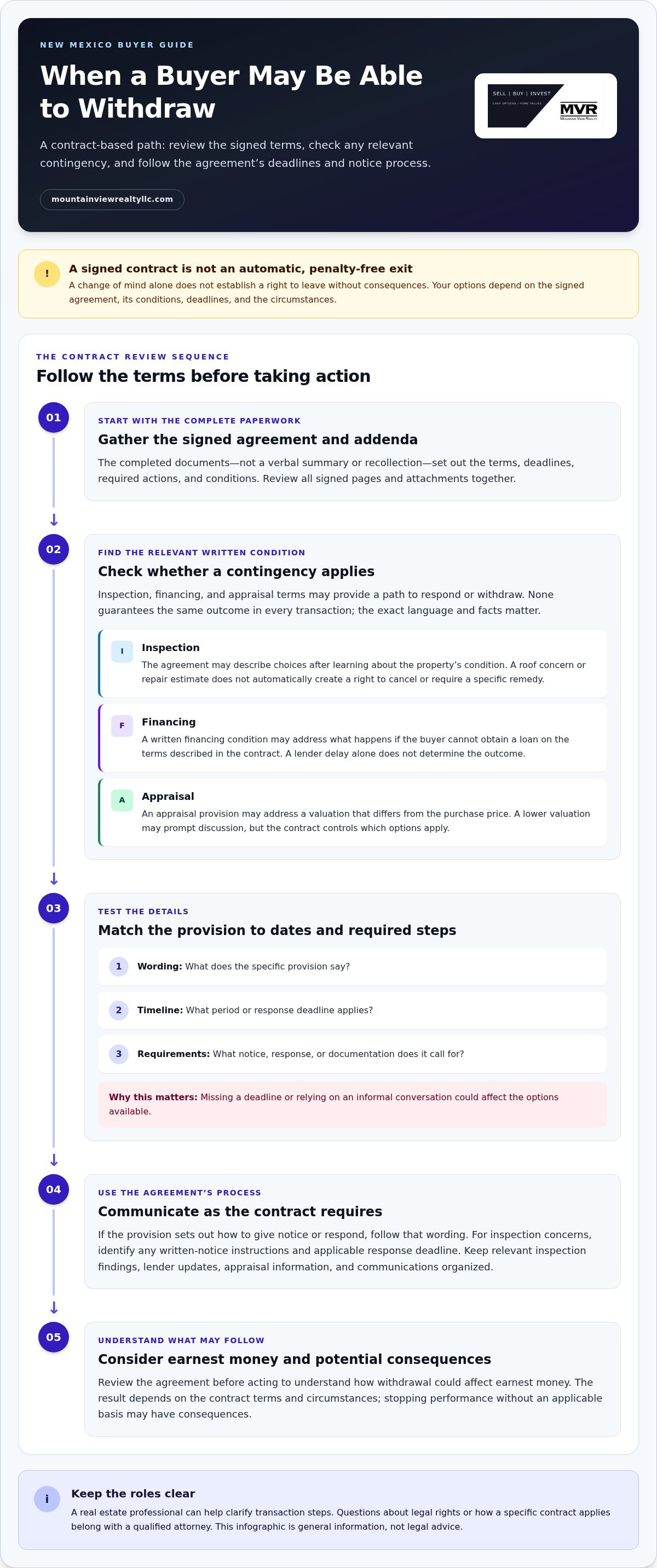
Steps for buyers before withdrawing in New Mexico
Before deciding how to proceed, clarify what’s driving the decision and what outcome would help. Is the concern a change in finances, a property issue, or a shift in personal plans? Separating the underlying concern from the urge to act can make conversations with your real estate agent and attorney more focused. Albuquerque market conditions may inform your broader plans, but they don’t determine the legal effect of your individual agreement.
There may be more than one practical way to address a concern. Depending on the circumstances, the parties might discuss a change to the transaction rather than ending it. Any alternative needs careful consideration and agreement from the parties where applicable. Don’t treat an online example or verbal assurance as a decision about your own contract. For a legal interpretation, seek qualified New Mexico counsel.
A practical checklist before sending a withdrawal notice
Use this checklist to prepare for a useful conversation, not to decide your legal rights on your own. Focus on your priorities and the questions you need answered.
- Write down the main reason you’re considering leaving and what has changed.
- Decide what outcome you hope to reach, such as proceeding, discussing a change, or ending the transaction.
- List practical concerns tied to each option, such as your moving plans or the timing of another purchase.
- Prepare specific questions for your agent and any legal questions for an attorney.
Keep the notes factual. Avoid making statements to the other party before you understand the potential effect of your next step. If you’ve already discussed options, distinguish what was proposed from what was actually agreed.
Who can help with which part of the decision?
An agent can help you understand the transaction process, coordinate discussions, and organize the practical questions that arise. Choosing a professional with a clear communication approach is one consideration when choosing a real estate agent in Albuquerque. An agent isn’t a substitute for an attorney and can’t provide legal advice about your rights or obligations.
A qualified attorney can address how current New Mexico law and your specific circumstances may affect the decision. If you’re a seller affected by a buyer’s withdrawal, your planning may look different. Your next move could involve considering timing, presentation, or a different sale strategy, depending on the transaction’s status. Reviewing home selling options in Albuquerque can help frame those practical considerations.
After a buyer backs out, what are the next steps for both sides?
Once the transaction’s status is clear, each side can focus on its next decision. A buyer may need to reassess housing plans, financing arrangements, or the timing of another purchase. A seller may need to reconsider when to resume marketing or how to respond to interest from another buyer. Those choices depend on the circumstances and any applicable advice, not just the fact that one party wants to move on.
If the parties agree the transaction has ended, they can turn to practical matters such as coordinating their next plans. If they disagree about whether it has ended, avoid making decisions based on an assumption that the other side shares. The signed agreement and appropriate legal guidance can help clarify how to proceed.
If the buyer and seller disagree about the withdrawal
A disagreement doesn’t establish who is right or predict how the issue will be resolved. Each party should get legal guidance about their position before taking steps based on a disputed interpretation. Keep discussions focused on specific questions and avoid treating a proposed resolution as final until the parties have clearly agreed to it.
While the issue remains unresolved, buyers can hold off on assuming they’re free to proceed with another purchase, and sellers can avoid assuming they’re ready to market the property again. A measured approach gives both sides room to understand their options without escalating the disagreement.
How an Albuquerque agent can support the transaction process
An agent can help coordinate practical transaction conversations and planning within their professional role. Robb Krautbauer has helped Albuquerque buyers and sellers navigate transaction decisions as a local real estate guide. Mountain View Realty LLC has helped 200+ families and investors buy and sell across the Albuquerque metro. This experience supports process guidance, not legal advice or a promised outcome.
For sellers, the next step after a transaction ends may be to reconsider timing, presentation, or the sale strategy that fits their priorities. For buyers, it may mean revisiting their plans before pursuing another property. The right path depends on each person’s circumstances.
- Buyers can revisit their plans once the current transaction’s status is clear.
- Sellers can consider their next marketing steps in light of the transaction status.
- Either party can seek legal guidance if the status or obligations remain disputed.
Grab a time on my calendar - no pressure, just a plan for your next move.
Choose a Clear Next Step
A difficult contract decision doesn’t have to be made on guesswork. If you’re asking whether a buyer can back out of a real estate contract in your situation, focus on what you can clarify next: the agreement’s terms, the timeline, and any questions that need legal review. A real estate agent can help organize the transaction details, while a qualified attorney can address legal questions about your specific contract.
Robb Krautbauer brings 10 years of experience as a licensed real estate agent to guiding Albuquerque buyers and sellers through transaction steps. The goal is a practical plan grounded in your circumstances, not pressure to reach a particular outcome.
Take the next step at a pace that lets you make an informed decision. Clarity can help you move forward with greater confidence.
Frequently Asked Questions
Can a buyer back out after the inspection contingency deadline?
There may be options, but a buyer shouldn’t assume the deadline has no effect or that it automatically prevents any further discussion. If an inspection reveals a concern after the stated period, the buyer and seller may still choose to discuss a possible resolution. Whether that discussion changes the buyer’s position depends on the circumstances and any agreement reached. Treat a proposal as a conversation, not a confirmed change.
Can a buyer get earnest money back after cancelling a contract?
Possibly, but cancellation alone doesn’t determine who receives the deposit. A useful next step is to identify who currently holds the funds and what information that party needs before taking action. If the buyer and seller give different instructions or disagree about entitlement, don’t assume the funds can be released immediately. Ask a qualified attorney how to address the disagreement and what steps fit the specific transaction.
What happens if a buyer misses a real estate contract deadline?
The effect can depend on what event starts the deadline and how the agreement describes it. For instance, a date calculated from delivery of a document may not match a date counted from signing. Check the stated trigger and the actual event before deciding a deadline passed. If the timing remains uncertain, get advice promptly and avoid changing records to make a timeline appear different from what occurred.
Can a buyer back out if financing falls through?
A buyer may have an option, but a lender’s update alone doesn’t establish what the purchase agreement permits. Ask the lender for a clear written explanation of the loan status, any remaining conditions, and the expected timing. That information can help the buyer understand the problem and prepare focused questions about the transaction. Don’t treat a preapproval or an informal estimate as a final answer about the buyer’s contractual position.
Does a buyer need to give a reason to terminate a real estate contract?
Whether a reason is required depends on the circumstances and the contract language involved. Be accurate and specific in describing what prompted the decision, and don’t state that a particular right applies unless that has been established. If you’re unsure how to explain your position, pause before sending a message and get advice about the wording. A clear, factual explanation can help prevent confusion between a request and an agreed outcome.
Are New Mexico real estate contract rules different from other states?
They can differ. A buyer relocating from another state may recognize familiar terms but should not assume the same wording has the same effect in a New Mexico transaction. Forms, legal requirements, and contract provisions can vary by jurisdiction and by agreement. Use New Mexico-specific information when considering an Albuquerque purchase, and treat advice based on another state’s transaction as background rather than a decision rule.

Article by
Robb Krautbauer
Robb Krautbauer is the Owner and Qualifying Broker of Mountain View Realty, serving Albuquerque, Rio Rancho, Santa Fe, and surrounding New Mexico communities. With more than a decade of real estate experience, Robb specializes in luxury homes, strategic home marketing, and helping homeowners navigate important life transitions with confidence.
Known for combining luxury-level marketing, AI-powered technology, and innovative selling strategies, Robb helps clients maximize their home's value while creating a smooth, personalized selling experience. Whether assisting luxury homeowners, retirees, families downsizing, or real estate investors, his focus is always on delivering expert guidance, honest advice, and exceptional results.
When he's not helping clients achieve their real estate goals, Robb enjoys studying market trends, emerging technology, and investment strategies that keep Mountain View Realty at the forefront of the industry.
Disclaimer
**Disclaimer:** The information provided in this article is for general educational purposes only and should not be considered legal, tax, financial, or professional advice. Real estate laws, market conditions, and regulations change over time and may vary based on your individual circumstances. Before making any real estate decision, consult with qualified legal, tax, or financial professionals. If you have questions about buying or selling real estate in New Mexico, contact Mountain View Realty for guidance specific to your situation. © 2026 Mountain View Realty. All rights reserved. The content on this website may not be reproduced without written permission.


