
Common Closing Problems and How to Avoid Them
What if a closing delay starts with one missing document or a question raised too late? Financing, appraisal, title, inspection, and paperwork issues can all affect the plan. Understanding common closing problems and how to avoid them starts with spotting unanswered questions early, tracking who needs to act, and keeping the right people informed.
It’s reasonable to feel uncertain when buyers, sellers, lenders, title professionals, and others are working toward the same date. A small unresolved detail can complicate moving plans. Early communication can help you understand what’s happening and consider your options before the pressure builds.
This guide explains how to recognize potential trouble, what information to gather, and who to contact when something needs attention. You’ll also learn how to think through changes to the original closing plan. Whether you’re buying or selling in Albuquerque, Rio Rancho, Corrales, or nearby communities, a clear plan can make the process easier to manage when details don’t go as expected.
Key Takeaways
- Use a timeline to track key documents, decisions, and deadlines from contract acceptance through closing.
- For common closing problems and how to avoid them, identify who owns each open task and what information that person needs.
- Review contract terms with your agent if an appraisal or inspection raises a concern, then discuss practical next steps.
- Pay close attention to ownership records, insurance details, closing paperwork, and instructions for transferring funds.
- If the planned date changes, clarify what remains unresolved and consider whether a revised timeline or another path makes sense.
Common closing problems: where delays begin and why they matter
A closing is the final stage of a real estate transaction, when required steps are completed and ownership changes. The finish line feels more manageable when you understand what the process depends on. Common closing problems and how to avoid them become easier to address when you treat the transaction as a coordinated set of people, documents, funds, property details, and deadlines, not simply one appointment on the calendar.
Some issues are easier to address with prompt communication, such as a missing document or an unanswered question about a property detail. Others may surface unexpectedly despite careful preparation. Early planning can reduce avoidable uncertainty, but it can’t control every event or guarantee a specific closing date. The contract and the facts of each transaction shape which issues matter.
For a broader overview of potential delays, watch this video:
For example, a buyer purchasing a home in Albuquerque may be responding to lender requests while the seller gathers information about a past repair. If a question about the home needs more attention, it may overlap with other deadlines. That doesn’t determine the outcome, but it does make a shared list of open tasks and clear updates useful.
Which closing issues most often disrupt a transaction?
Common risk areas include financing, title, appraisal, inspection, insurance, and paperwork. Each raises different questions, and an unresolved item can affect related tasks or deadlines. A concern doesn’t automatically derail a sale. The contract, property, and transaction details determine what needs attention and what options may be available.
- Financing: A lender may need additional or corrected borrower information.
- Title: Ownership records or a potential claim may need review.
- Appraisal: The valuation may prompt discussion of the contract terms.
- Inspection: A property finding may lead the parties to consider next steps.
- Insurance: Unanswered coverage questions may need follow-up.
- Paperwork: Missing, inconsistent, or late documents can leave tasks unfinished.
These categories can overlap. A question about the property, for example, may need an answer before someone can decide what document or response is appropriate. Don’t assume the same process applies to every New Mexico transaction. Review the specific agreement and details with your agent.
Why early communication matters in Albuquerque-area transactions
A buyer, seller, agent, lender, and title professional may each hold information someone else needs. In a Corrales sale, for example, a question about a property feature could require the seller to share available records, the agent to clarify the concern, and other transaction participants to understand the response. This is an illustration, not a description of a required local procedure.
For each open item, identify the next action, the person responsible, and any relevant deadline. Share updates with everyone who needs them. Early coordination turns unanswered questions into clear next steps and reduces avoidable uncertainty, without promising that every delay can be prevented.
Financing, appraisal, and inspection problems: address them before the deadline
Financing, appraisal, and inspection questions can feel connected, but each calls for a different response. A lender may need clearer or updated information to assess a loan. An appraisal addresses the property’s value for lending purposes, while an inspection reports on observed conditions. Keeping those distinctions clear helps buyers and sellers focus on the right next step instead of treating every new question as a crisis.
How to reduce financing and appraisal delays
Underwriting can raise questions when requested documents are incomplete, details don’t match, or a buyer’s financial picture changes. Respond promptly and accurately to lender requests. If your circumstances change, tell the lender rather than assuming the effect is minor. Before making a major financial change, such as taking on a new loan or making a large purchase, discuss potential effects with the lender.
Use a simple record to keep requests from getting lost. For each lender question, note what was requested, which documents you submitted, when you sent them, and what remains unresolved. Keep copies in one organized folder, and ask for clarification if a request is unclear. This won’t control the lender’s decision, but it can help you catch missing information and respond consistently.
An appraisal concern is about the appraiser’s opinion of value; an inspection issue is about the property’s observed condition. If the appraisal differs from the contract price, review the agreement and possible next steps with your agent. The right response depends on the contract and the parties’ circumstances, so don’t assume one side must accept a particular change.
How to handle inspection findings without losing perspective
An inspection report may include observations of different levels of importance, from routine upkeep to a concern that deserves closer attention. Review the specific finding, identify what remains unresolved, and discuss what information could help clarify it. The presence of an item in a report doesn’t mean every item requires repair or that the transaction must change course.
Any negotiation depends on the contract and the parties’ decisions. A requested repair, credit, or other response isn’t automatic. Focus the discussion on the specific concern and communicate through the appropriate transaction professionals. Clear written communication helps everyone understand what was requested, how the other party responded, and whether anything remains open.
For a buyer in Albuquerque, a lender’s request for updated records might arrive while the parties are also discussing an inspection finding. Track each issue separately so one conversation doesn’t obscure another. Keep financing questions with the lender, and work with your agent on how property concerns relate to the agreement.
These practical habits are central to common closing problems and how to avoid them: respond clearly, keep documents organized, and raise questions before they become last-minute surprises. If you’re weighing a purchase or sale in the Albuquerque area, real estate guidance for your next move can help you understand the decisions in front of you.
Title, insurance, paperwork, and wire risks: verify details carefully
Some closing questions involve records or instructions that are easy to overlook until another person needs an answer. The guidance below is general, not a statement of New Mexico requirements. Local procedures and the steps for a specific transaction can vary, so follow the contract and the direction of the professionals handling it.
Use this comparison to spot an early signal, decide on a first response, and direct the question to the right person.
| Issue | Early warning sign | First practical response | Responsible contact |
|---|---|---|---|
| Title or property records | A record, ownership detail, or possible claim needs review. | Ask what information is needed and gather relevant documents accurately. | Title professional, with the agent coordinating communication as appropriate. |
| Insurance | A question about coverage, property details, or documentation remains open. | Share accurate property information and clarify what remains unresolved. | Insurance contact and the transaction professional requesting information. |
| Paperwork | A form is missing, inconsistent, or unclear before signing. | Identify the specific question and request clarification before signing. | The person or professional who provided the document. |
| Wire instructions | Payment details change unexpectedly or arrive only by email or text. | Pause. Verify the instructions using a trusted contact method obtained independently. | Title professional or other trusted transaction contact. |
What to do when title or property records raise questions
A title professional can identify and communicate records or claims that need review. Questions may relate to ownership records or unresolved claims, but the steps to address them depend on the documents and transaction. Respond accurately to requests for relevant ownership or property records, and ask what information is still needed. Don’t assume a particular resolution or local procedure applies.
In an Albuquerque-area sale, a request for a past ownership document may prompt the seller to locate available records while the title professional explains what needs review. Keep the request and response organized, and update your agent so the open item doesn’t get lost among other tasks.
How to protect documents, funds, and personal information
Treat payment instructions as sensitive. Never rely on an unverified message, and don’t act on last-minute account changes sent only by email or text. Before transferring funds, use a trusted phone number or another contact method you obtained independently to verify the instructions. If a document is unclear, pause and ask the appropriate professional to explain it before signing.
These checks are practical steps in common closing problems and how to avoid them. If a question affects your sale or purchase, thoughtful guidance for your real estate transaction can help you understand the next decision.
A step-by-step checklist to prevent closing problems
A closing checklist turns a busy transaction into a sequence of manageable tasks. Start at contract acceptance and update one tracker as new questions arise. For each open item, record the due date, documents submitted, person responsible, and next confirmed step. This checklist is a planning tool, not a substitute for reviewing the contract or getting transaction-specific guidance.
The right plan also depends on how you’re selling. A traditional listing and other sale paths can involve different preparation and coordination needs. Mountain View Realty LLC offers traditional listings as well as CashOffer+, Home Trade-In, Renovate & Sell, and Sell & Stay. Comparing the paths against your priorities can help you plan the work ahead. You can also review Albuquerque home selling options.
| Stage | Practical check | Responsibility |
|---|---|---|
| After contract acceptance | Review the agreement, note stated dates and responsibilities, and identify needed documents or decisions. | Buyer, seller, agents |
| Early transaction period | Buyer responds to lender requests and tracks submitted documents; seller gathers available property information requested for the transaction. | Buyer, seller, lender, agents |
| As property questions arise | Track inspection concerns, title questions, insurance questions, and property access needs. Assign each an owner and next step. | Buyer, seller, agents, title professional |
| Before planned closing | Review remaining paperwork, unresolved questions, and any changed circumstances with the appropriate contact. | Buyer, seller, agents, lender, title professional |
| Final review and signing | Check names, figures, property details, and documents. Raise discrepancies before signing or transferring funds. | Buyer, seller, title professional |
Before the scheduled closing date
As the planned date approaches, ask each responsible person what remains outstanding and what action comes next. Review financing, inspection, title, insurance, and property access questions with the appropriate contact. If circumstances change, share that information early rather than waiting until the final appointment. Note whom you contacted and what they said, especially when a response depends on another person’s input.
For example, if a document has been sent but a question about it remains open, record both facts. That distinction helps the buyer, seller, agent, lender, or title professional determine whether the next step is to provide more information, clarify the document, or wait for a decision.
During the final review and signing
Read each document carefully. Compare names, figures, property details, and other key information with the transaction records available to you. If something appears inconsistent or unclear, pause and raise it promptly with the professional handling that document. Don’t assume a discrepancy is harmless or try to correct formal paperwork without guidance.
A checklist helps expose missing tasks before closing day, while there’s still time to clarify who needs to act. Used consistently, this simple habit can help you address common closing problems and how to avoid them, without suggesting that every delay can be prevented.
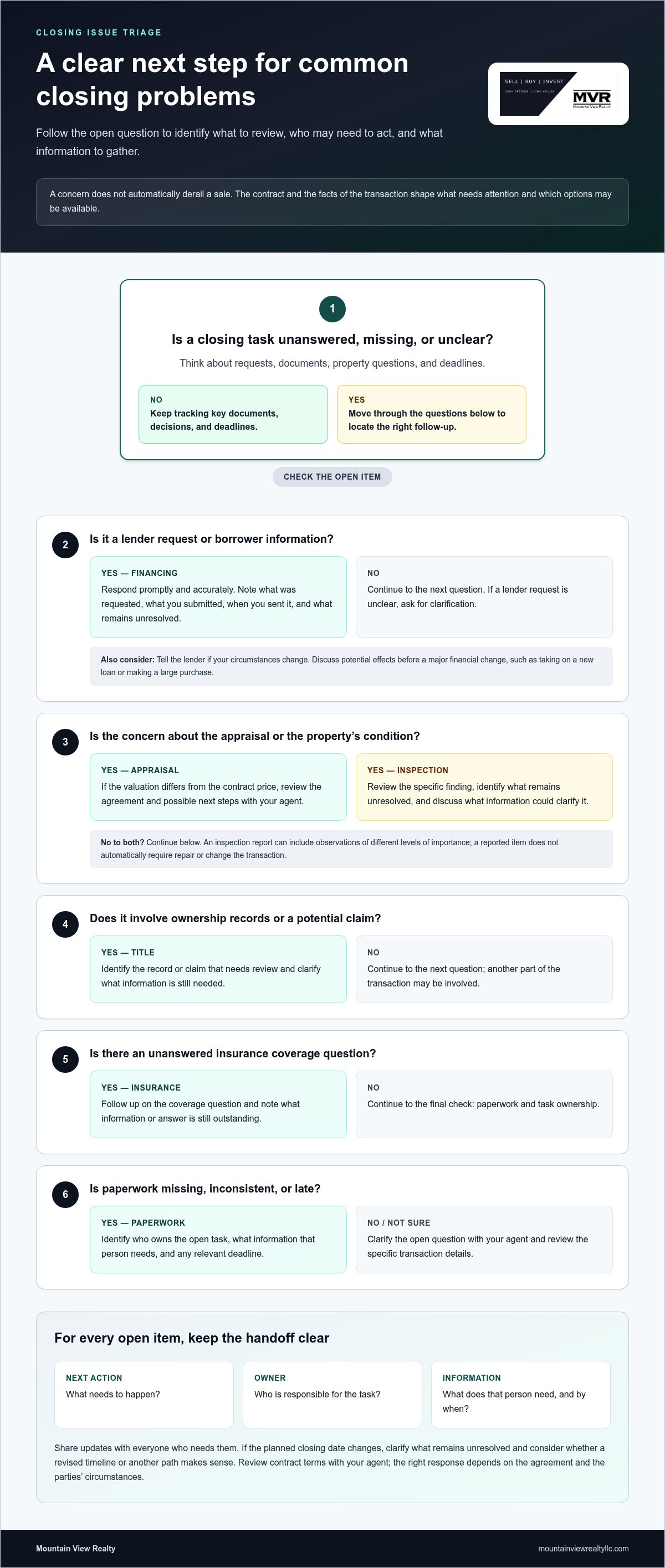
If closing is delayed: understand your options and choose a clear next step
A changed closing date can be unsettling, especially when a move, sale, or purchase is tied to other plans. A delay doesn’t automatically mean the transaction has failed. The reason for the delay, the parties’ decisions, and the contract terms all matter. Start by getting a clear picture of the open issue before deciding what to do next.
What to clarify when the original closing plan changes
Ask what remains unresolved, where the question came from, who is handling it, and when you can expect another update. Consider how the change may affect your plans, such as arranging a move, coordinating access, or planning around another property transaction. If a proposed change affects a contractual date or obligation, discuss it with the appropriate real estate professionals before agreeing to anything. For legal questions about your rights or the contract, speak with a qualified New Mexico attorney.
Once you understand the issue, consider which response fits the circumstances:
- Resolve an open item. If the delay relates to a missing document, unanswered question, or other outstanding task, identify who can address it and what information they need. Keep a written record of the request and response.
- Discuss a revised timeline. If more time may be needed, ask the transaction professionals to explain the proposed timing and any steps that must change. Don’t treat contract dates or obligations as changed until the parties receive appropriate guidance.
- Review alternatives. If the issue can’t be resolved as planned, ask your agent to help you understand possible paths in light of the agreement and your priorities. The available choices depend on the transaction, so don’t assume a particular outcome.
A buyer waiting on a lender’s decision and a seller planning a move may have different concerns when the same closing date shifts. Clarify which arrangements are affected and what information would help you make a sound decision. Keep communication specific: what has changed, what remains open, and who will provide the next update.
How a trusted real estate advisor can reduce uncertainty
A real estate advisor can help organize questions, explain how different choices may affect your plans, and keep communication focused. Robb Krautbauer brings 10 years of licensed-agent experience and 15 years of real estate investing experience to client decisions. His educational, tailored approach helps buyers and sellers compare options without pressure to choose a particular path.
Clear advice won’t control a lender’s decision or guarantee a closing date. It can help you separate confirmed information from assumptions and decide what to address next. That’s a useful foundation for working through common closing problems and how to avoid them, including situations where the original plan needs to change.
If you’re weighing a real estate decision in the Albuquerque area, Mountain View Realty LLC can help you think through your options. A guide to choosing an Albuquerque real estate agent can also help you consider the kind of support that fits your needs.
Move forward with a clear plan
A closing date is one part of a larger transition. Whether you’re coordinating a move, planning a sale, or preparing for a purchase, a clear next step can help you make decisions with more confidence. The practical value of understanding common closing problems and how to avoid them isn’t a perfect transaction. It’s knowing what needs attention, who can help answer the question, and how to adjust thoughtfully when plans change.
Keep your priorities visible as you move forward. A well-timed conversation can help you understand your options and decide what works for your circumstances, without pressure to choose a particular path.
With the right guidance, you can take the next step at a pace that feels informed and manageable.
Frequently Asked Questions
Can a home closing be delayed because of financing?
Yes. A financing question can affect the expected date while the lender reviews the file. Ask whether the open question concerns information from you, a property detail, or another part of the review, and what status update the lender can provide. This helps you understand what is still being assessed without guessing at the outcome. Your agent can help keep transaction communication organized, while the lender answers loan-specific questions.
What happens if the appraisal comes in below the purchase price?
There isn’t one automatic outcome. The buyer and seller can consider the available information and the choices allowed by their agreement and financing. For example, the parties may want to understand which property features or comparable sales informed the valuation before discussing next steps. Your agent and lender can explain transaction considerations. Consult a qualified New Mexico attorney if you need advice about legal rights or obligations.
Can a seller refuse to make repairs after an inspection?
A seller’s response depends on the signed agreement and any later written changes. A buyer’s request and a seller’s response are separate from an agreed change to the contract, so make sure any decision is recorded through the process the parties are using. Don’t treat a conversation as a final agreement. For questions about legal duties or remedies, ask a qualified New Mexico attorney to review the relevant documents.
How can I verify closing wire instructions safely?
Confirm instructions with the intended recipient through a phone number you obtained independently, and verify the recipient and account details before sending funds. Don’t use contact information supplied only in a message announcing a change. If you’ve already sent a transfer and suspect the instructions were fraudulent, contact your financial institution and transaction professional promptly. Keep a record of whom you contacted and when, without sharing account details broadly.
What if a title issue appears just before closing?
Ask for a plain-language description of the specific record or question, and clarify whether a document or further review is still outstanding. If a name variation, prior ownership record, or estate-related document is involved, don’t guess which paperwork will address it. The title professional can explain the record under review; your agent can help keep relevant parties informed. The effect on timing depends on the facts and contract, and legal questions belong with a qualified New Mexico attorney.
Should I cancel a move if closing is delayed?
Not solely on an estimate that hasn’t been confirmed. Before changing plans, find out whether the expected date has actually shifted and what update is still pending. Review the terms for any moving, storage, or temporary-arrangement reservations, and consider which plans can be adjusted without a major commitment. The right choice depends on your circumstances. Ask your agent about transaction updates and consult the appropriate professional about contract or financial questions.
Who should I contact first when a closing problem comes up?
Start with the person who can explain the source of the issue, then share relevant updates with your agent if the matter may affect other parts of the transaction. A lender can clarify a loan review question, while a title professional can explain a record under review. If several people need to act, your agent can help coordinate communication. For legal interpretation, speak with a qualified attorney. This focused approach helps you address common closing problems and how to avoid them.

Article by
Robb Krautbauer
Robb Krautbauer is the Owner and Qualifying Broker of Mountain View Realty, serving Albuquerque, Rio Rancho, Santa Fe, and surrounding New Mexico communities. With more than a decade of real estate experience, Robb specializes in luxury homes, strategic home marketing, and helping homeowners navigate important life transitions with confidence.
Known for combining luxury-level marketing, AI-powered technology, and innovative selling strategies, Robb helps clients maximize their home's value while creating a smooth, personalized selling experience. Whether assisting luxury homeowners, retirees, families downsizing, or real estate investors, his focus is always on delivering expert guidance, honest advice, and exceptional results.
When he's not helping clients achieve their real estate goals, Robb enjoys studying market trends, emerging technology, and investment strategies that keep Mountain View Realty at the forefront of the industry.
Disclaimer
**Disclaimer:** The information provided in this article is for general educational purposes only and should not be considered legal, tax, financial, or professional advice. Real estate laws, market conditions, and regulations change over time and may vary based on your individual circumstances. Before making any real estate decision, consult with qualified legal, tax, or financial professionals. If you have questions about buying or selling real estate in New Mexico, contact Mountain View Realty for guidance specific to your situation. © 2026 Mountain View Realty. All rights reserved. The content on this website may not be reproduced without written permission.


