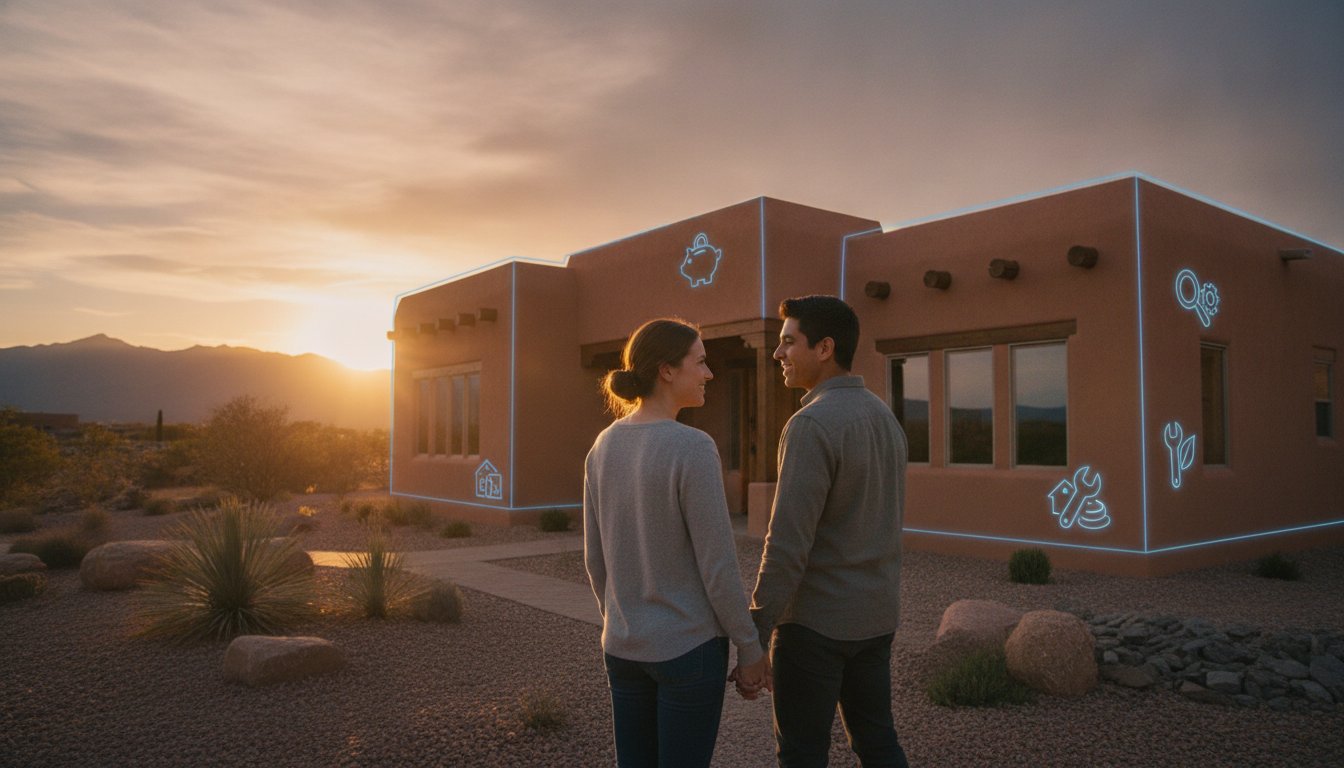
Hidden Costs of Buying a Home in Albuquerque: A 2026 Buyer’s Checklist
URL Slug: hidden-costs-buying-home-albuquerque-2026
Did you know that the property tax bill you see on a current Albuquerque listing could nearly double the year after you move in? In 2026, many buyers are finding that the sticker price is just the beginning of their financial story. It's completely normal to feel a bit of anxiety about the unknown fees waiting at the closing table. You've worked hard for your down payment. The last thing you want is a surprise expense that drains your savings before you even unpack.
We're here to ensure that doesn't happen. This guide uncovers the hidden costs of buying a home in Albuquerque, focusing on the specific transactional, structural, and geographic expenses that often catch people off guard. We'll explore the nuances of Bernalillo versus Sandoval County tax assessments and the unique maintenance requirements of high-desert homes. By the end, you'll have a comprehensive budget and a strategic plan to protect your investment equity from day one. Let's look at what you actually need to close with confidence.
Key Takeaways
- Understand the specific transactional fees in New Mexico, including how Gross Receipts Tax impacts your professional service costs at the closing table.
- Learn why climate-specific infrastructure like stucco and evaporative cooling requires a specialized inspection to avoid expensive post-purchase repairs.
- Navigate the "Lightning" effect of property tax reassessments to accurately budget for your 2026 tax bill in Bernalillo and Sandoval Counties.
- Identify the hidden costs of buying a home in Albuquerque to build a comprehensive budget that protects your investment equity from day one.
- Discover how strategic programs like Home Trade-In can simplify your transition and mitigate the logistical expenses of moving in the high desert.
The Transactional Layer: Closing Costs Specific to New Mexico
The moment your offer is accepted, the focus shifts from finding the right property to finalizing the numbers. While New Mexico is one of the few states without a statewide real estate transfer tax, other line items quickly add up. Most buyers in the Albuquerque metro should budget between 2% and 5% of the purchase price for their final settlement. On a $350,000 home, this means having between $7,500 and $12,500 ready at the closing table. Gaining a clear understanding closing costs before you sign the initial contract is the best way to protect your liquid capital.
To better understand the financial landscape of your move, watch this helpful video:
The following table provides a breakdown of the typical transactional expenses you will encounter during the closing process in Bernalillo County.
| Fee Category | Estimated Cost (2026) |
|---|---|
| Loan Origination Fee | 0.5% - 1.0% of loan amount |
| Home Appraisal | $400 - $700 |
| Home Inspection | $300 - $500 |
| Recording Fee (Bernalillo County) | $25.00 |
| Total Buyer Closing Costs | 2% - 5% of purchase price |
Lender Fees and Pre-Paid Items
In the 2026 interest rate environment, lender charges remain a primary component of the hidden costs of buying a home in Albuquerque. You'll likely see loan origination fees ranging from 0.5% to 1% of your total loan amount. Beyond the loan itself, you must account for "pre-paids." These are upfront payments for property taxes, homeowners insurance, and daily interest that accrues from your closing date to the end of the month. Most local lenders also require an escrow cushion; this is a reserve of approximately two months of tax and insurance payments held in your account to ensure future bills are covered without delay.
New Mexico Specific Transaction Fees
New Mexico has a unique tax structure that impacts professional services. The Gross Receipts Tax (GRT) is often applied to items like home inspections or appraisals. In high-value areas like Sandia Heights, appraisals can be more complex due to the custom nature of the homes, often costing between $400 and $700. Title company search and settlement fees are also standard, along with a $25 recording fee for documents in Bernalillo County. These costs are part of the essential due diligence that protects your investment.
It's vital to choose a real estate agent in Albuquerque who meticulously audits these settlement statements. A local expert ensures that you aren't overpaying for services and that every credit you're owed is correctly applied. This level of oversight turns a potentially stressful transaction into a seamless transition, allowing you to focus on your move rather than the math.
Structural Surprises: Albuquerque Climate and Infrastructure Costs
Buying in the Southwest requires looking past the aesthetic of adobe-style walls. A standard home inspection is essential, but it rarely covers the specialized systems unique to our region. To truly protect your equity, you need to account for the structural hidden costs of buying a home in Albuquerque that standard checklists often overlook. These expenses are often tied to how a property handles our intense sun and high-desert environment.
The Cooling System Dilemma
Many homes in the metro area still utilize evaporative coolers, commonly known as swamp coolers. These systems require seasonal maintenance, including a spring startup and a fall shutdown, adding a recurring annual expense. If you're looking at a home without refrigerated air, budgeting for a conversion is a smart move. In 2026, converting to high-efficiency refrigerated air typically costs between $7,500 and $16,000 depending on the home's size and existing ductwork. Modern refrigerated air has become a non-negotiable standard for luxury resale value in neighborhoods like Sandia Heights and Corrales.
Desert-Specific Exterior Maintenance
Southwestern architecture brings its own set of upkeep requirements. Stucco is beautiful but requires vigilance. Minor "spider cracks" can lead to moisture intrusion if ignored. Remediation for small cracks can cost between $500 and $1,500, while a full resurface is a much larger investment. Similarly, the flat roofs common in modern builds often use TPO or torch-down systems. These need regular inspections to ensure the seals remain intact against the intense New Mexico sun. Even xeriscaping, often marketed as "maintenance-free," requires periodic drip system repairs and rock replenishment to maintain curb appeal.
Don't forget the systems beneath the surface. For those eyeing historic estates in the North Valley, a sewer scope is an essential "extra" to check for root intrusion from mature cottonwoods. Radon testing is also highly recommended in certain pockets of the city. While these inspections add a few hundred dollars upfront, they prevent thousands in surprise repairs later. Managing these structural realities is just as important as understanding New Mexico property taxes when building your long-term budget. If you're unsure which inspections your specific property needs, consulting with a local expert can provide the clarity you need to move forward safely.
By planning for these structural hidden costs of buying a home in Albuquerque, you ensure your transition is as smooth as possible. Sophisticated buyers know that the true value of a home isn't just in its purchase price, but in its long-term structural integrity. Taking an investor's eye to these details now will protect your equity for years to come.
The Geographic Variable: Taxes and HOAs by Neighborhood
Location determines more than just your view of the Sandias; it dictates your long-term carrying costs. One of the most significant hidden costs of buying a home in Albuquerque is the variation in tax assessments and neighborhood-specific fees. Depending on which side of a county line you land on, your monthly obligation could shift by hundreds of dollars. Sophisticated buyers look beyond the listing price to analyze the mill levy and association structures that impact their equity over time.
Understanding New Mexico Property Taxes
New Mexico property tax law contains a specific provision that often surprises out-of-state buyers. While the state limits how much an existing owner's property value can increase for tax purposes annually, this 3% cap disappears the moment a property is sold. This phenomenon, often called "Tax Lightning," means your first-year tax bill will be reassessed at the "current and correct" market value. You cannot rely on the seller's current tax bill to estimate your own. In Bernalillo County, the effective tax rate sits between 0.84% and 0.90% of the property's assessed value. Remember that in New Mexico, your taxable value is calculated as one-third of the appraised market value.
Strategic buyers in Placitas or Corrales must also account for county-specific mill levy rates. By mid-2026, the median home price in Rio Rancho surpassed Albuquerque's, reaching roughly $390,000. This shift in market dynamics makes it even more important to verify whether a property sits in Bernalillo or Sandoval County. A home in the North Valley may have a vastly different tax profile than a similar custom build just a few miles away in Rio Rancho, even if the purchase prices are identical.
HOA and PID: The Monthly "Hidden" Costs
Neighborhood associations and special districts add another layer to your budget. In 2026, average HOA fees in Albuquerque saw a 4.2% increase, with single-family home dues averaging around $110 per month. However, in luxury enclaves like Tanoan or High Desert, these fees can climb much higher to cover gated security and private amenities. Conversely, older established areas like Sandia Heights may offer lower association costs but fewer shared services. It's essential to review the Covenants, Conditions, and Restrictions (CC&Rs) before you commit to a purchase.
You should also check for a Public Improvement District (PID) or a Tax Increment Development District (TIDD). These are common in newer master-planned communities like Mariposa. A PID is an additional assessment used to pay for the neighborhood's initial infrastructure, such as roads and sewer lines. It functions as a second property tax and can stay with the land for decades. Factoring these districts into your math is vital when exploring home selling options in Albuquerque, especially if you're planning a trade-in to a newer area. Understanding these geographic variables ensures you're making a move that supports your financial goals rather than straining them.
Post-Closing Realities: Moving and Utility Deposits
The relief of signing the final document at the title company is often followed by a flurry of logistical tasks. Planning for the hidden costs of buying a home in Albuquerque means looking beyond the mortgage payment to the practicalities of day-one ownership. In the high desert, these expenses range from utility connection fees to climate-specific home preparations. Budgeting for these items early helps maintain your peace of mind during a busy life transition.
Local Utility and Service Deposits
Setting up your new household involves several small but cumulative fees. Public Service Company of New Mexico (PNM) charges a connection fee of $19.00 plus tax; new customers may also face a deposit based on the property's previous high bills. New Mexico Gas Company requires a connection fee of $38.00 if the service is already on, or $63.00 for a new start. While the Albuquerque Bernalillo County Water Utility Authority (ABCWUA) does not charge a deposit or connection fee, those moving to Rio Rancho or Sandoval County should budget for separate trash and recycling account setups. Most utility transfers in the Albuquerque metro area require a lead time of at least three to five business days to avoid service interruptions.
Initial Home Security and Efficiency Upgrades
Security and energy efficiency are top priorities for 2026 buyers. Many homeowners choose to rekey all exterior locks immediately, which typically costs a few hundred dollars depending on the number of entry points. If you're moving into a custom home neighborhood like Sandia Heights, you might also consider upgrading to smart thermostats to manage cooling costs more effectively. Window treatments are another major expense that catches luxury buyers off guard. Homes with expansive desert views often require specialized UV-rated shades to protect flooring and artwork from intense New Mexico sunlight. These custom installations can easily reach several thousand dollars for a large property.
Don't forget the exterior of the home. Initial pest control is a wise investment to manage the local ecosystem of scorpions or centipedes that may have moved in while the house was vacant. You should also plan for a "landscaping refresh" to ensure your drip system is functioning correctly before the summer heat arrives. These small proactive steps protect your equity by preventing larger maintenance issues down the road.

Strategic Financial Planning: Protecting Your Equity
Navigating the hidden costs of buying a home in Albuquerque requires more than a simple savings account; it demands a strategic mindset. While most buyers focus on the aesthetics of a property, we look at every house through an investor’s eye. This means auditing the major systems mentioned earlier, such as the stucco, roof, and HVAC, to identify potential "equity-burners." Protecting your equity starts with acknowledging the hidden costs of buying a home in Albuquerque before you ever reach the closing table. Identifying these variables early allows you to negotiate effectively and safeguard your liquid capital.
Leveraging Strategic Transaction Paths
One of the most effective ways to manage your financial transition is by choosing the right selling path for your current home. Understanding the difference between a home trade-in vs traditional sale in Albuquerque can significantly change your cash-to-close requirements. For example, our Home Trade-In program allows you to buy your next property before selling your current one. This eliminates the stress of a double move and the associated carry costs. If speed is your priority, CashOffer+ provides a direct route that simplifies the entire process, ensuring you have the liquidity needed to cover those day-one expenses without draining your reserves.
The Trusted Advisor Approach
Robb Krautbauer’s approach is built on providing the information you need to hear, not just what you want to hear. We don't just help you sign a contract; we help you build a five-year equity protection plan. This plan accounts for the long-term maintenance cycles of Southwestern architecture. It ensures you aren't caught off guard by the "Tax Lightning" or infrastructure assessments discussed in previous sections. Our goal is to act as your strategic partner, offering a diverse menu of solutions tailored to your individual needs. We provide a plan for your next move with zero pressure.
Secure Your Equity with a Strategic Plan
Buying a property in the High Desert is a sophisticated financial decision that requires looking far beyond the initial listing price. By accounting for property tax resets and the specific maintenance needs of Southwestern architecture, you ensure your investment remains an asset rather than a burden. We specialize in identifying the hidden costs of buying a home in Albuquerque so you can move forward with absolute confidence.
Robb Krautbauer brings 15 years of investment experience and 10 years as a licensed New Mexico agent to every transaction. From managing the marketing of $1.7M luxury estates to helping families transition into custom homes in Sandia Heights, our focus is always on your long term peace of mind. You deserve a partner who prioritizes your equity protection through every step of the process.
Grab a time on my calendar, no pressure, just a plan for your next move.
Your next transition should be defined by clarity and empowerment. We're ready to help you navigate the 2026 market with ease and local expertise. Let's make sure your move is a successful one.
Robb Krautbauer, Owner & Qualifying Broker
Frequently Asked Questions
What are the typical closing costs for a buyer in Albuquerque?
Buyers in the Albuquerque metro should expect to pay between 2% and 5% of the home's purchase price in closing costs. On a $350,000 property, this totals between $7,500 and $12,500. These fees cover loan origination, title search, and pre-paid items like property taxes and homeowners insurance. Understanding these hidden costs of buying a home in Albuquerque early helps you manage your liquid capital without unnecessary stress during the transition.
Does New Mexico have a transfer tax on real estate?
New Mexico does not have a statewide real estate transfer tax. This is a significant benefit for local buyers, as it keeps total closing costs lower than in many other states. While you won't face this specific tax, you should still budget for the standard Gross Receipts Tax (GRT) applied to professional services like inspections and appraisals. This tax is part of the transactional layer unique to our local market.
How much should I budget for a swamp cooler to AC conversion in 2026?
Converting from an evaporative swamp cooler to high-efficiency refrigerated air typically costs between $7,500 and $16,000 in 2026. The final price depends on the size of your home and whether your existing ductwork requires upgrades to handle the increased airflow. While swamp coolers are cheaper to maintain seasonally, refrigerated air has become a standard requirement for maintaining luxury resale value in neighborhoods like Sandia Heights and Corrales.
Why did my Albuquerque property taxes go up so much after I bought the house?
Your property taxes likely increased due to the "Tax Lightning" effect, where the 3% annual assessment cap resets upon a change in ownership. In New Mexico, the county reassesses the property at its current market value during the first year after a sale. This means your bill is based on what you paid for the home, not the previous owner's discounted rate. It's a critical factor to include in your long-term budget.
Are home inspections more expensive in Albuquerque than in other cities?
Standard home inspections in Albuquerque generally cost between $300 and $500, which is consistent with national averages. However, the unique architecture of the Southwest often requires specialized add-ons. You should budget for sewer scopes in the North Valley or stucco inspections for custom builds. These additional checks are some of the hidden costs of buying a home in Albuquerque that protect your equity from expensive structural surprises after you move in.
What is a PID fee and which Albuquerque neighborhoods have them?
A Public Improvement District (PID) fee is an additional assessment used to fund neighborhood infrastructure like roads and utilities. It functions as a second property tax and is common in newer master-planned communities such as Mariposa or portions of Rio Rancho. These fees can add hundreds of dollars to your annual carrying costs. Always review the title commitment to see if a PID or Tax Increment Development District (TIDD) applies to your property.
Is homeowners insurance higher in New Mexico due to wildfire risks?
Homeowners insurance premiums in Albuquerque average between $1,488 and $2,375 annually for a $300,000 dwelling policy. While wildfire risk can impact rates in foothills communities like Sandia Heights or Placitas, it's not the only factor. Local insurers also look at roof age and the presence of specialized systems. We recommend getting a quote early in the due diligence period to ensure the property fits within your monthly mortgage and escrow budget.
How can I avoid paying double moving costs when buying and selling in ABQ?
You can avoid the logistical stress and expense of double moving by utilizing our Home Trade-In program. This path allows you to purchase and move into your next home before you sell your current one. It eliminates the need for temporary storage or short-term rentals, which are common expenses in traditional transactions. Our goal is to simplify the process and protect your equity by providing a seamless transition between properties.

Article by
Robb Krautbauer
Robb Krautbauer is the Owner and Qualifying Broker of Mountain View Realty, serving Albuquerque, Rio Rancho, Santa Fe, and surrounding New Mexico communities. With more than a decade of real estate experience, Robb specializes in luxury homes, strategic home marketing, and helping homeowners navigate important life transitions with confidence.
Known for combining luxury-level marketing, AI-powered technology, and innovative selling strategies, Robb helps clients maximize their home's value while creating a smooth, personalized selling experience. Whether assisting luxury homeowners, retirees, families downsizing, or real estate investors, his focus is always on delivering expert guidance, honest advice, and exceptional results.
When he's not helping clients achieve their real estate goals, Robb enjoys studying market trends, emerging technology, and investment strategies that keep Mountain View Realty at the forefront of the industry.
Disclaimer
**Disclaimer:** The information provided in this article is for general educational purposes only and should not be considered legal, tax, financial, or professional advice. Real estate laws, market conditions, and regulations change over time and may vary based on your individual circumstances. Before making any real estate decision, consult with qualified legal, tax, or financial professionals. If you have questions about buying or selling real estate in New Mexico, contact Mountain View Realty for guidance specific to your situation. © 2026 Mountain View Realty. All rights reserved. The content on this website may not be reproduced without written permission.


