
House Not Selling in Albuquerque: 2026 Guide
A price cut isn’t always the right first move when your Albuquerque home isn’t selling. If you’re weighing what to do if your house isn't selling in Albuquerque, start with the evidence in your listing: showing activity, buyer comments, and competing homes can help identify what deserves attention.
It’s understandable to worry that changing your price could reduce your equity unnecessarily. But sticking with a plan that no longer fits your priorities can also cost time and effort. A thoughtful review can help you consider your choices without reacting to uncertainty.
This guide explains how to assess possible reasons your home is sitting and compare practical next steps. You’ll learn how to review your listing, consider focused adjustments, and weigh continuing to market your home against other selling paths. The goal is a decision that fits your property and priorities, not a rushed change.
Key Takeaways
- Use showing activity, repeat visits, buyer comments, and offers to help pinpoint what may be holding back your sale.
- Compare your home with relevant closed sales, active competition, and pending listings before deciding whether price needs attention.
- Review photos, listing details, showing access, and marketing to spot presentation issues that may be limiting buyer interest.
- Follow an ordered reset plan to make focused, evidence-based adjustments instead of changing several parts of your strategy at once.
- Compare a traditional listing with alternative selling paths to see which approach may fit your priorities.
What to Do If Your House Isn't Selling in Albuquerque: Start With the Listing Evidence
Waiting for a sale can be stressful, especially when you’re unsure whether to change the price, prepare the home, or rethink the plan. Before making a move, review how buyers are responding. If you’re asking what to do if your house isn't selling in Albuquerque, start with the signals your listing is already producing.
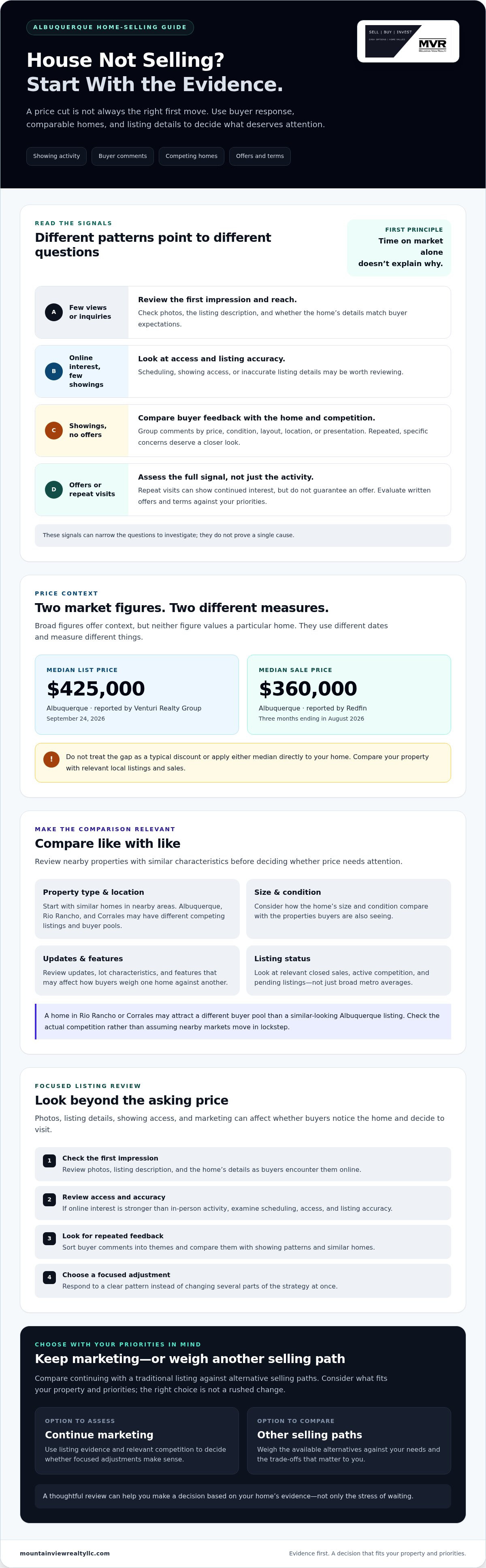
Time on market alone doesn’t explain why a home hasn’t sold. Compare your listing with similar properties by location, condition, size, and features. Albuquerque, Rio Rancho, and Corrales can have different competing listings and buyer pools, so metro-wide averages may not show how your home compares with its most relevant competition.
This video offers a broader perspective on common reasons a home may not attract an offer:
What does low showing activity tell you?
Compare listing views, inquiries, and in-person showings if your agent or listing platform provides reliable data. Low online interest may point to a first-impression issue, such as the photos, listing description, or a mismatch between the home’s details and buyer expectations. Strong online interest but few showings may prompt a review of access, scheduling, or listing accuracy.
Showings without offers raise a different question: what are buyers noticing during visits? Repeat visits can signal continued interest, but they don’t guarantee an offer. Track each signal separately rather than treating all activity as proof that the price is right or wrong.
What can buyer feedback reveal?
Group comments by theme: price, condition, layout, location, or presentation. A repeated, specific concern deserves a closer look; one person’s preference may not represent the wider market. Review feedback alongside comparable homes and showing patterns before deciding what to change.
Also note written offers, or their absence. An offer can reveal how a buyer values the home and which terms matter to them. No offers after visits narrows the questions to investigate, but doesn’t establish a single cause. Real estate economics helps explain how supply, demand, and buyer choices affect sales, but your decision should rest on relevant local evidence.
- Few views or inquiries: Review the listing’s first impression and reach.
- Showings without offers: Compare repeated feedback with the home’s condition and competing properties.
- Offers with different terms: Evaluate the proposal against your priorities and the other available evidence.
These signals can help narrow the likely problem, but they don’t prove it. A focused listing review can make the next step clearer.
Is Price the Problem? Compare Your Albuquerque Listing With the Right Homes
A price reduction isn’t automatically the first or only fix. Before changing your asking price, check whether comparable homes support the current figure and whether the listing is reaching buyers. If interest is limited, presentation or access may also need attention. A price change is more informed when it responds to a clear pattern, not just the discomfort of waiting.
Broad market figures can offer context, but they can’t value a particular property. Venturi Realty Group reported an Albuquerque median list price of $425,000 on September 24, 2026. Redfin reported a median sale price of $360,000 for the three months ending in August 2026. These figures have different dates and measure different things, so don’t treat the gap as a typical discount or apply either number directly to your home.
Which comparable homes should you examine?
Start with similar property types in nearby locations. Compare size, condition, updates, lot characteristics, and features that could affect how a buyer weighs one home against another. A Corrales property or a home in Rio Rancho may attract a different buyer pool than a similar-looking Albuquerque listing. Check the actual competing properties rather than assuming nearby markets move in lockstep.
Keep the evidence in separate categories:
- Closed sales: Completed transactions that show what buyers paid. Note the sale date and source.
- Active listings: Current asking prices. They show what sellers are seeking, not what buyers have agreed to pay.
- Pending listings: Homes under contract. Their final sale prices may not yet be available, so treat them as signs of competition, not confirmed values.
For broader context, the City of Albuquerque provides information about Albuquerque's housing shortage. That citywide context may help explain the local housing picture, but it doesn’t establish the right price for an individual home.
When should a seller consider a price adjustment?
Consider one when weak interest, repeated buyer feedback, and relevant comparable evidence point in the same direction. Before deciding, review your equity priorities and estimate how a change could affect your likely net proceeds. A comparable sale is useful evidence, not a promise that your home will sell for the same amount. Condition, features, timing, and terms can differ.
If you’re weighing what to do if your house isn't selling in Albuquerque, ask for a dated comparison that separates verified sales data from professional interpretation. A candid listing review can help clarify the evidence before you decide whether to adjust price, presentation, or another part of your selling plan.
Presentation, Marketing, or Access: Find What Is Holding Back Your Listing
Buyers experience your home in stages. They first see a photo or listing detail, then decide whether to schedule a showing, and finally judge the property in person. If interest fades at any point, review the full experience before assuming the home needs major work.
Start with the facts buyers see. Check that photos are clear, the description matches the property, and important features are easy to find. Confirm that details such as room uses, updates, and lot features are accurate. If buyers repeatedly mention an issue, use that feedback to guide a focused response. Don’t default to renovations without evidence that the work would address a real concern.
Does the listing make the home’s value clear?
Review the photo sequence, description, and floor-plan information together. The first images should represent the home well, while the written details should explain features that may not be obvious in a photo. Describe the property truthfully, including relevant outdoor space or a distinctive layout, without overstating its benefits. For a unique home, consider whether video, drone photography, or a dedicated property website would help buyers understand it.
Local details can add context when they fit the property and likely audience. Mention nearby amenities or access only when the information is accurate and relevant. A polished listing should help the right buyer picture the home, not promise a lifestyle the property can’t deliver.
Are showings and buyer follow-up working smoothly?
Look for practical barriers: narrow scheduling options, unclear access instructions, or slow responses to buyer questions. Ask whether showing requests are being handled promptly and whether feedback reaches you in time to act on repeated concerns. One comment may reflect personal preference; several similar, specific comments may point to something worth addressing.
- Before a showing: Confirm the access process and make sure the home is ready to view.
- After a showing: Record feedback by theme, such as condition, layout, or presentation.
- Before changing the plan: Connect any proposed preparation or marketing change to a clear observation.
If a marketing change or repair requires spending, consider how it fits your expected net proceeds and personal circumstances. The IRS explains tax rules that apply when you sell a home; consult a qualified tax professional about how those rules relate to your situation.
If you’re considering what to do if your house isn't selling in Albuquerque, remember that marketing earns attention, while clear access and timely follow-up help buyers evaluate the home. A listing and marketing review can help identify which part of that experience may need attention.
House Not Selling: A Practical Reset Plan
A useful reset begins with a clear record, not a sudden change. If you’re deciding what to do if your house isn't selling in Albuquerque, return to your original goals: your preferred timing, acceptable terms, and priorities for net proceeds. Then compare those goals with what the listing has produced so far.
How can you reset the current listing strategy?
Review listing data, showing feedback, written offers, and changes in current competition together. Use recent, relevant comparisons, and note each source and date. Separate what you can verify, such as showing activity or a completed sale, from professional judgment about what those signals may mean.
Next, identify the clearest issue. A practical sequence might look like this:
- Check the evidence: Summarize activity, feedback, and new competing listings since the last review.
- Name the likely barrier: Decide whether the strongest evidence points to price, presentation, marketing exposure, or showing access.
- Choose one focused change: When practical, adjust the part of the strategy most closely tied to that evidence.
- Set a review point: Agree with your agent when to assess the change, based on your circumstances and the activity you can reasonably track.
Changing one element at a time can make it easier to understand what affected buyer response. If several changes happen together, you may have less clarity about which one mattered. Keep a simple record of what changed, when it changed, and what you’ll review next. A review point is a planning tool, not a promise that a sale will happen by a certain date.
When might preparation or a different marketing approach help?
Match preparation to repeated feedback and the priorities of likely buyers. If comments repeatedly identify a maintenance issue, consider whether addressing it is more useful than a broad renovation. If buyers seem unable to understand a distinctive layout or property feature from the listing, clearer photography, video, or other marketing may help tell the home’s story. Choose tools that fit the property and your objectives, rather than adding them simply because they’re available.
For homes with complex financial or personal considerations, include the likely net outcome in the review. The IRS’s guide to tax rules for home sales can help you identify questions to discuss with a tax professional. It doesn’t replace advice tailored to your circumstances.
A measured reset gives you a way to act without making a series of reactive changes. A strategy conversation can help organize the evidence and clarify possible next steps.
Keep Listing or Choose Another Albuquerque Home-Selling Path?
A listing that hasn’t sold doesn’t automatically mean you need a different kind of transaction. Consider whether a revised listing plan could address the evidence you’ve gathered, then compare that route with other options based on your priorities, property condition, privacy needs, and preferred timing.
How do you compare a revised listing with other sale options?
A traditional listing can continue with a focused change to price, presentation, exposure, or access. Other paths use different transaction structures and may suit different circumstances. Mountain View Realty LLC offers CashOffer+, Home Trade-In, Renovate & Sell, Sell & Stay, Short Sale, and List with a Twist. These are distinct options, and whether one fits depends on your situation and the specific terms available.
- CashOffer+: Ask how this option compares with continuing to seek buyers through a listing, including its terms and fit with your priorities.
- Home Trade-In: Explore whether this path aligns with your plans for another home and how the transactions would be structured.
- Renovate & Sell: Consider it if condition or buyer feedback raises preparation questions. Clarify the scope and possible effect on your net outcome.
- Sell & Stay: Ask whether its structure fits your housing needs and desired timing after a sale.
- Short Sale: If financial circumstances are driving your decision, discuss whether this option may apply.
- List with a Twist: Ask how its terms differ from a traditional listing and whether they fit your goals.
Compare market exposure, preparation needs, privacy, transaction structure, and likely proceeds. Don’t assume any option guarantees a particular price, timeline, or result. For a deeper comparison, review an Albuquerque home-selling options guide and discuss the terms of each path.
What should you ask before choosing your next move?
Ask what evidence supports the recommendation, what remains uncertain, and how the approach fits your equity goals, moving plans, privacy preferences, and timing. If you’re weighing what to do if your house isn't selling in Albuquerque, a clear explanation of the trade-offs can help you decide without rushing into a new structure.
Robb Krautbauer brings 15 years of real-estate investing experience and 10 years as a licensed agent. He can help you review the evidence and consider a next step that fits your circumstances.
Grab a time on my calendar, no pressure, just a plan for your next move
Robb Krautbauer
Owner & Qualifying Broker
Make Your Next Move With Clearer Information
A home that hasn’t sold calls for a careful review, not an automatic price cut. Let the evidence and your priorities guide the next step, whether that means refining your listing plan or exploring another selling path.
Mountain View Realty LLC offers several selling options, with suitability assessed around each seller’s circumstances. Robb Krautbauer combines 15 years of real-estate investing experience with 10 years as a licensed agent. The firm has helped 200+ families and investors across the Albuquerque metro.
You don’t have to decide everything at once. A focused conversation can help you move forward with greater clarity and confidence.
Robb Krautbauer
Owner & Qualifying Broker
Frequently Asked Questions
Is lowering the price the first thing I should do if my Albuquerque house isn’t selling?
Not necessarily. Before deciding what to do if your house isn't selling in Albuquerque, ask what outcome matters most to you and what the listing evidence supports. A price change may be worth discussing if relevant market comparisons and buyer response suggest a mismatch. If not, review other parts of the selling experience. Ask for the reasoning behind any recommendation and consider its effect on your priorities before making a change.
How long should a house stay on the market before I change the strategy?
There isn’t a fixed number of days that applies to every Albuquerque home. Instead, agree on a review point based on your plans and the signals you can track, such as changes in competing listings, showing activity, and buyer responses. Ask your agent what developments would prompt another discussion. This creates a property-specific decision point without relying on a general rule that may not fit your home or circumstances.
Can I relist my house with a different real estate agent?
You can explore changing representation, but review your current agreement and seek guidance from an appropriate professional about its terms before taking action. Then assess what you want a new working relationship to address. Ask how the proposed approach differs, what information will guide decisions, and how progress will be reviewed. A thoughtful choice should reflect your goals and experience, not pressure or a promise of a particular result.
What happens if my Albuquerque house gets showings but no offers?
It means buyers have chosen to visit but haven’t submitted an offer so far. Ask whether your agent can identify themes across the visits and whether any questions went unanswered. You might also review the showing experience from a buyer’s perspective, including access instructions and how clearly the home’s features are presented. Use consistent, specific feedback to shape a response, rather than treating one visitor’s preference as a firm verdict.
Should I make repairs or sell my Albuquerque house as-is?
There’s no universal answer. Consider whether a specific repair addresses a documented concern, how disruptive the work would be, and whether you prefer to sell without making that change. Ask for a clear description of the proposed work and its practical trade-offs. Improvements don’t ensure a higher sale price or quicker transaction, so base the decision on your home, resources, and plans rather than a blanket recommendation to renovate.
What are my options if I no longer want to continue with a traditional listing?
You can review a revised listing plan or ask about other transaction structures. Mountain View Realty LLC offers CashOffer+, Home Trade-In, Renovate & Sell, Sell & Stay, Short Sale, and List with a Twist. Each is distinct, and none should be assumed to fit every seller. Ask what the process and terms involve, what information is still needed, and how the option relates to your circumstances before choosing.
How can I tell whether my home is priced correctly in Albuquerque?
Ask for a property-specific review that explains how each comparison was selected and what differences may affect its relevance. Consider location, condition, size, and features, and distinguish completed transactions from homes still being marketed. A broad neighborhood figure can be useful context, but it can’t account for every property detail. The analysis should clarify what the available evidence suggests while recognizing that it can’t guarantee a buyer’s offer.
Grab a time on my calendar, no pressure, just a plan for your next move.

Article by
Robb Krautbauer
Robb Krautbauer is the Owner and Qualifying Broker of Mountain View Realty, serving Albuquerque, Rio Rancho, Santa Fe, and surrounding New Mexico communities. With more than a decade of real estate experience, Robb specializes in luxury homes, strategic home marketing, and helping homeowners navigate important life transitions with confidence.
Known for combining luxury-level marketing, AI-powered technology, and innovative selling strategies, Robb helps clients maximize their home's value while creating a smooth, personalized selling experience. Whether assisting luxury homeowners, retirees, families downsizing, or real estate investors, his focus is always on delivering expert guidance, honest advice, and exceptional results.
When he's not helping clients achieve their real estate goals, Robb enjoys studying market trends, emerging technology, and investment strategies that keep Mountain View Realty at the forefront of the industry.
Disclaimer
**Disclaimer:** The information provided in this article is for general educational purposes only and should not be considered legal, tax, financial, or professional advice. Real estate laws, market conditions, and regulations change over time and may vary based on your individual circumstances. Before making any real estate decision, consult with qualified legal, tax, or financial professionals. If you have questions about buying or selling real estate in New Mexico, contact Mountain View Realty for guidance specific to your situation. © 2026 Mountain View Realty. All rights reserved. The content on this website may not be reproduced without written permission.


