How to Get Mail at a New Address Before You Move
Your new home is ready, but your move-in date is still a week away. Where should an important letter go in the meantime? When move-in and mail-forwarding dates don’t line up, mail may reach your old address before you’re settled in the new one. Figuring out how to get mail at a new address before moving starts with planning the destination and timing separately.
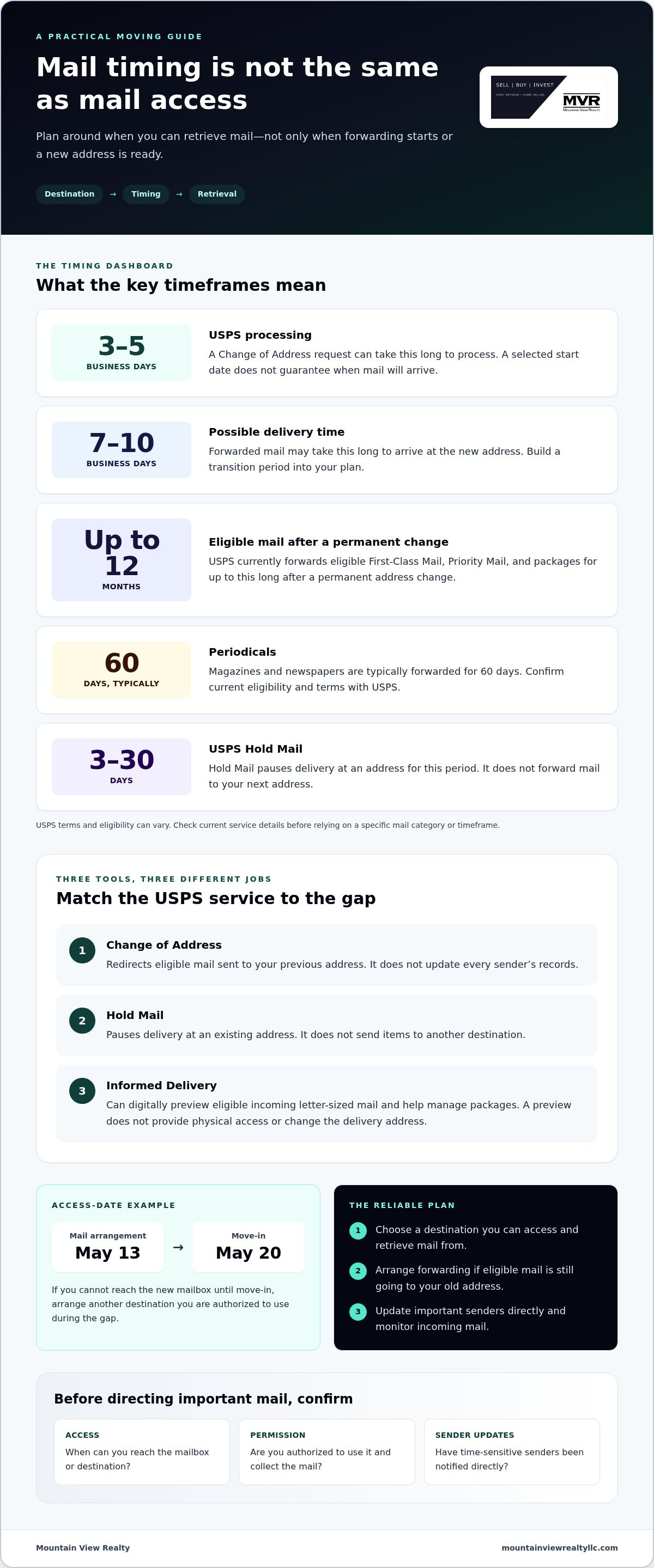
A USPS Change of Address request can help, but forwarding isn’t instant. USPS processing can take three to five business days, and mail may take seven to ten business days to arrive at the new address.
Build a more reliable plan by choosing a destination you can access, setting up forwarding at the right time, and updating senders directly. This guide explains when to use USPS forwarding, when an alternate mailing address may make more sense, and how to keep track of important correspondence during a move.
Key Takeaways
- To plan how to get mail at a new address before moving, choose a destination you can access and coordinate it with your move dates.
- USPS forwarding, Hold Mail, and Informed Delivery serve different purposes. Learn which option fits your transition.
- Compare a new mailbox, a trusted recipient, a PO Box, and a private mailbox based on access, privacy, and package needs.
- Use a five-step plan to organize your destination, USPS arrangements, sender updates, and delivery monitoring.
- Break the transition into tasks for before move-in, moving week, and after arrival to keep important mail on your radar.
How to Get Mail at a New Address Before Moving Day
Your next home in Albuquerque may be ready to receive mail before you’re ready to move in. The practical question is whether you can retrieve a letter if it arrives. A reliable plan matches the mail destination to the date you can access it, not just to the date you know the new address.
That distinction matters during a home transition. A postal address identifies where mail is sent; access determines whether you or someone you trust can collect it. The dates may not match. For example, your mail arrangement might begin on May 13, while your move-in date is May 20. If you can’t access the new mailbox until move-in, you’ll need another destination for that week.
What does receiving mail before moving actually require?
Mail needs a valid delivery destination and a practical way for you to retrieve it. Before directing important correspondence anywhere, confirm when mailbox access begins, who can collect items, and how they’ll reach you. Having an address does not automatically give you permission to enter a property or collect mail from someone else’s box.
If the home is part of a purchase or sale, coordinate mailbox access with the wider move schedule. Track the access date separately from the date you submit an address change or notify senders.
Which mail setup fits a move with overlapping dates?
When mail is still going to your previous address, USPS Change of Address forwarding can redirect eligible mail. It acts as a bridge, not a universal update to every sender’s records. If you can’t access the new home’s mailbox yet, consider a temporary mailing address you’re authorized to use, such as a trusted recipient’s address or a mailbox service. Choose a destination you can check and retrieve mail from reliably.
Senders may handle address changes differently from USPS, so review their instructions for time-sensitive items. These may include mail from banks, employers, medical offices, and subscription services. USPS Informed Delivery can help users preview incoming mail digitally, but a preview doesn’t give you physical access to a letter or package.
For most moves, the plan combines three actions: arrange forwarding for mail sent to your old address, use an alternate destination if the new mailbox isn’t accessible, and update important senders directly. The right mix depends on your access dates and the mail you expect. As you work out how to get mail at a new address before moving, write down when you can access your old mailbox, temporary destination, and new mailbox. Then decide where important correspondence should go at each stage.
Understand USPS Forwarding, Hold Mail, and Informed Delivery
USPS offers separate tools to redirect mail, pause delivery, and preview incoming items. Each solves a different problem. For a move, the key distinction is straightforward: only a Change of Address request redirects eligible mail to another address. Hold Mail pauses delivery at an existing address, while Informed Delivery helps you view information about eligible mail and packages.
Forwarding can bridge a move, but it doesn’t update every sender’s records. A bank, employer, medical office, or subscription service may have its own address-change process. For important correspondence, use forwarding as one part of the plan and update the sender directly. That gives the sender your new information instead of relying only on postal redirection.
When should you use USPS Change of Address?
Use Change of Address to redirect eligible mail sent to your previous address after an address transition. USPS offers permanent and temporary forwarding options, with different terms and limits. Before filing, check the current filing window, effective date, identity-verification steps, and mail categories covered. These details can affect when a request makes sense for your move.
The USPS Mail Forwarding Service page explains available forwarding options and how to submit a request. USPS says processing and delivery timing can vary, so allow for a transition rather than treating a selected start date as a guaranteed arrival date. Make a separate list of senders you need to notify directly.
Forwarding has limits. USPS currently forwards eligible First-Class Mail, Priority Mail, and packages for up to 12 months after a permanent address change. Periodicals such as magazines and newspapers are typically forwarded for 60 days. Temporary changes have their own duration rules. Confirm current eligibility and terms with USPS before relying on a specific type of mail being forwarded.
Can Hold Mail or Informed Delivery solve the timing gap?
Hold Mail pauses delivery to an address, such as your current home while you’re away. It doesn’t send mail to your next address. USPS currently allows a hold for 3 to 30 days, so check the service’s current eligibility and limits when planning. For a longer absence, consider whether forwarding or another destination better fits your dates.
Informed Delivery serves a different role. It lets eligible users digitally preview incoming letter-sized mail and manage packages, but it doesn’t change the delivery address or give you access to a physical item. It can help you notice that something is on the way, but it can’t ensure you can retrieve it. Review current USPS eligibility and coverage before depending on the service.
Match the tool to the problem: redirect eligible mail with Change of Address, pause delivery with Hold Mail, and monitor eligible items with Informed Delivery. Then contact important senders directly. If mail timing is one part of a larger Albuquerque-area home transition, you can also review home transition options as you organize the move.
Compare Ways to Receive Mail Before You Have the New Mailbox
Choosing a destination involves more than picking a convenient address. Consider when you can reach the mailbox, who has permission to collect mail, whether you expect packages, and how much privacy you need. A trusted recipient may be easiest for a few letters, while a separate mailbox can offer a more independent option during a longer gap.
Can you use the new home's address before moving in?
You may know the new home’s address before move-in, but that doesn’t automatically mean you can use or access its mailbox. Coordinate with the responsible owner, seller, landlord, or property contact before directing mail there. Agree on when mail can be delivered, who can retrieve it, and how it will reach you. Don’t assume items will be secure or available until you’ve arranged access.
Here’s how the main options compare:
- The new home’s mailbox: Convenient once you have permission and practical access. Confirm when you can collect mail, and consider whether packages can be received there before you take possession.
- A trusted recipient: A friend or family member may receive selected mail during the gap. Get their agreement first, and decide how they’ll notify you or pass items along. This can be personal and convenient, but it depends on their availability and willingness to handle packages.
- A USPS PO Box: This can provide a separate destination you can check directly, subject to current USPS terms, access arrangements, and identification requirements. USPS PO Boxes generally handle USPS-delivered items. Package acceptance from private carriers may depend on whether a location offers Street Addressing.
- A private mailbox: A private mailbox may provide a street-style address and package services, but features and rules vary by provider. Check which carriers it accepts, how you’ll access mail, and whether someone else can collect items for you.
When might a PO Box or private mailbox help?
A separate mailbox can be useful if you can’t access the new home yet or prefer not to send mail to a trusted person. Compare the address format, package handling, pickup hours, privacy, and any identification steps before choosing. The USA.gov Moving Guide also highlights address updates beyond USPS, a useful reminder when deciding which senders need your new mailing destination directly.
For how to get mail at a new address before moving, match the option to the mail you expect and the date you can access it. A letter-only plan may differ from one that must accommodate packages. Write down who can retrieve items and how you’ll receive them, especially if more than one address is involved.
If mail timing is part of a wider Albuquerque-area move, you can explore home transition options as you plan the next steps.
Set Up Your New-Address Mail Plan in Five Practical Steps
A short plan can make mail logistics easier to manage alongside the rest of a move. Start with three dates: when you leave your current home, when you can access the new mailbox, and any days when neither destination is convenient. Then decide where important mail should go during each part of the transition.
- 1. Confirm destination access. Write down when you can collect mail at your current address, new home, or alternate destination. If someone else will receive or retrieve items, agree on how they’ll notify you and pass them along.
- 2. Choose a mail arrangement. Match the destination to your access dates and the mail you expect. USPS forwarding may redirect eligible mail sent to your old address. An alternate mailing address can cover a period when you can’t reach the new mailbox.
- 3. Check USPS timing and terms. Before submitting a Change of Address or Hold Mail request, review current USPS filing instructions, eligibility, effective dates, and limits. The USPS forwarding guidance is the place to verify procedures. Use the official terms to guide your request, then coordinate them with your move dates.
- 4. Update senders directly. Make a list of organizations that send important or time-sensitive correspondence, then use each one’s address-update process.
- 5. Monitor delivery and follow up. Check the destinations you can access, review available mail notifications, and contact a sender if expected correspondence hasn’t arrived.
Which senders should you update directly?
Start with banks, insurers, healthcare providers, employers, and government agencies. Add financial accounts, services, or subscriptions that regularly send documents or replacement cards. Each organization may use a different process or update schedule, so don’t assume a postal request changes its records. Save a confirmation or note the date and method of each update.
A simple tracking list helps keep the task manageable. Record the sender, the date you requested the change, any confirmation received, and whether follow-up is still needed. If a sender provides separate mailing and residential address fields, read the instructions carefully so the information goes where you intend.
How can you reduce missed-mail risk during the overlap?
Check the old and new destinations during the transition when your access arrangements allow. USPS Informed Delivery can help monitor eligible incoming mail, but a preview isn’t proof that an item was delivered or collected. If an important letter or package doesn’t arrive as expected, contact the sender to ask about its status and confirm the address on file.
For how to get mail at a new address before moving, the practical sequence is to settle access first, coordinate USPS arrangements, update senders, and keep a record of follow-ups. That gives you a clear view of what’s been handled and what still needs attention.
Make a Low-Stress Mail Transition Part of Your Moving Plan
A dependable mail transition comes down to four decisions: choose a destination, confirm when you can access it, coordinate the timing, and update senders directly. Add these tasks to your moving plan rather than leaving them for moving day. Even for a move within Albuquerque, check current USPS procedures for the specific old and new addresses before submitting a request. Processing, eligibility, and mailbox access can affect the sequence.
Use this checklist to keep the plan visible and easy to update.
What should your before-move checklist include?
Before move-in, record your old and new addresses, move date, and the first date you can access the new mailbox. Track USPS requests, alternate destination arrangements, and direct sender updates as separate tasks. That way, you can see which steps are complete without assuming one change covers the others.
- Before move-in: Note the key dates and addresses. Choose where mail should go during any gap, confirm access arrangements, review current USPS guidance, and list the senders that need direct updates.
- Moving week: Keep your tracking list handy. Mark the date of each request, save confirmations where available, and check the old or alternate destination when access allows.
- After arrival: Confirm you can retrieve mail at the new home. Review expected correspondence, follow up with senders about important items that haven’t arrived, and set a reminder to review your mail arrangements again after settling in.
A tracking list can be simple: sender or task, date completed, confirmation received, and follow-up needed. Include the first date you can check each destination. This makes it easier to spot a gap, such as a sender update that’s still pending after you’ve left the old home.
How can mail planning support a larger home transition?
Mail is one detail in a broader household transition. Access, utilities, personal records, and move coordination also have their own dates and responsibilities. A shared calendar or moving file can keep these pieces together while giving each task a clear owner and next step.
If you’re selling a home in Albuquerque, include mail access and address updates in the same timeline as your other sale arrangements. If you’re coordinating a purchase and sale, comparing a home trade-in with other selling paths can help clarify how that transition is structured. Keep these real-estate decisions separate from USPS procedures, which you should verify through current postal guidance for the addresses involved.
A little preparation can make the overlap easier to manage. Choose a destination you can access, record the dates that matter, and use the checklist to close out each task before and after the move.
Plan Your Next Move With Confidence
A move is also a chance to make thoughtful decisions about what comes next. If you’re still working out how to get mail at a new address before moving, use the same planning mindset for the larger transition: set your priorities, map the dates, and choose the options that fit your household.
For Albuquerque-area homeowners weighing a sale, purchase, or both, experienced guidance can help bring the real-estate decisions into focus. Robb Krautbauer brings 10 years of licensed-agent experience and 15 years of real-estate investing experience. Mountain View Realty LLC has helped more than 200 families and investors across the Albuquerque metro.
When you’re ready to talk through your next move, you can review your options at your own pace.
With a clear plan in place, you can take the next step feeling more prepared and confident.
Frequently Asked Questions
Can I start receiving mail at my new address before I move in?
Yes, if mail can be delivered there and you have permission and a practical way to collect it. Before arranging delivery, confirm who controls the mailbox and when you can access it. For example, if you’re buying a home in Albuquerque, coordinate mailbox access with the appropriate property contact rather than assuming access begins when you receive the address. If access starts later, use an alternate destination in the interim.
How do I forward mail to a new address before moving?
Submit a USPS Change of Address request through the official USPS Change of Address page or follow USPS instructions for filing in person. Choose the move type and requested start date that match your situation, and review current filing requirements before submitting. Keep the confirmation details. If your move date changes, review USPS guidance for managing the request and update important senders separately.
Can I use a PO Box before moving to my new home?
Yes, a PO Box may give you a separate mailing destination before you move, if you can rent and access one under current USPS requirements. Consider whether the Post Office location is convenient to your routine and whether you can check it regularly. Before directing mail there, confirm the required application details, identification, box access arrangements, and how the address should be written for the senders you plan to update.
What happens if I change my address too early?
If your forwarding request takes effect before you can reach the new destination, eligible mail may be redirected while you’re unable to collect it. Before selecting a start date, compare it with your mailbox-access date and arrange another destination for any gap. If you’ve already submitted a request and your plans have changed, consult USPS instructions for managing it, then contact senders about time-sensitive mail.
Does USPS forwarding update my address with banks and government agencies?
No. A USPS forwarding request doesn’t replace the address-update process for banks, insurers, healthcare providers, employers, or government agencies. Update each organization directly using its own process, especially if it sends account notices, tax documents, replacement cards, or medical information. Save any confirmation and check that the address applies to the specific account or record you need to update. Procedures and processing times can differ by organization.
Can I receive packages at a private mailbox before moving?
Often, but package acceptance depends on the private mailbox provider’s rules and services. Before using the address, confirm which carriers it accepts, how packages are stored or collected, when you can access the mailbox, and what identification may be required. If someone else will pick up an item for you, check the provider’s authorization process. A private mailbox’s terms may differ from those of a USPS PO Box.
How can I tell whether mail is being sent to my new address?
Use more than one signal. Check delivery or tracking updates for packages, review sender confirmations after changing account details, and collect mail at the destination when you have access. Eligible users can also use USPS Informed Delivery to preview certain incoming mail, but a preview isn’t confirmation that an item reached your mailbox. If an important letter is missing, contact the sender to verify the address and ask about its status.

Article by
Robb Krautbauer
Robb Krautbauer is the Owner and Qualifying Broker of Mountain View Realty, serving Albuquerque, Rio Rancho, Santa Fe, and surrounding New Mexico communities. With more than a decade of real estate experience, Robb specializes in luxury homes, strategic home marketing, and helping homeowners navigate important life transitions with confidence.
Known for combining luxury-level marketing, AI-powered technology, and innovative selling strategies, Robb helps clients maximize their home's value while creating a smooth, personalized selling experience. Whether assisting luxury homeowners, retirees, families downsizing, or real estate investors, his focus is always on delivering expert guidance, honest advice, and exceptional results.
When he's not helping clients achieve their real estate goals, Robb enjoys studying market trends, emerging technology, and investment strategies that keep Mountain View Realty at the forefront of the industry.
Disclaimer
**Disclaimer:** The information provided in this article is for general educational purposes only and should not be considered legal, tax, financial, or professional advice. Real estate laws, market conditions, and regulations change over time and may vary based on your individual circumstances. Before making any real estate decision, consult with qualified legal, tax, or financial professionals. If you have questions about buying or selling real estate in New Mexico, contact Mountain View Realty for guidance specific to your situation. © 2026 Mountain View Realty. All rights reserved. The content on this website may not be reproduced without written permission.


