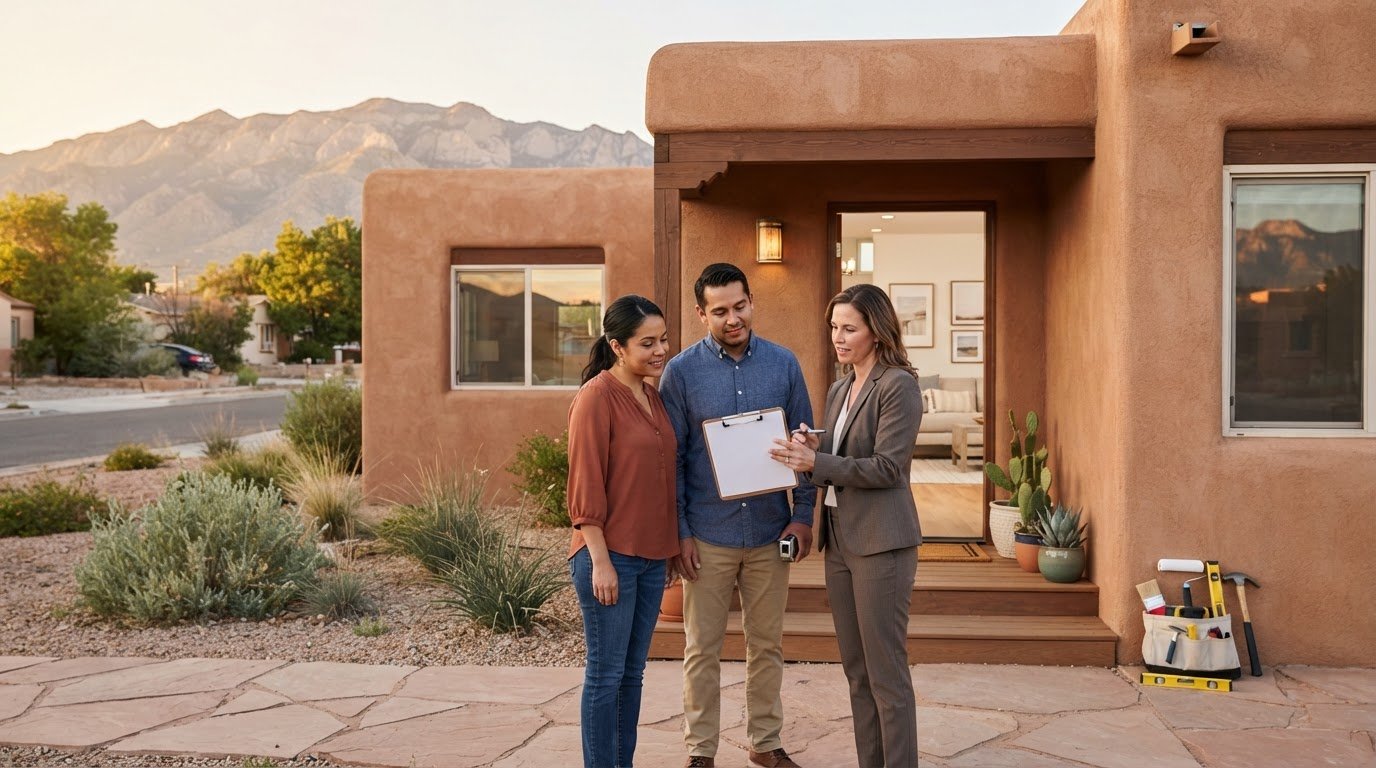
How to Increase Home Value Before Sale in Albuquerque
The biggest renovation may not be the best way to increase home value before sale. In Albuquerque, a focused refresh that helps buyers understand a home’s condition and potential may make more sense than a major remodel, especially when the return is uncertain.
It’s natural to wonder which updates buyers will notice and whether the time, cost, and disruption will pay off. You don’t need to make a lived-in home look untouched to prepare it for showings. The goal is to make thoughtful choices that support your selling plans and protect your equity.
This guide will help you prioritize practical improvements, from basic maintenance and presentation to selective updates, while keeping your budget and likely buyers in mind. You’ll also learn why local fit matters, which projects call for careful planning, and how to weigh an involved option like Renovate & Sell. With a clear plan, you can prepare your Albuquerque home with purpose, not assumptions.
Key Takeaways
- To increase home value before sale, focus on improvements that support the home’s presentation and condition, not on a guaranteed price increase.
- Assess visible concerns and separate maintenance priorities from optional cosmetic updates before choosing projects.
- Compare simple updates, repairs, and larger renovations by their purpose, disruption, and uncertainty, not just their appeal.
- Build a pre-sale plan around your goals, timing, and the home’s specific needs rather than assumptions about buyer reactions.
- Choose a selling path that fits your priorities. Renovate & Sell may suit sellers considering more involved preparation.
How to Increase Home Value Before Sale: Start With Buyer Appeal
To increase home value before sale, start by asking what will help a buyer understand the home’s condition and use, not which renovation looks most impressive. Preparation can make a property feel cared for and easier to evaluate. It can’t guarantee a higher offer or a particular sale price.
That distinction matters. A seller may value a custom kitchen because it suits their taste, while a buyer may focus on the home’s layout, upkeep, or fit with their plans. Begin by separating what the property needs from what you personally would choose to change.
This video offers one perspective on pre-sale upgrades. Treat it as a starting point, not a promise of results for an Albuquerque home.
What does increasing home value before a sale really mean?
Three ideas often get blended together. Market value is an informed estimate of what a property might sell for under current conditions. It depends on evidence such as comparable properties, location, and the home’s features and condition. A real estate appraisal provides an overview of how property valuation is assessed.
Perceived condition is how a buyer interprets what they see. Clear surfaces, working features, and visible upkeep may help buyers assess a home with fewer distractions. Negotiated sale price is the amount ultimately agreed upon by seller and buyer. It can differ from an estimate because each property, offer, and negotiation is unique.
Improvements can support presentation and buyer confidence, but their effect varies. A fresh coat of paint may address a visible distraction in one home, while another property may need attention elsewhere. Choose preparation based on the property, not a universal renovation list.
Why Albuquerque location and buyer fit matter
Albuquerque, Rio Rancho, Corrales, and nearby communities aren’t interchangeable markets. Homes differ by neighborhood, age, size, layout, and setting. A feature that matters to a buyer considering one home may be less relevant to someone comparing another property type or location. These are practical observations, not claims that all local buyers share the same preferences.
Condition and location help shape a pricing discussion, along with comparable properties and buyer perception. For example, a seller’s preferred high-end finish may not align with the features buyers notice in similar homes. Before committing to a project, compare the home’s current condition with relevant local properties and define what the update is meant to address.
Preparation may improve a home’s presentation, but it can’t guarantee a specific sale price or outcome. Keeping that principle in view helps you make measured choices and protect equity without treating every renovation as an investment that must pay off.
Assess Your Albuquerque Home Before Choosing Any Improvements
A useful walkthrough starts with observation, not a renovation list. Look at the home as a buyer might, then record what you see before deciding what to change. This keeps practical upkeep, visible presentation concerns, and personal style preferences from becoming one large, costly project.
The right preparation plan depends on your home’s condition and your selling goals. A seller preparing to move soon may set different priorities from someone with more flexibility. The aim is to make informed choices, not to treat every imperfection as a project that must be completed.
Which areas should you review first?
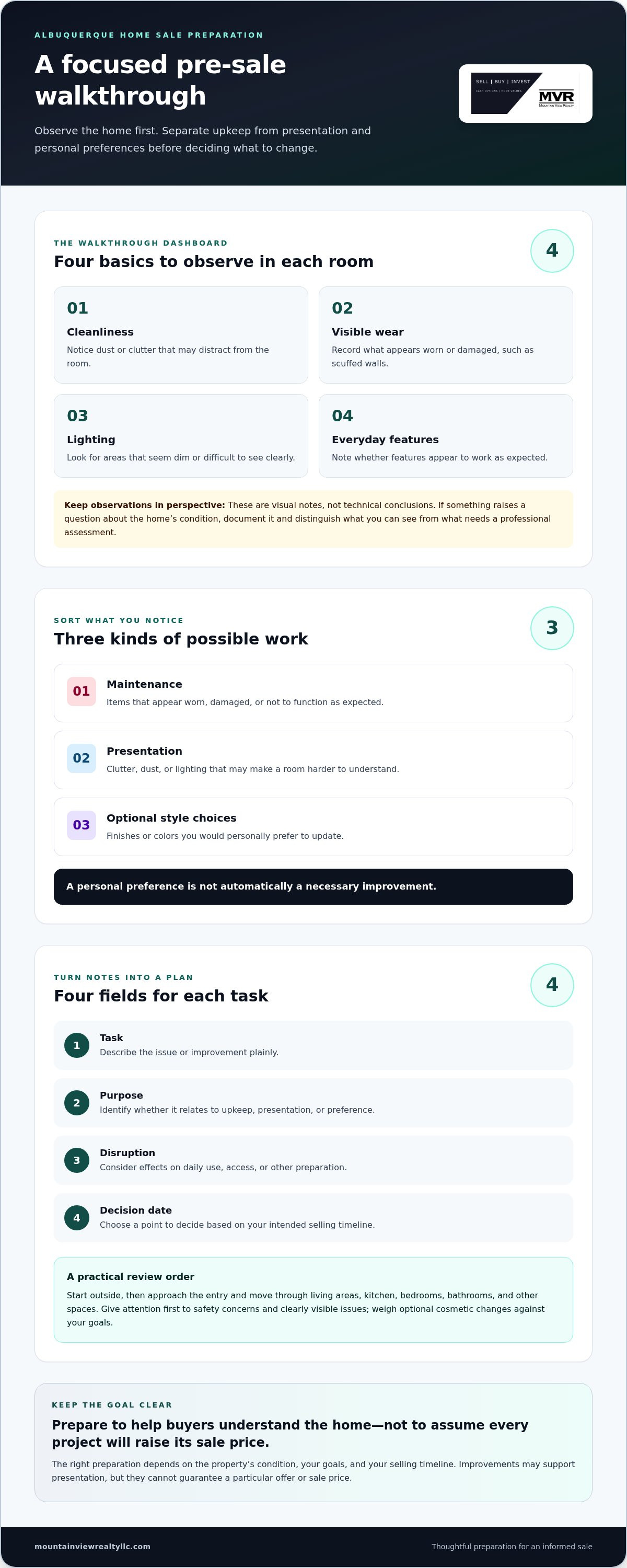
Walk through the property in a consistent order. Start outside, then enter through the main approach and continue through the living areas, kitchen, bedrooms, bathrooms, and other spaces. Notice the first impression at the entry, how the main rooms feel, and whether outdoor areas appear cared for.
In each room, record four basics: cleanliness, visible wear, lighting, and whether everyday features appear to function as expected. Note details such as scuffed walls, a dim corner, or a sticking door. These are observations, not technical conclusions. If something raises a question about the home’s condition, document it and separate what you can see from what needs a professional assessment.
- Maintenance: Items that appear worn, damaged, or not to function as expected.
- Presentation: Clutter, dust, or lighting that may make a room harder to understand.
- Optional style choices: Finishes or colors you’d personally prefer to update.
This separation helps keep preference from being mistaken for necessity. General resources, including Opendoor’s overview of proven ways to increase home value, can suggest ideas, but a broad list can’t determine what fits your property or selling plan.
How do you set a practical preparation budget?
Before deciding how much to spend, write down each possible task and why you’re considering it. Add the expected disruption to daily life and the date by which you need to decide. The list gives you a way to compare choices and identify questions to resolve before work begins.
- Task: Describe the issue or improvement plainly.
- Purpose: Note whether it addresses upkeep, presentation, or a personal preference.
- Disruption: Consider whether it affects daily use, access, or other preparation.
- Decision date: Set a point to choose, based on your intended selling timeline.
Give attention first to safety concerns and issues that are clearly visible, then weigh optional cosmetic changes against your goals. This is a planning approach, not a statement that a specific repair is legally required. For more involved preparation, the Renovate & Sell equity guide can help frame the decision around scope and equity.
As you review your notes, consider how a tailored preparation plan could fit your sale. A conversation with Mountain View Realty LLC can help you weigh the property’s condition and your priorities before choosing a scope.
Compare Simple Updates, Repairs, and Larger Renovations
Once you’ve noted what stands out, sort possible projects by scale. A cleaning task, a repair, and a full renovation solve different problems. Comparing them side by side can help you decide what supports your selling plan, what can wait, and what needs more thought.
A polished appearance can make a home easier to view, but it isn’t proof that a major project will pay off. The table below is a decision framework, not a promise about sale price or buyer response.
| Category | Purpose | Disruption | Decision effort | Uncertainty |
|---|---|---|---|---|
| Maintenance | Address an item that appears worn, damaged, or not to function as expected. | Can vary by task; some work may affect use of a room or feature. | Clarify the concern and decide what action makes sense. | The underlying condition or scope may need further assessment. |
| Low-disruption presentation tasks | Help rooms look orderly, clean, and easy to understand. | Often manageable within everyday routines, depending on the task. | Choose where a modest effort would make the home clearer to view. | Buyer reactions vary, and presentation alone doesn’t determine an offer. |
| Larger renovation projects | Change or substantially update part of the property. | May affect access, daily use, and the selling timeline. | Weigh scope, fit with the home, timing, and selling goals. | Costs, buyer preferences, and resale outcomes can be difficult to predict. |
When can cleaning, decluttering, or minor fixes help presentation?
Clear counters, open pathways, clean surfaces, and cared-for spaces can help buyers focus on the rooms rather than distractions. A minor fix may also make an everyday feature easier to use or understand. These are presentation considerations, not guarantees of faster sales or higher offers.
Match each task to the home’s condition and the time you have. If a room is already tidy and functional, more work may not be the best use of your attention. Focus on what helps a visitor see the space clearly.
When should you pause before taking on a major renovation?
Pause when a proposed project has a broad scope, disrupts daily life, or could affect your plans for listing. Ask what problem it solves, whether the change fits the property, and how much time and coordination it may require. Style preferences differ, so avoid relying on unsupported return-on-investment claims to justify a project.
For sellers weighing extensive work, pre-sale renovation decisions can be part of a broader selling strategy. Mountain View Realty LLC’s Renovate & Sell is one possible path for more involved preparation. A tailored discussion can help you compare the project with your priorities before deciding how to proceed.
Build a Pre-Sale Plan That Protects Your Equity
A written plan turns observations into decisions you can revisit. It also keeps preparation tied to your goals, rather than letting a growing list of possible projects set the agenda. To increase home value before sale thoughtfully, separate what you know about the property from what you’re assuming about buyer demand.
How do you turn observations into a short action plan?
Group potential tasks into essential upkeep, presentation, and optional larger work. Then choose priorities based on your selling goals, available time, and tolerance for disruption. A task that matters to one seller may not suit another’s timing or plans.
- Goals: Clarify what matters most, such as a manageable move, a particular timeline, or preserving equity.
- Condition: Record visible concerns and property details. Separate firsthand observations from questions that need further assessment.
- Priorities: Sort tasks by purpose and decide which ones fit your goals. Keep optional style changes distinct from upkeep.
- Timing: Note decision dates and how each task could affect your schedule or daily use of the home.
- Marketing needs: Identify features, spaces, and property details that should be presented clearly to likely buyers.
Revisit the list as pricing and marketing decisions take shape. If the plan changes, update the priorities rather than pressing ahead with work simply because it was on the original list.
How should local context shape your preparation?
Use the home’s location and features to guide the discussion, not broad assumptions about what every buyer in Albuquerque, Rio Rancho, Corrales, or surrounding areas wants. A home’s setting, layout, and condition are specific. So are buyers’ needs and preferences.
Separate confirmed facts, such as the property’s features and visible condition, from assumptions about local demand or likely buyer reactions. Avoid treating a general trend or someone else’s renovation choices as proof that the same project fits your home. Current comparable properties and property-specific marketing can help frame a more grounded conversation.
Preparation and pricing work best as connected decisions. Strategic pricing considers the home and relevant market context; pre-market preparation helps present the property clearly. Neither guarantees a particular offer or sale outcome. Albuquerque home-selling options can help you consider how preparation fits into a broader selling plan.
A tailored plan can bring clarity before you commit to a project or selling path. Mountain View Realty LLC can help you weigh your priorities and property details in an informed, low-pressure conversation.
Choose the Right Sale Strategy for Your Prepared Home
Preparation is one part of a sale plan, not a decision that locks you into a single way of selling. The right approach depends on the home’s condition, how much preparation you want to manage, your preferred timing, and what matters most to you financially. A carefully prepared home can still call for different selling paths depending on the seller’s circumstances.
If you’re considering how to increase home value before sale, keep the central question practical: which approach fits the property and your priorities? Don’t treat a renovation as a reason to choose a particular sale method or assume that one method will produce a better outcome for every seller.
When could Renovate & Sell fit a seller’s situation?
Renovate & Sell is a Mountain View Realty LLC option for sellers considering more involved preparation before a traditional sale. It may be relevant when the home needs more than light presentation work and the seller wants to weigh preparation alongside the overall sale strategy.
That doesn’t make it the default choice. A home needing extensive work may call for a different conversation from one that’s already in good condition. The appropriate approach depends on the property and the seller’s priorities. No specific project or selling path can promise a particular price or result.
What should you decide before moving forward?
Before choosing a path, bring the key decisions together. Start with what you know about the home, then consider what you’re willing to take on. A short summary can make a conversation about selling options clearer and help keep the plan grounded in your needs.
- Condition: Note the home’s visible needs and any questions still to resolve.
- Timing: Identify your preferred schedule and any constraints that shape it.
- Preparation appetite: Decide how much project coordination and disruption you’re comfortable managing.
- Equity priorities: Consider what you hope to preserve and how preparation choices fit that goal.
Then compare the effort and trade-offs of available paths. A traditional sale may suit a seller prepared to handle pre-market work; a more involved preparation option may deserve consideration when the home needs broader attention. These are starting points, not fixed rules. Strategic pricing and thoughtful preparation can support a clear market presentation, but neither guarantees an offer, sale price, or timeline.
Robb Krautbauer brings 15 years of real-estate investing experience and 10 years as a licensed agent to these discussions. That perspective can help sellers examine the choices and questions around a property without assuming every renovation will pay off. The goal is an informed plan, not pressure to take on more work than makes sense.
Grab a time on my calendar: no pressure, just a plan for your next move.
Robb Krautbauer, Owner & Qualifying Broker
Make Your Next Move With a Clear Plan
The next step doesn’t have to be a long list of projects. It can be a focused conversation about what matters to you, what the home needs, and how preparation fits your plans. The goal isn’t to renovate for its own sake. It’s to make considered decisions that support your next move.
For homeowners weighing how to increase home value before sale, a property-specific perspective can help separate useful preparation from work that may not serve their goals. Mountain View Realty LLC has helped 200+ families and investors buy and sell across the Albuquerque metro. Use that experience as a resource while you consider your options, without pressure to choose a particular path.
A thoughtful plan can bring more confidence to the decisions ahead. Start with a conversation centered on your home and what comes next.
Your next move can begin with one clear, manageable decision.
Frequently Asked Questions
Do home improvements always increase a home's sale price?
No. An improvement can make a home more appealing or functional, but it doesn’t guarantee that buyers will offer more. The result depends on the property, its condition, comparable homes, buyer preferences, and negotiation. For example, a seller may love a highly customized kitchen, while a buyer may prefer a simpler space they can personalize. Consider what a project addresses before treating it as an investment.
Is it better to renovate before selling or sell the home as-is?
Neither choice is best for every seller. A home in solid condition may need only straightforward preparation, while extensive work may not fit your schedule, finances, or plans. Selling as-is can be a reasonable path, though buyers may factor the home’s condition into their offers or plans. Compare the effort and trade-offs of each approach for your Albuquerque property before deciding.
Can decluttering make a home more appealing to buyers?
Yes. Decluttering can help buyers see how rooms function and move through the home. You might clear a crowded entry table, remove extra items from kitchen counters, or make a bedroom’s floor space easier to see. You don’t need to strip away every personal touch. Focus on making rooms accessible and easy to understand, while keeping daily essentials that help the home feel cared for and lived in.
How much should I spend improving my home before a sale?
There’s no universal amount that makes sense for every home. Set a spending limit that fits your finances and selling goals, then compare each task’s purpose with its likely effort and disruption. To increase home value before sale, avoid spending based only on a neighbor’s renovation or a national rule of thumb. A property-specific pricing discussion can help you decide which tasks deserve consideration before you commit.
What happens if I sell my home without making updates?
You can choose to sell without updating the home. Buyers will see its current condition, and their interest or offers may reflect the work they believe it needs. A clear presentation can still help them understand the property as it stands. Keep a record of known features and recent work so you can describe the home accurately during the sale process. The result depends on the property and negotiations.

Article by
Robb Krautbauer
Robb Krautbauer is the Owner and Qualifying Broker of Mountain View Realty, serving Albuquerque, Rio Rancho, Santa Fe, and surrounding New Mexico communities. With more than a decade of real estate experience, Robb specializes in luxury homes, strategic home marketing, and helping homeowners navigate important life transitions with confidence.
Known for combining luxury-level marketing, AI-powered technology, and innovative selling strategies, Robb helps clients maximize their home's value while creating a smooth, personalized selling experience. Whether assisting luxury homeowners, retirees, families downsizing, or real estate investors, his focus is always on delivering expert guidance, honest advice, and exceptional results.
When he's not helping clients achieve their real estate goals, Robb enjoys studying market trends, emerging technology, and investment strategies that keep Mountain View Realty at the forefront of the industry.
Disclaimer
**Disclaimer:** The information provided in this article is for general educational purposes only and should not be considered legal, tax, financial, or professional advice. Real estate laws, market conditions, and regulations change over time and may vary based on your individual circumstances. Before making any real estate decision, consult with qualified legal, tax, or financial professionals. If you have questions about buying or selling real estate in New Mexico, contact Mountain View Realty for guidance specific to your situation. © 2026 Mountain View Realty. All rights reserved. The content on this website may not be reproduced without written permission.


