
How to Negotiate Repairs After a Home Inspection: An Albuquerque Seller’s Strategy
You just opened a 50-page inspection report for your Albuquerque home, and your heart sinks at the sight of highlighted stucco cracks and radon concerns. It’s a stressful moment that makes many sellers worry their hard-earned equity is about to vanish. You aren't alone in feeling defensive when a buyer presents a long list of demands. Understanding how to negotiate repairs after home inspection is the difference between a deal that falls apart and a successful closing that preserves your profit.
We understand that you want a smooth, simple transition without the headache of unexpected construction projects. This guide provides a clear framework to help you prioritize what truly matters versus what can be ignored. You’ll learn how to offer strategic credits to save time, how to handle New Mexico’s specific environmental requirements, and how to maintain control of the conversation. We will look at how to turn a daunting inspection report into a manageable path toward the finish line while keeping your sale on track.
Key Takeaways
- Learn to distinguish between essential safety repairs and cosmetic requests that can be declined to protect your equity.
- Discover how to negotiate repairs after home inspection by offering closing credits to minimize your liability and keep the sale moving.
- Address unique Albuquerque challenges like stucco maintenance and HVAC systems using specific local market insights.
- Use independent contractor estimates to counter inflated buyer demands and ensure you only pay for necessary fixes.
- Explore alternative paths like 'Renovate & Sell' or 'CashOffer+' if the inspection reveals structural issues that are too complex for a standard sale.
The Inspection Report: Separating 'Must-Fix' from 'Nice-to-Have'
Receiving a 50-page inspection report is often the most stressful part of selling an Albuquerque home. It's vital to remember that no report is ever truly clean. Even brand-new construction in the Northeast Heights often comes back with a list of minor defects or installation quirks. Understanding the home inspection process helps you realize that the inspector's job is to find everything, but your job isn't to fix everything. The report isn't a "to-do" list for the seller; it's a snapshot of the property's current state.
Viewing this document through an investor's eyes is key to a successful sale. Instead of seeing it as a personal critique of how you maintained your home, treat it as a strategic negotiation tool. Knowing how to negotiate repairs after home inspection allows you to stay in the driver's seat. You aren't obligated to return the house to "perfect" condition. Your goal is to deliver a safe, functional home that meets the terms of your purchase agreement while protecting your equity.
To better understand this concept, watch this helpful video:
The 'Deal-Breaker' Repair Categories
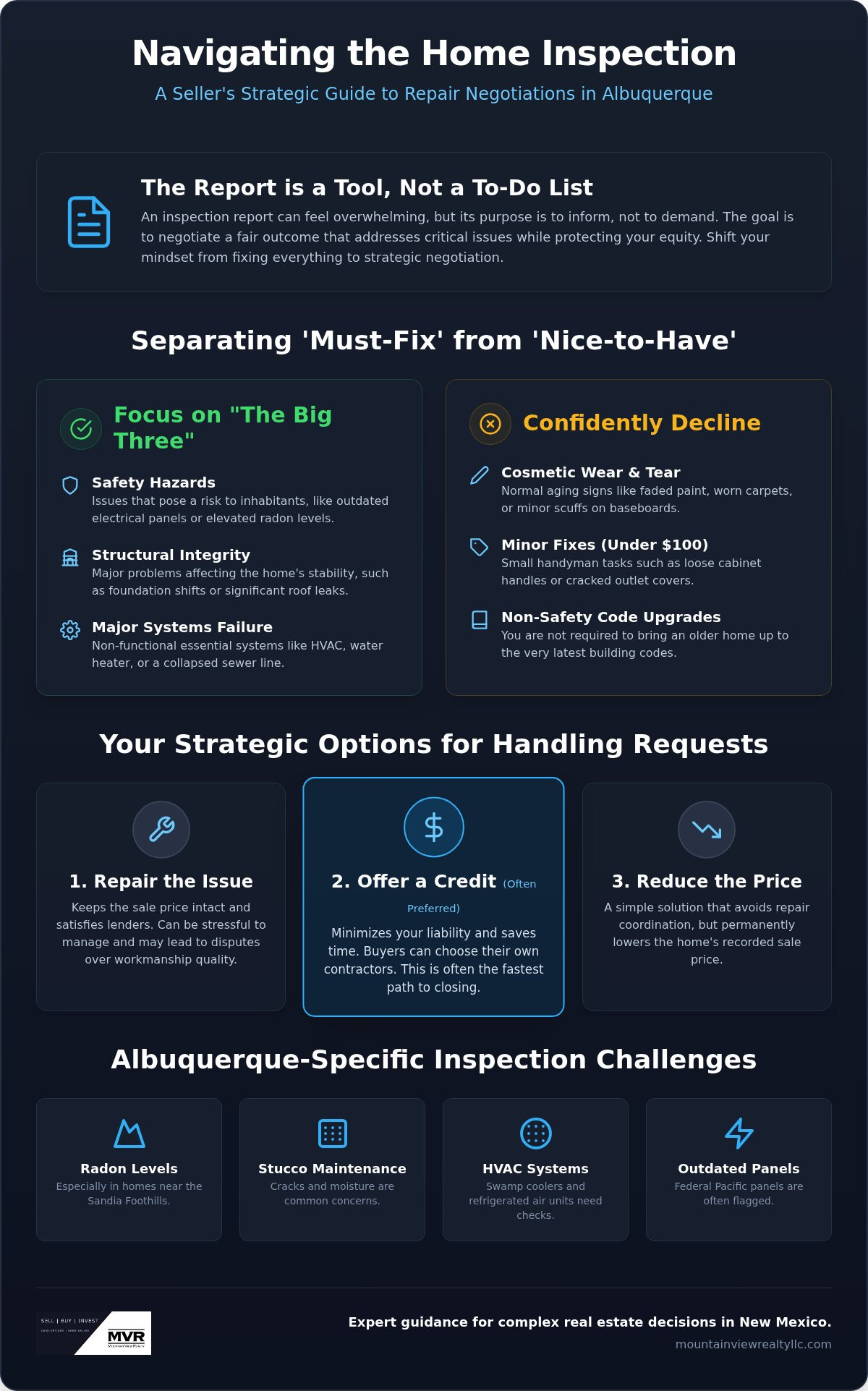
We focus on the "Big Three" when reviewing buyer requests: safety, structural integrity, and major systems. These are the items that can actually kill a deal or prevent a buyer from securing a mortgage. In Albuquerque, safety hazards often include outdated Federal Pacific electrical panels or elevated radon levels, which are more common in homes near the Sandia Foothills. Structural integrity is equally critical; if the report identifies foundation shifts or major roof leaks, these are usually non-negotiable for most lenders. Finally, major systems like a non-functional HVAC or a collapsed sewer line must be addressed. These are the "must-fix" items that protect the buyer's health and the property's value.
Items You Should Almost Always Decline
Many buyers treat the inspection report like a wish list for a home renovation. You should feel confident declining requests for cosmetic wear and tear that is typical for the home's age. Faded paint, worn carpet, or minor dings in the baseboards aren't your responsibility. We generally recommend declining minor handyman fixes that fall under a $100 threshold, such as a loose cabinet handle or a cracked outlet cover. Additionally, you don't have to bring an older home up to 2026 building codes unless a specific safety issue exists. Learning how to negotiate repairs after home inspection means knowing when to say no to these discretionary upgrades so you can preserve your profit at closing.
Strategic Options for Handling Repair Requests
Once you've reviewed the report, you face a strategic choice. You aren't limited to just fixing the items the buyer requested. Successful sellers usually look at a "Triple Threat" of options: making the repairs yourself, offering a financial credit at closing, or reducing the sale price. Each path has distinct advantages depending on your timeline and the specific issues found. Grounding your response in New Mexico's inspection standards ensures that you are negotiating based on state-regulated requirements rather than buyer emotions.
We often recommend using professional estimates to guide these conversations. Buyers frequently provide "guesstimates" that are inflated to cover worst-case scenarios. By obtaining your own quotes from local Albuquerque contractors, you bring the negotiation back to reality. In high-demand areas like Rio Rancho or the North Valley, you may even have the leverage to hold your ground with an "as-is" strategy. This is particularly effective if you have backup offers waiting. Knowing how to negotiate repairs after home inspection means understanding when the market allows you to be firm and when you need to be flexible.
Repairing the Issue Yourself
Choosing to handle repairs before closing keeps your original sale price intact and often satisfies traditional lenders who require specific fixes for loan approval. It can be a double-edged sword, though. Managing contractors while trying to pack for a move is stressful. There is also the risk that a buyer won't be satisfied with the quality of the work, leading to further delays. If you choose this path, New Mexico law requires you to use licensed and bonded contractors for major systems. Keeping detailed receipts and warranties is essential to prove the work was done correctly and to clear any remaining contingencies.
Offering a Seller Credit at Closing
Offering a seller credit is often the most efficient way to keep a sale on track. Instead of you managing the repairs, you provide a set dollar amount that is deducted from your net proceeds at closing. This approach is superior for many sellers because it eliminates your liability for the quality of the work. If a repair fails six months later, it’s the buyer's responsibility because they chose the contractor and oversaw the project. Buyers often prefer this too; it allows them to choose their own finishes or upgrades.
Be aware that lenders often place limits on these credits. A credit generally cannot exceed the buyer's total closing costs. If the repair list is extensive, we can help you balance credits with a price reduction to ensure the deal stays within lender guidelines. If you feel overwhelmed by a complex repair list, we can provide a confidential consultation to help you determine the most profitable path forward. This strategic flexibility is how smart sellers protect their equity while ensuring the buyer stays committed to the purchase.
Albuquerque-Specific Inspection Challenges
Albuquerque’s high-desert environment presents unique challenges that standard national real estate guides often miss. From the intense UV rays hitting our flat roofs to the specific soil conditions in the Rio Grande Valley, local expertise is essential. When you are learning how to negotiate repairs after home inspection, you must account for these regional factors to protect your equity. For example, radon gas mitigation is a standard negotiation point in Corrales and the North Valley, though it is also a frequent concern in Northeast Albuquerque and the East Mountains. Buyers in Rio Rancho subdivisions built in the 1980s and 1990s also look closely for Polybutylene piping, which was common in those builds.
Stucco and Flat Roof Maintenance
In neighborhoods like Sandia Heights and High Desert, stucco scrutiny is intense. It’s important to distinguish between minor "spider cracks," which are cosmetic and result from our dry climate, and true structural failure. A dedicated roof inspection is also vital because our high-UV environment can degrade materials faster than in other climates. TPO (Thermoplastic Polyolefin) is a white, reflective single-ply membrane that has become the preferred standard for modern Albuquerque flat roofs due to its superior heat resistance. If your roof is older, providing a recent maintenance record can often satisfy a buyer’s concerns without requiring a full replacement.
Heating and Cooling in the High Desert
The debate between evaporative (swamp) coolers and refrigerated air often dominates post-inspection talks. If your home uses a swamp cooler, ensure it is serviced and de-winterized before the inspection. Providing a multi-year service record is a powerful way to stave off demands for a system upgrade. Buyers often use an aging unit as leverage to ask for a conversion credit, but a well-maintained system is perfectly functional for our climate. We also see many older renovations in the North Valley with unpermitted work. Handling these disclosures upfront prevents them from becoming leverage points for the buyer later in the process.
- Radon Mitigation: Common in the valley and mountain areas; systems are a frequent seller-paid item to ensure safety.
- Plumbing Materials: Scrutiny of Polybutylene or Kitec piping in specific 1990s subdivisions in Rio Rancho.
- Sewer Lines: Camera inspections are increasingly common in older neighborhoods to check for root damage.
The Art of the Counter-Offer: Tactics for Sellers
Negotiation is where deals are won or lost. Once you have the inspection objection in hand, don't react emotionally. Instead, take a methodical approach to protect your equity. The first step is to group the buyer's requests into "Safety" and "Discretionary" buckets. Focus your energy on the safety issues, like a gas leak or a faulty furnace, as these are often required for loan funding. Discretionary items, like outdated fixtures or minor drywall cracks, are your primary bargaining chips.
Next, obtain your own independent quotes. Buyers often use inflated estimates to justify a larger credit request. By bringing in a trusted Albuquerque contractor, you ground the conversation in local market rates. Finally, consider offering a "lump sum" credit. This is often more effective than itemizing every small fix. It gives the buyer a win while allowing you to exit the project without ongoing liability. Knowing how to negotiate repairs after home inspection requires using an investor's eye; if a $2,000 repair ensures you close on time and protects $50,000 in equity, it’s a smart business decision.
How to Say No Without Killing the Deal
Saying no doesn't have to be confrontational. Frame your refusal by explaining that the home was already priced to reflect its current condition. If you recently upgraded the water heater or the TPO roof, highlight those values to show you’ve already invested in the home’s longevity. For aging appliances that still function, a low-cost compromise is offering a home warranty. It provides the buyer with peace of mind for the first year without requiring you to replace a working stove or dishwasher.
When to Walk Away
Sometimes, a buyer isn't looking for repairs; they’re trying to renegotiate the purchase price. If a buyer demands a $20,000 reduction for $5,000 worth of work, they may be acting in bad faith. Evaluate your "Plan B" carefully. In the current Albuquerque market, going back on the market might result in a higher offer, especially if you’ve already addressed the major safety concerns found in the first report. Having a strategic partner is essential during these tense moments. Review our guide on How to Choose a Real Estate Agent in Albuquerque to ensure you have an expert negotiator in your corner.
Strategic Alternatives: When Repairs Are Too Much
Sometimes a home inspection reveals issues that go far beyond a simple stucco patch or a leaky faucet. If the report identifies systemic foundation failure, extensive mold, or a roof that has reached the end of its life, the traditional negotiation path might feel like a dead end. Instead of worrying about how to negotiate repairs after home inspection when the costs are astronomical, you can pivot to a strategy that protects your remaining equity. We help sellers evaluate the math behind every fix to ensure you aren't spending a dollar just to make fifty cents in return.
Mountain View Realty LLC uses lifestyle storytelling to help buyers see the inherent value of your property, but we also recognize when the physical reality of the home requires a different approach. Protecting your equity often means using strategic pricing that accounts for known deferred maintenance from the start. If the inspection reveals more than you can handle, we offer specialized paths designed to remove the stress of construction and contractor management.
The Renovate & Sell Advantage
For homes requiring significant capital to reach their full market potential, our Renovate & Sell path is often the best solution. This is especially valuable for estate sales or long-held family homes in neighborhoods like Sandia Heights where modern updates drive the highest prices. We use our firm's resources to handle major repairs and cosmetic upgrades before the home ever hits the MLS. This strategy shifts the burden of management away from you while ensuring the work is done to a high standard. You can learn more about how this works in our guide on how to Maximize Your Home Sale Price in Albuquerque.
Pivoting to a CashOffer+
When an inspection reveals "deal-killer" issues that traditional buyers or lenders won't touch, the certainty of a cash offer becomes incredibly attractive. Our CashOffer+ program allows you to sell the property exactly as it stands today. You avoid the 10 to 14 day inspection contingency period and the subsequent "repair dance" that often leads to deals falling through. This path provides speed and certainty, allowing you to move on to your next chapter without the headache of managing a construction site. If you need a quick exit from a complex property, explore our insights on how to Sell My House Fast in Albuquerque for a stress-free transition.
- Renovate & Sell: Best for maximizing ROI on homes with high potential but significant repair needs.
- CashOffer+: Ideal for sellers who want to bypass the inspection process and close quickly without making any fixes.
- Strategic Pricing: Accounts for the home's current condition to attract the right buyer profile from day one.
Protecting Your Equity and Closing with Confidence
Navigating a home inspection doesn't have to be a stressful ordeal that drains your profit. By focusing on safety and structural essentials while declining minor cosmetic requests, you maintain control of the sale. Remember that using independent contractor quotes and offering strategic credits are powerful ways to ground the negotiation in reality. Understanding how to negotiate repairs after home inspection is about treating the process as a business pivot point rather than a personal hurdle.
Whether you choose to make repairs, offer a closing credit, or pivot to a streamlined path like CashOffer+, the goal is to keep your sale on track with maximum equity preserved. Robb Krautbauer and the team at Mountain View Realty LLC bring 15 years of investor experience and have helped over 200 families in the Albuquerque metro navigate these exact decisions. We are here to act as your strategic partner and trusted advisor through every step of your journey.
We provide the expertise you need to move forward with peace of mind and total clarity. Our team is ready to help you evaluate your report and choose the path that best serves your long-term goals.
Robb Krautbauer
Owner & Qualifying Broker, Mountain View Realty LLC
Frequently Asked Questions
Do I have to fix everything on the home inspection report in New Mexico?
You aren't legally required to fix every item found in a report. In New Mexico, you must disclose known adverse material facts, but the repair list itself is a negotiation. We advise focusing on the "Big Three": safety, structural integrity, and major systems. Cosmetic issues or minor wear and tear are typically the buyer's responsibility. Learning how to negotiate repairs after home inspection means knowing when to stand your ground on non-essential items.
What are the most common repair deal-breakers in Albuquerque?
Major deal-breakers in the Albuquerque metro often involve the roof, foundation, and environmental hazards. Specifically, lenders often require fixes for structural stucco failure, non-functional heating or cooling systems, and active roof leaks. Radon mitigation is also a frequent requirement in Corrales and the North Valley. If a home was built in the 1980s or 90s in Rio Rancho, buyers will often walk away if Polybutylene piping is discovered and not addressed.
Is it better to give a repair credit or fix the problem myself?
Offering a closing credit is usually the superior strategy for sellers. It allows you to avoid the stress of managing contractors while you are trying to move. Most importantly, it shifts the liability for the quality of the work to the buyer. If you perform the repairs yourself, you must use licensed and bonded New Mexico contractors for major systems. Credits keep the process simple and ensure the sale stays on track toward closing.
Can a buyer back out after the inspection if I agree to all repairs?
Yes, a buyer can still back out during the inspection contingency period, which typically lasts 10 to 14 days in New Mexico. Even if you agree to every request, the buyer may decide the property's overall condition isn't right for them. This is why we focus on clear communication and obtaining independent quotes early. Having a strategic partner helps you identify if a buyer is acting in good faith or looking for an exit.
How do I handle stucco cracks found during an inspection?
Stucco cracks are very common in our dry, high-UV climate. You should distinguish between cosmetic "spider cracks," which are normal, and structural failure where the stucco is pulling away from the frame. We recommend having a specialized stucco professional evaluate any significant cracks. Often, a simple patch and color match are enough to satisfy buyer concerns in neighborhoods like Sandia Heights or High Desert without requiring a full remediation of the entire exterior.
What happens if the inspection finds unpermitted work in my ABQ home?
Unpermitted work is a frequent discovery in older Albuquerque renovations. While it doesn't automatically kill a deal, it can complicate the buyer's financing or future insurance. Your best approach is full disclosure. If the work was done to code but simply lacks a paper trail, some buyers will accept it as-is. In other cases, you might need to offer a credit or use our Renovate & Sell program to rectify the issue before closing.
Should I get a pre-listing inspection before selling my Albuquerque house?
A pre-listing inspection is a smart move for many sellers. It gives you an "investor's eye" view of your home before it hits the market, allowing you to fix major issues on your own timeline. This prevents stressful surprises during the 10 to 14 day buyer contingency period. By addressing safety or structural concerns upfront, you can price your home more accurately and strengthen your position when learning how to negotiate repairs after home inspection.
How much of a credit should I offer for an old HVAC system?
There is no fixed amount, but credits should be based on the remaining functional life of the unit. If a swamp cooler or furnace is near the end of its life but still working, you aren't obligated to pay for a brand-new refrigerated air conversion. We typically suggest offering a credit that covers a portion of the replacement cost or providing a home warranty. This shows good faith while protecting your equity from unreasonable buyer demands.

Article by
Robb Krautbauer
Robb Krautbauer is the Owner and Qualifying Broker of Mountain View Realty, serving Albuquerque, Rio Rancho, Santa Fe, and surrounding New Mexico communities. With more than a decade of real estate experience, Robb specializes in luxury homes, strategic home marketing, and helping homeowners navigate important life transitions with confidence.
Known for combining luxury-level marketing, AI-powered technology, and innovative selling strategies, Robb helps clients maximize their home's value while creating a smooth, personalized selling experience. Whether assisting luxury homeowners, retirees, families downsizing, or real estate investors, his focus is always on delivering expert guidance, honest advice, and exceptional results.
When he's not helping clients achieve their real estate goals, Robb enjoys studying market trends, emerging technology, and investment strategies that keep Mountain View Realty at the forefront of the industry.
Disclaimer
**Disclaimer:** The information provided in this article is for general educational purposes only and should not be considered legal, tax, financial, or professional advice. Real estate laws, market conditions, and regulations change over time and may vary based on your individual circumstances. Before making any real estate decision, consult with qualified legal, tax, or financial professionals. If you have questions about buying or selling real estate in New Mexico, contact Mountain View Realty for guidance specific to your situation. © 2026 Mountain View Realty. All rights reserved. The content on this website may not be reproduced without written permission.


