
How to Reduce Stress When Selling a House: A Practical Guide
Nine in ten homeowners say selling a home is stressful, according to an American Home Shield survey published in February 2026. If you’re preparing to sell in Albuquerque or nearby, uncertainty about timing, repairs, showings, and your next move can make the process feel like too much at once. Learning how to reduce stress when selling a house starts with identifying the decisions you can control.
Selling can disrupt daily routines and carry emotional weight, especially when it overlaps with a move, a family change, or settling an estate. You don’t have to rush each decision or follow a one-size-fits-all plan. A clear sequence helps you focus on what matters most and handle each step with more confidence.
This guide covers practical ways to make preparation, pricing, showings, and negotiations more manageable. You’ll also learn how to compare selling paths against your timing, priorities, and comfort level, so your plan fits your life.
Key Takeaways
- Map the main stages of a sale so you can anticipate decisions and plan for changes along the way.
- To understand how to reduce stress when selling a house, connect your top priority to one practical next step and a scheduled check-in.
- Build your Albuquerque selling plan around household routines, privacy, moving needs, and the people involved.
- Compare selling paths against your priorities, and use support to understand trade-offs while keeping decisions in your hands.
Why Selling a House Feels Stressful, and What You Can Control
A home sale can involve financial decisions, property preparation, access for buyers, and plans for what comes next, all while everyday life continues. If the sale overlaps with retirement, downsizing, settling an estate, or another major change, familiar tasks may feel harder to manage. That pressure doesn’t mean you’re handling the process badly. It can come from facing several important decisions and unknowns at once.
Here, selling stress means pressure linked to decisions, disruption, and an uncertain outcome. The broader idea of psychological stress helps explain why demands and uncertainty can feel difficult to manage. In a home sale, you can choose how to prepare and what matters most, but you can’t control every buyer’s response or the final outcome. A clear plan makes the process more manageable by turning open-ended worry into decisions you can address one at a time.
A brief overview of the selling experience can help set expectations:
Which parts of selling tend to create pressure?
Some uncertainty is part of a sale. You may be deciding on a price, waiting for a buyer’s response, or trying to understand what happens after an offer. Those questions don’t have one answer for every Albuquerque home or seller. Clarify what you know, what still needs a decision, and when you’ll revisit the question.
Preparation and showings can interrupt daily routines. Keeping spaces ready, coordinating access, and adjusting plans for visits can be difficult if you work from home, care for family, or have pets. At the same time, the home may hold personal meaning, especially during a life transition. These practical and emotional pressures can overlap.
What can a seller control from the start?
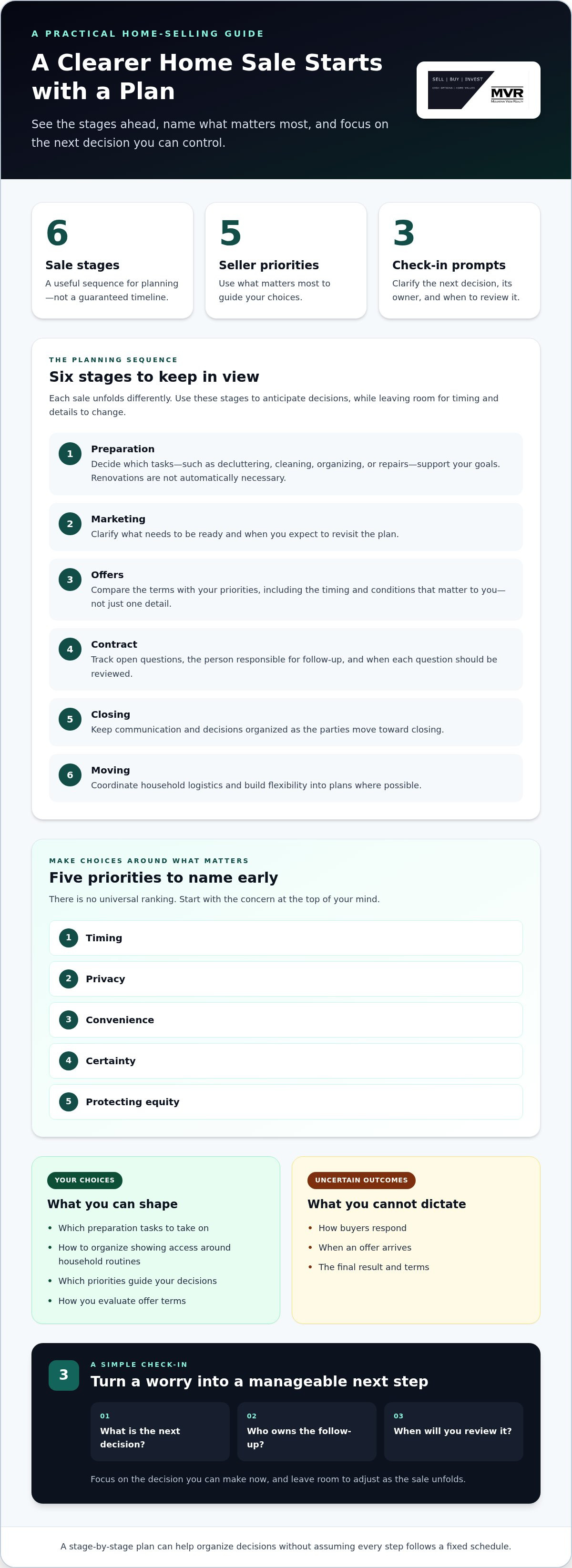
You can’t dictate buyer behavior, the number of offers, or the final result. You can make choices about your priorities, preparation, schedule, and how you evaluate offers. Before taking on a long task list, name the concern at the top of your mind. Is it timing, privacy, convenience, certainty, or protecting equity? Naming it helps you decide which questions to address first.
Start by separating decisions from outcomes:
- Your choices: which preparation tasks to take on, how to organize showing access, and what priorities should guide decisions.
- Uncertain outcomes: how buyers respond, when an offer arrives, and what the final terms will be.
This distinction is a practical first step in how to reduce stress when selling a house. Informed choices can prevent avoidable confusion, but they can’t remove every surprise. Focus on the next decision you can make, then leave room to adjust as the sale unfolds.
Where Stress Builds During a Home Sale: From Preparation to Closing
A home sale is easier to follow when you can see its stages, even though no two transactions unfold in exactly the same way. Preparation, marketing, offers, contract, closing, and moving make a useful planning sequence, not a guaranteed timeline. The pace and experience can vary with the property, transaction, and seller’s circumstances.
Stress can build when questions from one stage carry into the next. Uncertainty about what to prepare, for example, can make it harder to plan a marketing date. If no one has clarified who handles a task or when a decision is due, small unknowns can pile up. Keep a simple list of the next decision, who owns it, and when you’ll review it.
How preparation and showings can affect daily life
Getting a home ready to market may involve decluttering, organizing, cleaning, or deciding whether specific repairs make sense. Renovations aren’t automatically necessary. The right preparation depends on the home and your goals. A focused plan helps separate useful tasks from work that adds pressure without supporting your priorities.
Showings can affect privacy and routines, especially if household members work from home, have caregiving responsibilities, or need predictable schedules. Before marketing begins, agree on a realistic household plan. Decide which spaces need attention, how you’ll handle scheduling, and what arrangements would make access manageable. Aim for a workable routine, not a perfectly staged life.
Why offers and closing can bring a different kind of uncertainty
An offer is more than a number. Review its terms in light of your goals, including the timing and conditions that matter to you. Keeping your priorities in writing makes it easier to compare what’s proposed with what you need, rather than reacting to one detail alone.
After acceptance, coordination continues as the parties move toward closing. Decisions, communication, and planning still need attention, and the next step can depend on the transaction details. Track open questions and who is responsible for following up. This helps you distinguish an unanswered question from a missed task.
Moving plans can add pressure if you’re coordinating a sale, a new home, and household logistics at the same time. Don’t treat a general sequence as a promise about dates. Build flexibility into your plans where possible, and clarify timing as the transaction progresses. This stage-by-stage view is one practical part of how to reduce stress when selling a house: it helps you prepare for decisions without assuming every step will happen on a fixed schedule.
If you’re selling in Albuquerque and want to talk through decisions that may shape your sale, discuss your home-selling plan with Mountain View Realty LLC.
How to Reduce Stress When Selling a House: Choose Your Priorities
When several sale-related decisions compete for your attention, start by deciding what matters most. Your priorities might include timing, privacy, certainty, convenience, or protecting equity. There’s no universal ranking. A seller coordinating a move may value timing, while someone managing an estate may place more weight on privacy or keeping family members informed.
Use this short exercise to turn a broad concern into a manageable next step:
- Name the priority. Choose the outcome that matters most to you right now, such as maintaining privacy during showings or understanding the financial picture.
- Identify the stressor. Describe what feels uncertain or difficult. For example, you may not know how a showing schedule could fit around work or caregiving.
- Choose a next action. Pick one useful step, such as writing down your scheduling needs or listing questions you want answered before deciding.
- Set a check-in. Choose a regular time to review what you’ve learned and decide whether your priority or next step has changed.
A short priority list can guide your choices, though it can’t guarantee how the sale will unfold.
Turn worries into questions you can answer
Write down open questions so you don’t have to keep carrying them in your head. Separate what you know from what you’re assuming and what remains unanswered. For example, “I need to move by a certain date” may be a firm constraint. “Buyers won’t accept my preferred timing” may be an assumption to discuss. Start with one question that can guide your next decision instead of trying to solve the entire sale at once.
Financial and timing choices can affect one another. A real-estate professional can help you discuss trade-offs in relation to your goals and situation. Bring your written questions to that conversation. Clear answers can help you compare options, while your priorities remain the basis for deciding what fits.
Protect routines and reduce avoidable decision fatigue
Choose a regular time to review sale-related tasks and updates instead of reacting to each one as it arrives. Keep a simple running list of the question, next action, and person responsible. If other household members are involved, agree on who handles practical tasks and what the showing-day routine should look like. A shared plan can reduce last-minute confusion without requiring everyone to manage every detail.
It’s reasonable to ask for help with practical work, such as organizing belongings, coordinating household schedules, or tracking open questions. Delegating a task doesn’t mean handing over the decisions that matter to you. Keep your priorities visible and make time to consider important choices before responding. You can stay involved without carrying every task alone.
Build a Practical Albuquerque Home-Selling Plan That Fits Your Life
A useful selling plan starts with your life, not a generic checklist. Whether you’re selling in Albuquerque, Rio Rancho, Corrales, or a nearby community, your household routines, move plans, privacy needs, and personal priorities shape what a workable process looks like. The goal isn’t to control every part of a transaction. It’s to make decisions in a clear order and know what needs attention next.
Try this sequence:
- Identify your goals. Write down what you want the sale to support, such as a planned move, less upkeep, or a transition for your family.
- List your constraints. Note important dates, household schedules, privacy concerns, and people who need to be involved.
- Assign tasks. Decide who will handle preparation, communication, paperwork organization, and moving-related responsibilities.
- Schedule check-ins. Set regular times to review new information, revisit open questions, and decide what comes next.
This structure helps you apply how to reduce stress when selling a house to the details of your own move, instead of following a plan that doesn’t fit.
Create a plan around your timing and household needs
Before setting expectations for the transaction, identify your timing constraints. You might need to coordinate a move with a new home, a retirement date, or a family transition. Treat these as planning considerations, not assumptions about when a sale will happen. If you’re weighing different approaches, home selling options in Albuquerque can help you consider which paths may suit your priorities.
Write down who will manage preparation, track updates, and coordinate moving tasks. If a purchase is also part of your plan, consider how that may affect your timing and decisions. This guide to home trade-in versus traditional sale can help frame that comparison. The right plan depends on your circumstances, not a universal rule.
Make the next conversation more useful
Bring your goals, constraints, and open questions to a conversation with a real-estate professional. Ask how different selling paths compare, what decisions lie ahead, and which details you still need to understand. A useful advisor explains choices and trade-offs clearly, then gives you room to decide. For guidance on evaluating that working relationship, explore choosing a real-estate agent in Albuquerque.
Keep your plan flexible. As new information comes in, update the task list and check-in dates rather than treating an early outline as a fixed schedule. Your plan can support daily life while leaving space for informed decisions.
Get Support for Your Albuquerque Sale Without Giving Up Control
Good support makes your choices clearer without making them for you. A real-estate advisor can help organize questions, explain trade-offs, and outline possible next steps. You remain the person who decides which priorities matter most and which path fits your circumstances.
That distinction matters because no single selling approach suits every homeowner. You may be balancing a move, privacy, preparation, family needs, or plans for the home after a sale. Support is most useful when it helps you compare options against those needs without treating one result as automatic.
Discuss the selling path that fits your priorities
Mountain View Realty LLC offers several selling paths: CashOffer+, Home Trade-In, Renovate & Sell, Sell & Stay, Short Sale, and List with a Twist. They aren’t interchangeable, and a name alone can’t tell you which one suits your situation. Consider what you want to accomplish, the constraints you’re working with, and what you need to understand before choosing.
If staying in your home during a transition is relevant to your plans, selling and staying in your home can be one topic for discussion. Reviewing different paths doesn’t guarantee less stress. It gives you a chance to ask how each aligns with your priorities and make a more informed choice.
Choose clear guidance over pressure
An advisor’s role is to explain choices, potential risks, and next steps in plain language. That means helping you understand what is known, what remains uncertain, and what trade-offs may come with different approaches. You should have room to consider the information, ask follow-up questions, and decide without being pushed toward a predetermined outcome.
Robb Krautbauer brings 15 years of real-estate investing experience and 10 years as a licensed agent to an educational approach focused on helping sellers weigh their options. Mountain View Realty LLC has helped 200+ families and investors buy and sell across the Albuquerque metro. Each seller’s needs are different, so past experience can inform a conversation without dictating what you should do.
As you consider how to reduce stress when selling a house, look for support that turns uncertainty into useful questions and leaves key decisions in your hands. Bring your priorities, concerns, and timing considerations to a conversation, then take time to decide what makes sense for you.
Grab a time on my calendar, no pressure, just a plan for your next move.
Take the Next Step at Your Own Pace
Your next move doesn’t need to solve every part of the sale at once. Start with the decision that would make the biggest difference to your household, then give yourself room to ask questions and weigh your options. That’s a practical way to approach how to reduce stress when selling a house without letting outside pressure set your priorities.
A thoughtful plan can change as your needs become clearer. You can revisit timing, adjust tasks, and discuss different selling paths as you learn more. Progress doesn’t have to mean rushing. It can mean making one informed decision that supports what matters to you.
If you’re considering a sale in Albuquerque or the surrounding area, a conversation can help you think through your next step in a way that reflects your goals.
You can move forward with care, clarity, and a plan that feels like your own.
Frequently Asked Questions
Is it normal to feel anxious when selling a house?
Yes. Feeling anxious can be a normal response to the decisions and changes involved in a home sale. It doesn’t mean you’re making the wrong choice. To think through how to reduce stress when selling a house, name the specific concern, such as coordinating a move from Albuquerque or deciding which family members should be involved. Then write down what information would help you make your next decision.
How can I make home showings less stressful?
Set a simple routine for before a showing. Decide where household members will go, who will do a quick walk-through, and where you’ll keep personal papers or valuables. If you share the home with relatives, agree on the steps together so no one has to guess what to do. Tell your agent which scheduling or privacy concerns should shape the plan.
Should I accept the first offer to avoid more stress?
Not automatically. Review the offer as a whole, including its proposed timing and other terms, and compare those details with your plans. An offer that seems appealing at first, for example, may not fit a move that depends on a particular date. Ask your agent to explain unfamiliar terms in plain language, note what questions remain, and give yourself time to consider the trade-offs before deciding.
What can I do if selling takes longer than I expected?
Ask your agent to review the activity and feedback so far, then separate confirmed information from guesses about what a delay means. Consider whether buyers have raised similar questions or whether your timing needs have changed. Use that discussion to decide whether to keep the current plan or consider an adjustment. A slower-than-hoped process alone doesn’t prove your original decision was wrong.
Can I sell my house while buying another home?
It may be possible, but coordinating both moves involves decisions about timing, finances, and how much uncertainty you’re comfortable managing. Before choosing a route, write down your preferred move date and what you need to know about each transaction. Then discuss the trade-offs with your agent. For a closer look at one approach, see this guide to buying before selling in Albuquerque.
Does selling a house as-is always reduce stress?
No. Selling without making improvements may mean less preparation work, but you’ll still need to consider offers, timing, and your goals for the sale. Think about which tasks you’re willing and able to take on, then discuss how different approaches may affect your priorities. For an Albuquerque homeowner managing an estate or planning a move, the right choice depends on the property and personal circumstances, not a blanket rule.

Article by
Robb Krautbauer
Robb Krautbauer is the Owner and Qualifying Broker of Mountain View Realty, serving Albuquerque, Rio Rancho, Santa Fe, and surrounding New Mexico communities. With more than a decade of real estate experience, Robb specializes in luxury homes, strategic home marketing, and helping homeowners navigate important life transitions with confidence.
Known for combining luxury-level marketing, AI-powered technology, and innovative selling strategies, Robb helps clients maximize their home's value while creating a smooth, personalized selling experience. Whether assisting luxury homeowners, retirees, families downsizing, or real estate investors, his focus is always on delivering expert guidance, honest advice, and exceptional results.
When he's not helping clients achieve their real estate goals, Robb enjoys studying market trends, emerging technology, and investment strategies that keep Mountain View Realty at the forefront of the industry.
Disclaimer
**Disclaimer:** The information provided in this article is for general educational purposes only and should not be considered legal, tax, financial, or professional advice. Real estate laws, market conditions, and regulations change over time and may vary based on your individual circumstances. Before making any real estate decision, consult with qualified legal, tax, or financial professionals. If you have questions about buying or selling real estate in New Mexico, contact Mountain View Realty for guidance specific to your situation. © 2026 Mountain View Realty. All rights reserved. The content on this website may not be reproduced without written permission.


