
Peace of Mind During the Home-Buying Process: A Clear Step-by-Step Guide
What if the best way to buy a home with confidence is to slow down and make one decision at a time? Peace of mind during home buying process comes from understanding what’s ahead, knowing what matters most to you, and feeling comfortable asking questions before you commit.
It’s normal to feel overwhelmed by unfamiliar terms, competing priorities, and uncertainty around financing, offers, inspections, and timing. A clear plan helps you separate what needs a decision now from what deserves a closer look. You don’t have to rush simply because a choice feels important.
This guide walks through the key stages of buying a home, from setting priorities and preparing your finances to reviewing a property and moving toward closing. You’ll learn where to focus, what to clarify, and when to pause or reassess. For buyers across the Albuquerque metro, Robb Krautbauer brings 15 years of real-estate investing experience and 10 years as a licensed agent to complex decisions. His straightforward, educational approach keeps your goals at the center as you move forward at a pace that fits your needs.
Key Takeaways
- Separate personal preferences, financial facts, and timing concerns to see which questions need answers before you decide.
- Build peace of mind during home buying process with a clear roadmap, from setting priorities to closing.
- Compare homes using the factors that matter most to you, and distinguish verified details from assumptions.
- When an offer, inspection, or setback creates uncertainty, pause, gather information, and review your options before responding.
- Use informed guidance to weigh trade-offs and make choices that fit your goals, rather than reacting to pressure.
Why the Home-Buying Process Can Feel Uncertain, and How to Regain Perspective
Buying a home brings personal priorities, financial decisions, and timing together. You may be weighing where you want to live against what fits your budget, while learning unfamiliar terms and responding to new information. It’s reasonable to feel unsure. A concern deserves attention, but uncertainty by itself doesn’t prove that a decision is wrong.
Stress can rise when several questions arrive at once: Is the financing plan workable? Does a property meet your needs? Should you make an offer? What might an inspection reveal, and what deadlines apply? The answers depend on your circumstances and the terms of any agreement. You don’t need to resolve every question at the same time.
For a helpful perspective on preparation and support, watch this video:
Which parts of buying a home commonly create stress?
Financing can raise questions about affordability and loan terms. The search brings trade-offs between location, layout, condition, and personal priorities. An offer calls for decisions about price and terms, while an inspection may surface details that need review. Deadlines can add pressure, especially when several issues need attention at once.
These stages don’t unfold in exactly the same way for every buyer. If a financing question, a property decision, and an upcoming deadline overlap, first identify which issue needs action and when. Separating them makes it easier to focus on the next useful step.
How can buyers tell caution from pressure?
Careful questions help you make an informed choice. Ask yourself what facts you still need, who can explain them, and when a decision is required under the relevant agreement. Urgency alone isn’t a reason to proceed. At the same time, a specific concern, such as an inspection finding or a financial uncertainty, deserves a clear answer rather than dismissal.
Informed caution identifies a question that needs an answer; avoidable confusion leaves the question undefined.
Albuquerque-area example: Imagine you’re considering a home in Albuquerque and like its location, but aren’t sure whether the layout suits your daily needs. That’s a preference to assess, not proof that the home is a poor choice. If an inspection also raises a concern, keep the two issues separate: compare the layout with your priorities, then review the inspection information and available options.
Try this quick reset before taking the next step:
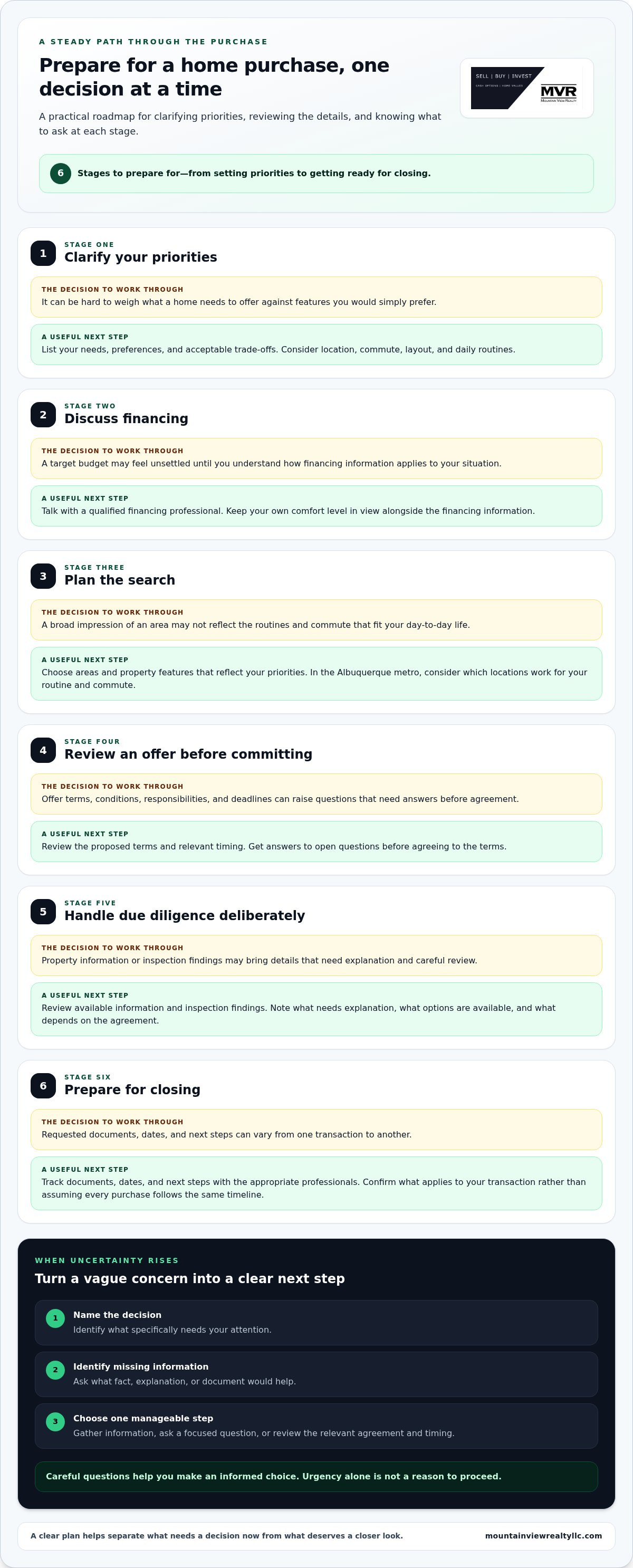
- Name the decision. What specifically needs your attention?
- Identify missing information. What fact, explanation, or document would help?
- Choose one manageable step. Gather that information, ask a focused question, or review the relevant agreement and timing.
This process can support peace of mind during home buying process without asking you to ignore real concerns or decide before you’re ready. It turns a vague sense of uncertainty into a question you can address, one step at a time.
How to Prepare for Each Stage of the Home-Buying Process
A clear roadmap turns a complex purchase into a series of decisions you can prepare for one at a time. Some tasks are within your control, such as defining priorities and organizing questions. Other details, including financing terms, deadlines, and contractual responsibilities, depend on your circumstances and the agreements you sign.
- Clarify your priorities. List what a home needs to offer, what you’d prefer, and where you’re willing to compromise. Consider how location, commute, layout, and daily routines fit together.
- Discuss financing. Talk with a qualified financing professional about your situation before treating a particular purchase budget as settled. Keep your own comfort level in view alongside the financing information.
- Plan the search. Choose areas and property features that reflect your priorities. Across the Albuquerque metro, communities can mean different routines and commutes, so identify which locations work for your day-to-day life rather than relying on a broad impression of the area.
- Review an offer before committing. Make sure you understand the proposed terms, any conditions, responsibilities, and relevant deadlines. Get answers to open questions before agreeing to the terms.
- Handle due diligence deliberately. Review available property information and inspection findings. Note what needs explanation, what options are available, and which questions depend on the agreement.
- Prepare for closing. Track requested documents, dates, and next steps with the appropriate professionals. Confirm what applies to your transaction rather than assuming every purchase follows the same timeline.
What should buyers clarify before touring homes?
Set out your needs, preferences, practical limits, and acceptable trade-offs. For example, you might need a certain number of rooms, prefer a particular area, and be flexible about finishes. Discuss financing before relying on a target budget. If you’re buying with someone else, agree on how you’ll share updates, discuss concerns, and make decisions. That groundwork makes it easier to assess each home consistently.
What questions help at offer, inspection, and closing stages?
At each stage, ask what a term means, what action is expected, who is responsible, and what deadline applies. During due diligence, write down questions raised by property information or an inspection, then review them before deciding how to proceed. At closing, clarify outstanding documents and next steps. Contract-specific or legal questions call for qualified guidance, since answers depend on the facts and signed agreement.
Separate preparation from advice. You can organize your priorities, records, and questions ahead of time. For loan-specific tools across the purchase process, consult the Consumer Financial Protection Bureau homebuying resources. A clear plan can support peace of mind during home buying process while leaving transaction-specific decisions to current, qualified guidance. Buyers preparing to purchase in Albuquerque can also explore buyer guidance in the Albuquerque area.
How to Compare Homes and Trade-Offs Without Rushing Your Decision
Two homes can meet the same basic needs and still feel very different to live in. A structured comparison helps you look past first impressions and weigh each property against your priorities. The goal isn’t to find a universally best home. It’s to understand which trade-offs make sense for you.
Compare each property using the same categories. Record what you know, what you prefer, and what still needs clarification. A simple side-by-side worksheet can include:
- Location: Note the address or area as a fact. Record commute, nearby destinations, or neighborhood feel as personal considerations to assess.
- Layout: Describe the rooms and flow you observed, then note how well they support your routines.
- Condition: Separate visible details and inspection information from assumptions about repairs or upkeep.
- Timing: Write down known timing details and questions that need clarification against the transaction schedule.
- Your priorities: Rate how well the home fits each need you identified, and explain any compromise.
Use the same categories whether you’re comparing homes in Albuquerque, Rio Rancho, or Corrales. Those place names help organize your search, but don’t determine which home will suit you best. Let your commute, routine, and property priorities guide the comparison.
How can buyers separate must-haves from preferences?
Start with daily usefulness. Ask what a feature allows you to do, how often you’ll rely on it, and whether another feature could meet the same need. A dedicated workspace may be essential for one buyer and optional for another. Note flexible details, such as finishes or room arrangement, separately from needs that affect how you use the home.
If a showing leaves you excited or disappointed, pause before scoring the property. Review your notes and compare the home with your original priorities, not only the strongest feeling from the visit.
How should buyers think through competing risks?
Separate known details from open questions. A property document or inspection report may provide facts to review; an unverified assumption about a future repair or resale value remains uncertain. Consider financial and practical trade-offs in light of your plans, and seek qualified input when a detail needs professional assessment. Don’t treat a prediction about future value as a fact.
A comparison is useful only when it reflects the buyer’s priorities, not a generic scorecard.
Keep your review grounded by marking each note as a fact, preference, assumption, or professional observation. “The room felt small” is a personal impression; a measured dimension is a factual detail; a concern about an unknown condition is a question to investigate. This distinction helps you see what needs follow-up and what comes down to preference.
A thoughtful comparison supports peace of mind during home buying process by making the trade-offs visible. You don’t need to eliminate every uncertainty. You do need to know which details matter, which questions remain open, and how each option fits the life you want to lead.
A Practical Plan for Handling Offers, Inspections, and Setbacks
A surprise during a purchase can make it tempting to react quickly. A repeatable process gives you a steadier way to respond without dismissing a concern or deciding before you understand it. Use these steps whenever an offer, inspection, or unexpected change leaves you unsure:
- Pause. Identify what needs attention and whether a decision deadline applies.
- Name the issue. Separate the immediate concern from other questions that can wait.
- Gather facts. Review the relevant documents and seek clarification from the appropriate professional.
- Review your options. Consider how each option fits your priorities, agreement, and practical limits.
- Decide and record the next step. Note what you’ve agreed to do, who is responsible, and any applicable deadline.
Keep a written record as you go. A short list of open questions, known deadlines, and agreed next steps keeps important details visible when several conversations are underway. Timing and available options depend on your circumstances and the terms of your agreement, so don’t rely on assumptions about what you can do.
What can buyers do when an offer is not accepted?
Give yourself room to feel disappointed, then review the decision with a clear head. Revisit the priorities you set before making the offer and consider whether its terms reflected your comfort level. If you’re still interested in pursuing another opportunity, discuss your approach with your real-estate professional. A declined offer doesn’t mean you should automatically raise your next offer or abandon your priorities. Use the pause to reassess, not to panic.
How can buyers respond to unexpected inspection findings?
Treat an inspection finding as information to understand, not an automatic reason to proceed or withdraw. Identify what the report says and what remains unclear. Don’t assume the finding’s severity or likely repair cost from a brief description. Discuss the concern with the appropriate real-estate professional and seek expert assessment when needed. The agreement’s terms and qualified guidance shape which next steps may be available.
Keep facts and interpretation separate in your notes. Record the report’s wording as a finding, then list your concerns and unanswered questions separately. Ask what needs clarification, who can provide it, and whether a relevant deadline is approaching. This makes it easier to discuss the issue calmly and weigh it alongside your needs, rather than treating every unexpected detail as a crisis.
After gathering information, compare the available options with your priorities and the terms of your agreement. Depending on the circumstances, you may decide to continue, seek further discussion, or reconsider. Contract-specific or legal questions call for qualified guidance. You don’t need certainty about every detail; you need clarity about what you know, what you don’t, and what action makes sense next. That process can help restore peace of mind during home buying process while keeping your decision grounded in facts.
How a Trusted Albuquerque Real-Estate Guide Can Support Confident Decisions
A steady real-estate guide can make a complex purchase easier to understand. A buyer’s agent can clarify the process, help organize questions, and offer perspective on trade-offs. The goal is to give you useful information, not to decide your priorities for you. You remain in control of what matters most and whether you’re ready to move forward.
What does steady, educational buyer guidance look like?
Good guidance leaves room for questions. An advisor can explain unfamiliar terms, outline the next step, and distinguish known details from items that need follow-up. They can also help you consider how a home’s features, condition, and location fit your stated goals. The published guide How to Choose a Real Estate Agent in Albuquerque offers another perspective as you consider what kind of support would suit you.
Mountain View Realty LLC's approach is honest, strategic, and educational. The focus is on explaining choices, clarifying next steps, and giving buyers room to decide without pressure. An investor’s perspective can help frame practical and financial trade-offs, while straightforward communication keeps the process clear. No advisor can promise a particular result, but a thoughtful conversation can help you better understand the decision in front of you.
Before meeting with an advisor, jot down what you hope to find, which areas you’re considering, what concerns you, and what remains unanswered. A short list is enough to give the conversation a useful starting point and keep the focus on your needs rather than a generic checklist.
How can Albuquerque buyers make a calm next move?
Buyers across the Albuquerque metro, including Bernalillo and Sandoval Counties, may be weighing different locations, routines, and property priorities. Bring those specifics into the conversation. You might discuss how a commute fits with your preferred features or clarify a question raised by a property document. A patient advisor can help organize these points and identify which details need further guidance.
Consider what communication style helps you feel informed. You may prefer written updates, time to review options, or a clear recap after a discussion. Sharing those preferences early can keep conversations focused and make decisions easier to track. Your next step might be gathering more information, adjusting your search, or clarifying what you want before taking action.
Grab a time on my calendar, no pressure, just a plan for your next move.
Peace of mind during home buying process comes from making informed choices, not from having every answer at once. Start with your goals and questions, then take the next manageable step with guidance that keeps your priorities at the center.
Robb Krautbauer
Owner & Qualifying Broker
Take Your Next Step With Clarity
You don’t need every detail settled before moving forward. Start with one useful action: write down what you want your next home to support, what questions remain, and which decision needs attention first. That gives you a clearer starting point for a conversation and helps keep your priorities in view as new information comes in.
For buyers across the Albuquerque metro, an experienced guide can bring structure to complex choices without taking those choices out of your hands. Mountain View Realty has helped more than 200 families and investors buy and sell across the area. The aim is straightforward guidance, clear communication, and room to make a decision that fits your circumstances.
If you’d like to talk through your goals or concerns, choose a time to make a plan, with no pressure to move faster than feels right.
Peace of mind during home buying process grows from taking the next step with purpose, not from rushing toward certainty. You can move forward thoughtfully, one informed decision at a time.
Frequently Asked Questions
How can I feel more confident during the home-buying process?
Confidence grows when you handle the purchase one decision at a time. Keep a running note of questions, such as what an unfamiliar term means or which document needs review. Before agreeing to offer terms, revisit the priorities you set for location, space, and daily use. Peace of mind during home buying process comes from understanding trade-offs, not eliminating every doubt. Ask for a clear explanation whenever a step feels unfamiliar.
Is it normal to feel anxious when buying a home?
Uncertainty can arise during a major personal and financial decision, though every buyer’s experience is different. If worry builds, write down the specific concern rather than trying to solve the whole purchase at once. For example, separate a financing question from a concern about a property’s condition. Focus on the next decision in front of you, and give genuine concerns the attention and information they need.
What should I do before I start touring homes?
Before touring, define what you need, which areas you prefer, and what practical limits matter in your daily life. List financing questions to discuss with a qualified lender, and agree with any co-buyer on how you’ll share updates and make choices. This preparation gives you a personal reference point while viewing homes in Albuquerque or nearby areas. It can also help you look beyond staging and focus on how a home would function for you.
Can I change my mind after making an offer on a home?
Whether you can change course depends on the offer, any signed contract terms, and the circumstances. Review the documents promptly with your real-estate professional so you understand what they say and what questions remain. If you need legal interpretation, seek qualified legal advice. Don’t assume that a conversation or a change of heart alone determines your options, timing, or any potential consequences.
What happens if an inspection reveals problems with a home?
Inspection findings give you information to consider, but they don’t automatically mean you should continue or withdraw. Read the report carefully and distinguish its observations from assumptions about severity or repair needs. If a finding needs technical interpretation, seek input from an appropriate expert. Then review your agreement and discuss possible next steps with your real-estate advisor. Your options depend on the inspection information and the terms that apply to your transaction.
Should I get mortgage preapproval before looking at homes?
A financing conversation before touring can help you understand possible loan options and plan your search with more context. Preapproval is not the same as a final loan commitment, and it doesn’t guarantee a particular rate or purchase budget. A qualified lender can explain how your circumstances and documents affect the process. Discuss timing, documentation, and what a preapproval does and doesn’t tell you before relying on it.

Article by
Robb Krautbauer
Robb Krautbauer is the Owner and Qualifying Broker of Mountain View Realty, serving Albuquerque, Rio Rancho, Santa Fe, and surrounding New Mexico communities. With more than a decade of real estate experience, Robb specializes in luxury homes, strategic home marketing, and helping homeowners navigate important life transitions with confidence.
Known for combining luxury-level marketing, AI-powered technology, and innovative selling strategies, Robb helps clients maximize their home's value while creating a smooth, personalized selling experience. Whether assisting luxury homeowners, retirees, families downsizing, or real estate investors, his focus is always on delivering expert guidance, honest advice, and exceptional results.
When he's not helping clients achieve their real estate goals, Robb enjoys studying market trends, emerging technology, and investment strategies that keep Mountain View Realty at the forefront of the industry.
Disclaimer
**Disclaimer:** The information provided in this article is for general educational purposes only and should not be considered legal, tax, financial, or professional advice. Real estate laws, market conditions, and regulations change over time and may vary based on your individual circumstances. Before making any real estate decision, consult with qualified legal, tax, or financial professionals. If you have questions about buying or selling real estate in New Mexico, contact Mountain View Realty for guidance specific to your situation. © 2026 Mountain View Realty. All rights reserved. The content on this website may not be reproduced without written permission.


