
Preparing Finances for a Home Purchase: A Strategic 2026 Checklist
Title: Preparing Finances for a Home Purchase: A Strategic 2026 Checklist
Meta Description: Master your mortgage readiness with a strategic financial roadmap for the Albuquerque market. Learn about credit, DTI, and local 2026 real estate price points.
URL Slug: preparing-finances-home-purchase-albuquerque-2026
Did you know that 34.3% of Albuquerque homes saw price drops this July, yet many qualified buyers are still sitting on the sidelines? Most people believe they need a massive 20% down payment or a perfect credit score to enter the market. In reality; preparing finances for a home purchase in New Mexico is more about strategic planning than hitting an impossible savings goal. Whether you're eyeing a property in Rio Rancho or a luxury estate in the High Desert, the path to ownership is clearer than you think.
It's completely normal to feel a bit of anxiety about 6.8% mortgage rates and local closing costs. You want a home that fits your lifestyle without compromising your financial peace of mind. This guide provides a no-fluff roadmap tailored specifically for our unique Albuquerque market. We'll break down 2026 credit requirements, explain why the 20% down payment is often a myth, and provide a clear checklist to help you move forward. You'll gain the confidence needed to start the mortgage process with a clear plan in hand.
Key Takeaways
- Identify why your Debt-to-Income (DTI) ratio is the most critical number for your mortgage application, often outweighing your credit score.
- Learn to budget for "hidden" Albuquerque costs beyond the down payment, including earnest money, inspections, and appraisal fees.
- Understand the property tax nuances between Bernalillo and Sandoval counties that can significantly impact your monthly payment.
- Follow a streamlined roadmap for preparing finances for a home purchase to ensure your pre-approval acts as a powerful negotiation tool.
- Explore strategic options like the Home Trade-In to leverage your current equity and simplify the transition to your next property.
The Foundation: Credit Scores and Debt-to-Income Ratios
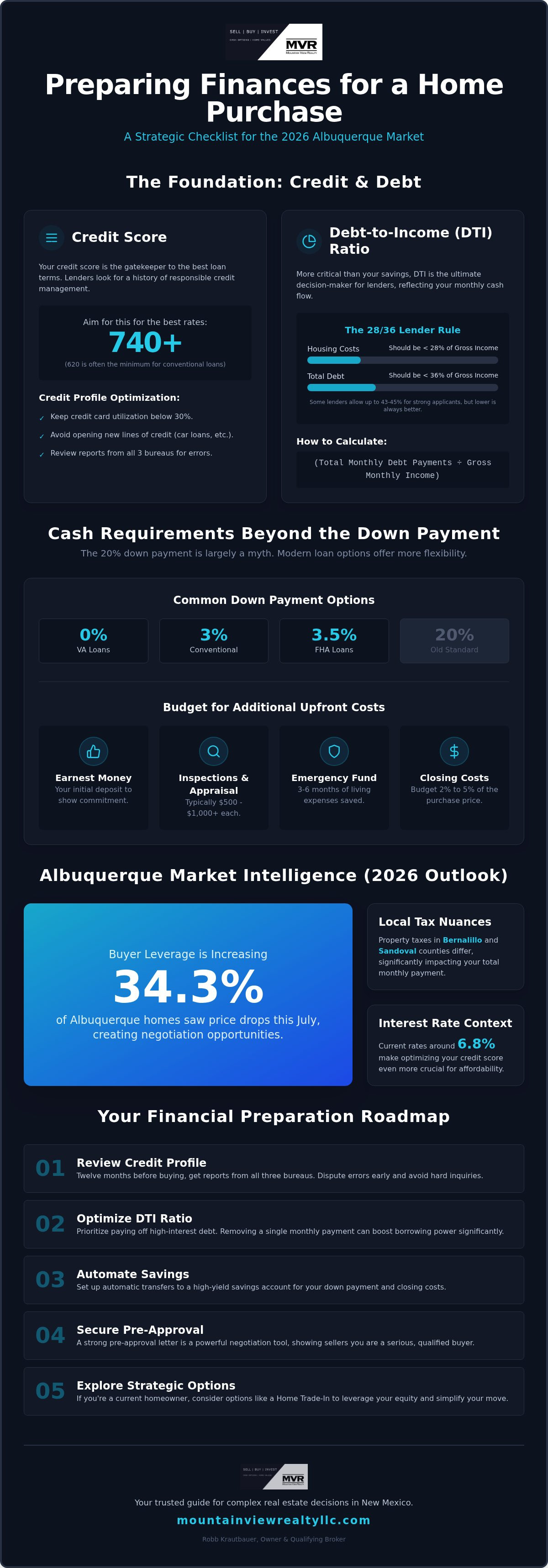
Before you browse listings in the High Desert or Rio Rancho, you must look at your numbers. Your credit score acts as the gatekeeper; your Debt-to-Income (DTI) ratio is the ultimate decision-maker. While many buyers focus solely on the down payment, lenders prioritize your monthly cash flow. When understanding mortgage loans, you'll find that a high DTI can disqualify even those with significant savings. It's the pulse of your financial readiness.
A soft credit pull is a preliminary look that doesn't impact your score. A hard inquiry happens when you formally apply for a loan, and it can cause a temporary dip. In the 12 months leading up to your purchase, limit hard inquiries. For the best 2026 interest rates, aim for a score of 740 or higher. While a 620 score is often the minimum for conventional loans, higher scores unlock lower monthly costs and better terms.
Strategic debt management often beats aggressive saving. If you have high-interest credit card debt, paying it off usually provides a better return than adding that same cash to your down payment. This move improves your score and lowers your DTI simultaneously. It's about maximizing your borrowing power before you ever sign a contract.
Optimizing Your Credit Profile
Start by reviewing your credit reports from all three bureaus. Errors are surprisingly common; disputing them early can take months but yields a significant score boost. Avoid opening new credit lines for cars or furniture during this time. These new monthly obligations can shrink your borrowing power by tens of thousands of dollars. Keep your credit utilization below 30% on every card to show lenders you use credit responsibly without depending on it.
Calculating Your Debt-to-Income (DTI) Ratio
Lenders typically follow the 28/36 rule. This means your mortgage payment shouldn't exceed 28% of your gross monthly income, and your total debt obligations should stay below 36%. While some conventional lenders allow up to 43% or 45% for strong files, staying lower gives you more financial breathing room. To calculate your ratio, divide your total monthly debt payments by your gross monthly income. If your ratio is high, consider paying off a small balance entirely to remove that monthly payment from the calculation. This is a vital step in preparing finances for a home purchase.
Cash Requirements: Beyond the Down Payment
The 20% down payment is a standard of the past. It's a myth that often keeps qualified buyers on the sidelines. Today, you have flexible options that prioritize your cash flow. Eligible veterans can access VA loans with 0% down. FHA loans require only 3.5%. Conventional loans often start as low as 3% for first-time buyers. While a smaller down payment usually triggers Private Mortgage Insurance (PMI), it allows you to start building equity years sooner than waiting to save a massive lump sum.
Preparing finances for a home purchase requires a clear view of upfront "hidden" costs. Earnest money acts as your initial deposit to prove your commitment to the seller. You will also pay for appraisals and home inspections before the keys are yours. These services typically cost between $500 and $1,000 each. Lenders also prefer that you maintain an emergency fund covering 3 to 6 months of living expenses. This safety net ensures you can handle the responsibilities of homeownership without any unnecessary stress.
Saving for the Down Payment
Success starts with automation. Treat your future mortgage payment like a current bill by setting up automatic transfers to a high-yield savings account. This is a foundational step when preparing finances for a home purchase. If you receive financial help from family, keep in mind that lenders require a formal gift letter. This document proves the money is not a loan that adds to your monthly debt. Some buyers also leverage 401(k) loans or penalty-free IRA withdrawals to access liquidity without disrupting their long-term investment strategy.
Preparing for Closing Costs
Budgeting for closing costs is non-negotiable. Expect to pay between 2% and 5% of the home's purchase price at the settlement table. These funds cover title insurance, recording fees, and lender underwriting. In the 2026 Albuquerque market, buyers have more leverage than in previous years. With price drops becoming more frequent, you can often negotiate seller concessions to cover a portion of these fees. If you're curious about how these costs apply to specific neighborhoods, speaking with a strategic real estate partner can help you plan your offer effectively.
Albuquerque Market Context: Local Financial Nuances
Albuquerque real estate isn't a monolith. Your monthly payment in Rio Rancho will look very different from a similar home in the High Desert, even if the mortgage interest rates are identical. This happens because local variables like property taxes and insurance premiums fluctuate based on your specific zip code. When preparing finances for a home purchase, you must account for these regional nuances to avoid surprises at the closing table. It's about looking beyond the listing price to see the true cost of ownership.
Property Taxes in the Albuquerque Metro
New Mexico property taxes are paid in arrears, but the "tax lightning" effect is what catches most buyers off guard. When a property changes hands, the county reassesses its taxable value. This often results in a significant jump from the previous owner’s capped rate. In Bernalillo County, you should estimate your monthly escrow based on the current mill levy rather than the seller's historical bill. Sandoval County rates can differ significantly, particularly in areas with special assessment districts. Calculating these figures early prevents your monthly payment from spiking in your second year of ownership.
Neighborhood Price Comparisons
Price points vary wildly across the metro area. Understanding these tiers helps you refine your savings goal and target the right inventory for your lifestyle. The following table provides a snapshot of current median price points across key communities as of 2026.
| Neighborhood / Area | Estimated Median Price (2026) |
|---|---|
| Rio Rancho South | $372,000 - $375,000 |
| Rio Rancho North | $395,000 |
| Broadmoor Heights / Vista Montebella | $500,000 - $900,000+ |
| North ABQ Acres / Sandia Heights | $649,000 |
| High Desert / Tanoan | $875,000 |
| Corrales | $941,000 |
Don't forget the "true" cost of living in our high desert climate. Homeowners insurance in New Mexico often requires specific considerations for wind and hail damage. Fire coverage is also a priority for homes located near the Bosque or the Sandia foothills. Additionally, local utility costs can impact your monthly budget. While evaporative cooling is affordable, refrigerated air units will increase your summer electric bills. Factoring these details into your roadmap ensures your financial foundation remains solid long after you receive the keys. If you aren't sure which area fits your financial profile, learning how to choose a real estate agent in Albuquerque can provide the local expertise needed to navigate these price gaps.
The Pre-Approval Process: Your Financial Roadmap
A pre-approval letter is more than just a requirement. It's your strongest negotiation tool in a market where sellers value certainty above all else. While a pre-qualification is based on your self-reported data, a verified pre-approval means an underwriter has already reviewed your financial history. This distinction is vital when preparing finances for a home purchase. It tells the seller that your offer is backed by real numbers and a committed lender. Working with a local Albuquerque lender is equally important. They understand New Mexico’s specific closing timelines and property tax cycles, which can prevent delays that often frustrate out-of-state banks.
Gathering Your Documentation
Lenders will ask for a comprehensive digital paper trail to verify your income and assets. You should have at least two years of W2s, full tax returns, and three months of bank statements ready for review. If you've received large deposits from a car sale or a family gift, keep the receipts and documentation. Lenders must verify that these funds aren't undisclosed loans. For self-employed buyers, the process is more detailed. You'll need your full 1040 forms along with any Schedule C or K-1 documents. Organizing these in a secure digital vault early in the process saves time and reduces the stress of last-minute requests.
Choosing the Right Mortgage Product
With 2026 mortgage rates hovering in the mid-to-high 6% range, your choice of loan product impacts your long-term wealth. Fixed-rate mortgages offer stability for those staying in their home for a decade or more. However, some buyers explore Adjustable-Rate Mortgages (ARMs) if they plan to move or refinance within five years. Don't overlook specialized local programs. The New Mexico Mortgage Finance Authority (MFA) offers loans and down payment assistance that can make homeownership more accessible for eligible residents. If you're also moving out of a current property, you should review your Albuquerque home selling options to coordinate your timelines effectively.
Strategic Options for Current Homeowners
Many financial guides assume you are starting from zero, but for established homeowners in Corrales or Albuquerque, equity is your most powerful tool. You aren't just saving for a down payment; you are managing a complex transition between two significant assets. Preparing finances for a home purchase when you already own property requires a strategy that addresses the "Buy Before You Sell" dilemma. Traditional bridge loans or a Home Equity Line of Credit (HELOC) can provide the liquidity needed to secure a new property before your current one hits the market. These tools allow you to act quickly when the right luxury estate becomes available.
The Home Trade-In Strategy
Moving twice is both expensive and exhausting. Our Home Trade-In strategy eliminates this burden by allowing you to unlock your current equity without the pressure of a simultaneous closing. You can shop for your next home with confidence, knowing your path is clear. This approach is particularly effective for seniors looking to downsize or families moving into larger homes in neighborhoods like North ABQ Acres. It provides a seamless transition that protects your peace of mind. To see how this compares to a standard transaction, review the benefits of a Home Trade-In vs. Traditional Sale for your specific timeline.
CashOffer+ for Competitive Bidding
In a market where Albuquerque sellers are increasingly wary of financing delays, removing contingencies is your best leverage. Our CashOffer+ program turns your equity into a cash-equivalent offer. This removes the mortgage contingency entirely, placing you at the front of the line. Sellers in Rio Rancho and the High Desert prioritize these offers because they represent a guaranteed closing. It is a sophisticated way of preparing finances for a home purchase that gives you the upper hand in negotiations, even when competing against multiple buyers.
Ultimately, a strategic sale of your current home should do more than just facilitate a move. It should fund your next luxury purchase while preserving your long-term wealth. By leveraging these modern transaction structures, you can navigate the 2026 market with authority and ease. You aren't just buying a house; you are executing a calculated financial move that sets the stage for your next chapter in New Mexico.
Securing Your Financial Future in Albuquerque
Mastering your numbers is the first step toward a successful move in the 2026 market. By focusing on your Debt-to-Income ratio and debunking the 20% down payment myth, you've already gained a significant advantage. Local nuances, like property tax reassessments in Bernalillo and Sandoval Counties, require a proactive approach to ensure long-term affordability. Preparing finances for a home purchase is about strategic equity management rather than just hitting a savings target.
With 15 years of investor experience, I provide a no-fluff, strategic perspective for buyers across the Albuquerque metro. Whether you are navigating a luxury transition or entering the market for the first time, you deserve a partner who provides clarity. We can build a plan that prioritizes your long-term financial goals and peace of mind.
Your next chapter in New Mexico is within reach. I look forward to helping you move forward with confidence and purpose.
Robb Krautbauer, Owner & Qualifying Broker
Frequently Asked Questions
How much money should I save before buying a house in Albuquerque?
You should aim to save between 5% and 10% of your target purchase price to cover both the down payment and closing costs. In the Albuquerque metro, median prices range from approximately $372,000 in Rio Rancho to over $875,000 in the High Desert. Additionally, maintaining a cash reserve of 3 to 6 months of living expenses ensures you can handle property maintenance and unexpected repairs without financial stress.
Can I buy a home in New Mexico with a 600 credit score?
You can qualify for an FHA loan with a 600 credit score, although you may face higher interest rates. While the official FHA minimum is 580 for a 3.5% down payment, many lenders in Bernalillo County use overlays that require a score of 620 or higher. Improving your score to 740 will unlock the most competitive 2026 rates, which can save you thousands of dollars over the life of your loan.
What is the minimum down payment for a house in 2026?
The minimum down payment is 0% for eligible veterans using a VA loan. For other buyers, FHA loans require 3.5%, while some conventional products for first-time buyers start at 3%. If you are a repeat buyer, you should expect a 5% minimum. Preparing finances for a home purchase involves choosing a loan product that balances your upfront cash with the long-term cost of Private Mortgage Insurance (PMI).
Are closing costs higher in Albuquerque than in other cities?
Closing costs in Albuquerque typically range from 2% to 5% of the purchase price, which is consistent with the national average. Local fees for title insurance and New Mexico recording taxes vary slightly by county. In a market where 34.3% of homes saw price drops in mid-2026, you may have more leverage to negotiate seller concessions. These concessions can often cover a significant portion of your upfront transaction expenses.
How does New Mexico property tax impact my monthly mortgage payment?
New Mexico property taxes are reassessed when a home changes hands, which can cause your monthly payment to rise after the first year. This "tax lightning" effect occurs because the previous owner’s valuation cap is removed upon sale. You should calculate your monthly escrow based on the current mill levy for Bernalillo or Sandoval County rather than the seller's historical tax bill. This prevents unexpected budget shortfalls when the county updates its records.
Should I pay off my car loan before applying for a mortgage?
Not necessarily. While paying off a car loan lowers your Debt-to-Income (DTI) ratio, it also reduces your available cash for a down payment. Lenders prioritize your total monthly obligations versus your gross income. If your DTI is already below the 36% threshold, keeping that cash for your home purchase might be the more strategic move. It's best to consult with a local lender before making large payments that impact your liquidity.
What financial documents do I need for a pre-approval?
You will need two years of W2s, full tax returns, and three months of bank statements to verify your assets. If you are self-employed, you must provide your Schedule C or K-1 forms. Lenders also require documentation for any large deposits or gift funds from family members. Organizing these documents early is a vital part of preparing finances for a home purchase, as it allows for a faster and more reliable underwriting process.
How do I use my current home equity to buy my next house?
You can leverage your current equity through a Home Trade-In or the CashOffer+ program to secure your next property without moving twice. These strategies allow you to unlock the value of your existing home to make a non-contingent offer. This is especially useful in competitive areas like Corrales or Sandia Heights, where sellers prioritize buyers who don't need to wait for their current house to sell before they can close.

Article by
Robb Krautbauer
Robb Krautbauer is the Owner and Qualifying Broker of Mountain View Realty, serving Albuquerque, Rio Rancho, Santa Fe, and surrounding New Mexico communities. With more than a decade of real estate experience, Robb specializes in luxury homes, strategic home marketing, and helping homeowners navigate important life transitions with confidence.
Known for combining luxury-level marketing, AI-powered technology, and innovative selling strategies, Robb helps clients maximize their home's value while creating a smooth, personalized selling experience. Whether assisting luxury homeowners, retirees, families downsizing, or real estate investors, his focus is always on delivering expert guidance, honest advice, and exceptional results.
When he's not helping clients achieve their real estate goals, Robb enjoys studying market trends, emerging technology, and investment strategies that keep Mountain View Realty at the forefront of the industry.
Disclaimer
**Disclaimer:** The information provided in this article is for general educational purposes only and should not be considered legal, tax, financial, or professional advice. Real estate laws, market conditions, and regulations change over time and may vary based on your individual circumstances. Before making any real estate decision, consult with qualified legal, tax, or financial professionals. If you have questions about buying or selling real estate in New Mexico, contact Mountain View Realty for guidance specific to your situation. © 2026 Mountain View Realty. All rights reserved. The content on this website may not be reproduced without written permission.


