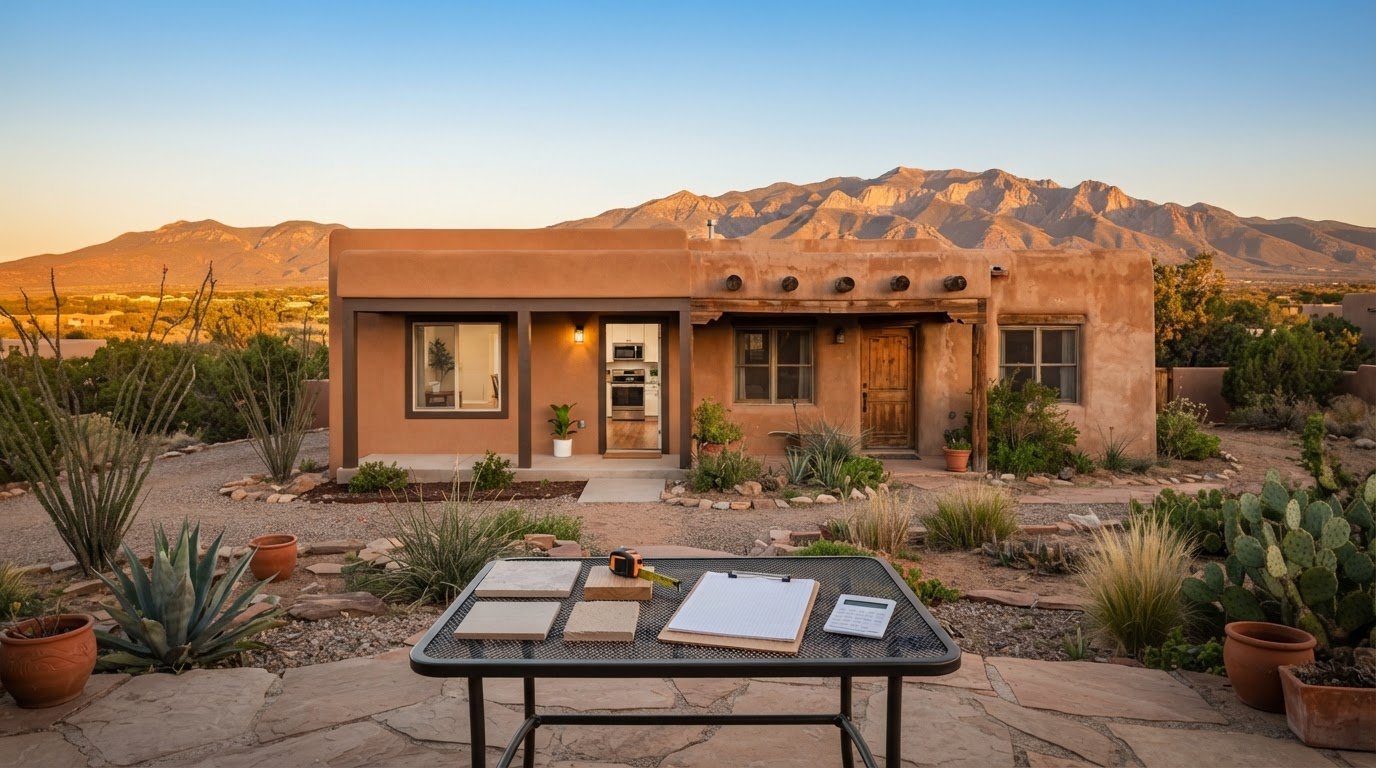
Should You Fix Up Your Home to Sell for More?
The smartest way to fix up home to sell for more may be to skip a costly project. A polished kitchen can catch the eye, but a repair that addresses visible wear or a known condition concern may matter more to a buyer considering the whole property. The right choice depends on what your home needs, what buyers are likely to notice, and what the work will require from you.
It’s reasonable to hesitate before investing time and money in updates that may not improve your sale outcome. In Albuquerque, Rio Rancho, Santa Fe, and nearby communities, there’s no universal pre-sale checklist that fits every home or seller. The goal is to protect your equity without taking on work simply because your home is going on the market.
This guide will help you sort condition concerns from optional improvements, weigh likely buyer response against the effort involved, and compare preparing a home with selling as-is. You’ll also see how a traditional listing compares with Mountain View Realty’s Renovate & Sell. With a clear view of the trade-offs, you can choose a path that fits your property, priorities, and capacity.
Key Takeaways
- Decide whether to fix up home to sell for more by weighing likely buyer response against the time, effort, and spending involved.
- Separate known condition concerns that may prompt buyer questions from optional updates intended to improve presentation.
- Compare preparing the home with selling as-is, including the differences in timing, effort, and control.
- Use a step-by-step plan to assess your goals and the home’s condition before gathering estimates for optional projects.
- Consider Renovate & Sell as one preparation path, with the scope shaped around your property and goals, not a promised sale result.
Should You Fix Up Your Home to Sell for More in Albuquerque?
Deciding how to fix up home to sell for more is really a question of trade-offs. Work may make a home more appealing to some buyers, but it also takes money, coordination, and time. The useful measure isn’t how many updates you complete. It’s whether the work supports your likely net proceeds and fits your priorities.
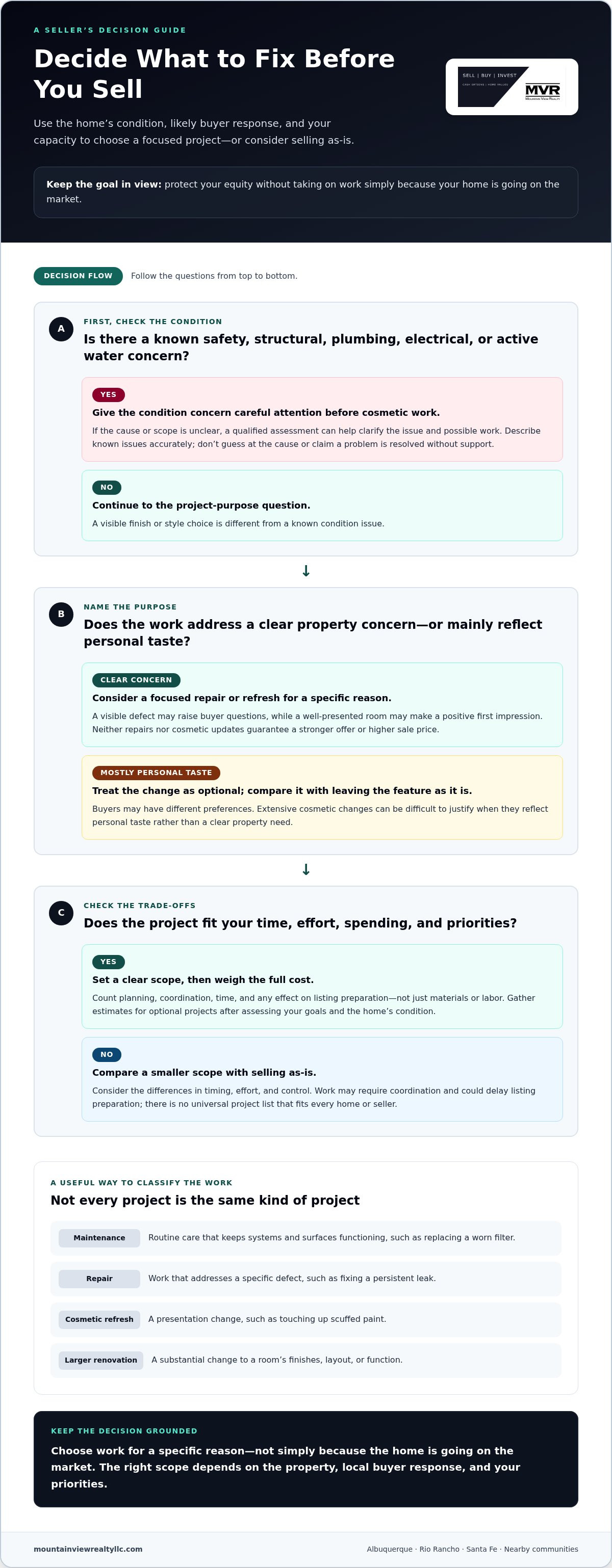
Start by separating repairs from improvements. A repair addresses a known problem, such as a leaking faucet or damaged stucco. An improvement changes the home’s appearance or function, such as updating finishes or reworking a room. Some projects do both, but naming the task helps you distinguish what needs attention from upgrades that are optional.
There’s no universal project list for Albuquerque homes. A buyer’s response can vary with the home’s condition, features, and the alternatives available in the local market. Base your decision on the property in front of you and current local evidence, not a renovation checklist or a promised sale price.
- Maintenance: Routine care that keeps systems and surfaces functioning, such as replacing a worn filter.
- Repair: Work that addresses a specific defect, such as fixing a persistent leak.
- Cosmetic refresh: A change to presentation, such as touching up scuffed paint.
- Larger renovation: A substantial change to a room’s finishes, layout, or function.
These categories help frame the decision, but they don’t dictate it. The right scope depends on the property and market. For a broad overview of the range of Home improvement projects, consider how varied the term can be, from small upkeep tasks to major renovations.
What does “fixing up” a home before sale actually mean?
“Fixing up” can mean anything from touching up paint to changing a room’s layout. Maintenance keeps things in working order; a repair addresses a known issue; a cosmetic refresh changes appearance; and a larger renovation changes a room or its function. These are useful categories for describing a possible project, not a checklist of work every seller should do.
When might pre-sale work be worth considering?
Consider work when a known condition issue could raise buyer questions, affect confidence, or become part of sale negotiations. A visible leak, for example, deserves a different kind of attention from a finish you wouldn’t choose today. By contrast, extensive cosmetic changes may be difficult to justify if they reflect personal taste rather than a clear property need. No upgrade guarantees a higher sale price.
Before committing, clarify what you need from the sale. You may value a shorter preparation period, less project management, or more control over how the home is presented. Those priorities matter alongside the home’s condition. A focused repair may make sense, while a broader refresh may not suit your timing or capacity. Choose work for a specific reason, not simply because the home is going on the market.
How Repairs and Improvements Can Affect a Home Sale
A home’s condition can influence what buyers notice, what they ask about, and what comes up during an inspection. A visible defect may prompt questions about its cause or scope. A well-presented room can make a positive first impression, but appearance alone doesn’t resolve a concern about the home’s function or condition.
That distinction matters when deciding whether to fix up home to sell for more. Separate issues that may affect safety or function from optional changes that mainly reflect taste. Neither repairs nor cosmetic updates guarantee a stronger offer. Their value depends on the property, buyer response, and the trade-offs involved.
Which condition issues deserve attention before cosmetic updates?
Give known safety, structural, plumbing, electrical, or active water concerns careful attention before choosing cosmetic work. A stain, for example, may be a surface issue or a sign of a larger problem. Its appearance alone can’t establish the cause. A qualified assessment can help clarify the issue and possible scope of work.
Describe known issues accurately. Avoid guessing at a cause, saying a problem is resolved without support, or making broad claims about what a repair will accomplish. Clear information keeps the discussion grounded in the property’s actual condition.
Why do appearance upgrades have uncertain sale value?
Buyers may not share the seller’s preferences. Fresh paint or new lighting might make a space feel more inviting to one person, while another may plan different finishes. Kitchen projects can also range widely in scope. Treat these as possible presentation choices, not guaranteed investments or promises of a higher offer.
The National Association of Realtors Remodeling Impact Report offers context on remodeling, but broad findings don’t determine what a specific project will mean for an individual Albuquerque home. Property condition, project scope, and local buyer response still matter.
Count the full cost of a decision, not just materials or labor. A project may require planning, coordination, and time to review or complete the work. If it delays listing preparation, that delay is part of the trade-off. Compare the project with a simpler alternative, including leaving the feature as it is.
- Condition work: Identify what’s known, what needs assessment, and whether the issue affects function or may prompt buyer questions.
- Presentation work: Ask whether the change addresses a clear concern or mainly reflects personal taste.
- Project burden: Factor in scheduling, oversight, and any effect on your intended timeline.
Net proceeds are the sale proceeds remaining after relevant selling and preparation expenses. The key question isn’t simply whether a project makes the home look newer. It’s whether its likely contribution justifies the money, time, coordination, and possible delay.
If you’re weighing a specific repair against listing plans, a property-specific sale strategy can help you compare options without assuming every home needs the same preparation.
Fix Up or Sell As-Is? Compare the Trade-Offs
Choosing whether to fix up home to sell for more means weighing more than appearance. Consider the work involved, your move timeline, and how much control you want over preparation. A completed project may address a concern or improve presentation, but doing more work doesn’t guarantee a higher offer or better net result.
Selling as-is is another path, not a promise that buyers will overlook condition or that the transaction will be faster or simpler. Buyers may consider visible issues when deciding what to offer and what questions to raise. Use the comparison below to identify which trade-offs matter most to you.
| Factor | Prepare the home | Sell as-is |
|---|---|---|
| Likely effort | Plan, coordinate, and review selected work. | Skip chosen pre-sale projects while still managing the sale process. |
| Timing | Work may affect when the home is ready to list. | May avoid project time, but doesn’t ensure a quicker sale. |
| Decision control | Choose which issues or presentation details to address. | Leave more condition decisions for buyers to assess. |
| Condition concerns | Selected issues may be addressed before marketing. | Some visible or unresolved concerns may remain part of buyer questions. |
When might selling as-is fit your priorities?
As-is may fit if you have limited time, energy, or capacity to manage projects, or if coordinating work would compete with a move, estate transition, or another major responsibility. It may also suit a seller who prefers to leave choices to the next owner. Buyers may still account for visible condition when considering an offer, and an as-is approach doesn’t remove the need to consider known issues.
When could targeted preparation make more sense?
Focused preparation may be worth exploring when one specific condition or presentation concern stands out. Assess that item on its own before expanding the scope. Addressing a clearly identified repair, for example, is a different decision from remodeling an entire kitchen. A smaller, purposeful scope can preserve more choice over time and effort, but it doesn’t assure a particular financial outcome.
Your capacity and move timeline matter as much as the property. If your move date is firm, a project with uncertain scheduling may not fit, even if you’d prefer the finished look. If you have room to manage preparation, a targeted plan may be practical. Compare the specific work you’re considering with what happens if you leave it for the buyer to evaluate, rather than comparing “renovated” with “untouched” in the abstract.
Before deciding, write down the condition concern or presentation goal, the work involved, and how it fits your plans. Then compare that path with listing without the project. More work isn’t automatically better preparation. Choose an approach that suits the home and your priorities without assuming either option guarantees a particular buyer response or sale result.
A Practical Albuquerque Plan for Prioritizing Pre-Sale Work
The strongest preparation plan starts with the home’s condition and your priorities. In Albuquerque, Rio Rancho, Corrales, and nearby communities, the right scope depends on the specific property and current local evidence, not a one-size-fits-all renovation list. If you’re deciding whether to fix up home to sell for more, follow a clear sequence before gathering project estimates.
- Clarify your goals. Note your preferred move timeline, how much project coordination you can manage, and what matters most: addressing condition concerns, improving presentation, or limiting disruption. A seller managing an estate may have different priorities from someone preparing to move on a set schedule.
- Assess the home’s condition. Record known maintenance concerns, visible wear, and unfinished projects. Separate what you know from what you suspect. If an issue involves a system or structure that needs expertise, a qualified assessment can clarify its condition before you choose a scope of work.
- Compare your options. For each possible project, note the work, timing, coordination, and disruption involved. Compare that plan with a sale strategy that doesn’t require completing the work. Use current local evidence to assess likely buyer response rather than relying on general renovation claims.
- Decide what to prepare. Identify any condition work you’ve chosen to address, then consider optional updates separately. Keep the final scope aligned with your goals and capacity. You can choose focused preparation, a renovation-assisted approach, or a sale without completing optional work.
How should you assess your home's readiness?
Walk through the home and make a room-by-room record. Note what’s confirmed, such as an already identified repair, and what’s only an assumption, such as guessing at the cause of a mark or stain. Add unfinished projects and visible wear, but don’t treat every dated feature as a problem. This record helps distinguish a condition question from a personal preference before you consider updates.
How can you compare a project's effort with its likely benefit?
For each project, write down the work involved, the sequence and coordination it may require, and whether the timing fits your plans. Then compare those demands with selling without that work. A broader strategy comparison can also help clarify which sale approach suits your situation. Mountain View Realty’s guide, “Home Selling Options in Albuquerque,” is a useful reference for that decision.
Keep the analysis specific to the property. A checklist that seems suitable for one Albuquerque home may not fit a property in Corrales or Rio Rancho, where features, condition, and relevant buyer evidence may differ. Ask what each task is meant to accomplish, what it requires from you, and whether you’d still choose it if it didn’t change the sale outcome you hope for.
Once you’ve separated necessary condition work from optional updates, gather estimates for the projects that remain under consideration. This avoids pricing every possible upgrade before you know which ones support your plan. A measured decision can protect your time and equity while leaving room to choose a manageable level of preparation.
How Renovate & Sell Can Fit Your Home-Sale Strategy
Some sellers want to prepare a home before it goes on the market but prefer to consider that work as part of a broader sale plan. Mountain View Realty’s Renovate & Sell gives sellers a way to consider preparation alongside the sale instead of treating repairs and listing decisions as separate questions.
The right scope depends on the property and your goals. One seller may want to address a specific condition concern; another may prefer to avoid extensive work and focus on a different sale path. Renovate & Sell doesn’t promise a particular price or return. It lets you explore whether preparation fits your circumstances.
What should a seller clarify before choosing a renovation-assisted path?
Start with your desired timeline, your comfort with project coordination, and what you most want to protect: equity, time, or peace of mind. Then compare preparation with other sale approaches, including a standard listing or selling as-is. No single path suits every seller. Clear priorities keep the decision tied to your needs instead of assumptions about what every buyer wants.
An individualized plan can organize the choices without requiring a broad remodel. It can help distinguish work you consider necessary from optional updates, then weigh how each choice fits your timing and capacity. That structure can be especially useful when you’re managing a move, an estate, or another transition at the same time as a home sale.
Robb Krautbauer brings 15 years of real-estate investing experience and 10 years as a licensed agent to an educational approach focused on reducing stress and protecting client equity. The goal is to help you understand the trade-offs and choose a direction with care, not assume that more renovation will produce a better result.
Marketing is another part of a sale strategy, separate from any promise about price or outcome. For example, a $1.7 million Jemez Pueblo estate campaign generated more than 35,000 video views and 18,000 ad impressions. Those figures describe campaign reach. They don’t establish what a different property will sell for or guarantee a particular result.
What is a low-pressure next step?
If you’re selling in Albuquerque or a nearby community, begin by discussing the home’s condition, your timeline, and how much preparation you’re comfortable taking on. Then compare possible strategies without assuming renovation is required or selling as-is is the only alternative.
Choose a Next Step That Fits Your Plans
If you’re weighing whether to fix up home to sell for more, make a decision that reflects your priorities, not someone else’s renovation checklist. Your next move may be a focused assessment, a comparison of sale strategies, or time to clarify what you’re comfortable managing.
You don’t need every answer before you begin. A thoughtful discussion can help frame the choices around your home and plans, without pressure to take on work that doesn’t feel right. The goal is a clear direction and an understanding of the trade-offs.
Whatever path you choose, you can make it deliberately and on your terms.
Frequently Asked Questions
Is a pre-listing inspection worth considering before fixing up a home?
It can help you understand the home’s condition before choosing what work to pursue. An inspection report may help separate observed conditions from questions that need more investigation, but it doesn’t mean every listed item should be repaired before sale. A note about a system, for example, may need clarification about its condition or scope. Consider the findings alongside your goals and the property’s circumstances, without assuming they’ll prevent later negotiations.
Should I repaint my home before selling it?
Repainting may be worth considering if the existing finish draws attention away from the room, but it isn’t a guaranteed way to improve an offer. Look at the walls in natural and indoor light. Peeling or visibly marked paint may affect presentation differently from a color you simply wouldn’t choose. Deciding whether to fix up home to sell for more means considering the condition, work involved, and your priorities, not assuming every room needs a new coat.
Should I remodel my kitchen before selling my home?
A kitchen remodel isn’t a default step before a sale. First define what you hope it will address: a specific condition concern, limited function, or dated appearance. Then consider the scope and how it fits your timeline. A focused preparation plan may suit your goal better than changing multiple finishes or fixtures. General return estimates can’t determine the value of a remodel for your property or predict how buyers will respond.
Can I sell my home while repairs are still underway?
You may consider selling while work remains underway, but the practical approach depends on the type of work, the home’s condition, and your transaction plans. A partly completed bathroom project, for example, may raise different questions from a small repair that doesn’t affect how a room is used. Keep a clear record of what’s finished and what remains, and describe the current condition so buyers understand what they’re viewing.
Is home staging the same as renovating before a sale?
No. Staging focuses on how the home is presented, while renovation changes or updates the property itself. Staging might involve arranging furnishings to show how a room can be used; renovation might involve changing fixed finishes or features. You can consider presentation without starting a construction project. Whether staging or another preparation step fits depends on the home, marketing plan, and your preferences. Neither approach guarantees a particular offer or sale result.
What should I consider before fixing up an inherited home for sale?
Begin by clarifying who is involved in decisions, what condition concerns the family already knows about, and how much time and coordination everyone can manage. If relatives have different views about updates, agree on priorities before requesting estimates or starting work. Then compare targeted preparation with selling in the home’s current condition. An inherited property may call for its own timeline and strategy, so don’t assume another family’s repair plan will fit.

Article by
Robb Krautbauer
Robb Krautbauer is the Owner and Qualifying Broker of Mountain View Realty, serving Albuquerque, Rio Rancho, Santa Fe, and surrounding New Mexico communities. With more than a decade of real estate experience, Robb specializes in luxury homes, strategic home marketing, and helping homeowners navigate important life transitions with confidence.
Known for combining luxury-level marketing, AI-powered technology, and innovative selling strategies, Robb helps clients maximize their home's value while creating a smooth, personalized selling experience. Whether assisting luxury homeowners, retirees, families downsizing, or real estate investors, his focus is always on delivering expert guidance, honest advice, and exceptional results.
When he's not helping clients achieve their real estate goals, Robb enjoys studying market trends, emerging technology, and investment strategies that keep Mountain View Realty at the forefront of the industry.
Disclaimer
**Disclaimer:** The information provided in this article is for general educational purposes only and should not be considered legal, tax, financial, or professional advice. Real estate laws, market conditions, and regulations change over time and may vary based on your individual circumstances. Before making any real estate decision, consult with qualified legal, tax, or financial professionals. If you have questions about buying or selling real estate in New Mexico, contact Mountain View Realty for guidance specific to your situation. © 2026 Mountain View Realty. All rights reserved. The content on this website may not be reproduced without written permission.


