The Albuquerque Home Inspection Checklist: A Buyer’s Guide to the High Desert
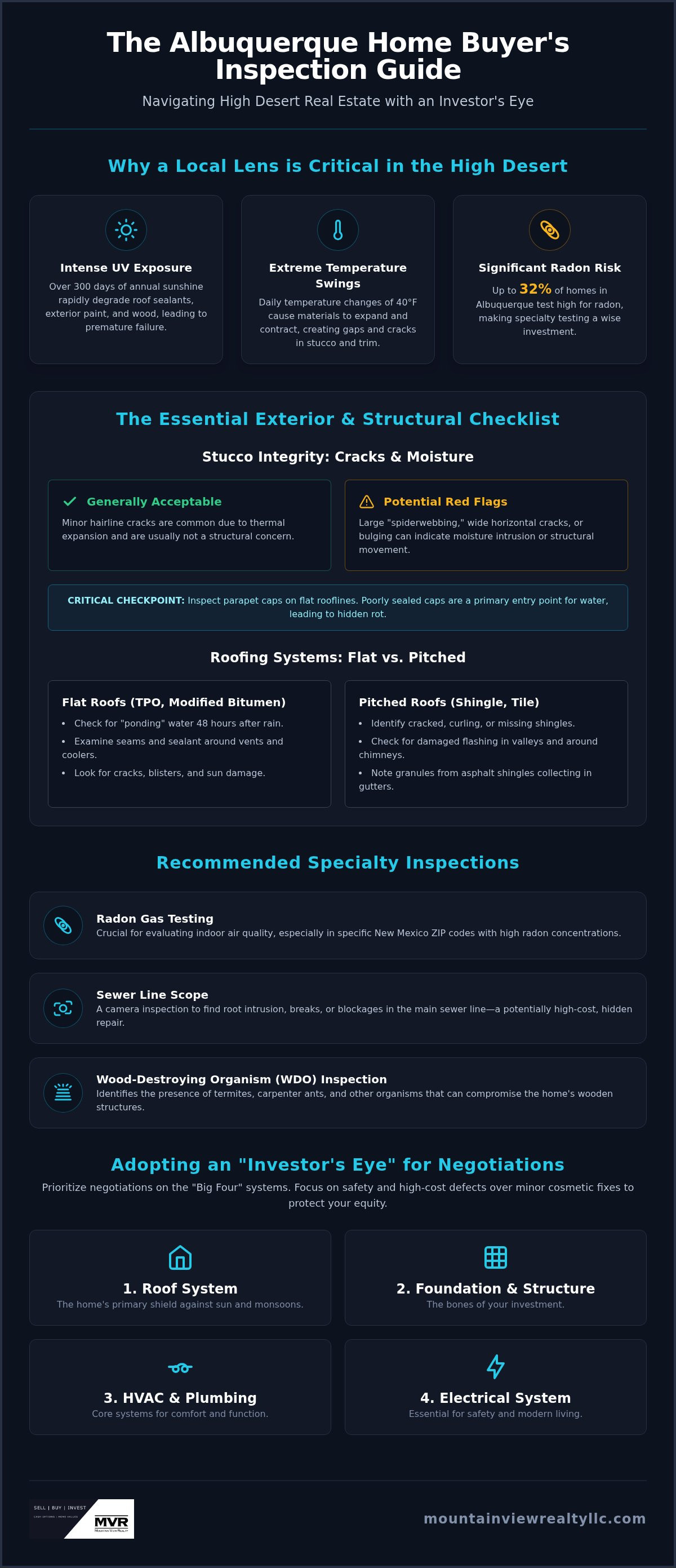
Did you know that up to 32% of homes in Albuquerque test high for radon? While the High Desert offers stunning views and a unique lifestyle, our local environment places specific demands on residential construction. It is completely normal to feel a sense of dread when the inspector starts walking the roof. You might worry about hidden stucco failure or wonder if that aging evaporative cooler is a deal-breaker. You need more than a generic list of repairs. You need a targeted Albuquerque home inspection checklist for buyers that accounts for our intense sun and seasonal monsoons.
We understand that the inspection period is often the most stressful part of a real estate transaction. Our goal is to replace that anxiety with professional clarity. This guide promises to help you navigate the process with an investor's eye for detail. You will learn how to categorize issues as either critical structural needs or simple cosmetic updates. We will preview the specific local red flags, including drainage patterns and sewer line integrity, while providing a clear plan for your negotiation strategy. By the time you finish reading, you will have the confidence to move forward or walk away with your equity protected.
Key Takeaways
- Learn how Albuquerque’s intense UV exposure and extreme temperature fluctuations impact building materials differently than in other climates.
- Use this comprehensive Albuquerque home inspection checklist for buyers to distinguish between minor cosmetic hairline cracks and serious structural stucco failure.
- Understand the specific maintenance requirements of evaporative cooling systems and how to evaluate refrigerated air units for 100-degree summers.
- Identify when to request specialty tests for radon or wood-destroying organisms based on specific New Mexico ZIP codes and environmental risks.
- Adopt an "investor’s eye" approach to prioritize the "Big Four" systems during negotiations to protect your equity and long-term peace of mind.
Why Albuquerque Home Inspections Require a Local Lens
Before you commit to a major investment, you must understand the fundamentals of the process. What is a home inspection? At its core, it is a professional, non-invasive examination of a property's condition on a specific day. In our region, a generic approach isn't enough. An effective Albuquerque home inspection checklist for buyers must account for the unique stresses our High Desert environment places on a structure. We look beyond the surface to identify how intense UV rays and massive temperature swings have aged the home over time.
With 15 years of real estate investing experience, I view every property through an "investor’s eye." This perspective prioritizes protecting your equity rather than just checking boxes. We don't just look for what is broken today. We look for signs of future failure that could cost you thousands down the road. Early detection of High Desert wear is the best way to ensure your investment remains sound.
To see these High Desert challenges in action, watch this helpful video regarding local inspection traps:
The High Desert Impact on Exterior Materials
Albuquerque enjoys over 300 days of sunshine annually, but that beauty comes with a price. Intense solar radiation rapidly degrades roof sealants and exterior paint, often leading to premature failure. Our extremely low humidity also plays a role. It causes wood to shrink, which creates gaps in trim and siding. These gaps allow wind-driven dust to penetrate deep into your mechanical systems. These local factors can turn a seemingly minor issue into a major structural defect if you don't catch them during the initial walk-through.
Understanding the New Mexico Inspection Timeline
In New Mexico, the clock starts ticking the moment your offer is accepted. The standard Purchase Agreement includes specific dates for Objection, Resolution, and Termination. Using a strategic Albuquerque home inspection checklist for buyers helps you stay organized during this fast-paced period. You must act quickly to schedule your primary inspection and any specialty scopes, like sewer or radon tests. Missing these deadlines can put your earnest money at risk. I always advise my clients in Bernalillo and Sandoval Counties to have their professionals lined up before they even go under contract. This proactive approach ensures you have enough time to negotiate repairs or exit the deal safely.
The Essential Albuquerque Exterior and Structural Checklist
An effective Albuquerque home inspection checklist for buyers focuses heavily on the exterior envelope. This is where New Mexico homes face their toughest battles against the elements. Our local soils and intense weather patterns mean the "shell" of your home requires a more rigorous evaluation than properties in milder climates. We look for specific signs of wear that indicate how well the structure has held up against decades of High Desert sun and seasonal rains.
Stucco Integrity and Maintenance
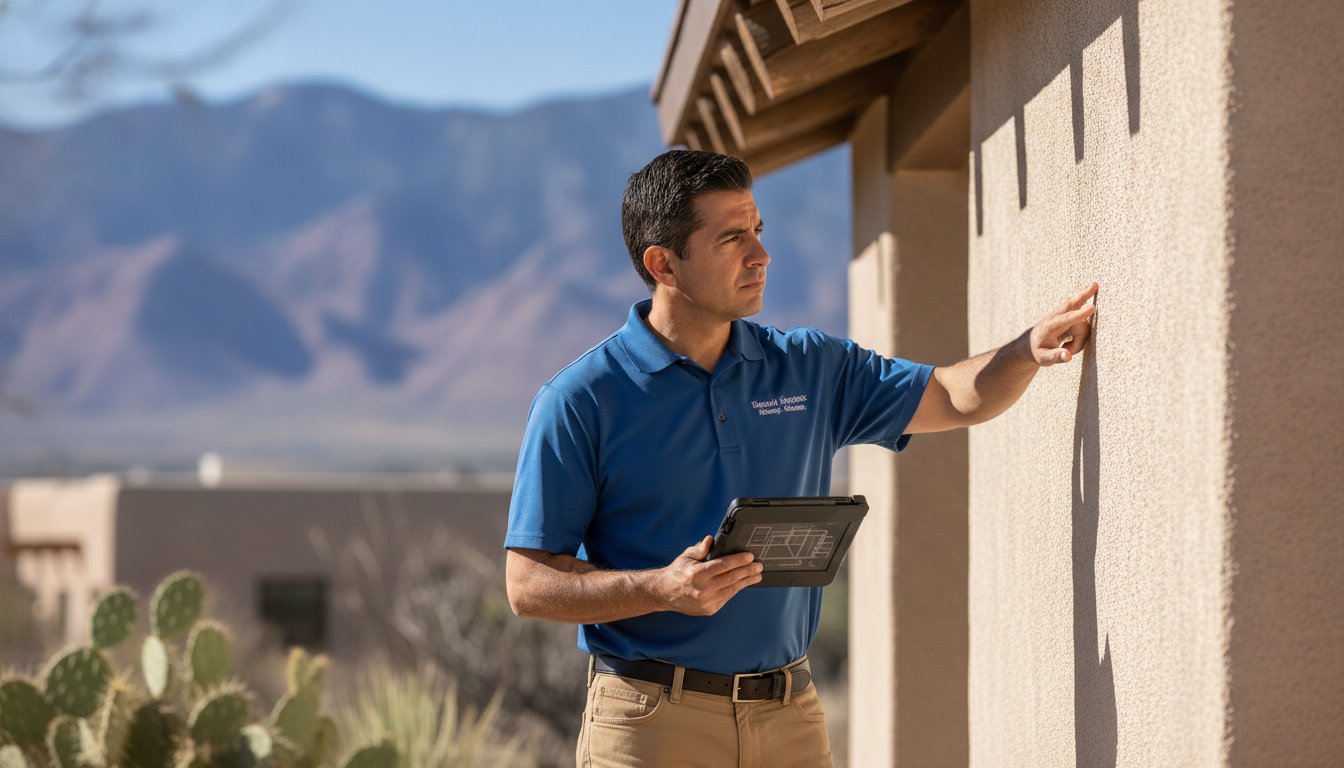
Stucco is the most common exterior finish in our region, but it's not all the same. Traditional cement stucco is common in older Sandia Heights homes, while synthetic (EIFS) appears frequently in newer builds. You'll likely see hairline cracks during your walk-through. These are usually just signs of the house "breathing" during our 40-degree daily temperature swings. However, large "spiderwebbing" or wide horizontal cracks suggest structural movement or moisture intrusion.
The most critical part of an Albuquerque exterior is the parapet cap. These metal or tile coverings sit atop the flat walls of the roofline. If these caps are loose or improperly sealed, water can seep behind the stucco shell. This often leads to hidden rot in the wood framing that you won't see until it becomes a major expense. If you feel overwhelmed by these technical details, our team can help you evaluate your next investment with professional clarity.
Roofing Systems: Flat vs. Pitched
Whether the home has a modern TPO flat roof or a traditional pitched shingle roof, UV damage is the primary enemy. Flat roofs are iconic to our skyline, but they require a specific eye. We look for "ponding," which occurs when water sits for more than 48 hours after a rainstorm. This often indicates a poor slope or clogged canales. Canales are the drainage scuppers that direct water off the roof; they must remain clear to prevent weight stress and leaks.
In high-elevation areas like the foothills, pitched roofs face intense UV degradation. This radiation makes shingles brittle and less effective over time. Beyond the roof itself, we examine the foundation stability. Albuquerque's soil varies from the sandy banks of the Rio Grande to the clay-heavy areas of Bernalillo County. Clay soils expand and contract significantly, which can lead to settling. Look for these specific indicators:
- Stair-step cracks in exterior brick or block work.
- Interior door frames that no longer sit square.
- Gaps between the xeriscaping and the foundation wall.
- Evidence of water pooling near the base of the home after monsoons.
Ensuring your drainage systems move water at least five feet away from the foundation is critical. Proper xeriscaping should slope away from the structure to prevent "wicking," where moisture travels up into the stucco and causes delamination.
Evaluating Albuquerque Mechanical and Plumbing Systems
Mechanical systems in the High Desert work harder than almost anywhere else in the country. When using your Albuquerque home inspection checklist for buyers, you should prioritize the cooling and plumbing components. These systems often represent the highest repair costs after the roof, and their failure can quickly erode your home equity. We focus on identifying the health of these units to ensure your move is as seamless as possible.
Swamp Coolers vs. Refrigerated Air
Many Albuquerque homes still use evaporative cooling, commonly known as swamp coolers. While these are energy-efficient in our low humidity, they require significant seasonal maintenance. Check the internal pan for rust and the pads for heavy mineral scale. You should also examine the ceiling directly beneath the unit for water stains, which indicate past or current leaks.
If a home has been converted to refrigerated air, verify the SEER rating and the age of the compressor. A modern system needs to handle our 100-degree summer days without constant strain. Pay close attention to conversion jobs. If a contractor didn't resize the ductwork or properly seal the old swamp cooler transition, the new AC unit will work inefficiently and likely fail prematurely. Look for signs of "sweating" on the ducts, which suggests poor insulation in the attic space.
Plumbing Red Flags in Bernalillo County
Older neighborhoods in Albuquerque, particularly those built between 1978 and 1995, present specific plumbing risks. We frequently find polybutylene piping, a flexible gray plastic pipe. This material is a major red flag. It is prone to sudden, catastrophic failure at the joints, and many insurance companies will refuse to cover a home until it's replaced.
In historic areas or high-elevation spots like Sandia Heights, keep an eye out for these specific plumbing items:
- Galvanized Lines: These old steel pipes corrode from the inside out. This restricts water pressure and can eventually lead to pinhole leaks.
- Water Pressure: Homes in the foothills often require pressure-reducing valves. Without them, the high municipal pressure can burst residential pipes.
- Sewer Scopes: A routine inspection with an accessible cleanout typically costs between $250 and $600. This is essential for homes with mature cottonwoods or elms, as root intrusion often collapses aging cast iron or clay lines.
- Water Heater Strapping: New Mexico code requires water heaters to be double-strapped and properly vented to prevent carbon monoxide leaks and tipping during seismic activity.
Don't be fooled by modern fixtures in the kitchen or bath. I've seen many buyers overlook the "bones" of the plumbing system because the visible parts look new. A shiny faucet won't help you if the main line under the slab is failing. Always ensure your inspector checks the age and material of the main supply and waste lines.
Specialty Inspections for the Albuquerque Metro Area
A standard visual inspection is only the first step. To truly protect your investment, your Albuquerque home inspection checklist for buyers must include specialty scopes. These tests address hidden environmental risks that a general inspector might not be equipped to evaluate. In our local market, failing to test for soil gases or wood-destroying organisms can lead to significant unexpected costs after closing. We coordinate these experts to ensure you have a complete picture of the property's health.
Radon and Soil Gas Risks
Bernalillo County is designated as an EPA Radon Zone 1. This indicates the highest potential for elevated indoor radon levels. Current data shows that up to 32% of Albuquerque homes test high for this colorless, odorless gas. Because our local geology contains decaying uranium, radon often seeps through foundation cracks or plumbing penetrations. Luxury buyers in high-elevation areas should never skip this test. A standard short-term radon test typically costs between $150 and $300. If levels exceed the EPA action limit of 4 pCi/L, you'll need a mitigation system. These systems use a specialized vent pipe and fan to pull gas from beneath the house and release it safely into the air.
Termites and Pests in the Desert
New Mexico is home to aggressive subterranean termites. These pests travel through mud tubes to reach the wood framing of your home. Many buyers confuse "dry rot" with pest damage, but the causes are very different. Dry rot is a fungal decay caused by moisture, while termites actively consume the structure. A professional Wood-Destroying Organism (WDO) inspection generally costs between $75 and $325. Most lenders require a "clear" termite report before they will fund your loan. This report provides peace of mind that the home is structurally sound and free of active infestations.
If you are looking at luxury properties in Tanoan or the High Desert, consider a dedicated pool and spa inspection. These evaluations check for underground leaks and the health of expensive heating units. For those moving to rural areas like Corrales or Placitas, septic and well inspections are mandatory. These tests ensure your water is safe to drink and your waste system functions correctly. We use our investor's eye to help you prioritize these additional scopes based on the home's age and location.
Strategic Negotiation: Turning the Report into a Plan
Once the inspection report arrives, it is time to move from discovery to decision-making. A professional report often stretches over fifty pages, which can feel overwhelming for even the most experienced homeowner. We use an investor’s eye to sift through the data and focus on the items that truly impact your equity. By categorizing every finding into safety hazards, structural defects, and general maintenance, you can use your Albuquerque home inspection checklist for buyers to drive a focused negotiation rather than a list of minor complaints.
Prioritizing Your Inspection Response
In a fast-moving market like Bernalillo County, requesting every small fix can jeopardize your contract. We focus our energy on the "Big Four" systems: the roof, HVAC, electrical, and plumbing. These are the primary equity-killers that carry the highest repair costs and the most risk for future resale value. If the inspection reveals a failing swamp cooler or a hairline crack that turns out to be a structural stucco failure, these become our top priorities. Smaller cosmetic items like faded paint or worn carpet are usually best left for your own post-closing maintenance roadmap.
You have several strategic paths when addressing these major issues. You might ask the seller to perform the repairs using licensed contractors, request a direct price reduction, or seek a closing cost credit. We often favor a credit because it gives you control over the quality of the work after you take possession. This ensures that repairs meet your high standards rather than the seller’s desire for a quick and inexpensive fix.
How Mountain View Realty LLC Protects Your Equity
Robb Krautbauer and the team at Mountain View Realty LLC bring fifteen years of investing experience to your side of the table. We don't simply hand you a report; we provide a clear, educational strategy for the resolution phase. Whether you are considering a Home Trade-In vs. Traditional Sale or closing on a luxury estate in Corrales, our approach reduces the inherent stress of the transaction. We use concrete market data to justify your requests, ensuring the seller views your needs as reasonable and necessary.
The journey concludes with the final walk-through. This is your chance to verify that the seller honored every agreement and that no new issues appeared during the move-out process. We recommend collecting all receipts and transferable warranties for any professional work completed during this window. This methodical final check ensures you step into your new High Desert home with total confidence in its structural and mechanical health.
Securing Your High Desert Investment
Successfully navigating a home purchase in New Mexico requires a blend of local knowledge and strategic planning. By using a tailored Albuquerque home inspection checklist for buyers, you ensure that every part of the property, from the parapet caps to the sewer lines, is evaluated for High Desert longevity. This process isn't about finding a perfect home; it's about making an informed decision that protects your equity and your peace of mind.
I have spent 15 years investing in real estate and have helped over 200 families in the Albuquerque metro find clarity during the inspection phase. Whether you are navigating a luxury purchase in Sandia Heights or a senior transition in Corrales, my goal is to provide the sophisticated guidance you need. You deserve a partner who understands how to protect your interests and separate minor maintenance from major structural risks in this unique market.
Robb Krautbauer
Owner & Qualifying Broker
Frequently Asked Questions
Do I need a separate roof inspection in Albuquerque?
Yes, we often recommend a dedicated roofing professional for properties with flat TPO or built-up roofs. While a general inspector provides a visual overview, a specialist can provide a certification or a detailed estimate for necessary repairs. This is especially important in Sandia Heights or the foothills where UV damage and high winds accelerate the aging of materials. A specialist has the tools to identify hidden moisture trapped beneath the roof membrane.
What is a 'Sewer Scope' and is it necessary for newer homes?
A sewer scope is a camera inspection of the main waste line from the house to the municipal connection. It is necessary even for newer builds because construction debris or soil shifting can cause blockages or pipe offsets. In older neighborhoods with mature trees, this test identifies root intrusion that often leads to catastrophic backups. Spending a few hundred dollars now can save you thousands in excavation costs later.
How much does a typical home inspection cost in Albuquerque in 2026?
The average cost for a standard home inspection in the Albuquerque metro area currently ranges between $276 and $337. Depending on the size and age of the property, you might see prices from $186 to $420. When you follow an Albuquerque home inspection checklist for buyers, remember that specialty tests like radon or sewer scopes will add to this total. These additional fees are a small price to pay for protecting your equity.
Should I attend the home inspection in person?
You should absolutely attend at least the final thirty minutes of the inspection. This allows the professional to walk you through the property and explain the difference between a major structural defect and a simple maintenance item. Seeing a hairline stucco crack in person is much less stressful than reading about it in a fifty-page report. Using your Albuquerque home inspection checklist for buyers during this walk-through helps you stay focused on the most critical systems.
Can I cancel my purchase if the inspection report is bad?
Yes, the standard New Mexico Purchase Agreement includes specific Objection and Termination deadlines that allow you to exit the deal. If the inspector discovers a major issue that the seller refuses to repair, you can terminate the contract and receive your earnest money back. You must act within the agreed-upon timelines to preserve your legal rights. We help our clients track these dates closely to ensure they never lose their ability to walk away.
What are the most common inspection failures in Corrales and Rio Rancho?
In Corrales, we frequently see issues with aging septic systems and private wells that don't meet modern health standards. Rio Rancho properties often show signs of soil settling or stucco delamination due to the sandy terrain. Both areas face intense sun exposure, which means failed window seals and degraded exterior trim are common findings. We look for these specific regional red flags to ensure your investment is sound for the High Desert climate.
Does a home inspection cover the swimming pool or hot tub?
Standard home inspections generally do not include a detailed evaluation of pools or spas. A general inspector might check if the pump turns on, but they won't pressure test the lines or examine the heater's internal components. If you are buying a luxury property with water features, you should hire a certified pool technician. They can identify underground leaks or equipment failures that a visual inspection will likely miss.
What is the difference between a home inspection and an appraisal?
An inspection focuses on the physical condition and safety of the home, while an appraisal determines its fair market value for the lender. The inspector works for you to find defects that might cost you money after closing. The appraiser works for the bank to ensure the property is worth the loan amount. Both are essential steps in the process, but only the inspection gives you a detailed roadmap of the home's mechanical and structural health.

Article by
Robb Krautbauer
Robb Krautbauer is the Owner and Qualifying Broker of Mountain View Realty, serving Albuquerque, Rio Rancho, Santa Fe, and surrounding New Mexico communities. With more than a decade of real estate experience, Robb specializes in luxury homes, strategic home marketing, and helping homeowners navigate important life transitions with confidence.
Known for combining luxury-level marketing, AI-powered technology, and innovative selling strategies, Robb helps clients maximize their home's value while creating a smooth, personalized selling experience. Whether assisting luxury homeowners, retirees, families downsizing, or real estate investors, his focus is always on delivering expert guidance, honest advice, and exceptional results.
When he's not helping clients achieve their real estate goals, Robb enjoys studying market trends, emerging technology, and investment strategies that keep Mountain View Realty at the forefront of the industry.
Disclaimer
**Disclaimer:** The information provided in this article is for general educational purposes only and should not be considered legal, tax, financial, or professional advice. Real estate laws, market conditions, and regulations change over time and may vary based on your individual circumstances. Before making any real estate decision, consult with qualified legal, tax, or financial professionals. If you have questions about buying or selling real estate in New Mexico, contact Mountain View Realty for guidance specific to your situation. © 2026 Mountain View Realty. All rights reserved. The content on this website may not be reproduced without written permission.


