
What Happens to Earnest Money If a Home Sale Falls Through?
What happens to earnest money if sale falls through? The answer isn’t automatic. A cancelled home sale doesn’t always mean the buyer loses the deposit, and it doesn’t always mean the money is returned right away. The signed purchase agreement and the reason the deal ended help determine what happens next.
It’s understandable to feel unsettled when a transaction stops and a substantial deposit is at stake. In Albuquerque and surrounding communities, the purchase agreement identifies key terms, including who holds the funds and what conditions may allow a buyer to end the contract. Deadlines and required notices matter, too, so acting before reviewing the paperwork can create more uncertainty.
This guide explains how contingencies, cancellation reasons, and release documents can affect earnest money. You’ll also learn which parts of the agreement to review and what practical steps buyers and sellers can take when a sale is at risk or has fallen through. The goal is to help you understand your options and know when a New Mexico real estate attorney may be needed to advise on a dispute.
Key Takeaways
- What happens to earnest money if sale falls through depends on the signed agreement and the circumstances, not simply on the fact that the sale ended.
- Review the contract’s contingency, cancellation, notice, and deposit-release terms before deciding what to do next.
- Deadlines and required notices can affect the options available, so identify them promptly and keep a record of communications.
- If the parties disagree about the deposit, avoid signing a release you don’t understand and seek appropriate guidance.
What happens to earnest money when a home sale falls through?
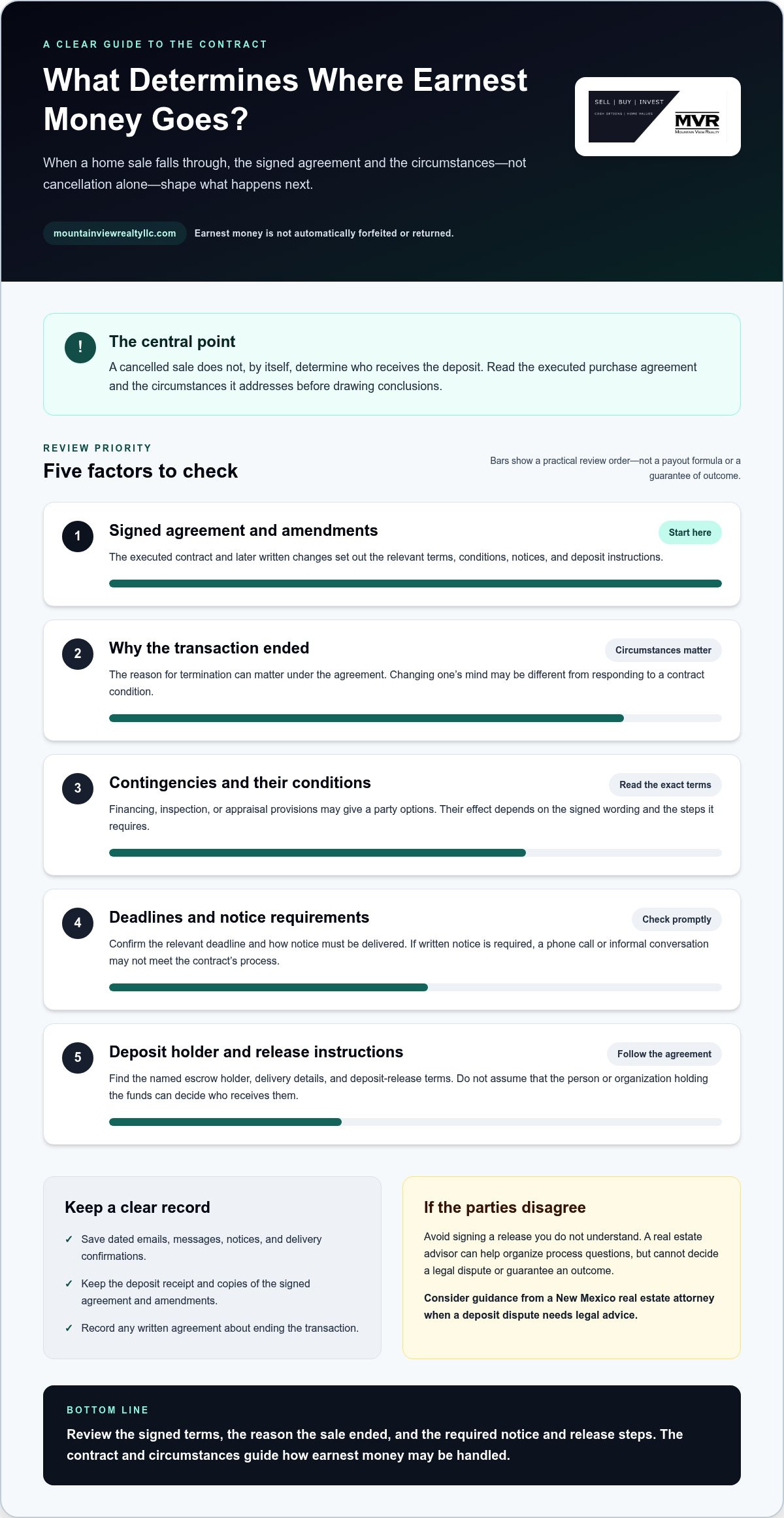
The signed purchase agreement and the reason the transaction ends shape what happens to the earnest money. If you’re asking what happens to earnest money if sale falls through, the key point is that cancellation alone doesn’t decide who receives the funds. The agreement’s terms and the circumstances of termination matter.
Earnest money is a deposit connected to a purchase contract. It shows the buyer’s commitment under the agreement, but it isn’t automatically a penalty if the sale doesn’t close. It’s also separate from the purchase price and other funds due at closing. If the transaction proceeds, the agreement and closing documents explain how the deposit is handled as part of the overall funds.
For a general overview of the deposit’s purpose and possible outcomes, see Earnest Payment on Wikipedia.
This video offers another general explanation of what may happen when a home sale doesn’t close:
What earnest money is meant to show
The deposit signals that the buyer intends to follow the agreement’s terms while the transaction moves forward. It doesn’t guarantee that financing, inspections, title work, or other parts of the transaction will lead to closing. The signed contract sets out how the deposit is handled and what instructions apply if the parties don’t complete the sale.
Think of it as one part of the transaction, not a verdict about who is at fault if a problem arises. A buyer and seller may have different views about why the deal ended, so it’s useful to separate the known facts from assumptions. Start with the executed agreement and any signed changes to it.
Who holds the deposit during a pending sale?
The agreement should identify the escrow holder, the person or organization named to hold the deposit, and provide instructions for delivering it. Use the agreement’s own terminology when locating this information. Don’t assume that the party who received the funds can decide on their own who should ultimately receive them.
Find the deposit section in your signed paperwork and check for the holder’s name, delivery instructions, and any related provisions. Keep a copy of the receipt or other record showing that the deposit was delivered. If the paperwork is unclear, a real estate advisor can help you organize questions about the transaction documents. An advisor can explain process steps, but can’t determine a legal dispute or guarantee an outcome.
In short, the contract terms and the reason the sale ended, not cancellation by itself, guide how the earnest money may be handled. Before drawing conclusions, make sure you’re reviewing the signed agreement and the circumstances it addresses.
Which contract terms determine whether earnest money may be returned?
To understand what happens to earnest money if sale falls through, read the executed purchase agreement, not a general rule of thumb. The agreement’s cancellation, contingency, notice, and deposit-release language helps explain what options the parties may have. A useful review looks at how those provisions work together, rather than focusing on a single clause or a verbal summary.
Start with the signed version and any later written changes. Locate the sections that describe the buyer’s conditions, how a party must give notice, and what instructions apply to the deposit if the contract ends. The National Association of REALTORS® on Earnest Money offers general background, but your own agreement controls the terms of your transaction.
The signed agreement, not a general rule of thumb, governs the transaction. That distinction matters because two buyers may face similar problems but have different contract language, deadlines, or notice requirements.
How contingencies can affect a deposit
A contingency is a contract condition that may give a party options if a specified event occurs. Financing, inspection, or appraisal provisions are examples that may appear in an agreement, but their meaning and effect depend on the signed terms. Don’t assume that a problem with a loan or inspection automatically guarantees a deposit refund.
Read three details together: the condition that applies, any deadline tied to it, and the notice method the agreement requires. For example, a buyer concerned about an inspection should check what the contract says about that concern and what steps it requires. A buyer who simply changes their mind may be in a different position from one responding to a contract condition.
Why notices and deadlines deserve careful attention
An agreement may require written notice or specify how a notice must be delivered. If it does, a phone call or informal conversation may not meet the stated process. The exact requirement depends on the contract, so avoid relying on assumptions or on a deadline from someone else’s transaction.
Keep a clear record of what you send and receive. Save dated emails, messages, notices, delivery confirmations, and any written agreement about ending the transaction. These records can help establish what was communicated and when. They don’t settle a disagreement by themselves, but they make the timeline easier to review.
- Find the signed agreement and any amendments.
- Mark the relevant conditions and deadlines.
- Check how the contract says notice must be given.
- Keep copies of notices and delivery records.
New Mexico purchase agreements and their wording can change, so review the current form that applies to your transaction rather than relying on an older example or a general online explanation. A local real estate advisor can help organize the contract questions and process steps; for legal interpretation, consult a New Mexico real estate attorney. If you’d like help reviewing the transaction documents and identifying the questions to resolve, Mountain View Realty LLC's local real estate guidance can be a useful starting point.
Does a failed sale automatically let the buyer keep, or the seller claim, the deposit?
No. A canceled transaction doesn’t automatically transfer the earnest money to either party. The buyer and seller may have different views about why the sale ended, but a claim about breach needs to be assessed against the signed agreement and the facts, not guesswork. The Consumer Financial Protection Bureau describes earnest money as a good-faith deposit in a home purchase, but that purpose alone doesn’t decide who receives the funds if the transaction stops.
A canceled transaction is not the same as an agreed release of the deposit. The escrow holder’s role and the agreement’s release instructions still matter. The examples below are educational scenarios, not predictions of a specific legal result. Contract language, notice, and transaction details can change how a situation is evaluated.
| Scenario | What to review | Why the outcome isn’t automatic |
|---|---|---|
| Cancellation under a contract condition | The condition, applicable deadline, and required notice | The agreement’s terms and the facts determine whether the condition applies. |
| Mutual agreement to end the transaction | Any written agreement and instructions addressing the deposit | Ending the purchase and deciding how to distribute funds are related but distinct steps. |
| Disputed termination | The signed agreement, communications, notices, and escrow instructions | When buyer and seller disagree, neither should assume their position alone directs release. |
When a contract condition may support termination
Hypothetical: A buyer encounters an issue covered by a condition in the agreement and considers ending the transaction. The relevant questions include what the condition says, whether its deadline has passed, and how the agreement requires notice. This example doesn’t predict a refund or forfeiture. Different facts, amendments, or signed terms can change the analysis.
When the parties disagree about who should receive the funds
If the buyer and seller dispute the deposit, the escrow holder may need to follow the agreement and applicable instructions or procedures before acting. Don’t assume either party can unilaterally direct release. Preserve relevant documents and communications, then seek legal guidance from a New Mexico real estate attorney about interpreting rights or resolving the dispute.
For buyers and sellers in Albuquerque, a real estate advisor can help organize the timeline, identify the documents that matter, and clarify transaction process steps. That support can help you prepare focused questions without treating an advisor’s view as a legal decision. If you’d like help making sense of the transaction paperwork, Mountain View Realty’s real estate guidance can help you identify the next questions to address.
What should buyers and sellers do when a sale is at risk?
A transaction problem can make it tempting to react quickly. A steadier first step is to pause and organize the facts. If you’re trying to understand what happens to earnest money if sale falls through, begin with the signed agreement and the transaction record, not assumptions about who should receive the deposit.
Use this sequence to get oriented:
- Retrieve the complete file. Gather the executed purchase agreement, amendments, deposit receipt, notices, and relevant written messages. Locate the escrow holder’s name and the agreement’s instructions for the deposit.
- Identify contract dates. Note any relevant deadlines, conditions, and notice requirements stated in the agreement. Don’t substitute a deadline from another transaction or rely on memory.
- Build a brief timeline. Record important dates, what was sent, how it was delivered, and any response. Keep the original messages and delivery records rather than relying only on a summary.
- Clarify the process. Ask the transaction professionals involved to explain administrative steps and documents. Their process guidance is different from legal advice about a disputed right to the funds.
A practical document and communication checklist
Keep the file together and easy to review. Include the signed agreement and changes, deposit receipt, notices, and messages related to the concern or cancellation. A simple timeline can help show which events occurred and when. Before signing a deposit release, read what it authorizes and ask for an explanation if any language is unclear. Don’t sign a document you don’t understand.
The escrow holder and written deposit instructions should be identified in the transaction file. If the holder’s role or the next process step isn’t clear, transaction professionals can help explain what the paperwork says about handling the funds. Avoid treating an explanation of procedure as a decision about which party is legally entitled to the deposit.
When to seek legal guidance
Consider speaking with a New Mexico real estate attorney if the parties disagree about what the agreement means, whether someone breached it, or who should receive the deposit. Reach out promptly if a contract deadline or formal notice may be involved, since the agreement’s timing and instructions can affect the options available. An attorney can advise on rights and possible next steps; no particular result should be assumed in advance.
Clear records and careful document review can make a stressful moment more manageable. A local real estate advisor can help you organize transaction questions and understand process steps, while leaving legal interpretation to an attorney when a dispute arises.
How Albuquerque buyers and sellers can plan their next step
The central principle is simple: understand the signed agreement before assuming what happens to the deposit. In Albuquerque and nearby communities, the right next step depends on the transaction’s terms and what has happened so far. A local real estate advisor can help organize the questions, identify relevant documents, and clarify process steps. That support can bring structure to a stressful situation without promising a particular outcome.
If a sale may not proceed, separate the immediate deposit questions from the bigger decision about what to do with the property or purchase. A seller reconsidering a listing strategy can review home selling options in Albuquerque while keeping the current contract and deposit issues in view. A new plan should not replace careful review of the existing agreement.
Questions to clarify before deciding what comes next
Before taking another step, make sure you can answer a few practical questions. Which contract provision applies to the concern? What written notice or other step does the agreement call for, and is a deadline involved? Who is named to hold the deposit, and are any instructions, notices, or release documents still outstanding?
It also helps to identify the kind of question you’re facing. Is it about the process, the meaning of a contract provision, or a disagreement over legal rights? A real estate professional can help organize the transaction file and explain process steps. A New Mexico real estate attorney can advise on disputed contract meaning, breach, or entitlement to funds.
Get steady guidance for an Albuquerque-area transaction
Robb Krautbauer brings 15 years of real estate investing experience and 10 years as a licensed agent to an approach centered on honest, strategic, and educational guidance. In a complicated transaction, that means helping clients sort through the documents and decision points, understand which questions need answers, and consider next steps with their equity in mind. It doesn’t mean deciding a legal dispute or guaranteeing how a deposit will be handled.
If you’re also weighing representation for a future purchase or sale, choosing an Albuquerque real estate agent can help you think through what kind of guidance fits your needs.
You don’t have to settle every question at once. A conversation can help you organize the transaction details and understand your options, without pressure or a promised result.
Move forward with a clear plan
A disrupted sale can also be a chance to reassess what you want from your next move. You may be weighing a new timeline, a different way to sell, or a pause before making another commitment. Whatever the choice, give yourself room to consider how it fits your broader plans, not just the immediate stress of the transaction.
If you’re still wondering what happens to earnest money if sale falls through, treat that question as one part of a larger transition. Your next chapter may call for a different property strategy or a fresh conversation about timing and priorities.
There’s no need to have every answer before you begin planning. A thoughtful next step can help you move toward the future you want with greater confidence.
Frequently Asked Questions
Is earnest money different from a down payment?
Yes. Earnest money is delivered in connection with the purchase agreement; a down payment is part of the buyer’s funds applied toward the purchase at closing. Don’t budget or label the two as interchangeable. Check the agreement and final closing documents to see how the deposit is credited in your transaction. If you’re comparing funds needed before and at closing, ask the transaction professionals to explain the figures in your paperwork.
How much earnest money should a buyer offer in New Mexico?
The right amount depends on the transaction, negotiated terms, and obligations in the purchase agreement. Before agreeing, consider whether you can meet the deposit requirement and what the contract says about your responsibilities if plans change. A real estate professional can help you understand the transaction terms and questions to weigh. If a proposed term raises concerns about your legal rights or exposure, get legal advice before committing.
When is earnest money usually deposited after an offer is accepted?
The signed purchase agreement sets the required timing. Look for the due date and delivery details, then confirm you have the correct instructions before sending funds. Keep the receipt or confirmation with your closing paperwork so you can reconcile the amount later. If the recipient or delivery method is unclear, pause and get clarification from the transaction professionals rather than relying on a customary timeframe from another deal.
Does earnest money get applied to closing costs or the purchase price?
The signed agreement and closing documents determine how the deposit is credited. To check the accounting, compare the deposit amount shown in your receipt with the credit listed on the settlement paperwork. If the figures differ, ask the closing professionals to explain the calculation before you approve the final documents. Don’t assume the deposit is an extra charge or that it will reduce a particular cost in every transaction.
Can a buyer change their mind after the inspection?
A buyer’s options depend on the signed agreement, so an inspection alone doesn’t settle whether the buyer can end the transaction or recover the deposit. If a report raises concerns, identify the specific findings that affect your decision and discuss the available transaction steps promptly with your real estate professional. If the buyer and seller disagree about what the contract allows, consult a New Mexico real estate attorney.
What records should I keep if there is an earnest money disagreement?
Keep the signed agreement, amendments, deposit receipt, notices, delivery confirmations, and relevant written communications. A useful extra step is to name digital files by date and document type, while keeping the original messages and signed documents unchanged. This makes it easier to locate the right version during a review. A complete file can help professionals understand the sequence, but it doesn’t establish who is entitled to the funds.
Can the escrow holder release earnest money without both parties agreeing?
There isn’t one answer for every transaction. The signed agreement, applicable instructions, and procedures matter. Ask the named escrow holder for its written list of documents needed to process a release, and keep its response with your transaction file. That request clarifies process, not entitlement. If either party challenges the proposed release or the parties disagree about their rights, consult a New Mexico real estate attorney before taking action.

Article by
Robb Krautbauer
Robb Krautbauer is the Owner and Qualifying Broker of Mountain View Realty, serving Albuquerque, Rio Rancho, Santa Fe, and surrounding New Mexico communities. With more than a decade of real estate experience, Robb specializes in luxury homes, strategic home marketing, and helping homeowners navigate important life transitions with confidence.
Known for combining luxury-level marketing, AI-powered technology, and innovative selling strategies, Robb helps clients maximize their home's value while creating a smooth, personalized selling experience. Whether assisting luxury homeowners, retirees, families downsizing, or real estate investors, his focus is always on delivering expert guidance, honest advice, and exceptional results.
When he's not helping clients achieve their real estate goals, Robb enjoys studying market trends, emerging technology, and investment strategies that keep Mountain View Realty at the forefront of the industry.
Disclaimer
**Disclaimer:** The information provided in this article is for general educational purposes only and should not be considered legal, tax, financial, or professional advice. Real estate laws, market conditions, and regulations change over time and may vary based on your individual circumstances. Before making any real estate decision, consult with qualified legal, tax, or financial professionals. If you have questions about buying or selling real estate in New Mexico, contact Mountain View Realty for guidance specific to your situation. © 2026 Mountain View Realty. All rights reserved. The content on this website may not be reproduced without written permission.


