What Is the Culture Like in Albuquerque? A Local’s Guide
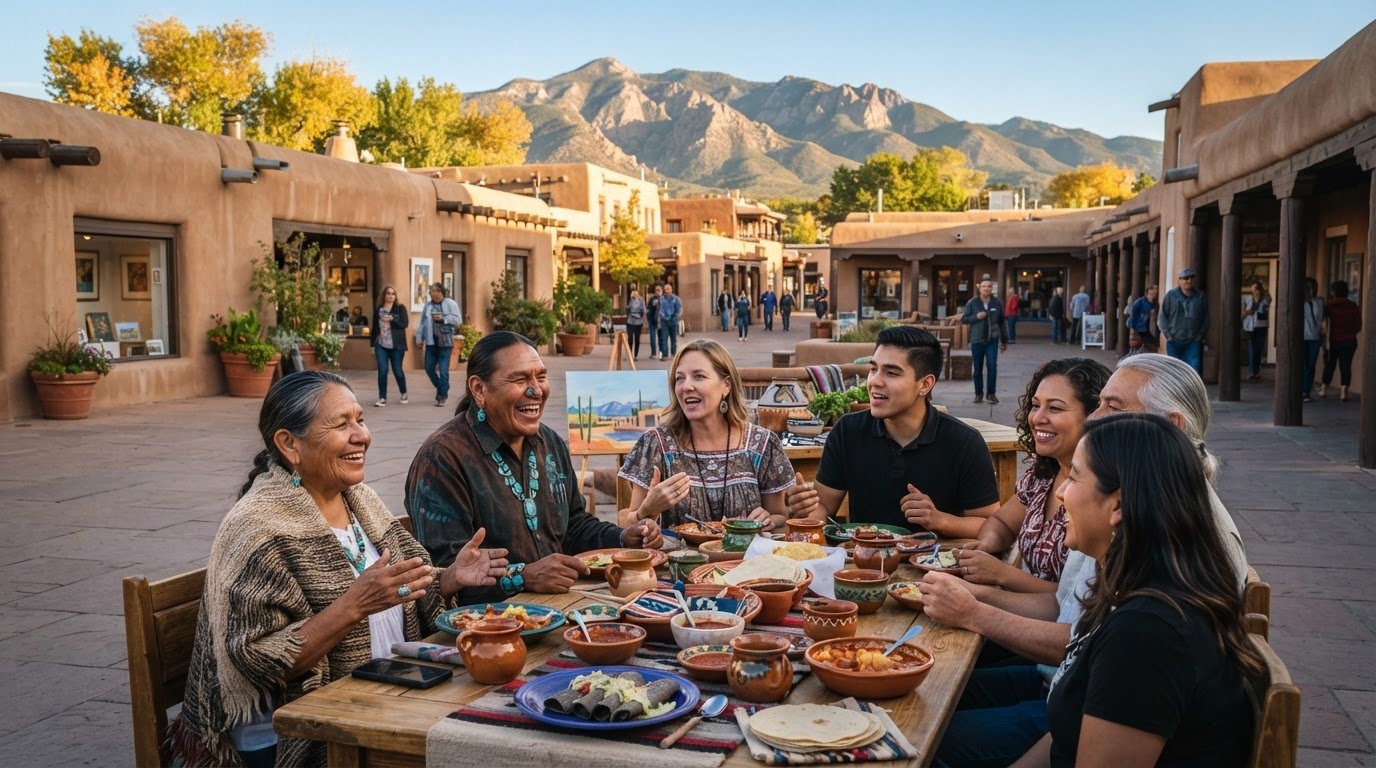
What if Albuquerque’s culture is less a single story than a conversation among many? If you’re asking what is the culture like in Albuquerque, the answer depends on where you look: along Central Avenue’s Route 66 corridor, in local art spaces, at community events, or around a table sharing New Mexican food. Native, Hispanic, Anglo, and other influences shape the city, but no one tradition speaks for everyone.
That variety can make it hard to know where to begin. A quick description often leaves out the history behind today’s neighborhoods and traditions. This guide connects Albuquerque’s layered past with its present-day creative life and everyday pace. You’ll find ways to explore cultural institutions, art, food, and community events with curiosity and respect, while remembering that traditions are living and personal. By the end, you’ll have a clearer sense of what gives the city its character, where to start exploring, and how to think about whether Albuquerque’s rhythms might suit you.
Key Takeaways
- To understand what is the culture like in Albuquerque, look beyond a single identity and consider the city’s distinct communities and changing stories.
- Explore how Indigenous and Hispanic histories inform the region while recognizing that today’s communities are diverse and contemporary.
- Use food, art, performance, and public spaces as different ways to learn about local life, not as a single definition of it.
- Plan a thoughtful cultural outing: learn some context, choose an experience, check current details, and make time to reflect.
- Notice which experiences and everyday rhythms appeal to you as you consider whether Albuquerque might feel like a fit.
What Is the Culture Like in Albuquerque? Start With Its Many Layers
Albuquerque’s culture is contemporary and layered, shaped by Indigenous communities, Hispanic heritage, migration, and other influences. These histories meet in a city where people create, work, gather, and build community in different ways. No single tradition or neighborhood can stand in for everyone’s experience. To answer what is the culture like in Albuquerque, look beyond a single label and notice how place, history, and present-day life interact.
For historical and demographic context, the Albuquerque, New Mexico Wikipedia overview offers a broad starting point, including references to Native American and Hispanic influences and Route 66. That context matters, but it doesn’t make the city’s cultures interchangeable. Historical influence is not the same as a shared identity, and a visitor’s brief impression can’t explain how every resident relates to a tradition or place.
For a street-level look at the city, watch Inside Albuquerque: What’s It Really Like by Peter Santenello:
Why one description cannot capture every Albuquerque experience
Indigenous peoples have longstanding ties to this region, while Hispanic histories and communities have also shaped Albuquerque across generations. Those broad descriptions offer important context, not one uniform viewpoint. People’s identities and relationships to place differ. Culture changes as communities carry traditions forward, respond to new circumstances, and create new forms of expression. Keep that distinction in mind so historical context doesn’t become a claim about what every resident believes or practices.
A city’s living culture is not a visitor checklist; it’s the many ways people make meaning, share space, and shape daily life. Use that as a lens for approaching local customs and creative work with curiosity, rather than assuming one event or landmark tells the whole story.
How the high-desert setting informs local life
The Sandia Mountains form a recognizable presence east of the city and help give Albuquerque a distinct sense of place. The surrounding landscape is part of how residents and visitors orient themselves, but it doesn’t dictate a single lifestyle. People experience the setting differently depending on where they live, what routines they keep, and what matters to them. Treat the view as an invitation to notice, not a shortcut to conclusions about local character.
As you explore, look for how history and place appear both in everyday settings and in cultural institutions. A neighborhood, gathering, or creative space may offer a perspective different from a landmark. Together, these encounters can give you a more grounded picture of Albuquerque while leaving room for the city and its communities to be more complex than any one account.
How Indigenous and Hispanic Histories Continue to Shape Albuquerque
Albuquerque’s history is not a simple sequence in which one culture replaced another. Indigenous communities have deep roots in the region, and Hispanic presence also reaches back centuries. Spanish colonial authorities established Albuquerque in 1706. These histories help explain the city’s place names, historic sites, and institutions, but they don’t define every resident’s identity or experience today.
The City of Albuquerque’s History & Heritage guide provides an overview of local historic places and cultural influences. It’s a starting point, not a complete account of living communities. Pair historical context with contemporary perspectives, and remember that a public institution can share information without speaking for every person or community connected to that history.
Understanding Pueblo communities and living Indigenous cultures
Pueblo peoples are not one interchangeable community. Each Pueblo has its own identity, history, and present-day community life. Albuquerque’s proximity to Pueblo communities makes Indigenous presence part of the region’s living context, not only its past. Cultural institutions and public programs can be places to learn, while care and respect help avoid assumptions about what individuals choose to practice or discuss.
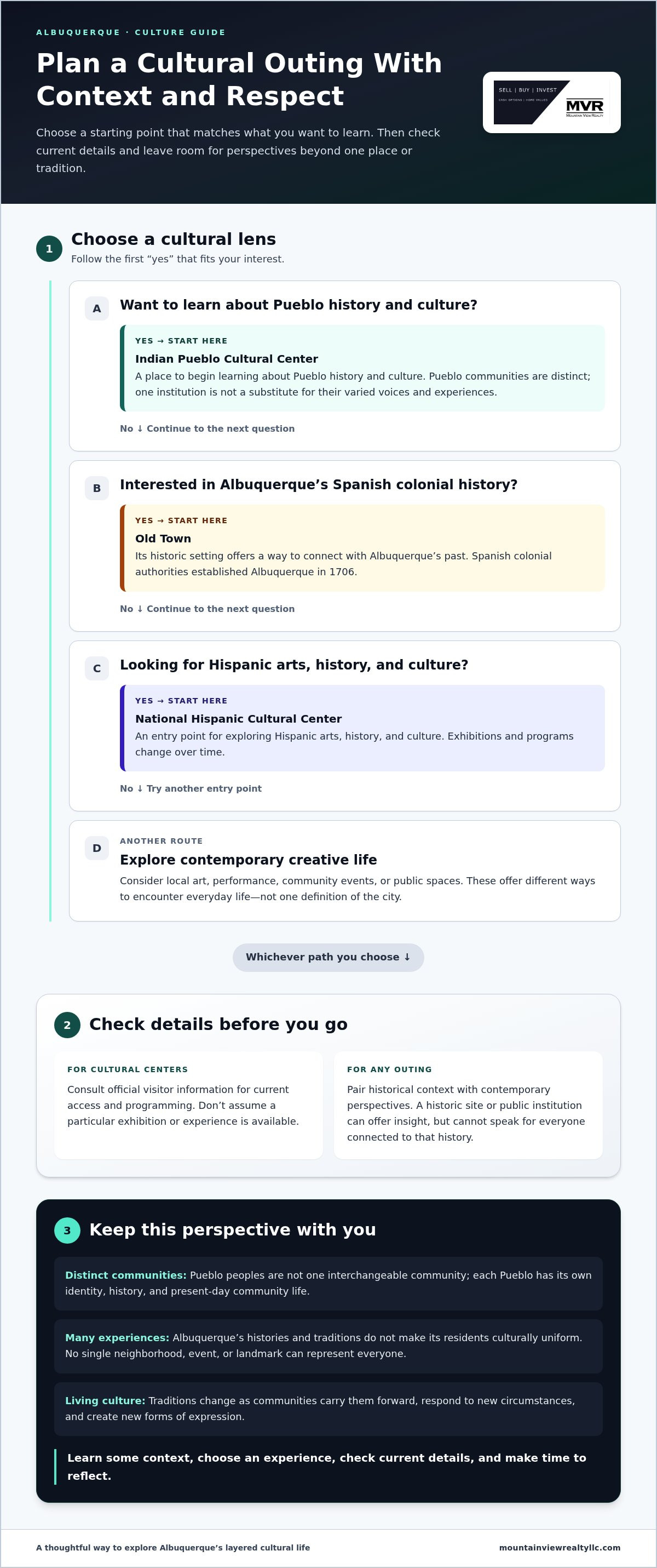
The Indian Pueblo Cultural Center offers one place to begin learning about Pueblo history and culture. It can provide context, but it shouldn’t be treated as a substitute for the voices and experiences of distinct Pueblo communities. Check the center’s official information for current access and programming before planning a visit. Notice whether information identifies specific communities rather than using “Native American” as though it describes a single experience.
Hispanic heritage, Old Town, and the National Hispanic Cultural Center
Albuquerque’s Spanish colonial history is visible in Old Town’s historic setting, while Hispanic heritage continues through contemporary cultural life across the city. The National Hispanic Cultural Center offers another entry point for learning about Hispanic arts, history, and culture. Its exhibitions and programs change, so consult its official visitor information for current details instead of relying on an old listing or assuming a particular experience is available.
These places can connect dates and historical context to the present, but neither Old Town nor one cultural center captures the full range of Hispanic identities. The term includes varied family histories, traditions, and experiences. That distinction matters when considering what is the culture like in Albuquerque: historical influence is real, but it doesn’t make a diverse population culturally uniform.
Albuquerque’s cultural roots are layered: Indigenous and Hispanic histories are central to the region, while contemporary communities continue to shape their meanings in distinct ways. Read interpretive material, listen before drawing conclusions, and check official venue information before you go. A thoughtful visit makes room for both what a place can teach and what it cannot represent.
What Albuquerque’s Food, Arts, and Route 66 Say About Local Life
Food, art, and familiar streets offer different ways to notice how Albuquerque’s past and present meet. None provides a complete portrait. A dish can reflect regional ingredients and family traditions; a mural can make public space a canvas for local expression; a stretch of Central Avenue can carry layers of history alongside daily routines. Together, these entry points make the question “what is the culture like in Albuquerque” easier to explore with care.
Food as a way into Albuquerque’s regional identity
New Mexican cuisine is part of the region’s identity, with red and green chile among its recognizable ingredients. The local food scene is broader than any one dish or style, and menus reflect the choices of individual cooks and restaurants. The agricultural roots behind regional ingredients add context, but they don’t mean every resident eats the same foods or relates to them in the same way.
Try a local dish with curiosity. Notice how a restaurant describes its ingredients and approach, and appreciate the people who prepare and share the food. Treat a meal as one perspective on regional life, not proof of a single “authentic” version.
Art, public life, and the Route 66 story
Albuquerque’s creative life appears in galleries, performances, murals, and public art. The city’s monthly ArtWalk brings attention to the downtown Arts & Cultural District, while murals and other outdoor works make art part of the streetscape. Check official event listings before making plans, since schedules and programming can change.
Route 66 offers more than a nostalgic photo stop. The historic highway runs through Albuquerque along Central Avenue, connecting places and neighborhoods while reflecting the city’s role in a larger travel corridor. It’s a way to consider how transportation and urban life intersect, not a shortcut to understanding every neighborhood or resident.
| Explore | What it offers | A respectful approach |
|---|---|---|
| Local food | A taste of regional ingredients and varied cooking styles | Ask what shapes a dish’s ingredients or preparation without assuming one style represents everyone |
| ArtWalk and public art | A view of creative work in galleries and shared spaces | Check current event details and consider the artist’s perspective |
| Central Avenue | A chance to see Route 66 in the city’s everyday street life | Look beyond roadside imagery to the places and people along the corridor |
These experiences can complement one another. Pair a meal with a walk through an arts district, or notice public art while exploring Central Avenue. Let each encounter add context. The goal isn’t to collect cultural highlights, but to understand how food, creativity, and place contribute to local life without asking any one example to speak for the whole city.
How to Experience Albuquerque Culture With Curiosity and Respect
A thoughtful visit doesn’t need a packed schedule. Give yourself time to learn context, choose an experience, confirm practical details, and reflect on what you encountered. This approach helps answer what is the culture like in Albuquerque without asking one venue, event, or conversation to represent an entire community.
- Learn some context. Read a reliable local history source or the institution’s background materials before you go.
- Choose one experience. Select a cultural institution, arts event, neighborhood walk, or meal that interests you.
- Check current details. Confirm hours, events, access information, and visitor guidance directly with the venue or organizer.
- Reflect thoughtfully. Consider what you learned and what one visit can’t tell you about a diverse community.
Build a thoughtful first-day cultural itinerary
Keep the plan flexible. You might start with a history-focused institution, take a neighborhood walk, then choose a locally grounded arts experience or meal. The Indian Pueblo Cultural Center and National Hispanic Cultural Center are possible starting points for learning; check their official visitor information for current offerings and access. Leave room to rest or spend time outdoors, and follow your interests instead of trying to cover everything in one day.
One practical approach is to pair an institution visit with a walk in a nearby area. Notice how public spaces and daily activity shape your impression. The walk isn’t a substitute for community perspectives, and a short visit won’t reveal every layer of local life. Treat your itinerary as an introduction and adjust it as you learn what draws your attention.
Show respect when learning about living traditions
Follow the venue’s visitor guidance, including rules about photography and access. Use community-led interpretation where available, and rely on reputable sources when describing cultural practices. If you speak with someone, listen without expecting them to explain or represent an entire community. Curiosity works best when it leaves room for boundaries, different perspectives, and what a person chooses not to share.
Before heading out, check official sources for current hours, event schedules, visitor access, and guest guidance. These details can change. For a cultural event, confirm information with its organizer; for an institution, use its own visitor information. This helps you plan and arrive with a better sense of what to expect.
Afterward, note what surprised you and what questions remain. Resist turning a single meal, exhibit, or conversation into a broad conclusion. Instead, look for another perspective on a future visit. That open-minded approach makes exploring Albuquerque more rewarding, whether you’re here briefly or getting to know the city over time.
Could Albuquerque’s Culture Feel Like Home? Connect Lifestyle to Your Next Move
Culture can shape how a place feels, but personal fit depends on more than a list of landmarks or events. Your answer to what is the culture like in Albuquerque will reflect what you value in daily life: the places you return to, the pace you prefer, and the activities that feel meaningful to you. Those impressions matter, but they’re personal observations, not facts about every resident or neighborhood.
If you’re considering a move, give yourself room to form a fuller impression. One visit can introduce you to the city; spending time in different areas and experiencing ordinary routines can help you decide what deserves a closer look. There’s no need to turn curiosity into a decision before you’re ready.
Questions to ask yourself after exploring the city
Use a few questions to distinguish a first impression from the features that might matter over time:
- Which places or activities felt meaningful to you, rather than simply convenient to visit?
- Did the city’s pace, landscape, and creative life suit your preferences?
- What would you want to experience again, perhaps at a different time or in another part of the city?
- Which areas would you like to explore further before deciding whether a move makes sense?
Your answers don’t need to match anyone else’s. You might value access to arts and community activities, or prefer a quieter routine with time outdoors. Those are reflections about your priorities, not universal descriptions of Albuquerque or its residents.
Get local real-estate guidance without rushing your decision
Neighborhood fit is personal. As you explore the places you’re considering, pay attention to how your routines might work there. A real-estate advisor can help you understand housing options and local market considerations, but your own experience should guide what feels right. Robb Krautbauer helps buyers and sellers across Albuquerque and can offer local guidance on a potential move without claiming to speak for the city’s cultural communities.
As you explore, consider returning for a different kind of day. Visit an area beyond your original itinerary, make time for routine errands, or notice how you feel moving through the city at a pace you’d keep in everyday life. These observations can give you a more useful picture than a quick visit alone. They won’t predict every part of living in Albuquerque, but they can clarify what you want to learn next.
There’s no single test for whether Albuquerque will feel like home. Look for a fit between your priorities and the life you can picture building, while staying open to new information. If a move is on your mind, Robb Krautbauer can discuss your real-estate questions and help you consider next steps at a pace that works for you.
Robb Krautbauer
Owner & Qualifying Broker
Let Your Next Step Reflect What Matters to You
The question “what is the culture like in Albuquerque” can open the door to a more personal one: what kind of daily life are you hoping to build? Give yourself time to explore beyond first impressions. Return to the places that stayed with you, visit areas you haven’t seen, and notice which routines feel comfortable. Your sense of fit can develop gradually.
If a move is on your mind, a conversation about your housing plans can help you think through practical next steps without rushing a decision.
Keep exploring at a pace that feels right. A well-considered move starts with your priorities, and you can take the next step when you’re ready.
Frequently Asked Questions
Is Albuquerque culturally diverse?
Yes, Albuquerque is culturally diverse, though that diversity isn’t expressed in one shared way. To get to know the city, compare how different organizations describe their communities and programs rather than relying on a single event or conversation. Notice whose perspective is being presented and how specifically it’s identified. This helps you understand a particular experience without treating it as a complete portrait of the city.
What cultures have shaped Albuquerque?
Indigenous, Hispanic, Anglo, and other influences have shaped Albuquerque, alongside generations of migration and change. These influences aren’t interchangeable, and their meaning varies among people and communities. For a deeper understanding, look at how local sources connect historical events to present-day life. Pay attention to who created the interpretation and which community or time period it describes; that context can keep broad labels from obscuring distinct experiences.
What food is Albuquerque known for?
Albuquerque is known for New Mexican cuisine, but the city’s dining choices extend beyond any one regional tradition. For a first meal, choose a menu that explains its dishes and ingredients, then ask how a preparation is served if you’re unfamiliar with it. You can also compare a traditional New Mexican restaurant with a contemporary or international option. That gives you a wider sense of the local dining scene without treating one meal as representative.
Is Route 66 part of Albuquerque’s local culture?
Yes, Route 66 is part of Albuquerque’s local history, but it’s best understood as more than a symbol of road travel. Consider how a major highway can shape movement, business, and the way people experience a city over time. If you explore its route, look beyond familiar roadside imagery and consider how the corridor functions for people who live and work nearby. That connects its history with the present.
How can newcomers experience Albuquerque culture respectfully?
Choose public events or programs that explain their purpose and identify the people or communities involved. Before attending, read the organizer’s visitor guidance and follow stated boundaries. If you share what you learn, use the source’s own terms and avoid presenting your interpretation as universal. You can also learn about artists’ work on their own terms, without expecting them to provide personal or community-wide explanations.
What cultural attractions should first-time visitors explore in Albuquerque?
Start with the kind of experience you want: a history exhibit, a public performance, an art market, or a guided local history program. Check current city and organizer calendars, then choose an event or attraction that offers context about its subject. If your schedule allows, add a different type of experience rather than visiting several places with the same focus. Confirm current hours, access, and program details directly before making plans.

Article by
Robb Krautbauer
Robb Krautbauer is the Owner and Qualifying Broker of Mountain View Realty, serving Albuquerque, Rio Rancho, Santa Fe, and surrounding New Mexico communities. With more than a decade of real estate experience, Robb specializes in luxury homes, strategic home marketing, and helping homeowners navigate important life transitions with confidence.
Known for combining luxury-level marketing, AI-powered technology, and innovative selling strategies, Robb helps clients maximize their home's value while creating a smooth, personalized selling experience. Whether assisting luxury homeowners, retirees, families downsizing, or real estate investors, his focus is always on delivering expert guidance, honest advice, and exceptional results.
When he's not helping clients achieve their real estate goals, Robb enjoys studying market trends, emerging technology, and investment strategies that keep Mountain View Realty at the forefront of the industry.
Disclaimer
**Disclaimer:** The information provided in this article is for general educational purposes only and should not be considered legal, tax, financial, or professional advice. Real estate laws, market conditions, and regulations change over time and may vary based on your individual circumstances. Before making any real estate decision, consult with qualified legal, tax, or financial professionals. If you have questions about buying or selling real estate in New Mexico, contact Mountain View Realty for guidance specific to your situation. © 2026 Mountain View Realty. All rights reserved. The content on this website may not be reproduced without written permission.


