
What Is Title Insurance and Why Do You Need It? An Albuquerque Guide
What if an ownership claim or unpaid lien surfaces after you’ve bought a home? If you’re asking what is title insurance and why do I need it, the key is understanding that this coverage may help protect against certain past title problems. It doesn’t replace a careful review before closing.
Buying a home comes with plenty to review, and it’s easy to confuse title insurance with homeowners insurance. They serve different purposes: homeowners insurance generally covers certain damage to the property, while title insurance can address covered ownership-related claims. A lender’s policy protects the lender’s interest, not your equity. An owner’s policy is designed to protect you, subject to its terms and exclusions.
In this Albuquerque-area guide, you’ll learn what title insurance may cover, where its limits matter, and why a title search and commitment deserve close attention. We’ll explain the difference between owner and lender policies, outline title issues that can arise in New Mexico transactions, and identify what to review in your documents before closing. With clear information and guidance from a real-estate advisor, you can make informed decisions and move forward with greater confidence.
Key Takeaways
- Understand what title insurance is and why you may need it by separating protection against past ownership issues from coverage for future physical damage.
- Learn how a title search, commitment, exception review, and final policy fit together, and what each step can reveal.
- Compare owner’s and lender’s policies to see whose interests each protects and why they aren’t interchangeable.
- Before closing, review the names, legal description, listed exceptions, and unresolved items in your title documents.
- Use title information connected to Bernalillo or Sandoval County property records to plan your transaction and address questions early.
What Does Title Insurance Protect in an Albuquerque Home Purchase?
Title refers to the legal rights associated with owning a property. A deed may show a transfer, but questions about earlier ownership or recorded claims can still matter. Title insurance is a policy that may protect against certain covered losses caused by title defects that existed before the purchase. Protection depends on the policy’s terms, conditions, and exceptions.
If you’re asking what is title insurance and why do I need it, focus on the word “past.” Title insurance addresses certain ownership-related problems rooted in a property’s history. It doesn’t insure the home against future physical damage, such as fire or theft. Homeowners insurance is a separate type of policy that addresses those risks.
This video offers a general overview of title insurance and the kinds of protection it may provide to homebuyers.
What kinds of hidden title problems can surface?
A lien may remain unresolved if a prior debt or bill hasn’t been paid. If it appears during a later transaction, the parties may need to understand what it relates to and how it affects the sale. Ownership questions can also arise if a required signature was missing from an earlier transfer, or if an heir’s interest wasn’t clearly addressed.
Errors in recorded documents, identity fraud, and conflicting ownership claims are other examples. These are possibilities, not predictions about Albuquerque homes, and an example doesn’t mean a policy will cover that specific claim. Coverage depends on the policy language and its exceptions. For a broader overview of the concept, see What is Title Insurance?
How is title insurance different from homeowners insurance?
The simplest distinction is the risk being insured and when it began. Title insurance concerns certain past ownership defects; homeowners insurance generally concerns specified damage or loss affecting the home after you own it. Neither policy replaces the other, and homeowners coverage doesn’t resolve ownership rights.
| Risk type | Timing | Protection |
|---|---|---|
| Ownership claims or covered title defects | Rooted in the property’s past | Title insurance, subject to policy terms |
| Covered physical damage or theft | May occur during your ownership | Homeowners insurance, subject to policy terms |
For example, a dispute over who had the right to transfer ownership differs from storm damage to a roof. One concerns the property’s ownership history; the other concerns physical loss. A title policy may help with certain covered claims, but it doesn’t promise that every dispute will be paid or resolved. The policy’s exclusions and exceptions matter. Review them to understand where protection begins, where it stops, and what questions to raise before closing.
How Do a Title Search, Commitment, and Insurance Work Together?
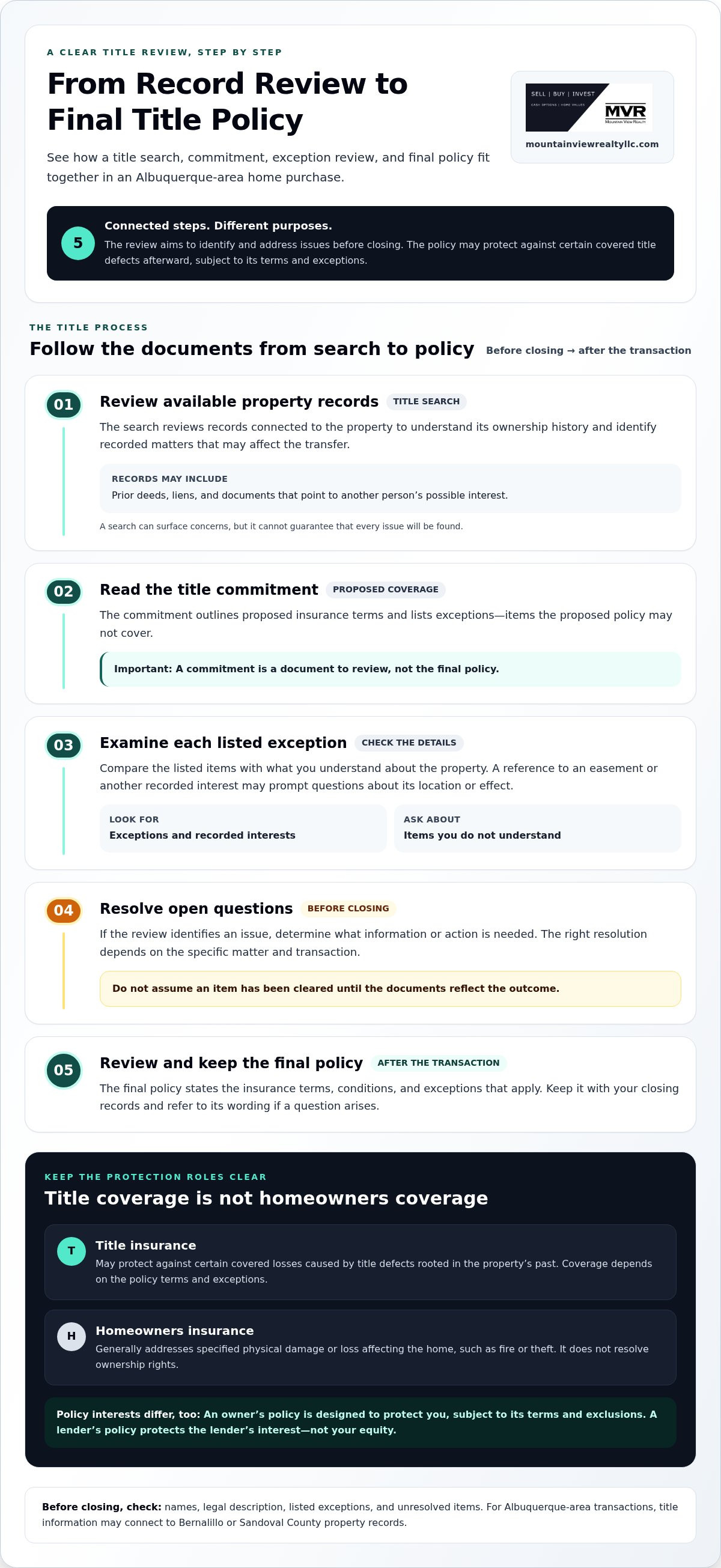
A title search, title commitment, and final policy are connected, but each serves a different purpose. The search reviews available property records. The commitment outlines proposed coverage and lists items that may be excluded or need attention. The final policy states the insurance terms, subject to its conditions and exceptions. For buyers asking what is title insurance and why do I need it, understanding this sequence clarifies what happens before closing and what protection may apply afterward.
The title review aims to identify and address issues before closing; the policy provides protection afterward only for risks it covers. A search can surface concerns, but it can’t guarantee that every issue will be found. The American Land Title Association describes industry work involving searches, examinations, and policy issuance in its Role of the American Land Title Association.
- Review available records. The title process begins with a review of records connected to the property, such as prior deeds and recorded interests. The goal is to understand the ownership history and identify matters that may affect the transfer.
- Prepare a commitment. The commitment sets out proposed insurance terms and identifies exceptions, or matters the proposed policy may not cover. It’s a document to review, not the final policy.
- Examine the exceptions. Compare listed items with what you understand about the property. A reference to an easement or other recorded interest, for example, may prompt questions about its location or effect.
- Address open questions. If the review identifies an issue, the parties can determine what information or action is needed. Resolution depends on the specific matter and transaction. Don’t assume an item has been cleared until the documents reflect the outcome.
- Issue the final policy. After the transaction proceeds, the final policy states the coverage and exceptions that apply. Keep it with your closing records and refer to its wording if a question arises.
What does a title search look for?
A title search examines available records about ownership and recorded interests. Depending on the property’s history, those records may include deeds, liens, and documents pointing to another person’s possible interest. The review helps identify questions for follow-up, but it can’t guarantee that no unrecorded claim, error, or other issue exists.
What should buyers understand in a title commitment?
Read the commitment carefully before closing. Check that the names and property description match the transaction, then review each listed exception, requirement, or unresolved item. If wording is unclear, raise the question through the transaction process and seek an authoritative explanation of the policy language and applicable local procedures. The final policy, not a general description, determines coverage.
Clear documents help buyers understand what remains open. If a title question affects your purchase or sale plans, discussing the transaction with a real-estate advisor can help you understand how that question fits into the broader deal.
Owner’s Policy vs. Lender’s Policy: Which Protection Applies to You?
These policies may relate to the same property, but they protect different interests. An owner’s policy is intended to protect the buyer’s eligible ownership interests. A lender’s policy is intended to protect the lender’s interest in the loan. One doesn’t stand in for the other, so seeing a lender’s policy in your closing documents doesn’t mean your equity is insured.
If you’re considering what is title insurance and why do I need it, start by identifying who each policy protects, then read the actual terms. The policy language, including its exceptions, determines the scope of coverage. Don’t rely on the policy name alone or assume either policy resolves every ownership concern.
| Policy | Whose interest it protects | What it does not protect |
|---|---|---|
| Owner’s policy | The owner’s eligible title interests, subject to the policy | The lender’s separate interest in a loan, or claims and losses excluded by the policy |
| Lender’s policy | The lender’s financial interest in the loan, subject to the policy | The homeowner’s equity as a separate ownership interest |
What does an owner’s policy generally protect?
An owner’s policy is designed to address certain covered claims that affect the buyer’s ownership rights. Whether a specific issue qualifies depends on the policy’s wording, conditions, and exceptions. Review the actual policy and its listed exceptions rather than assuming that “owner’s” means every ownership dispute is covered. This helps you understand what protection applies to your interests and what falls outside it.
That distinction matters to a buyer because equity is tied to ownership. If a claim challenges the buyer’s rights, an owner’s policy may respond only if the claim falls within its coverage. The policy itself is the guide. A general explanation can help you understand the terms, but it can’t replace a careful review of the documents for your transaction.
What does a lender’s policy protect?
A lender’s policy focuses on the lender’s financial interest in the loan, not the buyer’s equity. If your closing documents include one, read its details alongside any owner’s coverage documents. The policies have different purposes. Lender coverage alone doesn’t establish that you have a separate policy protecting your ownership interest.
Before closing, confirm which policy documents are part of your transaction and identify the named insured on each. Compare the property description and exceptions, then note any wording you don’t understand. Review the transaction documents rather than assuming a policy is required or included.
A practical way to assess the difference is to ask whose financial interest the policy is designed to protect. If it names the lender, that coverage isn’t a substitute for protection of your own eligible ownership interests. Reviewing both policies separately helps you make a more informed decision without confusing the lender’s position with your own.
What Should Albuquerque-Area Buyers and Sellers Review Before Closing?
Before closing, compare the title documents with the details of your transaction. A spelling difference, unclear property description, or unfamiliar exception may call for an explanation. These checks don’t replace a professional review, but they can help you identify questions while there’s still time to understand how they fit into the transaction.
Which details deserve a careful second look?
Read each document alongside your purchase or sale paperwork. Focus on names, the property description, exceptions, and any item still awaiting resolution. If something doesn’t match or seems unfamiliar, note it and ask for clarification through the transaction process.
- Names: Check that buyer and seller names match the transaction documents. Pay attention to spelling and differences in how a name appears.
- Property description: Compare the description in the title documents with the transaction paperwork. If the wording or boundaries are unclear, don’t assume the documents refer to the property as you understand it.
- Listed exceptions: Review each listed exception. Flag an unfamiliar item and ask what it refers to and how it affects the proposed coverage.
- Unresolved items: Look for any open question, claim, or requirement. Ask what remains outstanding and how it may affect the planned closing.
Local records matter. Albuquerque-area transactions may involve property records in Bernalillo or Sandoval County, depending on the property’s location. The relevant county clerk’s official website is a starting point for information about local records and access. For New Mexico title insurance information, consult the New Mexico Office of the Superintendent of Insurance (OSI). Use official sources for current access details and applicable requirements rather than assuming procedures are the same across counties.
What questions help clarify the policy?
Ask direct, document-specific questions. Which interests does this policy protect? What exceptions does it list? Is there an identified issue that remains unresolved, and how could it affect the planned closing? For legal questions, ask where to find authoritative New Mexico guidance or seek advice from a qualified legal professional.
If you’re weighing what is title insurance and why do I need it, remember that local record context can help explain what you’re seeing, but it doesn’t determine whether a policy covers a claim. The policy wording and exceptions govern that question. County records and local examples provide context, not legal advice or a substitute for reviewing the policy itself.
Use this checklist to organize questions before closing. If an item affects ownership expectations or transaction planning, raise it early enough for the parties to understand the issue and consider its impact. A real-estate advisor can help connect title questions to the broader transaction without replacing legal or policy-specific guidance.
How Title Insurance Fits Into Your Albuquerque Real-Estate Plan
Title information is one part of a larger real-estate decision. It can help buyers and sellers understand what the documents say about ownership, what questions remain, and whether those questions could affect timing or plans for the property. A clear review supports better decisions, but it can’t promise a problem-free closing. The goal is to understand the facts and their possible effect before deciding how to proceed.
An unfamiliar ownership history, a recorded interest, or a document that doesn’t match expectations can affect more than paperwork. A buyer may need to revisit assumptions about use or ownership. A seller may need to understand what information is needed to move the transaction forward. In either case, identifying the question early gives the parties an opportunity to consider its implications in the transaction plan.
When should a title question become part of your transaction plan?
Bring a question into the planning conversation when a document, recorded interest, or ownership detail could affect your expectations or the timing of the sale. Gather the relevant paperwork and identify what remains unclear. General real-estate guidance can help you consider how the issue fits the transaction, but it isn’t legal advice or a determination of title-insurance coverage.
The next step depends on the specific facts and documents. A question about a name or property description may call for a different review than an unresolved ownership claim. Avoid assuming one solution fits every situation. Keep the issue visible as you consider timing, responsibilities, and decisions you may need to make.
How can an advisor help you move forward with clarity?
A real-estate advisor can help connect title questions to your goals for the purchase or sale, organize the key points, and consider how an open issue may affect the transaction plan. An advisor doesn’t replace the title professional or legal counsel, and doesn’t determine what an insurance policy covers. That distinction keeps the guidance useful and clear.
Robb Krautbauer brings 15 years of real-estate investing experience and 10 years as a licensed agent to transaction planning. Mountain View Realty LLC has helped more than 200 families and investors buy and sell across the Albuquerque metro. That experience informs an educational, client-first approach: understand the issue, consider its impact, and make decisions with the available facts.
A buyer asking what is title insurance and why do I need it may be weighing how to protect ownership interests while making a larger purchase decision. A seller may be focused on whether an unresolved document question could affect the path to closing. In both situations, clarity supports a more informed conversation without promising a specific outcome.
If you’re planning a move in Albuquerque or the surrounding area, a conversation can help you organize next steps and identify the right questions for the transaction. There’s no pressure to decide before you understand your options.
Grab a time on my calendar, no pressure, just a plan for your next move.
Robb Krautbauer
Owner & Qualifying Broker
Make Your Next Move With a Clear Plan
A real-estate decision feels more manageable when you know what you need to learn before choosing a path. Write down your goals, the questions still open, and any decisions that depend on the answers. This gives each conversation a clear purpose and keeps a title concern in context, rather than letting uncertainty shape the whole transaction.
If you’re asking, “what is title insurance and why do I need it?” consider what you want to understand about your ownership interests and transaction. Policy-specific questions call for a careful reading of the policy, while legal questions may need qualified legal guidance. An advisor can help you consider how an open question fits your broader real-estate plans.
You don’t need every answer at once. A thoughtful next step can help you move forward at a pace that feels right and make decisions with greater confidence.
With clear information and the right questions, you can approach your next decision with confidence.
Frequently Asked Questions
Is title insurance required when buying a home in New Mexico?
An owner’s policy is optional, while a lender may require its own policy as a loan condition. To understand what applies to your purchase, compare your signed contract with your lender’s closing instructions and settlement documents. If the paperwork is unclear, ask for the requirement to be explained in writing. This gives you a clear record of which policies are part of the transaction and whom each is intended to protect.
Does title insurance protect me from every ownership dispute?
No. A policy doesn’t automatically cover every disagreement involving a property. If someone raises a claim, keep the notice and related records, then follow the reporting instructions in your policy. Don’t assume a claim is covered before it’s reviewed. For a legal dispute, consult a qualified attorney; direct questions about a policy’s claim process to the party responsible for administering it.
Can a title search miss a problem that title insurance may cover?
Yes. A later-discovered issue may not have appeared in the records reviewed before closing, though coverage depends on the policy. If you encounter a possible defect after purchase, gather the deed, closing paperwork, relevant correspondence, and any notice describing the issue. Keeping these records together can make it easier to explain what happened and identify documents needed for review.
What is the difference between owner’s and lender’s title insurance?
The key distinction is whose interest is insured. Check the named insured on each policy and keep the documents separate in your closing file. Don’t infer that one policy covers another party simply because both refer to the same property. If you’re asking what is title insurance and why do I need it, identifying the insured party is a useful first step in understanding the paperwork.
Does title insurance cover damage to my house?
No. For physical damage, review your homeowners policy and its claim instructions, not your title policy. If an event also raises a question about property records or ownership, keep those documents separate from repair estimates, photographs, and communications about the damage. Organizing paperwork by issue helps you direct each question to the relevant policy without confusing a property claim with an ownership concern.
What happens if a title issue is found before closing?
Ask for a written description of the issue, what information is still needed, and who is handling the next step. Then compare any proposed change with your transaction documents and expected schedule. If you’re a seller, gather records that may help clarify the property’s history; if you’re a buyer, keep a written list of open questions. Make decisions based on the specific documents and circumstances.
Should I keep my title insurance policy after closing?
Yes. Store the final policy with your permanent property records, and make a secure backup you can locate later. Add a note identifying where the original is kept, especially if someone else may need to manage your affairs. Keeping the policy alongside your deed and closing file can help you find the right paperwork if you refinance, sell, or need to review a future ownership question.

Article by
Robb Krautbauer
Robb Krautbauer is the Owner and Qualifying Broker of Mountain View Realty, serving Albuquerque, Rio Rancho, Santa Fe, and surrounding New Mexico communities. With more than a decade of real estate experience, Robb specializes in luxury homes, strategic home marketing, and helping homeowners navigate important life transitions with confidence.
Known for combining luxury-level marketing, AI-powered technology, and innovative selling strategies, Robb helps clients maximize their home's value while creating a smooth, personalized selling experience. Whether assisting luxury homeowners, retirees, families downsizing, or real estate investors, his focus is always on delivering expert guidance, honest advice, and exceptional results.
When he's not helping clients achieve their real estate goals, Robb enjoys studying market trends, emerging technology, and investment strategies that keep Mountain View Realty at the forefront of the industry.
Disclaimer
**Disclaimer:** The information provided in this article is for general educational purposes only and should not be considered legal, tax, financial, or professional advice. Real estate laws, market conditions, and regulations change over time and may vary based on your individual circumstances. Before making any real estate decision, consult with qualified legal, tax, or financial professionals. If you have questions about buying or selling real estate in New Mexico, contact Mountain View Realty for guidance specific to your situation. © 2026 Mountain View Realty. All rights reserved. The content on this website may not be reproduced without written permission.


