
Who Pays Closing Costs in New Mexico? A Clear Buyer and Seller Guide
The signed purchase agreement, not a universal state formula, determines who pays closing costs in New Mexico. That can make an estimate difficult to interpret: local expectations may help frame the conversation, but they are not fixed rules for every sale. Buyers need to know how much cash to bring, while sellers need a realistic picture of their likely proceeds.
Costs are easier to plan for when you separate them by side and check how the agreement assigns each item. This guide explains common buyer and seller expenses, what can affect the allocation, and how to compare an Albuquerque-area estimate with the terms of your deal.
You’ll also learn what to look for in a seller’s net sheet and which questions can clarify a line item before closing. Whether you’re buying in Albuquerque or selling in Rio Rancho, Corrales, or nearby, the goal is a clearer view of expected costs, fewer surprises, and more confidence in your next steps.
Key Takeaways
- To understand who pays closing costs in New Mexico, check how each charge is allocated in the signed purchase agreement.
- Review buyer estimates alongside the loan terms and transaction timing, since both can affect which costs appear.
- Use a seller’s net sheet to see how agreed credits and transaction expenses may affect expected proceeds.
- Separate the closing professional’s coordination role from the agreement’s decision about who pays each charge.
- Compare final closing documents with the signed terms and flag any unclear or changed amounts.
Who pays closing costs in New Mexico? Start with the agreement
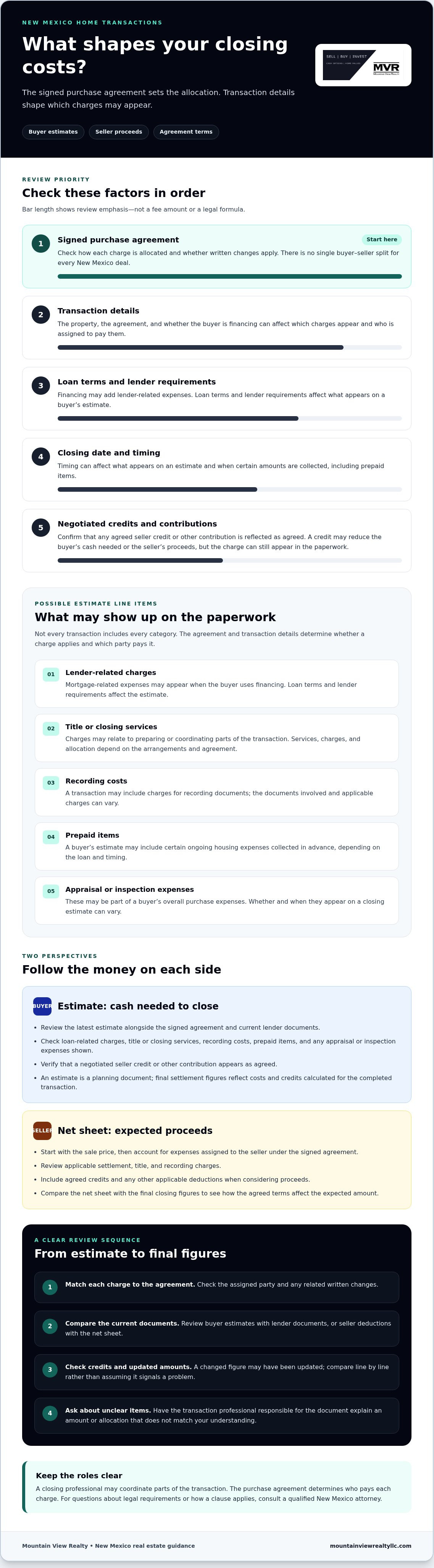
The signed purchase agreement and the transaction details determine how closing costs are allocated between buyer and seller. If you’re asking who pays closing costs in New Mexico, start with the agreement instead of assuming there’s one statewide split. The parties may take on different cost categories or negotiate for one party to cover an agreed expense.
Closing costs are transaction expenses paid in addition to the agreed property price. They can arise during closing, when the real estate transaction is completed and required documents and funds are handled. The specific charges depend on the property, the agreement, and whether the buyer is financing the purchase.
What counts as a closing cost?
Estimates may group charges into several categories. Not every transaction includes every category, and responsibility for a charge can depend on the agreement.
- Lender costs: Charges connected with arranging or processing a mortgage may apply when the buyer uses financing. Loan terms and lender requirements affect what appears.
- Title or closing costs: These relate to preparing or coordinating parts of the transaction. The services and charges depend on the closing arrangements.
- Recording costs: A transaction may include charges for recording documents. The documents involved and applicable charges can vary.
- Prepaid items: A buyer’s estimate may include amounts collected in advance for certain ongoing housing expenses, depending on the loan and timing.
Use these categories as a guide, not as a checklist of fees every buyer or seller will owe. For example, a financed purchase may include lender-related items that are not part of a cash transaction.
Does New Mexico law set one standard split?
For planning purposes, don’t treat a local practice or a commonly repeated allocation as a fixed rule for your deal. A reported custom is a market observation, not a substitute for the terms both parties signed. Review the purchase agreement’s cost allocations and any related written changes to see what applies to your transaction.
No single buyer and seller split applies to every New Mexico deal. The allocation depends on the signed terms and transaction details. If you’re unsure how a clause works or whether a legal requirement affects your situation, consult a qualified New Mexico attorney. A real estate professional can help explain the practical steps, but that guidance is not a substitute for legal advice.
Buyer closing costs in New Mexico: What may appear on your estimate?
A buyer’s estimate can include more than the amount needed for a down payment. Charges depend on the purchase, financing, timing, and cost allocations in the agreement. As you review who pays closing costs in New Mexico, treat each estimate as a working picture of your transaction, not a standard list of charges every buyer will owe.
Which buyer expenses may be included?
Depending on the transaction, an estimate may show:
- Lender-related charges: If you’re using a mortgage, the lender’s terms and requirements may add loan-related expenses to the estimate.
- Appraisal or inspection expenses: These may be part of the buyer’s overall purchase expenses. Whether and when they appear on a closing estimate can vary.
- Title or closing services: Charges for these services may appear, but their allocation depends on the agreement and transaction details. Don’t assume a category is automatically the buyer’s responsibility.
- Prepaid items: Depending on the loan and closing date, the estimate may include certain housing expenses collected in advance.
Financing can change the mix of charges. Loan terms, lender requirements, and the closing date may affect what appears and when an amount is collected. If a charge is unfamiliar, first identify what it covers, then consider how it affects the total.
How should buyers review a closing estimate?
Compare the latest estimate with the signed purchase agreement and current lender documents. Review each line item, then check that any negotiated seller credit or other contribution appears as agreed. A credit can affect the amount you need to bring, but it doesn’t necessarily mean a charge disappears from the paperwork.
A lender’s estimate is a planning document; final settlement figures reflect the costs and credits calculated for the completed transaction. Figures can change as details are updated. Compare the documents line by line rather than assuming every change signals a problem.
If an amount or allocation doesn’t match your understanding, ask the transaction professional responsible for that document to explain it. Clear questions can help identify whether the charge changed, was updated, or needs correction. For a clearer view of how a purchase fits your broader plans, you can discuss your buying plans with Mountain View Realty LLC.
Seller closing costs in New Mexico: Understand deductions from proceeds
A seller’s proceeds depend on more than the sale price. The final amount reflects expenses assigned to the seller in the signed agreement, agreed credits, and any other applicable deductions. To understand who pays closing costs in New Mexico, review the actual terms and figures for your sale instead of relying on a standard split.
What seller-side charges might appear?
Your closing documents may include charges related to settlement, title, or recording. Whether a line item applies and which party pays it depend on the transaction and written agreements. A seller credit negotiated as part of the deal can also reduce proceeds. Review each charge against the purchase agreement and any later written changes.
Compensation, including any real estate commission, is governed by the relevant agreement. Don’t assume a particular amount or allocation based on a general estimate or someone else’s transaction. Check the terms that apply to your sale and how they appear in the closing figures.
A mortgage payoff is different from a closing cost. If there’s an outstanding loan, its payoff may be deducted from the seller’s funds at closing. Keep it separate in your planning so you can distinguish transaction expenses from the amount needed to satisfy the loan.
How do closing costs affect estimated proceeds?
A seller’s net sheet or other proceeds estimate organizes expected credits and deductions. Use figures tied to your transaction, and treat the result as an estimate, not a guaranteed final amount.
Sample proceeds framework, not a dollar estimate:
- Agreed sale price
- Less credits or contributions included in the agreement
- Less seller-assigned expenses shown in the transaction documents
- Less compensation owed under the applicable agreement
- Less mortgage payoff, if applicable, and other documented deductions
- Estimated proceeds before final settlement adjustments
As the transaction progresses, compare the estimate with updated documents. A change to a credit, an expense, or the payoff figure can affect expected proceeds. If a line is unclear or differs from the signed terms, raise it with the professional responsible for that document before treating the estimate as settled.
This review can help connect the sale to your next decision, whether you’re planning a move, an estate transition, or another investment. Mountain View Realty LLC helps sellers consider their equity, timing, and transaction priorities. Direct legal or tax questions to qualified counsel.
Title company or real estate attorney? Know who handles what
A title company and a real estate attorney can have different roles in a transaction. A title company may coordinate closing steps, while an attorney can provide legal advice. The exact services and arrangements depend on the transaction. Neither professional’s involvement, by itself, determines who pays closing costs in New Mexico. The signed agreement and relevant service arrangements guide that question.
| Role | Typical task | Payment allocation question |
|---|---|---|
| Title company | May coordinate settlement, handle transaction documents, and manage funds through escrow, depending on its role in the transaction. | What does the agreement say about applicable charges, and what do the service arrangements specify? |
| Real estate attorney | Can provide legal advice, including help with contract interpretation or other legal questions. | What do the attorney’s engagement terms say about fees and payment? |
What does a title company generally do?
A title company may support closing by coordinating documents and funds, and its work may include title-related research. The scope can vary, so don’t assume every New Mexico transaction follows the same process or that every company provides the same services. The purchase agreement and applicable service arrangements help clarify which charges appear and how the parties allocate them.
Keep two questions separate: who coordinates a service, and who pays for it? A company’s role in preparing or handling closing documents doesn’t automatically make its charge a buyer or seller expense. Review the written terms and itemized figures for your transaction.
When might a real estate attorney be involved?
An attorney’s role is distinct from general transaction coordination. Legal counsel can address questions about contract language, rights, or other legal issues. If you need a legal interpretation, seek advice from a qualified New Mexico attorney. This article offers general real estate guidance, not legal advice, and doesn’t determine whether attorney involvement is required for a particular transaction.
As you review your documents, identify who is responsible for each task, then compare any related charge with the agreement. If a responsibility or payment allocation is unclear, raise the question with the professional handling that part of the transaction.
Review your New Mexico closing statement and plan your next move
A careful document review can help you catch mismatches before closing and understand how the final figures affect your plans. Compare each charge and credit with the signed terms instead of scanning only the bottom-line amount. The practical answer to who pays closing costs in New Mexico is to check the agreement, then confirm that the transaction documents reflect it.
A practical closing-cost review sequence
- Gather the paperwork. Set aside the signed purchase agreement, any written amendments, and the latest estimates or settlement documents.
- Check the allocations. Match each assigned charge and agreed credit against the purchase agreement. Note any item assigned to a different party or any amount that has changed.
- Compare updated figures. Review the latest statement against earlier estimates. Changes may reflect updated transaction details, but make sure each change is clear to you.
- Raise questions before signing. If a charge, credit, or allocation is unclear, ask the transaction professional responsible for the document to explain it. For legal interpretation of the agreement, consult a qualified New Mexico attorney.
Keep real estate planning separate from legal and tax advice. An agent can help you think through transaction choices and how estimated proceeds fit your plans. Questions about legal rights, contract interpretation, or tax consequences call for qualified legal or tax counsel.
Plan seller proceeds with an Albuquerque real estate advisor
For sellers, reviewing closing figures is part of understanding potential proceeds and deciding what comes next. Mountain View Realty LLC helps sellers consider their equity, timing, and transaction priorities as they weigh a move. Robb Krautbauer brings 15 years of real estate investing experience and 10 years as a licensed agent to that guidance.
For a closer look at different ways to sell, read the related article Home Selling Options in Albuquerque: A Strategic Guide to Your 2026 Move. The right path depends on your circumstances and priorities. An estimate can support planning, but it isn’t a promise of the final amount you’ll receive.
If you’d like to talk through your plans and possible next steps, grab a time on my calendar, no pressure, just a plan for your next move.
Review the details, then move forward with confidence
The answer to who pays closing costs in New Mexico comes down to the signed agreement and the details of the transaction. Buyers can review estimates alongside current lender documents, while sellers can use a net sheet to understand how agreed costs, credits, and other deductions may affect proceeds. Comparing final figures with the written terms can help bring questions to light before signing.
Closing professionals help coordinate transaction steps, but their roles don’t determine which party pays each charge. For contract interpretation or tax questions, seek qualified legal or tax advice. For real estate planning, a clear view of the numbers can help you weigh your next move with care.
Robb Krautbauer brings 15 years of real estate investing experience and 10 years as a licensed agent. Mountain View Realty LLC has helped 200+ families and investors across the Albuquerque metro make informed buying and selling decisions.
With the agreement and figures in view, you can take your next step with greater clarity.
Robb Krautbauer, Owner & Qualifying Broker
Frequently Asked Questions
Who usually pays closing costs in New Mexico?
There isn’t one fixed buyer and seller split. Who pays closing costs in New Mexico depends on the signed purchase agreement and the transaction details. Buyers may have costs tied to financing, while sellers may have expenses or credits assigned to them by the agreement. Treat commonly reported local practices as general context, not as a rule for your sale or purchase. Review the written terms to see how each charge is allocated.
Do buyers and sellers split closing costs in New Mexico?
Not automatically. Depending on the agreement and transaction, costs may be assigned to one party, shared, or addressed through negotiated terms. Don’t assume every charge is divided equally or that a reported local practice applies to your deal. Check the purchase agreement and any written changes, then compare those terms with current closing documents. If the allocation is unclear, raise the question with the professional handling the relevant document.
Can a New Mexico seller pay some of the buyer’s closing costs?
A seller may agree to cover some buyer costs as part of negotiated terms. Any agreed contribution should be clearly reflected in the signed purchase agreement or a written amendment, then shown correctly in the closing figures. The effect on the buyer’s amount due and the seller’s proceeds depends on the transaction. Review the lender’s documents and settlement figures to see how the credit is applied, and clarify any mismatch before signing.
What closing costs does a homebuyer pay in New Mexico?
Buyer expenses vary by transaction and financing. A buyer’s estimate may include lender-related charges, appraisal or inspection expenses, title or closing services, recording charges, and prepaid items. Not every category applies to every purchase, and a line item isn’t automatically the buyer’s responsibility just because it appears on an estimate. Compare the charge with the purchase agreement and current lender documents, and ask for clarification if its purpose or allocation is unclear.
What closing costs does a home seller pay in New Mexico?
Seller costs depend on the signed terms and details of the sale. Closing documents may include expenses allocated to the seller, negotiated credits to the buyer, and compensation governed by the relevant agreement. An outstanding mortgage payoff may also reduce the seller’s proceeds, but it is separate from closing costs. A seller’s net sheet can help organize expected deductions and credits, though the final amount may change as transaction figures are updated.
Does New Mexico require a real estate attorney at closing?
Whether an attorney must be involved is a legal question, so don’t rely on general closing guidance as a definitive answer. Check current New Mexico authority or consult a qualified New Mexico attorney about requirements that may apply to your transaction. An attorney can also advise on contract language, legal rights, and other legal questions. A real estate agent can explain transaction steps, but that guidance isn’t a substitute for legal advice.
How can I estimate my closing costs before closing in Albuquerque?
In Albuquerque, start with the signed purchase agreement and the latest transaction estimates. Buyers can compare lender documents, listed charges, and agreed credits. Sellers can use a net sheet that includes the expected sale price, assigned expenses, credits, and any applicable mortgage payoff. Treat each figure as an estimate, then compare updated settlement documents with the signed terms. Ask the professional responsible for a document to explain unclear or changed amounts before signing.

Article by
Robb Krautbauer
Robb Krautbauer is the Owner and Qualifying Broker of Mountain View Realty, serving Albuquerque, Rio Rancho, Santa Fe, and surrounding New Mexico communities. With more than a decade of real estate experience, Robb specializes in luxury homes, strategic home marketing, and helping homeowners navigate important life transitions with confidence.
Known for combining luxury-level marketing, AI-powered technology, and innovative selling strategies, Robb helps clients maximize their home's value while creating a smooth, personalized selling experience. Whether assisting luxury homeowners, retirees, families downsizing, or real estate investors, his focus is always on delivering expert guidance, honest advice, and exceptional results.
When he's not helping clients achieve their real estate goals, Robb enjoys studying market trends, emerging technology, and investment strategies that keep Mountain View Realty at the forefront of the industry.
Disclaimer
**Disclaimer:** The information provided in this article is for general educational purposes only and should not be considered legal, tax, financial, or professional advice. Real estate laws, market conditions, and regulations change over time and may vary based on your individual circumstances. Before making any real estate decision, consult with qualified legal, tax, or financial professionals. If you have questions about buying or selling real estate in New Mexico, contact Mountain View Realty for guidance specific to your situation. © 2026 Mountain View Realty. All rights reserved. The content on this website may not be reproduced without written permission.


