
Who Pays for a Home Warranty: Buyer or Seller?
A home warranty isn’t automatically the buyer’s bill or the seller’s obligation. In an Albuquerque-area sale, who pays for home warranty buyer or seller is a decision the parties can negotiate and spell out in the purchase agreement, not a universal rule.
It’s understandable to want a clear answer before closing. Buyers may value added protection after move-in, while sellers may consider a warranty as one way to address buyer concerns. But the payment decision is only part of the picture. The plan’s coverage, limits, exclusions, and costs can affect whether it makes sense for the home and each party’s budget.
This guide explains how payment responsibility is decided, how purchase-agreement terms can shape the outcome, and what buyers and sellers should review before accepting or requesting coverage. You’ll also see why a warranty isn’t a substitute for understanding a home’s condition or carefully reading the plan. For Albuquerque, Rio Rancho, and nearby communities, a clear conversation during negotiations can help set expectations and reduce avoidable stress as closing approaches.
Key Takeaways
- Who pays for home warranty buyer or seller depends on what the parties agree to, not a universal rule.
- Put the payment responsibility and agreed coverage terms in the signed transaction documents.
- Compare buyer-paid, seller-paid, and shared-cost arrangements based on each party’s priorities and the plan’s terms.
- Before agreeing, review the plan, start date, covered items, exclusions, claim limits, and service fees.
- Consider the warranty alongside the full Albuquerque-area purchase or sale negotiation, so expectations are clear before closing.
Who pays for a home warranty: the buyer, the seller, or whoever negotiates it?
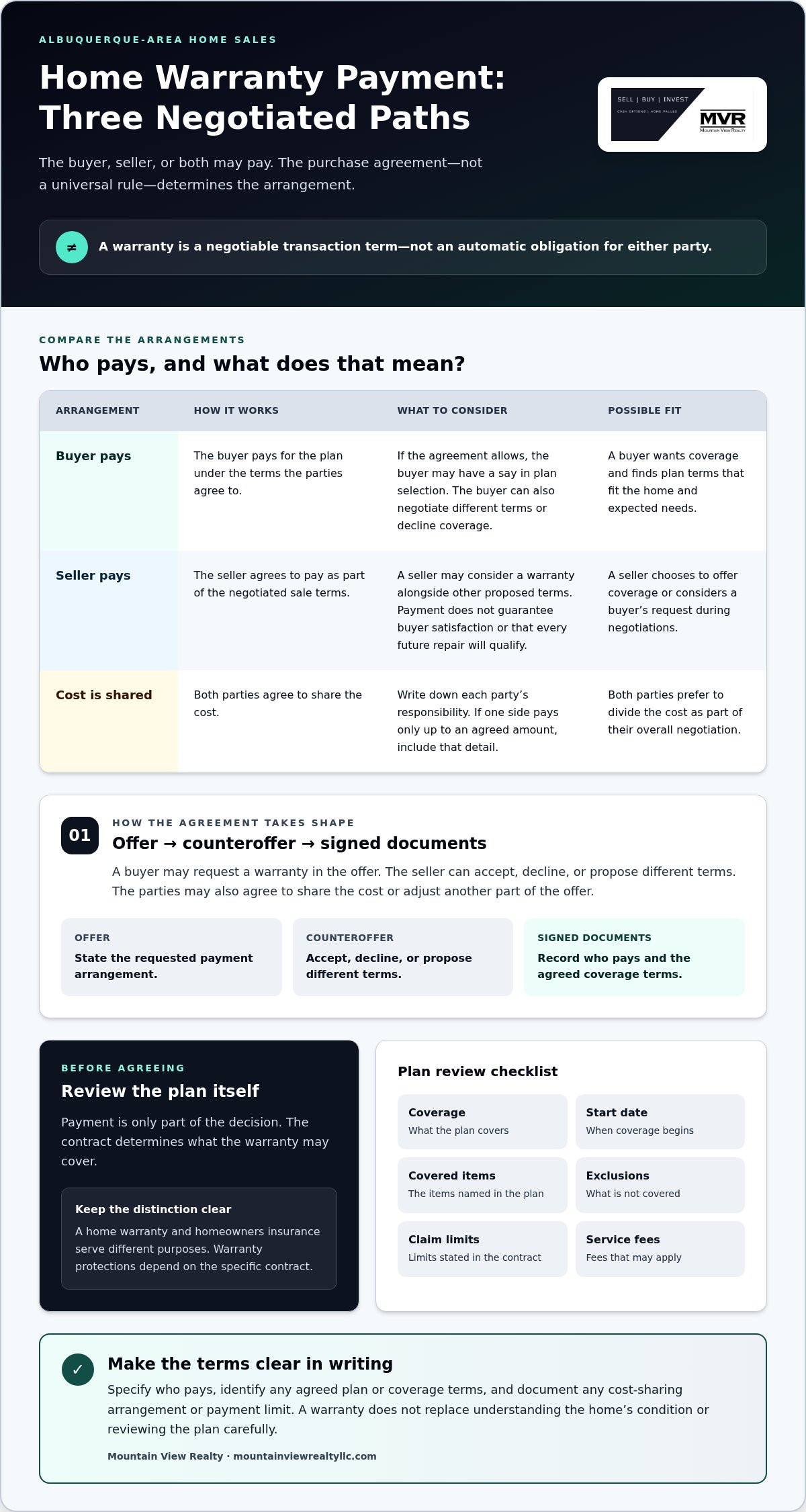
The buyer or seller may pay for a home warranty, or they may agree to share the cost. The answer depends on what the parties negotiate and record in their transaction documents. There isn’t a universal rule that assigns payment to one side in every Albuquerque-area sale.
A home warranty is a negotiated transaction term, not an automatic obligation for either the buyer or the seller. A seller might agree to pay, a buyer might choose to pay, or the parties might settle on another arrangement. Each option depends on the terms they’re willing to accept, not on one isolated story about a sale. An anecdote can show what happened in a particular transaction, but it doesn’t establish a standard for Albuquerque.
Before deciding, distinguish a home warranty from homeowners insurance. They serve different purposes, and a warranty’s protections depend on the specific contract. For general background, see Home warranty on Wikipedia.
When might a seller agree to pay?
A seller may offer to pay for coverage as one part of negotiating a sale. For example, a buyer might request a warranty, and the seller could consider that request alongside other proposed terms. The parties can weigh the warranty against their broader priorities for the transaction, including what each is prepared to give or receive. A seller’s offer doesn’t guarantee that a buyer will be satisfied, or that every future repair will qualify for coverage.
When might a buyer pay or decline?
A buyer can request a warranty, accept a seller’s offer, negotiate different terms, or decline coverage. Paying for the plan may give the buyer a say in the selection, if the parties agree to that approach. But a buyer shouldn’t assess the decision by price or the word “warranty” alone. Review the actual contract, including covered items, exclusions, claim limits, and any service fees, then consider whether those terms fit the home and the buyer’s expected needs.
For anyone asking who pays for home warranty buyer or seller, the practical answer is to discuss responsibility as part of the overall offer or counteroffer. Cost-sharing may also be an option if both parties prefer it. Whatever they decide, clear written terms can help prevent different expectations about who pays and what coverage was agreed upon.
How a home-warranty payment agreement works in a New Mexico home sale
The discussion can begin with an offer, continue through a counteroffer, and end in the final signed transaction documents. A buyer might request a warranty with the offer. The seller could accept, decline, or propose different terms. The parties might also agree to share the cost or adjust another part of the offer. For Albuquerque-area buyers asking who pays for home warranty buyer or seller, the practical answer is found in the terms they negotiate and put in writing.
For the parties’ negotiated arrangement, the written agreement is the reference point. Statewide forms and transaction requirements can change, so avoid relying on a remembered form or assuming a verbal conversation settles the issue. The key is to make the agreed responsibility and coverage terms clear in the appropriate transaction documents.
Where should the agreement be recorded?
Record the agreement in the transaction documents used for the sale, with enough detail to make the arrangement clear. Specify who will pay and identify any agreed plan or coverage terms. If the parties agree that one side will pay only up to a stated amount, or that they’ll share the cost, make that part of the written terms as well. Vague verbal assumptions can lead to different expectations as closing approaches.
What changes in an Albuquerque-area transaction?
The setting may be Albuquerque, Rio Rancho, Corrales, or another nearby community, but local expectations don’t replace the parties’ written agreement. Practices can vary by transaction, so a story about another sale isn’t a reliable guide to what applies to yours. If the language in current transaction documents is unclear, a qualified real-estate professional can help explain how the term fits into the agreement.
A seller may view a warranty as one possible part of a broader negotiation. For a provider’s perspective on potential seller benefits and negotiable payment, see First American Home Warranty on seller benefits. That information can offer context, but the specific terms in your transaction still matter. A warranty agreement should not be treated as a replacement for discussing the home’s condition or the parties’ other negotiated terms.
Clear documentation helps keep the warranty decision connected to the full transaction, rather than leaving it as a separate promise. For guidance on how a negotiated term fits into an Albuquerque-area sale, explore local real-estate transaction guidance.
Should the buyer or seller pay? Compare the practical trade-offs
There’s no single arrangement that fits every sale. The right choice depends on the negotiated terms, who wants the coverage, and whether the plan itself suits the home. This comparison can help Albuquerque-area buyers and sellers weigh options without treating any one of them as standard.
| Arrangement | Plan choice and control | Transaction simplicity | Possible fit |
|---|---|---|---|
| Buyer pays | The buyer may have more input into plan selection if the agreement allows it. | Can be straightforward if payment responsibility and plan terms are clearly documented. | A buyer who wants coverage and finds a plan that aligns with their needs and budget. |
| Seller pays | The buyer and seller should clarify who selects the plan and what coverage is included. | Can address a buyer’s request as part of the broader sale negotiation. | A seller willing to include coverage as one negotiated term. |
| Parties share the cost | Selection and payment details need to be agreed between both parties. | May require clear documentation of each party’s share and any plan terms. | Both parties see value in coverage but prefer to divide the expense. |
Payment and control aren’t automatically the same thing. The fact that one party pays doesn’t, by itself, establish who chooses the plan, who is covered, or how claims are handled. Those details depend on the warranty contract and the parties’ written agreement. Read both before relying on assumptions.
What can matter to a seller?
A seller can consider whether offering coverage supports their negotiation strategy and fits with the other terms under discussion. Before agreeing, understand the payment responsibility and the scope of the proposed warranty. Coverage isn’t a substitute for an inspection or for appropriate property disclosures. Nor does offering a plan guarantee buyer satisfaction or a particular outcome after closing.
What can matter to a buyer?
For buyers, the home’s age and included systems can help frame what to review, but the plan’s actual language matters most. Check covered items, exclusions, claim limits, and service fees. Coverage varies by contract, so don’t assume a system or repair is included based on the plan’s name alone.
Ultimately, the question of who pays for home warranty buyer or seller is only one part of the decision. Compare the written terms with your priorities and comfort with potential repair costs. A plan may suit one buyer’s circumstances and not another’s. Neither payment arrangement guarantees savings, repairs, or claim approval.
What buyers and sellers should review before agreeing to a home warranty
A home warranty can be one part of a sale, but its value depends on the written terms and the home’s needs. Before agreeing, both parties should understand who pays, what plan is involved, and when coverage begins. The question of who pays for home warranty buyer or seller is only one piece of the decision.
Questions to resolve before signing
Use this checklist to clarify the agreement:
- Payment: Identify who pays and whether that party covers all or only part of the plan.
- Plan selection: Name the selected plan or explain how the parties will choose it.
- Timing: Review when coverage is scheduled to begin, as stated in the contract.
- Other terms: Read any selection, cancellation, or payment conditions in the actual documents.
- Written wording: Make sure the final language matches what both parties intended.
Clear details can prevent a difference between what one party expected and what the signed agreement says. If the parties revise their terms during negotiations, review the updated documents rather than relying on an earlier draft or conversation.
How to assess the coverage itself
Next, read the warranty contract, not just a summary or sales description. Check which systems and appliances are covered, then review exclusions, claim limits, and the steps for making a claim. Look for service fees or other out-of-pocket costs that may apply. Coverage and claim procedures depend on the specific contract, so don’t assume a particular repair will qualify.
Consider the home’s age and the systems and appliances included in the sale. Compare those details with the plan’s actual terms and your own priorities. A buyer may value coverage for certain items, while another may prefer to assess potential repair costs without a warranty. Neither choice fits every home or budget.
Keep warranty terms separate from inspection findings, seller disclosures, and other responsibilities in the transaction. A warranty doesn’t replace a careful review of the property or resolve questions raised during an inspection. Buyers and sellers should address those matters through the appropriate parts of their sale agreement, rather than assuming the warranty handles them.
If a contract term is unclear, a qualified real-estate professional can help explain how it fits into the broader purchase or sale strategy. A thoughtful review can support clearer expectations and help both parties make a decision that aligns with their priorities.
Make the home-warranty decision part of a clear Albuquerque transaction plan
A home warranty decision works best when it supports the broader purchase or sale plan. Agree on who will pay, review the actual plan terms, and document the decision alongside the other negotiated terms. For anyone weighing who pays for home warranty buyer or seller, the answer should reflect the parties’ agreement, not assumptions about local custom.
A simple path from discussion to closing
Start by identifying each party’s preference. Does the buyer want coverage, is the seller open to including it, or would neither party choose a plan? If the warranty remains part of the negotiation, compare its specific coverage and costs with the home and the parties’ priorities. Then record who pays, what plan terms apply, and any agreed timing in the appropriate transaction documents. Review the written language with the rest of the sale terms before closing.
This keeps the warranty from becoming an isolated promise. It also gives both parties a clearer view of how the decision fits with the inspection, other negotiated terms, and their plans for the transaction.
Get guidance that fits the whole transaction
Warranty questions can connect to larger decisions about buying or selling, from weighing a buyer’s priorities to considering how a seller wants to structure an offer. Robb Krautbauer brings 15 years of real-estate investing experience and 10 years as a licensed agent to practical transaction education, with an emphasis on protecting equity and making informed decisions.
If you’re a seller considering broader options, Mountain View Realty LLC’s home-selling options guide can help you compare possible approaches. The goal is to consider the warranty in context, alongside the terms and priorities that shape the full sale, rather than treating it as a guarantee of repairs or a substitute for careful review.
Buyers and sellers in Albuquerque, Rio Rancho, Corrales, and nearby communities can take a measured approach: clarify preferences, read the plan, and make sure the written agreement reflects the final decision. If you’re planning a purchase or sale, you’re welcome to discuss your next steps with Mountain View Realty LLC and consider how each transaction term fits your goals.
Make your next real estate decision with clarity
Who pays for home warranty buyer or seller depends on the terms both parties negotiate, not an automatic rule. The buyer, seller, or both may take responsibility. Before agreeing, review the specific plan, including coverage, exclusions, limits, fees, and timing. Then make sure the written transaction documents reflect the decision clearly.
A warranty is only one part of a home purchase or sale. Consider it alongside the home’s condition, inspection findings, and the priorities shaping the full negotiation. A clear plan can help both parties set expectations without assuming coverage will handle every repair.
Robb Krautbauer brings 15 years of real-estate investing experience and 10 years as a licensed agent to his educational, equity-conscious approach. Mountain View Realty LLC has helped more than 200 families and investors across the Albuquerque metro. If you’re weighing a move, you can talk through your next steps without pressure.
With clear information and thoughtful guidance, you can move forward with greater confidence.
Frequently Asked Questions
Who usually pays for a home warranty, the buyer or the seller?
Neither party is automatically responsible in every transaction. The question of who pays for home warranty buyer or seller depends on what the buyer and seller agree to. The buyer may pay, the seller may pay, they may share the expense, or they may decide not to include a warranty. Make the agreement clear in the signed transaction documents. An example from another Albuquerque sale doesn’t establish a rule for yours.
Can a buyer ask the seller to pay for a home warranty?
Yes. A buyer can raise a home warranty during negotiations, and the seller can accept, decline, or suggest different terms. Whether seller-paid coverage becomes part of the transaction depends on the parties’ agreement and documents. Before accepting, read the plan itself. Check what it covers, along with exclusions and limits, so you can decide whether the proposed coverage fits your needs and the home.
Is a seller required to provide a home warranty in New Mexico?
Don’t assume a seller must provide a home warranty. Whether a warranty is included and who pays should be addressed in the negotiated transaction documents and considered alongside current applicable requirements. Forms and rules can change, so consult a qualified professional about New Mexico-specific legal questions. A warranty discussion doesn’t replace reviewing property disclosures or inspection findings as part of the purchase process.
What happens if the purchase agreement doesn’t say who pays for the warranty?
An unclear agreement can leave the buyer and seller with different expectations about payment, plan selection, or timing. Raise the ambiguity before relying on a verbal understanding, and have the appropriate transaction documents clarified. The right next step depends on the transaction stage and paperwork. In an Albuquerque-area sale, a qualified real-estate professional can help explain the documents and how the warranty term fits into the broader agreement.
Can the buyer and seller split the cost of a home warranty?
Yes, the parties may agree to share payment and document the arrangement. Clarify how payment will be handled, which plan applies, and any relevant timing or selection terms. Don’t assume cost-sharing is standard, or that dividing the payment changes the plan’s coverage. Read the warranty contract before accepting the arrangement, including its exclusions, limits, and any service fees or other out-of-pocket terms.
Does a home warranty cover everything an inspection finds?
No. A home warranty follows its own contract, which may set exclusions, coverage limits, claim procedures, and service fees. It isn’t a promise to repair every issue identified during an inspection. Review inspection information and warranty documents separately. Then consider whether the negotiated coverage fits your priorities, rather than assuming the warranty addresses a repair or condition just because it appeared in the inspection findings.
Should a buyer accept a seller-paid home warranty?
Seller payment alone doesn’t determine whether a home warranty suits you. Review the plan’s coverage, exclusions, limits, claim process, and any out-of-pocket terms. Compare those details with the home, inspection findings, and your priorities. If the coverage doesn’t fit, discuss alternatives during negotiations. A seller-paid plan may be one option, but it doesn’t guarantee savings, repair coverage for every issue, or claim approval.

Article by
Robb Krautbauer
Robb Krautbauer is the Owner and Qualifying Broker of Mountain View Realty, serving Albuquerque, Rio Rancho, Santa Fe, and surrounding New Mexico communities. With more than a decade of real estate experience, Robb specializes in luxury homes, strategic home marketing, and helping homeowners navigate important life transitions with confidence.
Known for combining luxury-level marketing, AI-powered technology, and innovative selling strategies, Robb helps clients maximize their home's value while creating a smooth, personalized selling experience. Whether assisting luxury homeowners, retirees, families downsizing, or real estate investors, his focus is always on delivering expert guidance, honest advice, and exceptional results.
When he's not helping clients achieve their real estate goals, Robb enjoys studying market trends, emerging technology, and investment strategies that keep Mountain View Realty at the forefront of the industry.
Disclaimer
**Disclaimer:** The information provided in this article is for general educational purposes only and should not be considered legal, tax, financial, or professional advice. Real estate laws, market conditions, and regulations change over time and may vary based on your individual circumstances. Before making any real estate decision, consult with qualified legal, tax, or financial professionals. If you have questions about buying or selling real estate in New Mexico, contact Mountain View Realty for guidance specific to your situation. © 2026 Mountain View Realty. All rights reserved. The content on this website may not be reproduced without written permission.


