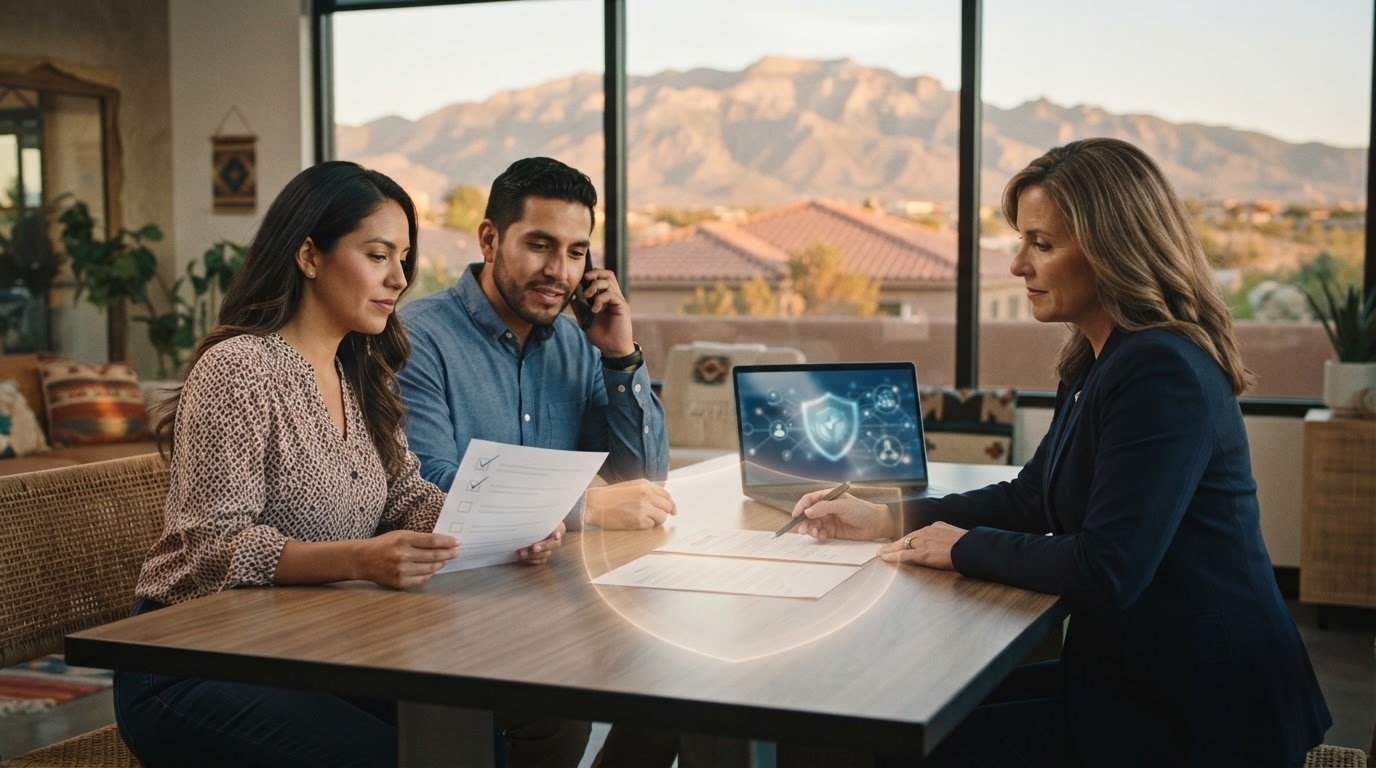
Wire Fraud Protection in Real Estate Transactions: A 2026 Checklist
A familiar name in your inbox does not prove that wiring instructions are genuine. During a home purchase or sale, an email can appear to come from a trusted real estate or closing contact. Wire fraud protection in real estate transactions starts with verifying instructions independently, not judging them by how convincing they look.
For Albuquerque-area buyers and sellers, a clear plan can make payment steps easier to manage without assuming every email is fraudulent or letting uncertainty disrupt the transaction. Know which contact can confirm payment details, and use information you already trust to reach them.
This 2026 checklist explains how to verify wire instructions, spot requests that deserve a closer look, and respond if instructions seem suspicious or a transfer has already been sent. Your real estate agent can help clarify the transaction timeline and keep communication organized. Verify payment details directly with the appropriate closing contact through a trusted channel.
Key Takeaways
- Learn how impersonation or altered instructions can redirect a legitimate payment.
- Compare email review with stronger verification methods and understand why the channel matters.
- Use a stage-by-stage checklist to prepare for payment and confirm recipient details.
- Know what to do if a transfer seems wrong, as part of wire fraud protection in real estate transactions.
- Keep communication clear by involving the appropriate closing contacts when concerns arise.
What wire fraud protection means in a real estate transaction
Wire fraud is an attempt to divert a legitimate payment to an account controlled by someone else. During a home purchase, a fraudulent message may arrive while a buyer is arranging earnest money or preparing closing funds. Wire fraud protection in real estate transactions means confirming the recipient and payment instructions through a trusted, independent channel before sending money.
Not every message about a deposit or closing is suspicious. The important distinction is whether payment details are verified independently, rather than accepted because an email looks familiar. That habit helps buyers and sellers handle each instruction thoughtfully without treating every transaction message as a threat.
For a general overview of wire fraud, watch this video about avoiding fraud during a real estate transaction:
In brief: Wire-fraud protection means confirming the recipient and payment instructions through a trusted, independent channel before sending real estate funds. It helps you distinguish verified instructions from an attempt to divert a payment.
How wire fraud can enter a home sale or purchase
A scammer may impersonate an agent, title contact, or another person involved in the transaction. One method is to access a real email account and observe routine messages. Another is to use a lookalike email address or display name that resembles a familiar contact. A fraudulent message may include genuine details, such as the property, closing date, or names of people involved, to make false payment instructions seem believable.
Earnest money and closing funds deserve careful attention because they are important payments tied to transaction steps. If account details change or a message asks you to do something differently, verify the request separately, even when the rest of the message matches what you expect.
Why the familiar sender name is not enough
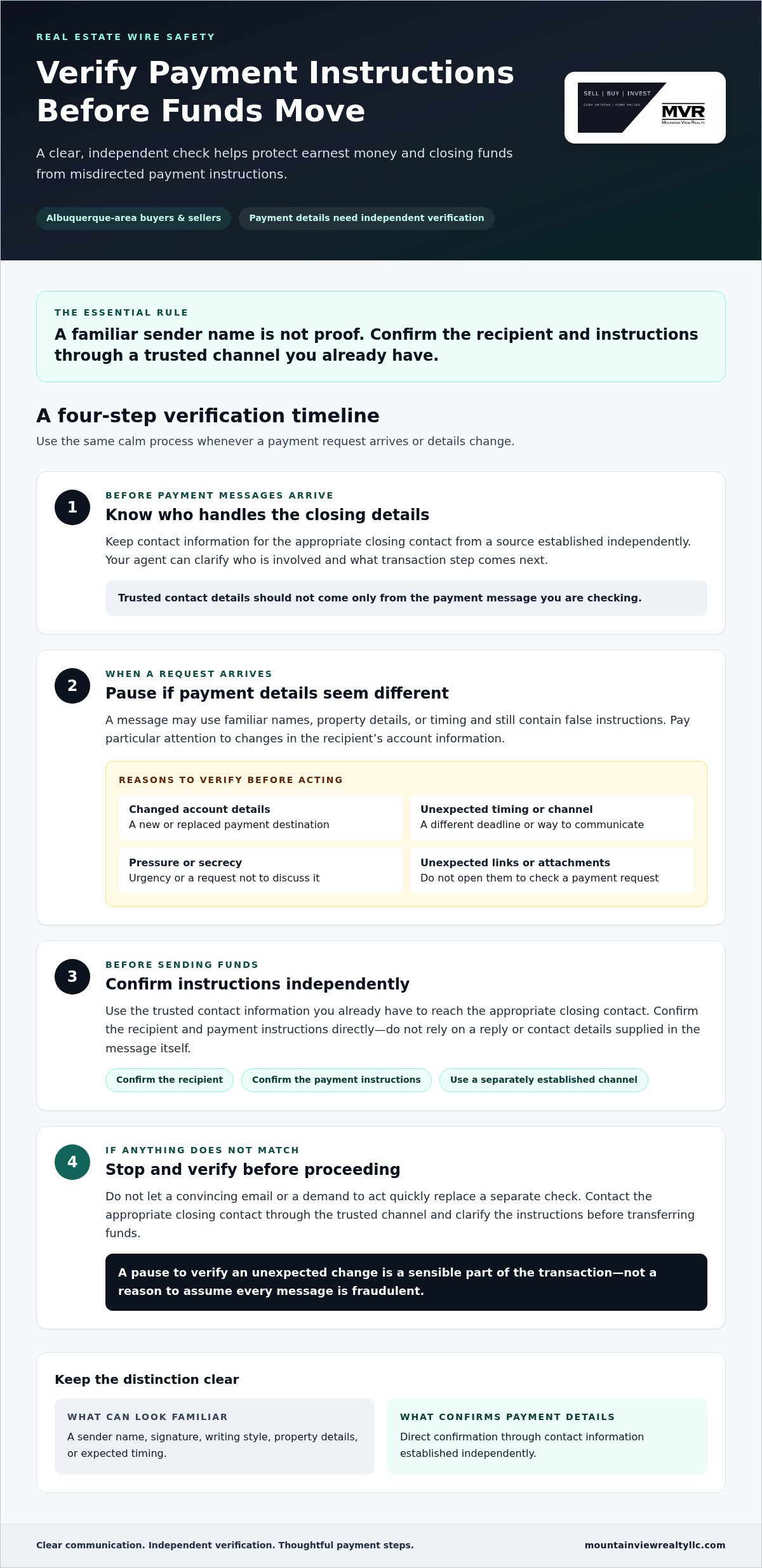
An email’s display name and signature can look familiar, but they do not prove who sent the message or whether its account details are correct. Even an expected message deserves a separate verification step when it contains payment instructions. This does not mean every closing email is unsafe. It means you should confirm the payment destination using contact information established independently, not details included in the message itself.
In an Albuquerque-area transaction, clear communication among the buyer, seller, agent, and closing contact helps everyone understand what is expected. A real estate agent can clarify the transaction timeline and who is handling each step. Buyers and sellers should independently verify payment details before transferring funds.
How real estate wire scams work from first contact to payment
A wire scam can unfold alongside a legitimate home sale. A criminal may learn basic details about a transaction, impersonate someone involved, and send altered payment instructions. The message may arrive near a planned deposit or closing, when the buyer expects to hear about funds. Understanding this sequence can help you pause when instructions change, rather than assuming every transaction email is fraudulent.
Email compromise occurs when someone gains access to an account and may use it to observe or imitate ongoing correspondence. Spoofing means making a message appear to come from a familiar sender. In either case, a fraudster may use names, property details, or timing that match the actual transaction. Those details can make a false request seem ordinary, but they do not verify where the money should go.
Illustrative scenario, not a reported local incident: A buyer purchasing a home in Rio Rancho has been discussing closing arrangements by email. A message that appears to come from a closing contact refers to the property and expected payment, then says the account information has changed and asks the buyer to send funds that day. The details feel familiar, but the new destination and timing are reasons to pause and verify independently before paying.
Warning signs in a message about closing funds
One unusual detail does not prove that a message is fraudulent. It does mean you should verify the request before acting, especially if payment instructions differ from what you received earlier.
- New account details: The message replaces or changes the recipient’s account information.
- A change in timing or channel: It asks for payment earlier than expected or shifts the conversation to a different method.
- Pressure or secrecy: It urges immediate action or tells you not to discuss the request with other transaction participants.
- Unexpected links or attachments: Do not open them just to confirm a payment request. Check whether the message is genuine through a trusted contact method.
Pressure can make an ordinary decision feel like a race. Taking a moment to verify an unexpected change is a sensible part of the process, not a sign that you are holding up the sale.
How a legitimate transaction can be impersonated
A deceptive message may copy a familiar name, logo, signature, or writing style. It may also refer to earlier conversations, making the request seem consistent with the deal. But a sender’s apparent identity and the payment instructions are separate questions. Even if a message matches the transaction, confirm changed details through a channel established independently. Do not rely on a reply or contact information supplied in that message.
Wire fraud protection in real estate transactions depends on a calm, repeatable communication practice, not on spotting every possible forgery. Your agent can clarify who is involved and what step comes next, while payment details still need independent verification. For a broader perspective on Albuquerque-area real estate decisions, Mountain View Realty LLC shares guidance for local buyers and sellers.
Compare wire-verification methods and address the trust objection
Reviewing an email can help you understand a payment request, but it cannot confirm on its own that the instructions are genuine. Instead, check the details through a contact method you established before receiving the payment message. If the closing professional has an established process for confirming instructions, use it too.
The principle is simple: recognizing a sender is not the same as authenticating a payment request. A message may use the right name, signature, or transaction details and still contain incorrect payment information. Independent confirmation gives you a separate way to check the instructions.
Which channel is best for confirming wire instructions?
For direct confirmation, call a number you already verified, such as one saved from an earlier conversation or provided at the start of the transaction. Do not use a number included in a message announcing changed instructions. If your closing professional uses an established secure process, follow that process as part of your confirmation routine. A phone call reduces reliance on email, but does not replace the closing professional’s established transaction procedures.
- Email-only review: Useful for reading and keeping track of instructions, but it does not independently verify the recipient or account details.
- Previously verified phone number: Lets you speak with a known transaction contact through a channel separate from the payment email.
- Established confirmation process: Keeps verification aligned with the closing professional’s existing method for handling payment details.
Use the channel that was established before the payment request arrived. If a process or instruction is unclear, pause and clarify it through a known contact rather than improvising based on the latest message.
What to do when instructions change or details do not match
Treat a mismatch as a reason to stop before sending money, not as a minor administrative edit. Contact the known transaction professional using previously verified contact information. Explain what differs, such as the account details, payment timing, or requested communication channel, and ask them to resolve the discrepancy through the established process.
Do not reply to the questionable message to ask whether it is genuine, and do not use a phone number or link included in it to verify the change. Those details come from the same source you are trying to check. Start a separate conversation using trusted contact information already in your records.
Resume the transfer only after the discrepancy has been resolved through a trusted communication path and you understand the instructions. This measured pause supports wire fraud protection in real estate transactions without assuming that every change is fraudulent. Clear communication can also help keep the broader closing on track. For guidance on Albuquerque-area real estate decisions, Mountain View Realty LLC helps buyers and sellers understand each step of a transaction.
Use this real estate wire-fraud protection checklist before sending funds
A short, repeatable routine can make payment steps easier to follow during an Albuquerque-area closing. Keep the checklist with your transaction records and use it whenever you receive instructions or prepare a transfer. Wire fraud protection in real estate transactions cannot guarantee that fraud will not occur. It is a practical way to confirm that you understand the instructions and have checked the payment details through a trusted channel.
Before the closing instructions arrive
Set up your communication plan before a payment request reaches your inbox. Save contact information for your real estate agent and closing professional from a source you already trust. Ask how payment instructions will be communicated and how changes will be handled. When you keep transaction discussions in established channels, it is easier to notice a message asking you to switch methods unexpectedly.
- Save verified phone numbers and contact details for the professionals involved in your transaction.
- Ask what process to follow if payment instructions change.
- Keep a record of the expected payment steps and the contact who will answer questions.
Clear expectations support clear communication. A guide to choosing an Albuquerque real estate agent explains why it helps to work with someone who can clarify the transaction and keep communication organized.
Before you send a wire
Pause before authorizing the transfer. Compare the recipient and account information with instructions you have independently verified through the established process. Do not rely only on a new email, even if it appears to come from someone you know. If anything has changed or does not match, contact the appropriate closing professional using previously saved contact information. Resolve the difference before sending funds.
- Confirm the recipient’s identity and account details through a trusted, independent channel.
- Check for differences in names, account information, payment timing, or the requested communication method.
- Do not act on last-minute revised instructions until you have confirmed the change through the established process.
- If you are unsure, pause and ask the known transaction contact to clarify the instructions.
A brief delay to resolve a mismatch is more sensible than treating changed details as routine. Your agent can clarify who is handling each transaction step, but payment information should still be verified with the appropriate closing contact.
Immediately after sending the wire
After sending payment, follow the transaction’s trusted process to confirm that the intended recipient has received it. Keep a record of the transfer and confirmation. If a detail seems wrong or you cannot confirm receipt, promptly contact your financial institution and the closing professional through contact methods you already trust.
- Confirm receipt through the process established for your transaction.
- Save relevant transfer records and communications.
- Raise concerns promptly with your financial institution and the appropriate closing contact.
You do not have to manage every part of the transaction alone. Your real estate agent can help keep communication clear and direct questions to the right person. The closing professional handles payment-related confirmation.
Respond quickly to suspected wire fraud and keep the transaction moving
If you think you sent money to the wrong account, contact the financial institution that sent the wire immediately. Explain that the transfer may be fraudulent or mistaken, and ask what steps it can take. Follow its instructions and record whom you speak with. Acting promptly matters, but recovery cannot be promised.
At the same time, use established contact information to notify the closing professional and other relevant participants. A clear update helps everyone understand what happened and coordinate next steps. Keep your communication factual: explain when you sent the payment, which instructions you followed, and what now seems wrong.
First actions when a transfer seems wrong
Move calmly, but do not wait to gather every detail before making the first calls. Contact your sending financial institution using a trusted number, then alert your established title or closing contact through previously verified details. Preserve the message and transfer records. You can also file a complaint with the FBI’s Internet Crime Complaint Center at IC3.gov.
- Call the sending financial institution. Explain the concern and follow its directions about the transfer.
- Notify the closing professional. Use a trusted number or established communication channel, not contact details from the questionable message.
- Inform relevant transaction participants. Share verified facts so the people involved can coordinate and avoid relying on the suspect instructions.
- Preserve records. Save emails, texts, attachments, call details, and transfer confirmations. Do not delete or edit information that may be useful.
- Report the incident. Submit a complaint through IC3.gov and follow the instructions provided there.
Keep copies of messages in their original form where possible, along with dates, times, and any transfer reference information. Do not forward suspicious links or attachments as proof. Describe what you received and preserve the original message for the appropriate parties.
How a real estate agent can support clear communication
A real estate agent can help organize updates, clarify who is handling each transaction step, and keep buyers, sellers, and closing contacts informed. An agent is not a cybersecurity specialist and cannot guarantee fraud prevention or recovery. Robb Krautbauer brings an educational, strategic approach to real estate decisions and has helped more than 200 families and investors buy and sell across the Albuquerque metro. That experience supports informed transaction communication, not a promise about security outcomes.
Wire fraud protection in real estate transactions includes knowing whom to notify and keeping communication clear if a payment concern arises. Practical steps can help everyone focus on the next confirmed action while the closing professional addresses payment-related questions.
Schedule a no-pressure conversation
Make clear communication part of your next move
A real estate closing involves many important decisions, and you can make communication expectations part of your plan from the start. Know who will answer transaction questions, which channels you will use, and how to handle a request that differs from what you expected. That clarity can help you stay composed and make thoughtful choices, whether you are buying, selling, or planning a move in the Albuquerque area.
Wire fraud protection in real estate transactions is a practical part of managing a complex sale, not a reason to approach every message with fear. Robb Krautbauer brings 10 years of licensed-agent experience and 15 years of real estate investing experience to guiding clients through real estate decisions. An informed conversation can help you think through your next step and feel more prepared for the process ahead.
With a clear plan and the right questions, you can move forward with greater confidence.
Frequently Asked Questions
How can I verify wire instructions for a real estate closing?
Compare the instructions with the closing figures and payment purpose provided for your transaction. Check that the amount you plan to send matches the funds due and that the recipient name matches the closing paperwork. If a figure or name differs, clarify what the difference represents before proceeding. Keep a copy of the confirmed instructions with your closing records so you can refer to the same version later.
Is it safe to send real estate wire instructions by email?
Email can be a convenient way to share closing information, but it is not proof that payment details are authentic. Some transaction professionals may use an established secure portal or another agreed process to share documents. Use the communication method established for your transaction, and avoid forwarding payment details more widely than necessary. No communication method replaces a separate check that you understand the payment and its purpose.
What should I do if I receive changed wire instructions?
Note exactly what changed before discussing the request. For example, check whether the recipient name, account information, amount, or timing is different. This gives the closing professional a clear question to address and helps avoid confusion between versions of the instructions. A change may have an ordinary explanation, but do not treat it as routine until you understand why it was made and which instructions apply.
What should I do if I already wired money to a suspected scammer?
Along with notifying the relevant parties, make a brief timeline: when you received the instructions, when you authorized the transfer, and when you noticed the concern. Keep any reference number the bank gives you and note its next requested steps. If you file a report with the FBI’s Internet Crime Complaint Center at IC3.gov, save the complaint confirmation for your records.
Can a bank reverse a fraudulent real estate wire transfer?
A bank can tell you whether it can request a recall, but a recall is not the same as a completed reversal, and recovery is not assured. Ask what action the bank has taken, whether it needs documents from you, and how it will update you. Keep your transfer receipt and any case or reference number together. The bank can explain the options that apply to your transfer.
Does title insurance cover real estate wire fraud?
There is no universal answer based on the phrase “title insurance” alone. Coverage depends on the specific policy language and facts of the loss. Review the policy documents and ask the insurer or issuing title professional whether a payment redirected before reaching the closing account falls within the coverage. Keep the response with your records. Do not assume that title insurance or another policy will reimburse a wire loss.
How do scammers get information about a real estate transaction?
They may piece together details from several sources, such as public property information, messages shared during a transaction, or a compromised account. A property address or closing date may appear in ordinary communications, then show up in a message designed to look familiar. Avoid sharing transaction documents beyond the people who need them, and be thoughtful about where you store copies.
Should I trust a call confirming wire instructions?
A phone conversation can clarify a question, but a caller’s confident tone or knowledge of the sale does not prove their identity. Treat an unexpected call as a reason to use the communication process already set for your transaction, rather than accepting a new payment destination on the spot. Be especially careful if the caller asks you to keep the change private or discourages you from discussing it with other participants.
For a clear, no-pressure plan for your next real estate move in Albuquerque, grab a time on Robb Krautbauer’s calendar.

Article by
Robb Krautbauer
Robb Krautbauer is the Owner and Qualifying Broker of Mountain View Realty, serving Albuquerque, Rio Rancho, Santa Fe, and surrounding New Mexico communities. With more than a decade of real estate experience, Robb specializes in luxury homes, strategic home marketing, and helping homeowners navigate important life transitions with confidence.
Known for combining luxury-level marketing, AI-powered technology, and innovative selling strategies, Robb helps clients maximize their home's value while creating a smooth, personalized selling experience. Whether assisting luxury homeowners, retirees, families downsizing, or real estate investors, his focus is always on delivering expert guidance, honest advice, and exceptional results.
When he's not helping clients achieve their real estate goals, Robb enjoys studying market trends, emerging technology, and investment strategies that keep Mountain View Realty at the forefront of the industry.
Disclaimer
**Disclaimer:** The information provided in this article is for general educational purposes only and should not be considered legal, tax, financial, or professional advice. Real estate laws, market conditions, and regulations change over time and may vary based on your individual circumstances. Before making any real estate decision, consult with qualified legal, tax, or financial professionals. If you have questions about buying or selling real estate in New Mexico, contact Mountain View Realty for guidance specific to your situation. © 2026 Mountain View Realty. All rights reserved. The content on this website may not be reproduced without written permission.


