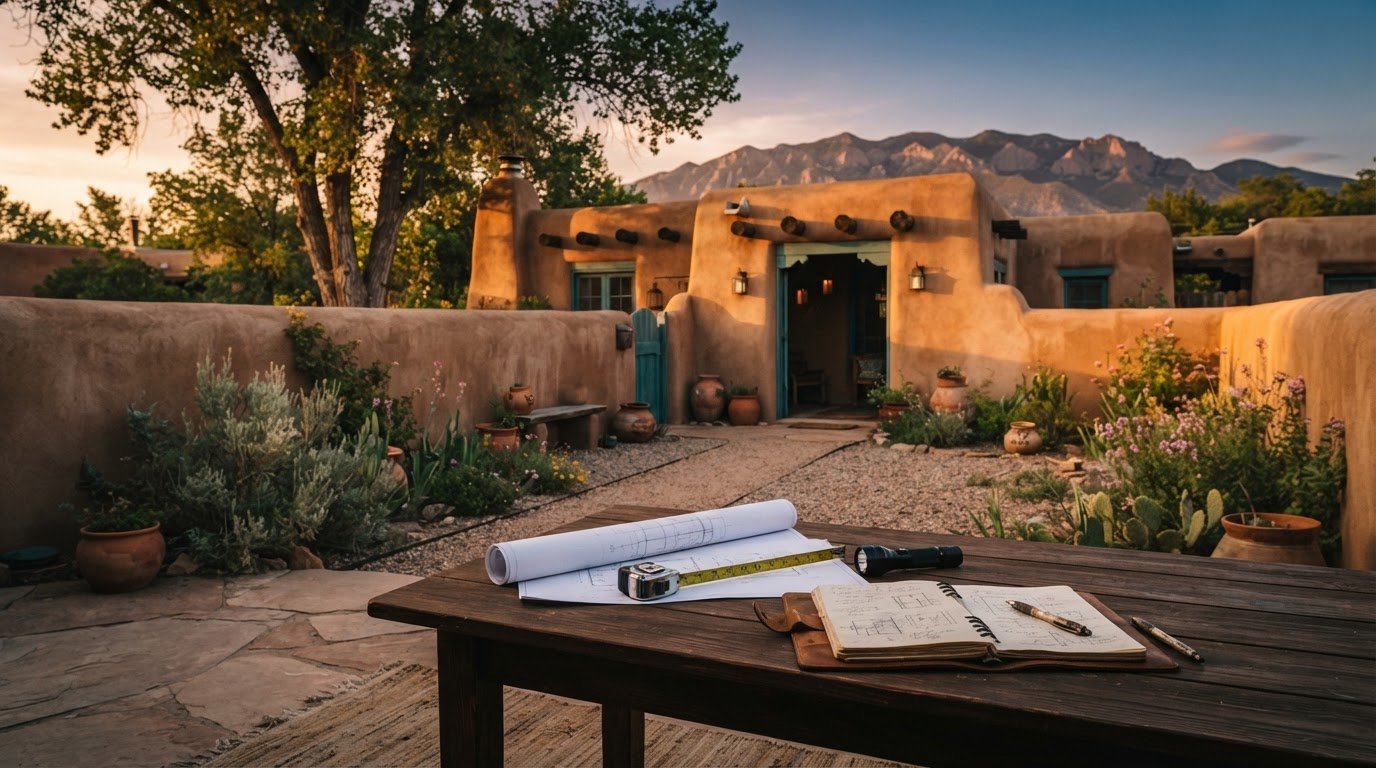
Buying a Historic Home in Old Town Albuquerque: A 2026 Guide
What if the details behind a home’s historic character matter as much as its charm? Buying a historic home in Old Town Albuquerque can mean living among distinctive architecture in a neighborhood established in 1706. But a beautiful façade won’t tell you the home’s condition, the quality of past repairs, or whether its designation could affect your renovation plans.
It’s reasonable to weigh those unknowns carefully. Historic character can be rewarding, but maintenance needs and preservation requirements may shape how a property fits your daily life and long-term plans. The details can vary from one home to another, so it’s important to assess the specific property rather than rely on assumptions about Old Town.
This guide explains what to examine before making an offer, which property records and designation details to verify, and how to balance architectural appeal with practical needs. You’ll also learn how to approach inspections, past repairs, and potential changes with a clear plan, so you can make an informed decision at your own pace.
Key Takeaways
- Separate a home’s age and architectural character from any formal historic designation or listing.
- Look beyond the showing: organize condition questions around moisture, drainage, walls, foundation movement, and past repairs.
- For buying a historic home in Old Town Albuquerque, verify the specific parcel’s status and applicable requirements through official records.
- Compare the home’s layout, maintenance needs, and potential for future changes with how you plan to live in it.
- Use a step-by-step review of priorities, property records, condition, and designation to make a measured decision.
Why Old Town Albuquerque’s historic homes need a property-first buying approach
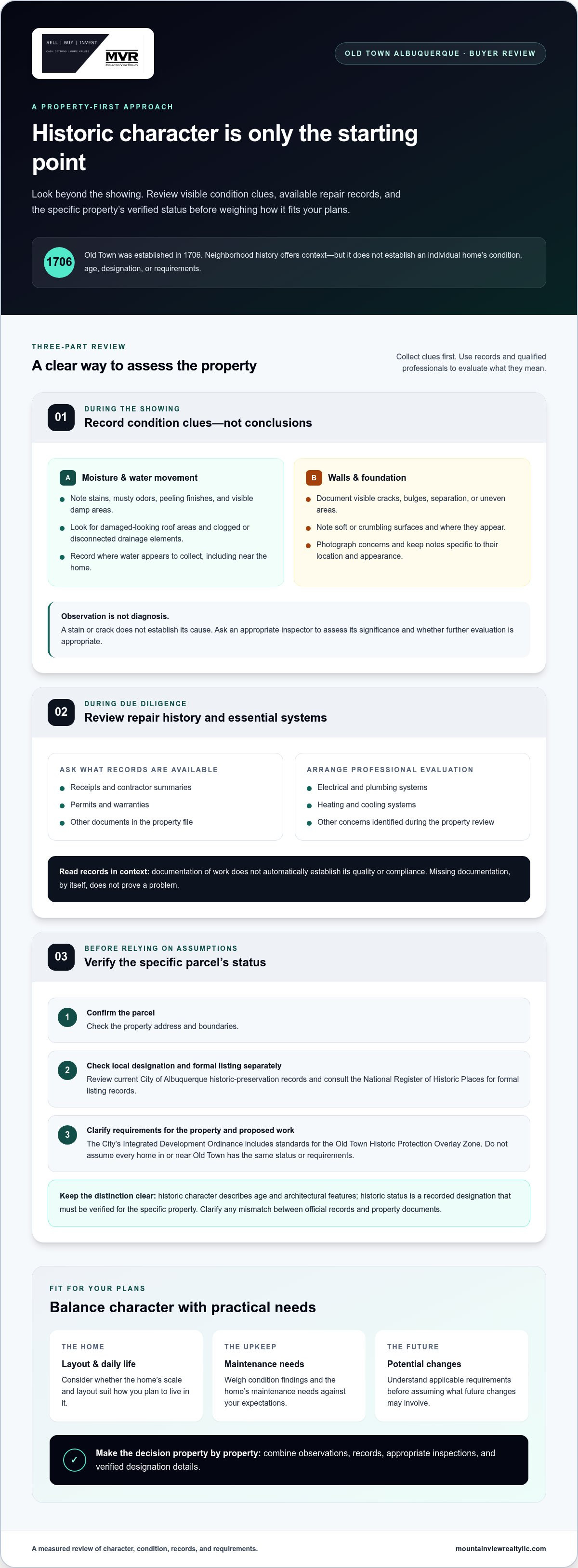
Old Town’s adobe architecture, established streets, and close ties to Albuquerque’s early history give the neighborhood a strong sense of place. But charm is only a starting point. A showing can reveal a home’s look and layout; it can’t, by itself, establish the property’s condition, repair history, or preservation status. Buying a historic home in Old Town Albuquerque means evaluating the individual home as carefully as the setting.
Old Town was established in 1706, and its built character reflects more than one period of local history. The Old Town Albuquerque Wikipedia article provides a useful overview of the area’s history and architecture. Treat neighborhood context as orientation, not as proof of a particular home’s age, designation, or requirements.
A short walk-through can help you notice how a home feels and how its scale may suit your plans. To see a nearby property and its setting, watch this video:
What makes Old Town’s built character distinct?
Adobe is a locally relevant building tradition, and the area includes Spanish Colonial and Pueblo Revival influences, alongside other styles. Old Town Plaza and San Felipe de Neri Church help orient visitors to the historic center, but neither landmark establishes the status of a nearby parcel. For buyers, materials, building scale, and the relationship between a home and its surroundings can shape expectations about layout, upkeep, and potential changes.
That context can help you identify what you value: traditional materials, a compact footprint, or a home that feels connected to the neighborhood. It doesn’t answer whether a particular house has been well maintained or whether its layout works for everyday life. Keep those questions separate as you assess each property.
Historic character is not the same as a verified designation
Historic character describes a home’s age and architectural features; historic status is a recorded designation that must be verified for the specific property. A house may look old without having a local designation or formal listing. Conversely, a property’s recorded status and applicable review requirements may affect plans for changes.
Start with the exact parcel, then check current City of Albuquerque historic-preservation records and applicable planning information. The city’s Integrated Development Ordinance includes standards for the Old Town Historic Protection Overlay Zone, but don’t assume every home in or near Old Town has the same status or requirements. For formal listing records, consult the National Register of Historic Places. Compare the official records with the property documents and clarify any mismatch before relying on an assumption.
- Confirm the parcel address and boundaries.
- Look for local designation and formal listing records separately.
- Check which preservation requirements apply to that property and proposed work.
A property-first approach doesn’t diminish Old Town’s appeal. It gives you a clearer basis for deciding whether the home’s character, verified status, and practical realities fit your plans.
How to assess an Old Town adobe home’s condition before you buy
A home can look cared for during a showing and still have questions that only a closer review can answer. You may notice a ceiling stain, a crack, or uneven flooring, but appearance alone won’t identify the cause or show whether an issue is active. An older home’s condition must be assessed property by property, using observations, records, and appropriate professional inspections.
Use the showing to collect clues, not to diagnose. Photograph visible concerns, note where they appear, and ask focused questions during due diligence. A clear list helps you separate a cosmetic concern from an issue that needs further evaluation.
Adobe, moisture, and roof drainage: what buyers should notice
Pay attention to signs that may warrant follow-up, such as staining, peeling finishes, soft or crumbling surfaces, visible cracks, or areas where water appears to collect. These clues don’t establish a cause. Record their location and condition, then have the appropriate inspector assess them. Around adobe walls and roof edges, include water movement and drainage in your questions rather than assuming the source from what you see.
- Moisture: Note staining, musty odors, peeling paint, and visible damp areas, including where they appear inside and outside.
- Roof and drainage: Look for damaged-looking roof areas, clogged or disconnected drainage elements, and signs of water pooling near the home.
- Walls and foundation: Document cracks, bulges, separation, or uneven areas. Ask an inspector to assess their significance and whether further evaluation is appropriate.
These are observation prompts, not a substitute for an inspection. Keep your notes factual: “stain below the roof edge” is more useful than guessing why it formed.
Repairs and updates: build a clear property history
Ask what records are available for past repairs and updates. Useful materials may include receipts, contractor summaries, permits, warranties, or other documents in the property file. Their availability can vary. Review each item in context; a record of work doesn’t automatically establish its quality or compliance, and a missing document doesn’t, by itself, prove a problem.
Include the home’s essential systems in your assessment. Ask for professional evaluation of electrical, plumbing, heating, and cooling systems, along with the roof, walls, and foundation. A general inspection may identify concerns that call for a closer look by a specialist. If planned exterior work is part of your decision, review the City of Albuquerque’s Albuquerque Historic Protection Overlay Zones information alongside the parcel’s applicable requirements.
Before deciding on next steps, sort open questions into three groups: items already documented, items requiring inspection, and items that remain unclear. That makes it easier to understand condition and potential work without jumping to conclusions. If you’d value a measured perspective on how condition fits your purchase plans, connect with Mountain View Realty LLC for a planning conversation.
What to verify about Old Town historic status, renovations, and ownership
Historic status can influence how you evaluate a property, but a label alone doesn’t tell you which requirements apply or whether a planned change is feasible. For buying a historic home in Old Town Albuquerque, use a parcel-specific review rather than relying on a listing description, a street’s appearance, or a broad statement about the neighborhood.
Keep a record of what you find. Note the source, date, property address, and any questions that remain. The City of Albuquerque’s historic-preservation resources, including the Landmarks Commission, and the National Register of Historic Places are useful research entities. Their records serve different purposes, so don’t treat one listing as proof of every local requirement.
How to check whether a specific home has historic status
Begin with the property’s exact address and parcel information. A street address alone can be insufficient if records use a parcel number or if boundaries are unclear. Check official city records for local designation and applicable overlays, then consult National Register records for federal listing status. Keep those findings distinct: local designation and National Register listing are not interchangeable, and neither alone establishes every restriction that may apply.
- Identify the parcel. Match the address to parcel information in official property records so your research applies to the correct land and improvements.
- Verify recorded status. Review City of Albuquerque historic-preservation records for local designation or overlay information. Separately check the National Register of Historic Places for a formal listing. Record the source and date of each result.
- Check applicable requirements. Use current city planning and historic-preservation resources to determine whether a property-specific review process applies. A historic listing, by itself, does not establish every rule or requirement.
- Review property records. Compare available ownership and property documents with the parcel and designation information. Look for records relevant to past work, while keeping in mind that the presence or absence of a document does not settle every question.
- Resolve open questions. Write down conflicting details or gaps and seek clarification through the official source responsible for the record or requirement before making plans based on an assumption.
What to investigate before planning changes
First define the work you’re considering. Replacing windows, changing a roof, or altering an exterior feature may raise different questions from interior updates. Don’t assume a review applies, or that it doesn’t. Check the parcel’s current records and the relevant city guidance for each proposed change. Approval requirements and outcomes depend on the specific property and work, so verify them before treating a renovation plan as settled.
Then compare the verified facts with your intended use and ownership plans. If the records identify a designation but don’t answer how it affects a specific project, preserve that as an open question. Keep a simple file with the parcel details, official records, dates checked, property documents, and proposed work. This creates a clearer basis for deciding what to investigate next and whether the home fits your plans.
How to decide whether an Old Town historic home fits your life
A home can be appealing and still ask you to adjust your routines. To decide whether buying a historic home in Old Town Albuquerque fits, compare what you want from a home with what this specific property offers. Keep personal preferences separate from verified facts, such as inspection findings, room dimensions, records, and applicable requirements for planned changes.
Match the home to your plans, not an idealized image
Picture an ordinary weekday, not just a special occasion. Consider how you’ll move through the home, where you’ll store everyday items, and whether the outdoor space and layout support your routines. If accessibility matters now or may matter later, identify the features you need and assess the property against them. Historic homes vary, so don’t assume every one has the same layout or maintenance needs.
| Factor | Ask yourself | Verify about the property |
|---|---|---|
| Character | Which materials and details matter to me? | What features are present and documented? |
| Layout | Does the floor plan support my routines? | Room sizes, circulation, storage, and access. |
| Condition | What uncertainty am I comfortable managing? | Inspection findings, repair records, and open questions. |
| Maintenance | How much time and attention can I give the home? | Known upkeep needs and system condition. |
| Future changes | What changes would improve daily life? | Parcel-specific review requirements for that work. |
Use the table to sort priorities into essentials, preferences, and trade-offs. For example, limited storage may be manageable if you’re willing to adapt, but it may be a poor fit if you need substantial space for equipment or collections. Those are personal judgments, not property facts. Keep them distinct from inspection findings and official records.
Weigh character, condition, and long-term costs without guessing
Build a property-specific list of known expenses and unresolved items. Use available documents and professional assessments rather than generic renovation budgets or unsupported Old Town price claims. For each item, note what is established, what needs further evaluation, and how it could affect your plans. Then compare the documented information with your own financial priorities and comfort with uncertainty.
Future plans deserve the same care. List intended repairs or alterations, then compare them with verified requirements for the parcel and proposed work. A desired change should not be treated as settled until its feasibility is understood. If you’re weighing these trade-offs with professional guidance, this guide to choosing a real estate agent in Albuquerque offers a framework for finding an advisor who can help you assess property details and plans.
A measured decision comes from weighing the home as it is, the changes you hope to make, and the routines you want it to support.
A confident path to buying a historic home in Old Town Albuquerque
A sound decision comes from combining what you want with what the property can support. Keep the process in sequence: clarify your priorities, review the property facts, assess its condition, verify its designation and any applicable requirements, then decide whether the trade-offs make sense for you. This approach leaves room to appreciate Old Town’s character without letting first impressions stand in for due diligence.
What to prepare before pursuing a property
Before touring or making an offer, write down your preferred features, acceptable trade-offs, and intended timeline. Include practical needs such as layout, access, storage, outdoor space, and any changes you hope to make. A short list helps you compare homes against your life, not just against one another.
- Priorities: Identify the features you need and the ones you simply prefer.
- Trade-offs: Note what you could adapt to, such as a different room arrangement or less storage.
- Timeline: Clarify when you hope to move and what steps need to happen before then.
- Questions: Keep questions about condition, property records, prior work, and possible changes together.
As information comes in, label each item as confirmed, reported, or still unresolved. An inspection finding or official parcel record is different from a seller’s recollection or an assumption based on the home’s appearance. That distinction makes it easier to decide what needs follow-up and what you can weigh as a personal preference.
Get a clear plan for your Old Town home search
Robb Krautbauer brings 15 years of real-estate investing experience and 10 years as a licensed agent to buyer guidance. That perspective supports practical conversations about property condition, potential trade-offs, and how a home may fit your longer-term plans. Mountain View Realty LLC has helped more than 200 families and investors buy and sell across the Albuquerque metro. These are experience points, not promises of a particular result.
Tailored, start-to-finish guidance can help organize the moving parts: compare a property with your priorities, keep records and open questions visible, and consider next steps without rushing the decision. The goal is not to force a fit. It’s to help you understand what you know, what still needs attention, and whether the home aligns with the way you plan to live or invest.
Before deciding, return to your original priorities. Do the verified property facts support your intended use? Have you accounted for condition concerns and the changes you may want? Are the remaining uncertainties ones you’re comfortable carrying forward? A clear answer may be yes, no, or not yet. Each can be a thoughtful outcome.
If you’re considering a specific Old Town property, a planning conversation can help you organize your goals and questions at your own pace.
Let your next step reflect the way you want to live
Buying a historic home in Old Town Albuquerque is a personal decision, not a test of how much character you’re willing to accept. The right fit is the property that supports your priorities, even if that means adjusting a renovation idea, choosing a different layout, or deciding to keep looking. You’re allowed to take the time you need to make that judgment.
As you move forward, focus on one clear question: what would make this home work for you over time? Your answer can guide conversations, help you weigh new information, and keep the decision grounded in your real plans rather than the pressure of a moment.
Whether you’re ready to explore a property or still sorting through your priorities, a thoughtful next step can bring clarity. Choose the pace that feels right for you.
Frequently Asked Questions
Are all homes in Old Town Albuquerque officially designated historic?
No. Homes in Old Town can differ in age, architectural features, and recorded status; location alone doesn’t establish an official designation. For a specific address, match parcel details with City of Albuquerque historic-preservation records, then check the National Register separately. Keep the source and date with your notes. A listing in one record doesn’t, by itself, tell you which requirements apply to planned work.
What should I inspect when buying an adobe home in Old Town?
Look for visible signs that deserve follow-up, such as moisture staining, damaged-looking roof edges, wall cracks, or uneven areas, but don’t diagnose their cause from appearance alone. Ask for a professional inspection of the roof, drainage, walls, and foundation, plus electrical, plumbing, heating, and cooling systems. If an inspector identifies a concern, clarify whether a more focused assessment would help you understand its scope.
Can I renovate a historic home in Old Town Albuquerque?
Often, but the process depends on the property’s location and status and on the work you plan. City guidance requires a Certificate of Appropriateness from the Landmarks Commission before exterior alterations to properties within the Old Town Historic Protection Overlay Zone. Start by defining the proposed work, then verify the parcel’s applicable requirements with current city resources before treating a renovation plan as settled.
How do I check whether an Old Town property has historic restrictions?
Start with the exact parcel, not just the neighborhood name. Review City of Albuquerque historic-preservation and planning records for local designation or overlay information, and check the National Register for federal listing records. These sources serve different purposes. If a record doesn’t clearly address a project you’re considering, use the city’s official planning or preservation channels to clarify what applies to that parcel and work.
Is buying a historic home in Albuquerque more expensive to maintain?
There isn’t one reliable maintenance-cost answer for every older home. The home’s present condition, systems, past repairs, materials, and your maintenance preferences all matter. Instead of relying on a broad estimate, build a property-specific picture from inspection findings and available repair records. Separate known near-term needs from routine upkeep and unresolved concerns, then compare those items with your own budget and comfort level.
What records should I review before buying an older home in Old Town?
Review the property documents available to you, including seller disclosures, inspection reports, repair receipts, permits, warranties, and records of system updates. Compare dates and descriptions where possible. For instance, a receipt may show that work occurred but not explain its full scope. Keep a list of missing or unclear details so you can distinguish documented history from assumptions as you assess the property.
Should I buy a historic home if I want to make major changes?
It may fit, but first compare your intended changes with the property’s verified status and applicable review requirements. Write down the specific work you envision, such as changing an exterior feature or reworking the interior, and clarify which requirements apply to each item. If a key change proves impractical or uncertain, consider whether you’d still value the home without it before deciding whether to proceed.

Article by
Robb Krautbauer
Robb Krautbauer is the Owner and Qualifying Broker of Mountain View Realty, serving Albuquerque, Rio Rancho, Santa Fe, and surrounding New Mexico communities. With more than a decade of real estate experience, Robb specializes in luxury homes, strategic home marketing, and helping homeowners navigate important life transitions with confidence.
Known for combining luxury-level marketing, AI-powered technology, and innovative selling strategies, Robb helps clients maximize their home's value while creating a smooth, personalized selling experience. Whether assisting luxury homeowners, retirees, families downsizing, or real estate investors, his focus is always on delivering expert guidance, honest advice, and exceptional results.
When he's not helping clients achieve their real estate goals, Robb enjoys studying market trends, emerging technology, and investment strategies that keep Mountain View Realty at the forefront of the industry.
Disclaimer
**Disclaimer:** The information provided in this article is for general educational purposes only and should not be considered legal, tax, financial, or professional advice. Real estate laws, market conditions, and regulations change over time and may vary based on your individual circumstances. Before making any real estate decision, consult with qualified legal, tax, or financial professionals. If you have questions about buying or selling real estate in New Mexico, contact Mountain View Realty for guidance specific to your situation. © 2026 Mountain View Realty. All rights reserved. The content on this website may not be reproduced without written permission.


