
Buying a Home as a Single Person in Albuquerque: Are You Ready
Buying alone doesn’t mean buying unprepared. Buying a home as a single person in Albuquerque can be a sound move when the monthly costs fit your budget and you’re ready to manage the purchase on your own. A credit score is one factor to consider when assessing financial readiness, alongside whether the monthly costs fit your budget.
Buying a home as a single person in Albuquerque means weighing the responsibility of making decisions and covering the costs without a co-buyer. A clear plan can make those decisions easier. This guide will help you assess your financial and personal readiness, choose an agent and neighborhood, and understand pre-approval and key homebuying checks in Albuquerque.
You’ll also learn what to expect from an accepted offer through closing, including inspections, appraisal, title work, insurance, and final loan approval. With the right preparation, you can make each decision with more clarity and assess whether the timing, budget, and home fit your goals.
Key Takeaways
- Build a realistic picture of your budget by weighing ongoing home costs alongside your savings and financial goals.
- Choose an agent who communicates clearly, understands your priorities, and puts the buyer-broker agreement in writing before showings.
- Compare Albuquerque neighborhoods based on the routines and features that matter most to you, not just the home itself.
- Keep inspections, appraisal, title work, insurance, and final loan approval on your radar as the purchase moves toward closing.
- Use mortgage pre-approval to understand your financing options and set a practical search range before making an offer.
Assessing financial and personal readiness to buy
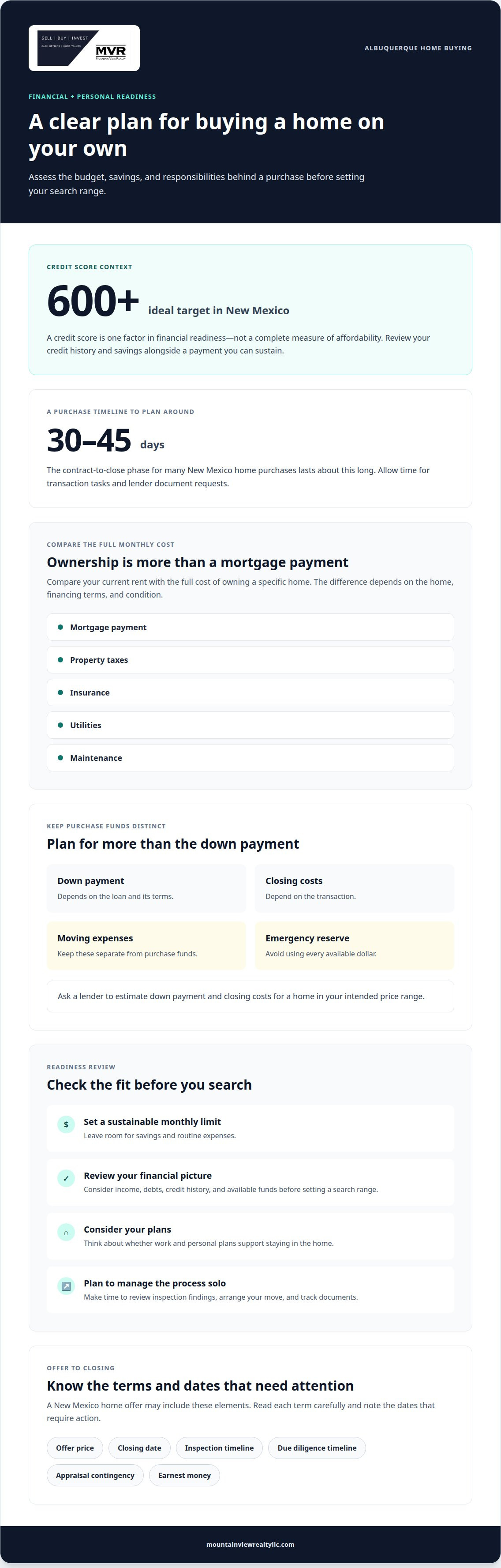
Start with a budget that reflects your actual income, savings, debts, and monthly obligations. In New Mexico, a credit score of 600 or higher is an ideal target when assessing financial readiness. It is one consideration, not a complete measure of affordability. Review your credit history and savings alongside the payment you could sustain without disrupting other financial goals.
How do Albuquerque rents compare with the cost of buying a home? Compare your current rent with the full cost of owning a specific home. Ownership expenses may include a mortgage payment, property taxes, insurance, utilities, and maintenance. The difference depends on the home’s price, financing terms, and condition, so compare actual rental and purchase options rather than relying on a general estimate.
What is the median home price in Albuquerque, New Mexico, and how has it changed recently? A median price depends on the time period and whether it reflects listing prices or completed sales. To assess a change, compare the same measure across matching periods. A citywide median offers useful context, but it cannot tell you whether a particular property fits your budget or priorities.
What down payment and closing costs should a first-time Albuquerque homebuyer expect? Your down payment depends on the loan and its terms, while closing costs depend on the transaction. Ask a lender to estimate both for a home in your intended price range. Keep moving expenses and an emergency reserve separate from the funds set aside for the purchase.
Use this practical review to assess how a purchase fits your circumstances:
- Set a monthly housing limit that leaves room for savings and routine expenses.
- Review income, debts, credit history, and available funds before setting a search range.
- Consider whether your work and personal plans support staying in the home.
- Retain savings for moving and future maintenance instead of using every available dollar.
Buying alone also means managing decisions and tasks without a co-buyer. Consider how you’ll review inspection findings, arrange your move, and track documents. If work limits your availability, build that constraint into your schedule before making an offer. Planning for these responsibilities can make the process more manageable.
A New Mexico home offer may include the offer price and closing date, inspection and due diligence timelines, an appraisal contingency, and earnest money. Read each term carefully and note the dates that require action. The contract-to-close phase for many New Mexico home purchases lasts about 30 to 45 days. Plan time for transaction tasks and lender document requests during that period.
Readiness comes from weighing your finances, priorities, and capacity to manage a purchase. When your budget and plans support the responsibilities involved, you can take the next step with a clearer sense of what works for you.
Choosing a real estate agent
A useful agent helps you make informed decisions without taking control. Start by explaining what matters in your Albuquerque search, such as location, layout, and communication preferences. You might want written notes after tours or time to review a property before discussing an offer. Notice whether the agent listens and responds to your specific needs.
Local familiarity can help you ask better questions about individual properties and areas. Ask how the agent would help you compare a home in Nob Hill with one near Downtown. A useful discussion might consider your commute, preferred home style, and everyday destinations. Look for practical context that supports your choices, not pressure to choose a particular address.
Before scheduling showings, consider discussing a written buyer-broker agreement. Treat it as an opportunity to clarify how you and the agent would work together. Read the terms, ask about the services described, and make sure you understand how the arrangement can end or change. A direct conversation now can prevent confusion about expectations later.
Use an introductory conversation to understand the agent’s process. Ask how they organize listings, arrange tours, and share updates. You could also discuss how they approach a home with visible repair needs or a seller’s preferred timeline. Specific examples can show whether the agent explains options clearly and gives you space to decide.
These points can help structure your conversation:
- Share priorities: Explain which features matter most and where you can be flexible.
- Discuss the search: Ask how listings and property tours will be organized.
- Set communication preferences: Choose a practical way to exchange updates and questions.
- Review the agreement: Read its terms and clarify anything you don’t understand.
Pay attention to how clearly the agent answers your questions. If you ask whether a floor plan suits remote work, look for a response that considers the home’s layout and your needs. If you’re comparing a condo with a detached house, ask what differences to weigh. Clear explanations help you assess the guidance you receive.
As the only buyer, you’ll want a working relationship where questions are welcome. Before committing, summarize what you expect from the search and review the proposed agreement. Consider whether the agent respects your pace, communicates in a way that works for you, and helps you assess choices on your own terms. The right fit can make your search more organized.
Evaluating Albuquerque neighborhoods
A neighborhood can shape daily life as much as a home’s layout. In Albuquerque, compare specific areas with your routines rather than relying on a general impression. You might consider Nob Hill, Downtown, Barelas, the North Valley, or the Northeast Heights. Treat each as a starting point, then assess individual streets and properties.
Start with your weekly routine. List your commute destination, regular errands, social plans, and preferred outdoor activities. Then consider how each candidate location connects to those places. Someone who works near Downtown, for example, may weigh commute routes differently from a buyer who regularly travels toward the North Valley.
Visit each area in person before choosing a favorite. Walk or drive the blocks around a home during the day, then return at another time. Notice traffic, parking, lighting, noise, and how easily you can reach nearby destinations. Conditions can differ from one street to another, even within the same named neighborhood.
Compare the homes as well as their locations. A smaller property near your daily destinations may suit you better than a larger home that requires a longer drive. Check whether the layout supports your work and storage needs. Consider stairs, outdoor upkeep, and the spaces you’ll use regularly, not just square footage.
Use a simple comparison list for each property:
- Daily routes: Note the trips you make most often and how each location serves them.
- Nearby needs: Identify grocery stores, medical appointments, parks, and other places you use.
- Street conditions: Record traffic, parking, noise, and lighting during your visits.
- Home fit: Compare layout, upkeep, storage, and outdoor space with your plans.
Separate essential needs from preferences. Reliable access to work might be essential, while a particular architectural style could be flexible. This distinction helps you compare Nob Hill with Barelas or another area without letting one appealing feature outweigh everyday convenience.
After each visit, review your notes. Record the address, what worked, and any questions while the details are fresh. If you tour several Albuquerque homes, consistent notes make it easier to compare locations fairly. A strong choice should support your routines, fit your budget, and work for the way you plan to live.
Inspections, appraisal, title, and insurance
After an Albuquerque offer is accepted, the contract-to-close process includes inspections, appraisal, title work, insurance, and final loan approval. Each step answers a different question: Is the home’s condition acceptable? Does its appraised value support the loan? Can ownership transfer clearly? Will the coverage meet the lender’s requirements?
What steps and documents are required to buy a home in Albuquerque? Start with the signed purchase agreement, then complete the inspection, appraisal, title, insurance, and loan-approval steps. Keep lender-requested financial documents, transaction paperwork, and insurance details organized so you can respond as the purchase progresses.
Use the inspection period to understand the home’s condition, not just to collect a report. Review findings carefully and distinguish routine maintenance from issues that could affect safety, function, or future costs. A report might flag a roof concern or plumbing problem, for example. Ask for a clear explanation of any finding you don’t understand before deciding how it affects your purchase.
The appraisal helps the lender assess the property’s value in relation to the financing. It serves a different purpose from an inspection: an inspection focuses on condition, while an appraisal evaluates value. If the appraised value differs from the agreed offer price, discuss your options and their potential consequences with your agent and lender before deciding what to do.
Title work examines ownership records and matters that could affect the transfer. Review the title documents and ask questions about any unclear names, property details, or recorded matters. Accurate paperwork matters for a single buyer, especially when purchase documents need to reflect the correct legal name and ownership details.
Plan for insurance before closing, not after moving day. Share the property details with the insurer, review the proposed coverage, and provide relevant information to your lender. The home’s location, construction, condition, and coverage choices can affect the policy. Keep the insurer’s paperwork accessible to meet transaction deadlines.
Keep the documents for your purchase in one organized folder. Include the signed agreement, inspection report, appraisal-related correspondence, title paperwork, insurance documents, and lender requests. Track who needs each item and when it is due. A simple checklist can help you catch unanswered emails or questions while several tasks are underway.
- Review: Read inspection findings and note questions about specific repairs.
- Compare: Keep appraisal and inspection purposes distinct.
- Confirm: Check that title and ownership details match the transaction.
- Organize: Save insurance and lender documents in one place.
For a solo buyer, this sequence breaks a complex closing into manageable decisions. Review each document as it arrives, record open questions, and address them before signing final paperwork. Clear records help you track what remains between an accepted Albuquerque offer and taking ownership.
Local lenders and mortgage pre-approval
Mortgage pre-approval helps turn a home search into a defined financing plan. A lender reviews your financial details and estimates the loan amount you may qualify for. This estimate can help set a practical search range, but it isn’t final loan approval. If you’re buying alone, understand how the proposed payment fits your income and other monthly obligations before touring homes.
What first-time homebuyer assistance programs are available in Albuquerque and New Mexico? First-time buyers can explore state and local assistance that may help with down payments or closing costs. Eligibility and terms depend on the program, household finances, property, and loan, so include assistance questions in your conversation with a lender.
Prepare for pre-approval by gathering the documents your lender requests. These may include income records, account statements, debt details, and identification. If you receive income from more than one source, organize records for each. Clear, current paperwork helps the lender assess your finances and explain what else the application requires.
Use this sequence to keep the process organized:
- Set your comfort range: Decide what monthly payment fits your budget, not only the maximum loan amount.
- Discuss financing: Ask how loan terms, taxes, insurance, and any mortgage-related costs affect the estimated payment.
- Submit requested records: Provide complete documents and respond to questions about income, assets, or debts.
- Review the pre-approval: Check the estimated amount, assumptions, and any conditions or expiration details.
Ask the lender how changing the purchase price affects your estimated payment and cash needed at closing. For example, compare a home at the top of your preferred range with a less expensive one. This can show how much room remains for utilities, repairs, savings, and other monthly commitments.
Pre-approval also gives you a chance to discuss financing before an offer creates a deadline. Ask how the lender will communicate, which documents may need updating, and what could change the estimate. If you’re considering assistance, ask how it works with the loan structure and what eligibility conditions apply.
Keep your pre-approval letter and supporting records together, but share financial documents only through the lender’s chosen process. Update the lender if your income, debt, or employment changes during the search. These steps help keep your financing information current as you consider Albuquerque homes.
A clear financing plan can make it easier to focus on homes that suit both your priorities and budget. For guidance on aligning your search with your homebuying goals, discuss your Albuquerque home search.
Mountain View Realty LLC: CashOffer+
Mountain View Realty LLC can help if your Albuquerque purchase involves selling a home you already own. CashOffer+ and Home Trade-In may suit different selling priorities, while Renovate & Sell may be relevant if you’re preparing a property for sale. These options address the sale side of a move, not mortgage lending or pre-approval.
If you’re buying your first home and don’t need to sell another property, focus on financing, neighborhood, and purchase checks. If your current home is part of your plans, discussing selling options can help you consider how that decision fits your next move.
Contact Mountain View Realty LLC to discuss your Albuquerque homebuying and selling plans.
Choose a Next Step That Fits Your Plans
Buying a home on your own is a personal decision, not a milestone you need to reach by a certain date. Let your priorities guide the timing. If buying a home as a single person in Albuquerque fits your financial goals and the life you want to build, move forward with a sustainable plan, not a rushed one.
For your next step, write down the questions still on your mind and decide which conversation would help most. You may want to clarify a property choice, discuss a sale connected to your move, or talk through what matters in your next home. A focused conversation can help you see your options more clearly.
Mountain View Realty LLC can discuss your real estate plans and help you consider a path that aligns with your priorities. Reach out when you’re ready to take the next step.
Move at a pace that supports your goals. A thoughtful decision is a strong place to start.
Frequently Asked Questions
What are typical mortgage rates and monthly payments for Albuquerque homes?
Mortgage rates and monthly payments vary by loan, borrower, and property. Ask a lender to show how the rate and loan terms affect principal and interest. Then add property taxes, homeowners insurance, and any applicable mortgage insurance or homeowners association dues. Comparing estimates for the same home price can show how different financing choices affect your monthly budget.
How much income is needed to afford a home in Albuquerque as a single buyer?
The income you need depends on the purchase price, financing terms, debts, and other housing expenses. A lender can assess how your income compares with those obligations, but your personal budget matters too. Consider whether a projected payment leaves room for utilities, savings, and routine expenses. Set a comfortable spending limit before choosing a search range rather than relying only on the maximum loan estimate.
What are the property taxes, homeowners insurance, and HOA costs in Albuquerque?
These costs depend on the property and community. Review the home’s tax information, request an insurance quote based on its features, and read any homeowners association documents for dues and shared responsibilities. A condo and a detached home may have different expense categories. Compare each cost with the mortgage payment to understand the total commitment before making an offer.
Which Albuquerque neighborhoods offer relatively affordable homes and good access to amenities?
Prices and access to amenities vary by property, so compare current listings in areas that fit your budget and daily routine. For each home, note the asking price, commute routes, and distance to places you use, such as grocery stores, parks, or medical services. Comparing similar homes across neighborhoods helps reveal trade-offs without assuming one area is consistently more affordable.
What mortgage options are available to single buyers with one income, including FHA and conventional loans?
FHA and conventional loans are options to discuss with a lender. Which fits depends on your finances, the property, and the terms available to you. Ask for estimates at the same purchase price so you can compare projected payments, upfront funds, and any ongoing mortgage-related costs. If you’re considering assistance, ask how it may interact with the loan and what eligibility conditions apply.
What risks should single homebuyers consider, including maintenance costs and relying on one income?
Depending on one income can make a job change or unexpected repair more disruptive to your budget. Consider how you would manage routine upkeep, a major appliance repair, or time away from work. Before choosing a home, estimate likely maintenance needs based on its age and condition, then decide how much financial room you want to preserve for unexpected expenses.
What inspections, permits, or local factors should buyers check for Albuquerque homes?
Review inspection findings and available permit records, especially for additions, conversions, or major renovations. Compare the described work with property records and ask about discrepancies. Consider the roof, drainage, heating and cooling, plumbing, and electrical systems in light of your intended use. If the home has shared spaces, review the governing documents to understand maintenance responsibilities and rules that may affect your plans.

Article by
Robb Krautbauer
Robb Krautbauer is the Owner and Qualifying Broker of Mountain View Realty, serving Albuquerque, Rio Rancho, Santa Fe, and surrounding New Mexico communities. With more than a decade of real estate experience, Robb specializes in luxury homes, strategic home marketing, and helping homeowners navigate important life transitions with confidence.
Known for combining luxury-level marketing, AI-powered technology, and innovative selling strategies, Robb helps clients maximize their home's value while creating a smooth, personalized selling experience. Whether assisting luxury homeowners, retirees, families downsizing, or real estate investors, his focus is always on delivering expert guidance, honest advice, and exceptional results.
When he's not helping clients achieve their real estate goals, Robb enjoys studying market trends, emerging technology, and investment strategies that keep Mountain View Realty at the forefront of the industry.
Disclaimer
**Disclaimer:** The information provided in this article is for general educational purposes only and should not be considered legal, tax, financial, or professional advice. Real estate laws, market conditions, and regulations change over time and may vary based on your individual circumstances. Before making any real estate decision, consult with qualified legal, tax, or financial professionals. If you have questions about buying or selling real estate in New Mexico, contact Mountain View Realty for guidance specific to your situation. © 2026 Mountain View Realty. All rights reserved. The content on this website may not be reproduced without written permission.


