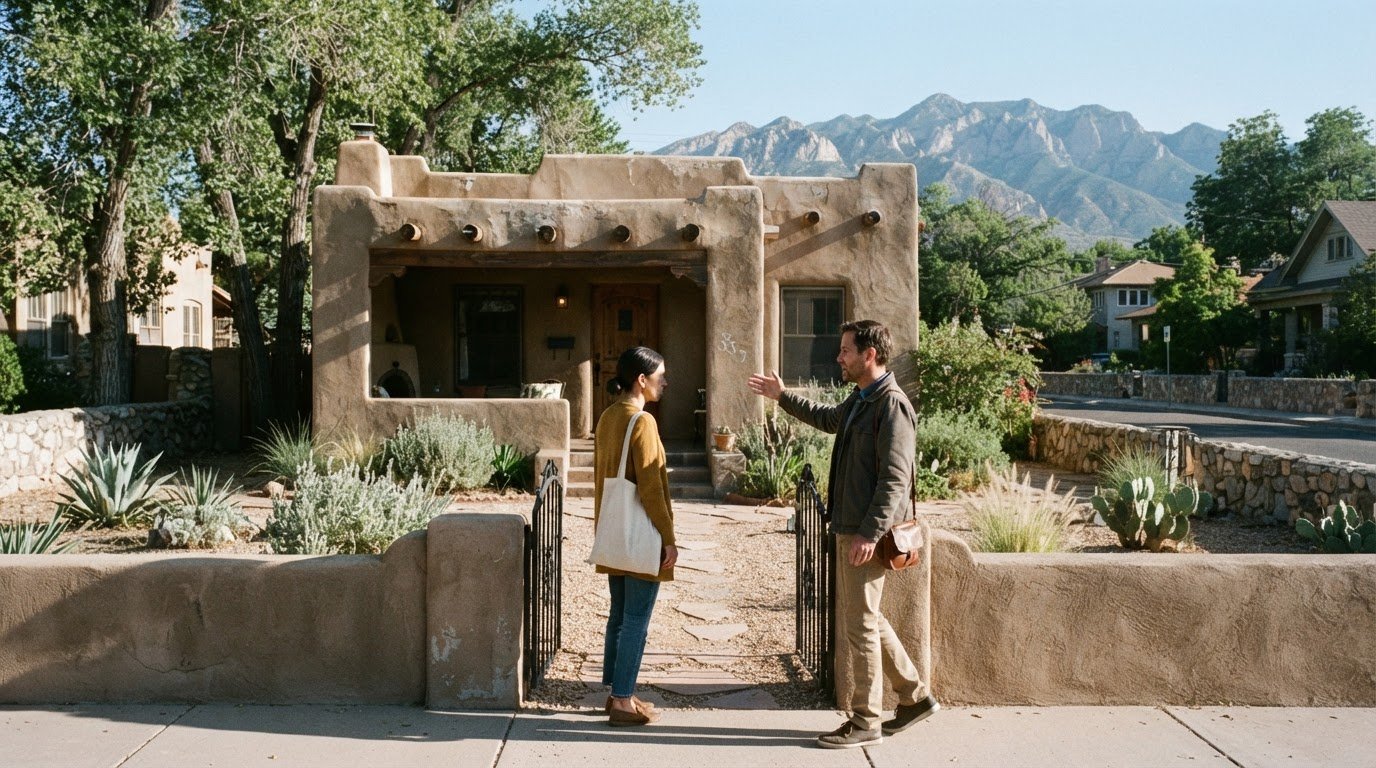
Buying a Home in Albuquerque, NM: Prices and Areas
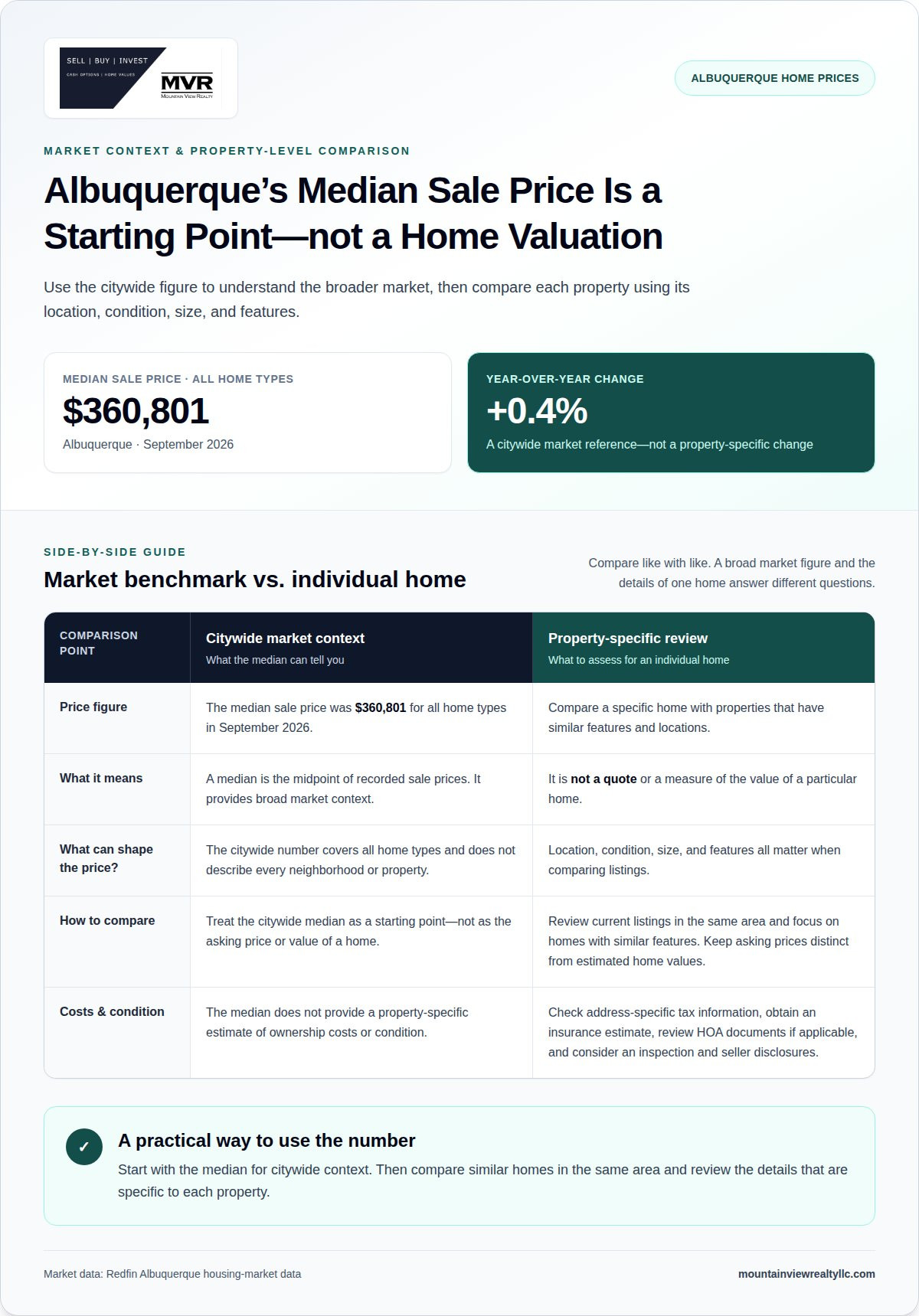
Buying a home in Albuquerque, NM, means weighing the citywide market against the features and location that matter to you. Redfin’s Albuquerque housing-market data reports a median sale price of $360,801 for all home types in September 2026, up 0.4% year over year. That figure offers a starting point, but individual prices vary by neighborhood, property size, and home features.
Whether you’re seeking a luxury property, planning a sale, or considering a senior transition, it helps to understand what your budget can buy. This guide explains how Albuquerque sale prices compare with prices in nearby cities, and how neighborhoods, home features, and property sizes can shape your priorities. You’ll have a practical framework for weighing trade-offs and deciding where to focus your search.
Key Takeaways
- Use Albuquerque’s citywide price trend as context, then weigh your home’s asking price and features individually.
- Compare neighborhood and ZIP code price patterns to understand how your property fits the local market.
- Look at nearby cities alongside Albuquerque to see how location may affect your selling or investment plans.
- Consider which property features and size matter most to your goals before weighing trade-offs between listings.
- Learn when Mountain View Realty’s Home Trade-In may fit your plans, and how it relates to CashOffer+, Renovate & Sell, and Sell & Stay.
Albuquerque median sale price and year-over-year change
Albuquerque’s median sale price for all home types was $360,801 in September 2026. It rose 0.4% year over year. These market figures offer context for buying a home in Albuquerque, NM, but they don’t set the value of an individual property. A home’s location, condition, size, and features all matter when comparing listings.
A median is the midpoint of recorded sale prices, not a quote for a particular home. Use it as a broad reference, then compare properties with similar features and locations. A home valuation calculator can estimate a property’s value based on the information entered. A home sale proceeds calculator can help organize estimated proceeds by accounting for sale assumptions and costs.
New Mexico homebuyer assistance programs have individual eligibility terms. Review each program’s stated requirements and application steps to see whether they fit your circumstances. Don’t treat a general market figure as a measure of eligibility.
When buying a home in Albuquerque, consider arranging a home inspection and reviewing available seller disclosures. These steps can help you understand the property’s condition and the information shared about it. Use any findings to inform your decision and discuss relevant concerns during the transaction.
Mortgage rates and loan options depend on the lender and the terms offered for your situation. Compare written loan details rather than relying on a general rate estimate. For covered mortgages, the Consumer Financial Protection Bureau says lenders generally must provide a Loan Estimate within three business days after receiving the six required pieces of application information.
The purchase process commonly moves from preapproval to home search, offer, property review, financing, and closing. For most covered mortgages, the Consumer Financial Protection Bureau says buyers must receive the Closing Disclosure at least three business days before closing. Review its terms and figures as you prepare to close.
For a property involving a well or water rights, review available property records and water-source details. Make sure your purchase review addresses the well’s condition and documented water availability. Those details can clarify the property’s water arrangements.
Consider wildfire, flooding, and extreme heat at the property level. Review available information about the parcel, drainage, shade, and cooling features. These details help you frame questions about a home’s setting and upkeep without assuming conditions are the same across Albuquerque.
Closing costs depend on the transaction, lender, and title charges. Review an itemized estimate to understand what’s included. Real estate broker compensation is negotiable, so make sure the agreed terms are clear in the relevant written agreement.
Neighborhood and map-based property search
Use a map to compare Albuquerque areas and specific homes side by side. Treat neighborhood labels as a starting point, then weigh each property’s details against your goals, whether you’re selling, investing, planning a senior transition, or evaluating a luxury home.
Map-Based Neighborhood Search
Start with the Albuquerque neighborhoods or ZIP codes you’re considering, then locate properties that may fit your plans on a map. Compare addresses by proximity to the destinations that matter to you, such as family, regular services, or places you visit often. Keep your criteria consistent across areas. A map can organize your options, but each property still needs its own review.
Home Prices and Values by Neighborhood
To compare home prices and values, review current listings in the same area and focus on homes with similar features. Keep asking prices separate from estimated home values, since they measure different things. Nob Hill and Taylor Ranch, for example, can be starting points for an Albuquerque search. Compare specific homes rather than assuming a neighborhood label predicts a property’s value.
Property taxes, homeowners insurance, and HOA fees don’t have one combined amount that fits every Albuquerque home. To build a property-specific estimate, review the tax information for the address, obtain an insurance estimate, and check association documents if an HOA applies. Add these amounts to your projected ownership costs as you assess whether a property fits your plans.
A useful map review pairs each address with practical details. Record the asking price, property type, and features you’re comparing, then note nearby destinations that matter to you or your household. If two homes appear similar, these details can help you spot what differs and identify questions to follow up on during your property review.
- Compare current listings within the same area.
- Keep asking prices distinct from home-value estimates.
- Include address-specific taxes, insurance, and applicable HOA charges in your budget.
Use a consistent set of criteria as you move between neighborhoods. That makes it easier to compare options without treating an area-wide figure as the value of one home. If you want guidance organizing an Albuquerque search around your goals and priorities, local real estate guidance can help frame your next steps.
These figures provide area-level comparison points, while keeping average home values distinct from displayed prices for homes for sale.
Use these figures as area-level context, not as a prediction of what a particular property is worth or will cost. A displayed price for a home for sale and an average home value are different measures, so compare like with like when reviewing the map. For a specific address, check the property’s details and applicable costs. This keeps the neighborhood comparison useful without treating an area figure as a property-specific estimate.
Average home prices in nearby cities
Compare homes across nearby areas using consistent criteria. A useful comparison identifies what each figure measures, which homes it covers, and when the information was recorded. Without those details, a citywide number can mislead you about a particular home’s potential value or fit.
Start by defining a comparable home profile, including bedroom count, property type, approximate size, and the features you want to assess. Then review homes matching that profile in Albuquerque, Rio Rancho, Santa Fe, and Las Cruces. For a luxury seller or investor, this can help frame a property’s position against relevant homes rather than unrelated listings. For seniors planning a move, it can help clarify which areas and property types merit a closer look.
Separate asking prices from completed sale prices and estimated home values. Each describes a different part of the market. A listing price is what a seller is asking; a completed sale price reflects a recorded transaction; an estimated value is an estimate. Keep these categories distinct in your notes, and don’t combine them into one city-to-city ranking.
Your location priorities also determine which comparison matters. A seller in Rio Rancho can consider relevant homes there alongside Albuquerque options when assessing positioning. Investors comparing Santa Fe or Las Cruces can use the same method while accounting for valued locations and property features. Seniors weighing a transition may also consider how school options, commute needs, and access to regular destinations affect the appeal of locations for themselves or future buyers.
Use this simple process to organize the comparison:
- Select comparable property types and features across cities.
- Record whether each figure is an asking price, sale price, or estimated value.
- Use information from the same time period for a fairer comparison.
- Compare the individual property details before drawing conclusions about a city.
For example, if a home in Albuquerque and one in Rio Rancho differ in lot size or condition, their prices alone won’t explain the difference. Note those distinctions before judging value or considering an investment. Apply the same approach when comparing properties in Santa Fe and Las Cruces.
A city comparison works best as a way to expand or narrow your search, not as a substitute for reviewing a specific home. Keep your property goals and location needs in view, then compare homes that meet them. That gives you a clearer basis for deciding which areas deserve closer attention.
Home features and property sizes
Albuquerque listings vary widely in size and features. Compare bedroom and bathroom counts, lot size, and property details to judge whether a listing suits your plans. A larger home may offer more rooms, while a smaller one may better fit your space needs. Focus on features you’ll use, not just the headline price.
Several three-bedroom listings illustrate different price points. These examples show why bedroom count alone doesn’t explain asking-price differences. Compare each listing’s condition, location, layout, and features.
Other examples show how room counts vary. These listings can help frame your search, but they don’t establish a price rule for every home with similar rooms.
Land can change how a property fits your priorities. A listing in Windmill Estates describes a home on a 1.7-acre lot with Sandia Mountain views. That example differs from a typical city-lot search in the amount of outdoor space available. Decide whether a larger lot, mountain views, or easier upkeep matters most, then use those preferences to filter properties.
Look beyond the advertised price when a listing includes a significant feature or obligation. That obligation is separate from the listed home price. Review listing details carefully, especially when equipment or ongoing payments are part of the property.
Before touring, make a short priority list. Separate essential needs from preferences, then assess each listing against those criteria. For example, a household needing additional rooms may weigh the four-bedroom Sunrose home differently from the three-bedroom Apple Valley property.
- Compare room counts alongside layout and condition.
- Decide how much lot space and outdoor features matter.
- Include disclosed property obligations in your home comparison.
Setting Albuquerque-area home search priorities
Reported incidents, school options, commute routes, and amenities can all shape decisions for luxury homeowners, sellers, investors, and seniors in the Albuquerque area. Compare specific locations with your property goals, lifestyle, and plans.
Crime Rates and Neighborhood Considerations
Crime data can help frame neighborhood questions, but broad citywide figures may not reflect a particular street. Compare reported incidents around each property, including the types, locations, and timing shown. For example, when weighing two Albuquerque-area properties, review each location separately rather than treating the neighborhood name as a complete safety assessment. Pair that review with an in-person visit.
Schools and Neighborhood Amenities
School access may matter differently depending on your household, investment, or future plans. Identify the school options connected with a property, then consider location, transportation, and your needs. When comparing homes in different parts of Albuquerque, assess those options alongside nearby parks, shops, and everyday services. Visit relevant destinations from each address so your map reflects practical routines, not just straight-line distance.
Commute Options
Commute priorities depend on where you travel and how you get there. Map routes from each Albuquerque-area property to work, family, regular appointments, or other destinations tied to your plans. Consider driving, public transportation, walking, or cycling based on your routine. A home that looks convenient on a map, for example, may require a different route at your usual travel time. Test the route that matters most before settling on a location.
Turn these factors into a short list before scheduling tours. Separate essentials, such as access to key destinations, from preferences, such as a nearby park. This helps you compare Albuquerque-area properties consistently and clarify trade-offs when one offers a preferred school location while another better fits your commute or access to amenities.
Ask the same questions about every address. What routes would you take on a typical weekday? Which nearby services would you use regularly? What information about reported incidents and school options would help you decide? A consistent review makes it easier to compare locations without relying on assumptions or a broad label.
- Compare incident information around each specific property.
- Review school options and nearby amenities against your household or property goals.
- Consider actual commute routes and transportation preferences.
- Record essential needs separately from optional neighborhood features.
These priorities can narrow your search while keeping your decision grounded in your daily life and property plans. Each consideration, from the commute to nearby services, connects to the property’s address. Use that address as the starting point for comparing what matters most to you.
Mountain View Realty: Home Trade-In
Mountain View Realty LLC’s Home Trade-In may be worth discussing if you plan to sell your current home and buy another. It offers a way to consider both parts of the move together. Your preferred timing, priorities, and next-home plans can guide the conversation. Consider this option when coordinating a sale and purchase is central to your transition, rather than treating each decision in isolation.
Begin by identifying what matters most. You may be focused on finding your next home, deciding how to sell your current property, or balancing both goals. Sharing those priorities can help Mountain View Realty LLC discuss whether Home Trade-In aligns with your plans. The right approach depends on what you want from the move, not simply on choosing an option by name.
Other selling strategies may suit different needs. CashOffer+ may be relevant if you’re considering a cash offer for your home. Renovate & Sell may suit you if renovation is part of your sale strategy. These options address different priorities. A useful discussion compares them with your goals and the decisions you’re weighing about your current home.
- Consider Home Trade-In if you want to discuss selling and buying together.
- Discuss CashOffer+ if a cash offer is part of your selling considerations.
- Explore Renovate & Sell if renovation is part of your sale plan.
Before choosing a direction, write down your priorities for the transition. Consider what you want in your next home, what you’re weighing about your current property, and how the move fits your plans. Mountain View Realty LLC can use those points to discuss available paths with you. A focused conversation keeps the decision centered on your circumstances and the trade-offs that matter.
Home Trade-In may not fit every move. If your plans don’t depend on coordinating a sale and purchase, another approach may better match your priorities. Mountain View Realty LLC can discuss Home Trade-In, CashOffer+, and Renovate & Sell in relation to your goals, without assuming one strategy suits every homeowner.
Move Forward With a Plan That Fits
Your next step is to turn your priorities into a clear plan. As you consider buying a home in Albuquerque, NM, think about how the move connects with your current property, preferred timing, and plans for what comes next. A focused conversation can help you consider those decisions together.
For homeowners coordinating a sale with a purchase, Home Trade-In may be relevant. CashOffer+ and Renovate & Sell are additional options for different selling priorities. Start with your goals and the choices that fit your situation, without assuming one path works for every move.
Mountain View Realty LLC can help you explore those options and consider a next step that reflects your plans.
With a thoughtful plan, you can approach your next move with greater clarity and confidence.
Frequently Asked Questions
What is the median home price in Albuquerque, NM, and how have prices changed recently?
The median sale price for all home types in Albuquerque was $360,801 in September 2026, up 0.4% year over year. A median is a snapshot of completed sales, not a quote for a particular property or a forecast. For a useful personal comparison, consider a home’s condition, features, and location alongside the market figure, then assess whether its asking price fits your purchase plans.
Which Albuquerque neighborhoods are best for different budgets and lifestyles?
No single Albuquerque neighborhood is best for every buyer. Use areas such as Nob Hill, Taylor Ranch, and ZIP codes 87114, 87122, and 87102 as starting points for a focused search, not as lifestyle labels. Compare available homes against your budget and priorities, then consider each property on its own merits. A shortlist based on specific homes can help clarify which location fits your plans.
What are typical property taxes, homeowners insurance, and HOA fees in Albuquerque?
Property taxes, homeowners insurance, and HOA fees vary by property. Check address-specific tax information, obtain an insurance estimate, and review association documents when an HOA applies.

Article by
Robb Krautbauer
Robb Krautbauer is the Owner and Qualifying Broker of Mountain View Realty, serving Albuquerque, Rio Rancho, Santa Fe, and surrounding New Mexico communities. With more than a decade of real estate experience, Robb specializes in luxury homes, strategic home marketing, and helping homeowners navigate important life transitions with confidence.
Known for combining luxury-level marketing, AI-powered technology, and innovative selling strategies, Robb helps clients maximize their home's value while creating a smooth, personalized selling experience. Whether assisting luxury homeowners, retirees, families downsizing, or real estate investors, his focus is always on delivering expert guidance, honest advice, and exceptional results.
When he's not helping clients achieve their real estate goals, Robb enjoys studying market trends, emerging technology, and investment strategies that keep Mountain View Realty at the forefront of the industry.
Disclaimer
**Disclaimer:** The information provided in this article is for general educational purposes only and should not be considered legal, tax, financial, or professional advice. Real estate laws, market conditions, and regulations change over time and may vary based on your individual circumstances. Before making any real estate decision, consult with qualified legal, tax, or financial professionals. If you have questions about buying or selling real estate in New Mexico, contact Mountain View Realty for guidance specific to your situation. © 2026 Mountain View Realty. All rights reserved. The content on this website may not be reproduced without written permission.


