Cash Offers or Listing in Albuquerque: Compare Your Costs
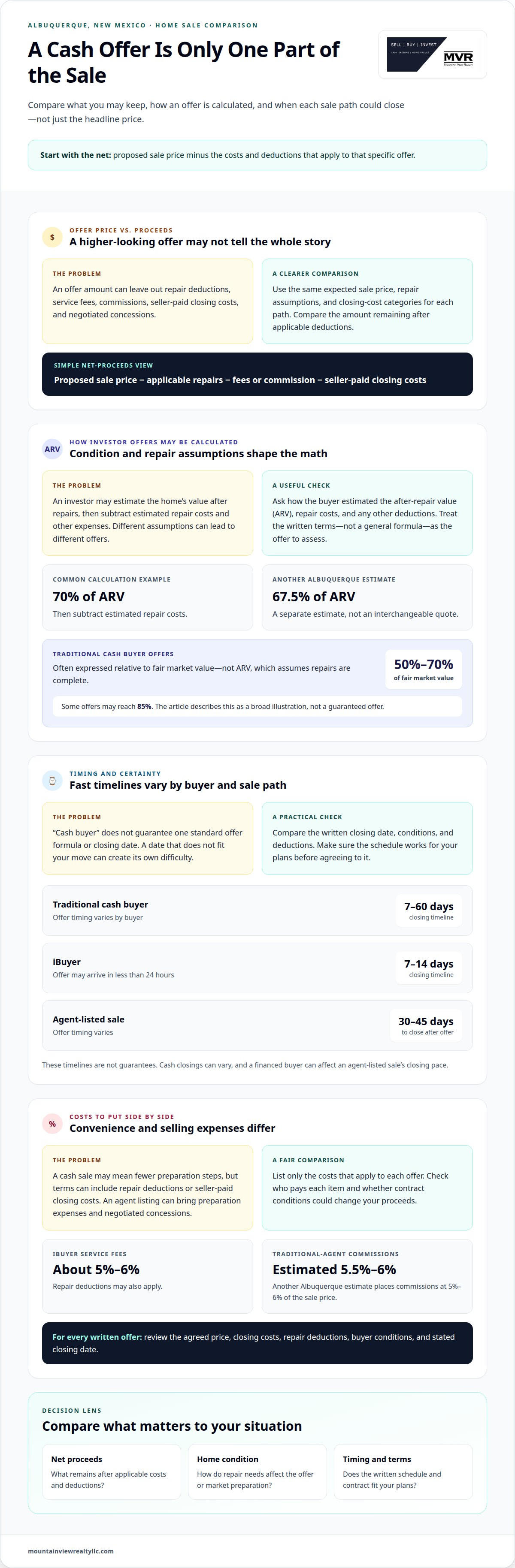
A faster sale can come with a lower offer. Cash home buyers in Albuquerque, NM, may close in 7 to 14 days, while a traditional agent sale can take 30 to 45 days to close. Traditional cash buyers typically offer 50% to 70% of a home’s fair market value, though some offers may reach 85%.
If you need to sell quickly, speed and certainty can matter as much as the sale price. But the offer alone won’t show what you’ll keep after repairs, selling costs, and other expenses.
This comparison explains how cash offers stack up against an agent-listed sale or a renovation-backed sale, including how investor offers are often calculated and which costs can affect your proceeds. You’ll also see how timing, the home’s condition, and your priorities can point toward the right path.
Key Takeaways
- Compare estimated proceeds after repairs and selling expenses, not just the offer amount.
- Understand how a home’s after-repair value and condition can shape an investor’s offer.
- Weigh the costs and preparation involved in an agent listing against the convenience of a cash sale.
- Consider a renovation-backed sale if improvements could help your home compete on the market.
- Use your timing, the home’s condition, and your priorities to narrow down the selling path that fits.
What are Cash Home Buyers?
Cash home buyers in Albuquerque, NM, purchase houses without relying on a buyer’s mortgage approval. The term describes how the purchase is funded, not a standard timeline or offer formula. The label alone doesn’t establish whether a buyer is licensed; applicable rules depend on the buyer’s role in the transaction.
Cash Offer Timelines
Cash buyers can move from offer to closing faster than a financed sale, but timing varies by buyer type. Cash home-buying companies in New Mexico often provide offers within 24 to 48 hours, while a cash closing can take 7 to 60 days. Some buyers may close in 2-3 days after making an offer; others need more time.
The process usually starts with the seller sharing property details and arranging an evaluation. The buyer reviews the home’s condition and presents a written cash offer. Before accepting, compare the proposed price, closing costs, repair deductions, and stated closing date. An inherited house, for example, may require extra coordination among decision-makers before the seller can sign.
An iBuyer may provide an offer in less than 24 hours and close in 7-14 days. That speed can come with service fees, estimated around 5%-6%, and possible repair deductions. A faster timeline doesn’t automatically mean a higher net amount, so compare the written offer and deductions with your expected proceeds from other sale paths.
Risks of Accepting a Cash Offer
The main risks are accepting less than you could net through another sale route, overlooking deductions, or agreeing to a date that doesn’t fit your move. Traditional cash buyers typically offer 50% to 70% of fair market value, though some offers may reach 85%. Review the full contract, including closing costs and the buyer’s conditions, before signing.
Cash buyers differ in speed and terms. An agent-listed sale generally takes longer to close, while an iBuyer may provide an offer quickly but charge a service fee. A traditional cash buyer’s closing schedule can also vary, so put the agreed date and any conditions in writing.
| Option | Offer timing | Closing timeline | Key comparison |
|---|---|---|---|
| Traditional cash buyer | Varies | 7 to 60 days | Offer and schedule depend on buyer type |
| iBuyer | Less than 24 hours | 7-14 days | Service fees and repair deductions may apply |
| Agent-listed sale | Offer timing varies | 30 to 45 days after offer | Financed buyer can affect closing pace |
Choose by comparing your net proceeds, the written terms, and a closing date that suits your plans.
Selling costs compared with listing through an agent
A cash offer and an agent-listed sale can produce different proceeds, even when both homes sell for the same amount. Compare the contract, selling expenses, and likely deductions before focusing on the offer price.
Cash Sale Compared With Agent Listing
A cash sale may involve fewer sale-preparation steps, while an agent listing exposes a property to open-market buyers. In New Mexico, traditional-agent commissions are estimated at 5.5% to 6%. Another Albuquerque estimate puts real estate agent commissions at 5% to 6% of the sale price.
Commission is only one part of the comparison. A cash offer may reflect the property's condition, and sellers should check which closing costs they would be expected to pay. An agent-listed seller should also consider preparation expenses and any negotiated concessions. Use the same expected sale price, repair assumptions, and closing-cost categories when comparing net proceeds.
Ask what remains after each path’s deductions instead of comparing a cash offer with an agent’s projected list price. The final contract should show the agreed price, costs assigned to each party, and any conditions that could change the seller’s proceeds. This side-by-side review helps show whether convenience offsets a lower offer.
Cash Buyer Companies in New Mexico
Cash home buyers serving New Mexico vary in how they assess properties and structure offers. Some subtract estimated repair costs; others may charge service fees or assign closing costs to the seller. The written terms matter more than a general claim of a simple sale. Compare the offer amount with every stated deduction.
Rankings and “top picks” can help organize choices, but a label alone doesn’t show which option suits a particular property. A useful comparison separates investor offers, iBuyer service fees, and agent commissions, and explains how each figure was calculated. For Albuquerque properties, review the offer method, repair deductions, seller-paid costs, and contract conditions together.
Build a simple net-proceeds comparison with these lines: proposed sale price, repair deductions, service fees, commission, and seller-paid closing costs. Include only costs that apply to each offer, then compare the remaining amounts. A home sale strategy comparison can help frame the decision around your property and priorities.
Typical cash investor offers relative to after-repair value
Cash investors often estimate a home’s value after repairs, then subtract repair costs and other expenses. This can produce an offer well below the home’s expected market value once improved.
Cash Offers and After-Repair Value
After-repair value, or ARV, estimates what a property could sell for after needed work. A common calculation applies 70% to ARV, then subtracts estimated repair costs.
Another Albuquerque estimate puts typical investor offers at 67.5% of ARV. These examples use different assumptions, so they are not interchangeable quotes. The repair estimate, expected resale value, and buyer’s costs all affect the result.
Offer Ranges and Fair Market Value
Traditional cash buyers in New Mexico typically offer 50% to 70% of fair market value, though some offers may reach 85%. ARV and fair market value are related but distinct: ARV assumes repairs are complete, while current condition affects what a buyer may deduct before resale.
Treat that as a broad illustration, not a property-specific valuation. A home’s location, condition, and repair needs change the calculation.
Albuquerque Cash Offer Estimates
To assess an estimate, ask for the buyer’s ARV, repair list, and calculation in writing. Then compare the proposed offer with your home’s likely value after repairs. An offer described as “no obligation” gives you a basis for review, but read its terms rather than relying on the label.
If you need to sell your house fast, speed may matter, but so does the net amount. Check whether the buyer may charge fees or deduct repairs, and note when the offer expires. A practical comparison has three steps: verify the assumed ARV, review each repair deduction, and compare the resulting proceeds with your other sale options.
Cash offer estimates can help set expectations, but one formula cannot capture every property. A dated roof, visible damage, or recently updated kitchen can lead to different repair assumptions. Ask how each item affects the calculation, then compare the buyer’s written figures with the home’s actual condition before deciding.
Commissions, fees, and selling costs
A useful cost comparison separates compensation from expenses tied to the property and transaction. Review each proposed charge by asking who receives it, what it covers, and whether it changes your estimated proceeds.
No-Commissions Cash Sales
A cash sale without seller-agent representation can avoid an agent commission, but “no commission” doesn’t mean “no costs.” The contract and settlement statement can still assign other expenses to the seller. Read the terms as a complete package instead of treating a commission-free claim as the amount you’ll keep.
An offer described as “no obligation” is an invitation to review the terms, not a reason to skip that review. Check whether acceptance creates duties, whether the buyer can change or withdraw the offer under stated conditions, and what happens if the closing date shifts. These details distinguish an initial estimate from the signed agreement.
For a clear comparison, record the proposed price and subtract each seller-paid item only once. Keep repair credits separate from transaction charges. If a buyer deducts a repair allowance from the offer, don’t also count that work as a separate seller expense unless the agreement requires both.
Company Fees and Seller Costs
Company fees and property expenses are different categories. A service fee compensates a company for its role; a property-related expense can include charges connected to the home or its transfer. The written terms should identify each charge and who pays it. Ask for an itemized estimate to compare the same categories across offers.
Also account for your existing obligations. A mortgage payoff, unpaid property charges, or recorded liens can affect the amount available after closing. These amounts depend on your records, so use current statements and settlement figures rather than relying on a rough offer summary.
Before signing, use this review:
- Identify: Mark each commission, service fee, repair credit, and seller-paid expense.
- Clarify: Match each charge to the contract language and the party responsible.
- Reconcile: Compare the estimated proceeds with the final settlement statement before closing.
This method helps sellers compare unlike offers fairly. A lower headline price may have fewer deductions, while a higher offer may include costs that reduce proceeds. Focus on the amount remaining after accounting for the contract terms and your property obligations.
Cash sale versus listing or renovation-backed sale
Albuquerque homeowners can choose a direct cash sale, a traditional listing, or a renovation-backed approach. The best fit depends on the home’s condition, the time available, and how much preparation you want to manage.
An agent-listed Albuquerque sale takes around 57 days on average, including 14 days to attract an offer and 43 days for a buyer’s purchase loan to close. That route can expose the listing to more buyers, but it may involve showings, preparation, and buyer financing. A cash sale may reduce those steps, though the offer can reflect repairs and resale costs.
Some cash buyers purchase houses in their current condition, so repairs may not be required before the sale. But “as-is” doesn’t mean repairs have no effect on price. An investor may account for the work in the offer, so compare the net proceeds with the potential result of listing after improvements.
A renovation-backed sale offers another path for homeowners who believe targeted work could improve buyer appeal. Renovate & Sell is designed for sellers considering improvements before going to market. The decision depends on which repairs matter, how the work affects the home’s presentation, and whether you can manage the process. A dated kitchen, for example, may call for a different plan than a home needing broad repairs.
Compare the options using the same questions:
- Cash sale: What deductions appear in the written offer, and does the proposed closing date suit your move?
- Listing: How much preparation and access for showings can you manage before the sale?
- Renovation-backed sale: Which improvements could make the property more competitive, and how will the sale plan account for the work?
Albuquerque homes spent a median of 53 days on the open market in the market snapshot. That measure differs from the 57-day average sale timeline, which includes the offer and loan-closing stages. Use each figure as context, not as a promise for an individual property.
Choose a cash sale when a direct offer and fewer preparation steps matter most. Consider listing when market exposure and the home’s presentation are priorities. A renovation-backed strategy may suit owners willing to improve the property before marketing. Compare expected proceeds, workload, and timing before choosing.
Mountain View Realty: CashOffer+
Mountain View Realty LLC offers CashOffer+ for Albuquerque sellers considering a direct cash sale. If you’re weighing an investor offer against listing or making improvements first, compare it with Home Trade-In, Renovate & Sell, or Short Sale based on your property and priorities.
CashOffer+ may suit sellers who want to explore a cash-offer route. Renovate & Sell is relevant when improving the home before listing is part of the plan. These options offer different ways to approach a sale, so consider your home’s condition, preferred timeline, and the work you’re ready to take on.
For a clearer comparison of your selling options, contact Mountain View Realty LLC to discuss your home and priorities.
Choose a selling path that fits your next move
If you’re weighing cash home buyers in Albuquerque, NM, let your priorities guide the decision. Consider how much preparation you want to manage, how soon you need to move, and whether improving the home fits your plans. The right choice is the one whose terms and process make sense for your circumstances.
Before committing, write down what matters most: timing, convenience, keeping the home occupied, or preparing it for the market. Then discuss those priorities and compare the available paths. A focused conversation can help turn a complicated sale into a clear next step.
Take that step when you’re ready, with a plan that reflects your home and your goals.
Your next move can start with a thoughtful choice.
Frequently Asked Questions
How Do I Sell My House Fast Albuquerque?
Start by choosing the outcome that matters most: a direct sale, a public listing, or a plan that includes preparing the home. Gather ownership records, loan information, and any documents related to an estate or other owners. Then compare written terms and decide who needs to approve the sale. Organizing these details can help keep decisions clear and avoid confusion during discussions.
Can I stay in the house after closing?
Mountain View Realty LLC offers Sell & Stay for homeowners considering a sale while planning to remain in the home. Any continued occupancy should be addressed in the written agreement. Review the move-out date, responsibilities for utilities and upkeep, and what happens if plans change. For example, a seller moving into senior housing can use these terms to coordinate the transition without relying on informal promises.
Can you buy my house if it’s in foreclosure?
A foreclosure situation calls for a review of the property’s loan and notice documents before choosing a sale path. Mountain View Realty LLC offers Short Sale for sellers considering a financially distressed sale. Gather current lender correspondence, loan statements, and ownership information to clarify the situation. If an estate or co-owner is involved, include the people responsible for decisions in the discussion.
Can you help if I am behind on payments or facing foreclosure?
Mountain View Realty LLC offers Short Sale for homeowners considering a sale while dealing with mortgage distress. Organize payment records, lender correspondence, and any notices you’ve received, then outline the dates that matter to you. If another owner, estate representative, or other decision-maker is involved, include them early. These details help frame a focused conversation about which selling path fits your circumstances.
Do I need to make repairs or clean out the house?
Before choosing a sale path, make a simple inventory of what stays with the property and what you plan to remove. Note appliances, personal belongings, and any items that belong to an estate or another family member. Share the list during sale discussions and make sure the final agreement clearly describes included items. This can prevent confusion over possessions when ownership transfers.
Do you buy houses with tenants or squatters?
Disclose who occupies the property and collect any lease, rental records, or written agreements before discussing a sale. Mountain View Realty LLC can consider occupancy details as part of a broader selling conversation. The written sale terms should address possession and any agreed handover arrangements. For a rental property, include the owner’s records and relevant communications so everyone understands the current situation.
How do you decide what to offer?
Mountain View Realty LLC can use a Comparative Market Analysis to assess comparable properties near the home. Its criteria include properties within ½ mile, listed within the last 6 months, of similar age, and with square footage within ±10%. For a 1,500-square-foot home, that means comparing homes from 1,350 to 1,650 square feet. The comparison helps frame a property-specific discussion.
How does the Albuquerque housing market affect my options?
Albuquerque market conditions can shape buyer competition, pricing strategy, and how a listing is positioned. Compare similar homes currently for sale with recent closed sales, then consider how your property’s features fit the local market. If you’re deciding between a direct offer and a listing, use those comparisons to weigh market exposure against personal priorities, such as your desired move and the home’s presentation.

Article by
Robb Krautbauer
Robb Krautbauer is the Owner and Qualifying Broker of Mountain View Realty, serving Albuquerque, Rio Rancho, Santa Fe, and surrounding New Mexico communities. With more than a decade of real estate experience, Robb specializes in luxury homes, strategic home marketing, and helping homeowners navigate important life transitions with confidence.
Known for combining luxury-level marketing, AI-powered technology, and innovative selling strategies, Robb helps clients maximize their home's value while creating a smooth, personalized selling experience. Whether assisting luxury homeowners, retirees, families downsizing, or real estate investors, his focus is always on delivering expert guidance, honest advice, and exceptional results.
When he's not helping clients achieve their real estate goals, Robb enjoys studying market trends, emerging technology, and investment strategies that keep Mountain View Realty at the forefront of the industry.
Disclaimer
**Disclaimer:** The information provided in this article is for general educational purposes only and should not be considered legal, tax, financial, or professional advice. Real estate laws, market conditions, and regulations change over time and may vary based on your individual circumstances. Before making any real estate decision, consult with qualified legal, tax, or financial professionals. If you have questions about buying or selling real estate in New Mexico, contact Mountain View Realty for guidance specific to your situation. © 2026 Mountain View Realty. All rights reserved. The content on this website may not be reproduced without written permission.


