
Choosing an Earnest Money Amount for a New Mexico Home
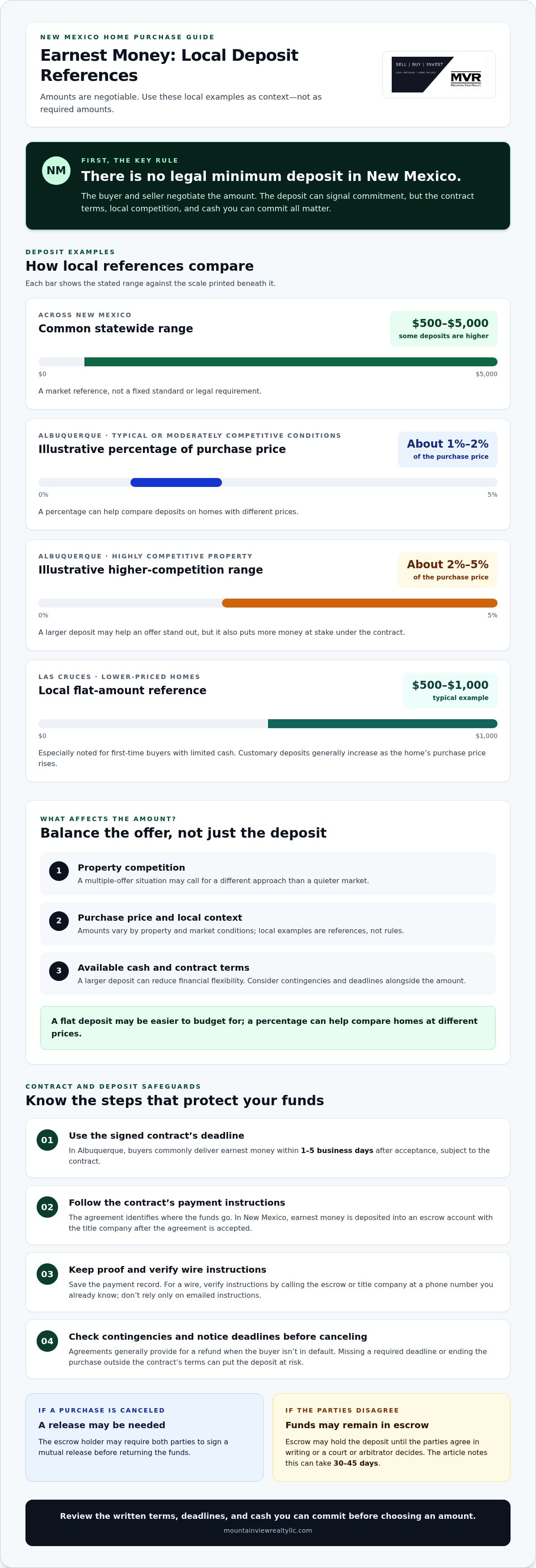
New Mexico doesn’t set a legal minimum earnest money deposit for a home purchase. If you’re deciding how much earnest money is required in NM, the key point is that the amount is negotiable: deposits commonly range from $500 to $5,000, and some are higher. The right offer depends on the home, local competition, and the terms you’re comfortable accepting.
It’s reasonable to want your offer to be competitive without tying up more cash than necessary. Earnest money signals to the seller that you’re serious, and it is generally credited toward your purchase costs if the sale closes.
This article explains how buyers can weigh the deposit against market conditions and available cash. You’ll also learn when earnest money may be returned, how contract deadlines affect that protection, and what can happen if a purchase falls through. Understanding these details can help you make a more informed decision before submitting an offer.
Key Takeaways
- Weigh the property’s competition and your available cash when choosing a deposit amount.
- Understand how the seller can respond to the earnest money amount in your offer.
- Learn who typically holds the deposit and how the contract sets its deadline.
- See how contingencies and notice deadlines can affect whether you recover your deposit.
- Explore how a stronger deposit can support negotiations, and what risks to consider before increasing it.
Is there a minimum earnest money amount?
New Mexico does not set a legal minimum earnest money deposit for a home purchase. Buyers asking how much earnest money is required in NM should know the amount is negotiable and depends on the property, local market, and offer terms.
Typical New Mexico Deposit Amounts
Across New Mexico, earnest money deposits commonly range from $500 to $5,000, with some deposits higher. This statewide range is a market reference, not a fixed standard. For example, a buyer weighing a lower-priced home might compare a flat deposit with an amount based on the purchase price. In a New Mexico property-sale case, the buyer paid $500 in earnest money, according to the U.S. Government Publishing Office. That example shows one transaction, not a required minimum.
How much earnest money is required in NM depends on the amount the buyer and seller negotiate. The deposit can signal commitment, while contingencies and contract terms affect the buyer’s exposure. Consider the full agreement, not just the amount, before making an offer.
Albuquerque and Bernalillo County Deposits
In Albuquerque and surrounding Bernalillo County, appropriate earnest money varies by neighborhood and current market conditions. In typical or moderately competitive Albuquerque conditions, an illustrative amount is roughly 1% to 2% of the purchase price.
A percentage can help compare deposits on homes at different prices, while a flat amount may be easier to budget for. Local competition matters too: a multiple-offer situation may call for a different approach than a quieter market. Weigh the deposit against the property’s market and the cash you can commit.
Customary Las Cruces Deposits
In Las Cruces, deposits of $500 to $1,000 are typical for offers on lower-priced homes, especially from first-time buyers with limited cash. Those figures offer a local reference, not a rule for every buyer or property. Customary amounts generally increase as the home’s purchase price increases.
For an Albuquerque home, compare a proposed flat deposit with a percentage of the offer price, then consider how much cash you’ll need for other purchase expenses. This is especially important for first-time buyers balancing several costs. Use local market conditions as context, and make sure the amount fits both your budget and the contract terms.
Market Conditions and Deposit Amounts
Competition can influence the deposit buyers propose. For a highly competitive Albuquerque property, an illustrative earnest money amount is roughly 2% to 5% of the purchase price. These examples describe market patterns, not fixed requirements across New Mexico.
A larger deposit may help an offer stand out, but it also puts more money at stake under the contract. Consider competition, purchase price, contingencies, and available cash together. A well-planned offer balances the seller’s expectations with terms you’re prepared to accept.
Earnest Money Explained: How Much Should You Offer?
Choose an earnest money amount as part of the full purchase offer, not in isolation. The deposit can show commitment, but the purchase price, contingencies, deadlines, and available cash also shape the offer. A larger deposit isn’t automatically better if it leaves you less financial flexibility during the transaction.
Match the Deposit to the Competition
Competition can influence the deposit a buyer proposes. In a multiple-offer situation, a higher amount may help an offer stand out. Those figures illustrate how deposits can vary, not a required amount or a guarantee of acceptance.
Consider the whole offer alongside its deposit. Price, contingencies, and timing all shape the seller’s decision. Weigh whether a larger deposit makes sense without overlooking the cash it ties up before closing. The amount should reflect your offer strategy and your capacity to meet the contract terms.
Deadlines and Payment Records
The signed purchase contract sets the deposit deadline. In Albuquerque, buyers commonly deliver earnest money within 1 to 5 business days after acceptance, subject to that contract. The contract also identifies where the funds go. In New Mexico, earnest money is deposited into an escrow account with the title company after the agreement is accepted.
Follow the contract’s delivery instructions and keep a record of the transfer. If sending a wire in Albuquerque, verify the instructions by calling the escrow or title company at a phone number you already know. Don’t rely only on emailed instructions. This step helps protect against wire fraud. Keep the receipt with your purchase documents.
Refunds, Release, and Forfeiture
New Mexico purchase agreements generally provide for a refund when the buyer isn’t in default. A buyer may risk forfeiting the deposit by breaching the contract without a permitted reason. For example, missing a required deadline or abandoning the purchase outside the agreement’s terms can put the funds at risk. A witness cited $1,000 and $10,000 as examples of earnest money a buyer could lose if closing doesn’t occur in a timely manner, according to the U.S. Government Publishing Office.
When a purchase is canceled, the escrow holder may require both parties to sign a mutual release before returning the money. If the buyer and seller dispute who should receive it, escrow may hold the funds until they agree in writing or a court or arbitrator decides. The deposit may remain in escrow for 30 to 45 days, affecting the buyer’s available cash.
Document the Deposit and Terms
Save the signed agreement, proof of payment, and any written notices about cancellation or release. These records show how much you delivered, whether you met the deadline, and why you requested a refund. Review the contract’s contingencies and notice rules before ending the purchase. The deposit’s outcome depends on the written terms and whether you follow them.
Does the seller decide how much earnest money is required?
In New Mexico, earnest money is customary, but it isn’t legally required for a home purchase. The buyer proposes an amount in the offer, and the seller can accept it or counter with a different amount. The signed contract records the agreed deposit and deadline. Earnest money is therefore a negotiated commitment, not an amount the seller sets alone.
Who Holds Earnest Money in New Mexico?
After the purchase agreement is accepted, earnest money is deposited into escrow with the title company. A title company holds the funds until the transaction closes or the parties resolve a cancellation. In some transactions, the listing broker’s trust account holds the deposit instead. The contract identifies where to deliver the money, so follow its instructions.
The escrow holder keeps the deposit separate from the buyer’s personal funds. The money isn’t paid directly to the seller when the offer is accepted. If the purchase closes, the deposit is handled as part of the transaction. If the sale ends early, the contract and release process determine what happens next.
How the Seller Responds to the Amount
A seller can accept the buyer’s proposed deposit or counter with a different amount. In a competitive situation, the seller may view a larger deposit as a stronger sign of commitment. But the amount alone doesn’t decide the offer. Price, contingencies, and contract deadlines also shape the terms under consideration.
For example, a seller may counter the earnest money amount while accepting other offer terms. The buyer can accept, reject, or negotiate the change. Any revised amount should appear in the final agreement. A verbal discussion doesn’t replace the written contract that sets each party’s commitments.
Deadlines and Escrow Release
The purchase contract sets the earnest money delivery deadline. Deposits are often due on the day of mutual acceptance or within a few business days, but the contract controls. Treat the deadline as a key task. Deliver the funds to the named escrow holder using the method and instructions in the agreement.
If a New Mexico purchase is canceled and a refund is requested, escrow may require both parties to sign a mutual release. This document confirms how the funds should be distributed. If the buyer and seller disagree, the escrow holder may retain the deposit until they reach a written agreement or a court or arbitrator decides. A dispute can delay access to the funds.
Refunds when a transaction falls through
In New Mexico, earnest money is generally refundable when the buyer isn’t in default. The purchase agreement determines which cancellations are permitted and what steps protect the deposit. The reason for ending the purchase matters, as do written notice rules and contract deadlines. Missing a required step can affect whether the funds are returned.
Contingencies and Refund Protection
Contingencies set conditions for proceeding with a purchase. New Mexico buyers may have protections related to financing, inspection, appraisal, title issues, or the sale of their current home. To rely on a contingency, the buyer must meet the agreement’s deadline and notice requirements. For example, an inspection concern may allow termination during the contract’s inspection period, provided the buyer gives notice as required.
Financing terms matter too. A buyer seeking to end the purchase because financing falls through must act within the applicable financing deadline and follow the contract’s notice rules. If an Albuquerque appraisal comes in below the purchase price, the agreement may allow the buyer to renegotiate, pay the difference, or terminate. The contract determines which options apply.
Refund Requests and Disputes
When a transaction ends, the buyer can request release of the earnest money through the process set out in the agreement. The title company or other escrow holder may require a mutual release signed by both parties before distributing funds. The document records their agreement about who receives the deposit. Keep copies of the cancellation notice, delivery records, and signed release.
If the seller disputes the refund, the escrow holder may keep the funds until the parties reach a written agreement or a court or arbitrator decides entitlement. A disagreement alone doesn’t establish who should receive the money. The contract, reason for cancellation, and compliance with notice deadlines are central to resolving the dispute. Clear records can help establish what happened and when.
Independent Consideration Is Separate
New Mexico purchase agreements may include independent consideration, a separate payment from earnest money that is typically much smaller. The parties may negotiate for it to be credited toward the purchase price, down payment, or closing costs if the sale closes, subject to lender approval. If the transaction ends, independent consideration is generally nonrefundable, except in limited circumstances such as a seller’s breach of the agreement.
Don’t treat independent consideration and earnest money as interchangeable. Each payment serves a different purpose and may have a different outcome if the sale ends. Review both amounts and their terms before signing. If the buyer cancels under a contingency, earnest money may be refundable under the contract, while independent consideration may remain nonrefundable.
Earnest money as a negotiating tool
A deposit can strengthen an offer by showing the seller that the buyer is serious. In a competitive New Mexico market, a higher earnest money amount may help an offer stand out. But the deposit is only one part of the agreement. Sellers also consider the purchase price, contingencies, and other terms. Weigh the signal a larger deposit sends against the money you’re willing to put at risk.
Build the offer around the specific property and level of competition. Those figures illustrate how a percentage changes the deposit, not what a seller will accept. Compare the amount with the offer price, competing offers, and the protections included in the agreement.
The decision also depends on your financial flexibility. Funds held in escrow aren’t available for other purchase needs until the transaction closes or the contract allows their release. If you’re planning for closing costs, account for that timing before offering more earnest money. A larger deposit may signal commitment, but it doesn’t replace careful review of contingencies, deadlines, and your ability to complete the purchase.
Offer terms work together. In Albuquerque, intense competition can make a larger deposit more persuasive, while a less competitive situation may leave room to negotiate other terms. Consider whether you have flexibility on the closing date or other contract details rather than relying on the deposit alone. Put every change in the written agreement so both parties share the same expectations.
Protect your position by matching the deposit to the risk you can accept. Before signing, review the cancellation terms, contingency deadlines, and required notice process. If you later need to end the purchase, following those terms can affect whether the deposit is returned. A larger amount increases the funds at stake if you default, so balance competitiveness with contract protections.
Independent consideration is separate from earnest money in New Mexico. The parties may negotiate whether it’s credited toward the purchase price, down payment, or closing costs if the sale closes, subject to lender approval. Buyers should account for both payments when comparing offers. Understanding how each term works can help buyers make a deliberate proposal instead of raising the earnest money amount without considering the full agreement. For help weighing those tradeoffs, discuss your New Mexico offer strategy with Mountain View Realty LLC.
Mountain View Realty: CashOffer+
If your next move depends on selling your current home, Mountain View Realty’s CashOffer+ is one selling option to consider. Earnest money is only one part of a purchase plan. Coordinating a home sale and purchase can also affect timing and available funds.
If you’re comparing ways to sell, CashOffer+ may fit your priorities. Other options include Home Trade-In, Renovate & Sell, and Sell & Stay. Each offers a different approach to a home sale, so consider your plans, property, and timing. These options are relevant when selling is part of a broader move, not a substitute for reviewing the earnest money terms in a purchase contract.
Contact Mountain View Realty to discuss your home sale options and how they fit your plans.
Make Your Next Move With Clarity
Understanding how much earnest money is required in NM is one part of preparing to buy. Next, consider whether the home, contract terms, and timing fit your plans. Before making an offer, account for the funds you’ll need throughout the transaction and how much flexibility you want to preserve. A clear plan can help you negotiate with confidence and make choices that reflect your priorities.
If selling a home is part of your move, consider how that transition affects your purchase plans. Mountain View Realty offers options including CashOffer+, Home Trade-In, and Renovate & Sell. A conversation about your goals can help you consider which path aligns with your circumstances and next steps.
When you’re ready to discuss your plans, contact Mountain View Realty.
Take the next step at a pace that feels right for you. A thoughtful plan can help you move forward with greater clarity.
Frequently Asked Questions
Does Earnest Money Go Toward Your Down Payment?
Yes. When a New Mexico purchase closes, earnest money is generally credited toward the buyer’s purchase costs. The final closing figures show how the credit is applied alongside the buyer’s remaining funds. Review the settlement statement to confirm the deposit appears in the transaction accounting. If a lender is involved, its requirements also shape how credits are recorded and applied.
What Happens if the Transaction Falls Apart?
The purchase contract determines whether the buyer can recover the deposit after cancellation. A buyer relying on a contingency must meet its deadline and follow the agreement’s notice process. For example, if an inspection issue prompts cancellation, use the contract’s required method and timing. If the parties disagree, the escrow holder may need their written agreement before releasing the funds.
Is earnest money required when buying a home in New Mexico?
No. New Mexico doesn’t legally require earnest money for a home purchase, though buyers commonly include it in offers. A seller can accept the proposed terms or counter with different terms, including a different deposit amount. If a buyer makes an offer without earnest money, the rest of the offer still matters. The written agreement should clearly state the agreed terms and any deposit obligations.
What is the typical earnest money deposit in New Mexico?
Typical deposits in New Mexico commonly fall between $500 and $5,000, with some higher. That statewide range is a reference, not a required amount. A buyer should consider the home’s price, local competition, and available cash when choosing a figure. Albuquerque and Las Cruces can show different customary patterns, so a statewide range may not describe every local offer.
How is earnest money calculated in New Mexico home purchases?
Buyers can propose a flat deposit or calculate it as a share of the purchase price. For a percentage-based amount, multiply the agreed purchase price by the chosen percentage. The result is a proposed deposit, not an automatic contract requirement. Compare it with your cash needs and the offer’s other terms before putting the amount in the agreement.
Does New Mexico set a minimum or maximum earnest money amount?
New Mexico sets no legal minimum earnest money amount for a home purchase. The buyer and seller negotiate the deposit as part of the offer, and the agreement records the amount they accept. No single customary figure fits every property. In practice, the buyer’s available funds, property price, and seller’s response shape the agreed amount.
When is earnest money due under a New Mexico real estate contract?
The signed contract sets the deposit deadline, so the buyer should use that date rather than assume a standard schedule. In Albuquerque, delivery commonly occurs within 1 to 5 business days after acceptance, subject to the agreement. Review the payment instructions and named recipient in the contract. Then retain proof of delivery with the purchase records.
Who holds earnest money deposits in New Mexico?
A New Mexico earnest money deposit is typically held by a title company or escrow agent. In some transactions, the listing broker’s trust account holds the funds. The purchase agreement identifies the recipient and delivery instructions. The holder handles the deposit under the contract, rather than treating it as money paid directly to the seller when the offer is accepted.

Article by
Robb Krautbauer
Robb Krautbauer is the Owner and Qualifying Broker of Mountain View Realty, serving Albuquerque, Rio Rancho, Santa Fe, and surrounding New Mexico communities. With more than a decade of real estate experience, Robb specializes in luxury homes, strategic home marketing, and helping homeowners navigate important life transitions with confidence.
Known for combining luxury-level marketing, AI-powered technology, and innovative selling strategies, Robb helps clients maximize their home's value while creating a smooth, personalized selling experience. Whether assisting luxury homeowners, retirees, families downsizing, or real estate investors, his focus is always on delivering expert guidance, honest advice, and exceptional results.
When he's not helping clients achieve their real estate goals, Robb enjoys studying market trends, emerging technology, and investment strategies that keep Mountain View Realty at the forefront of the industry.
Disclaimer
**Disclaimer:** The information provided in this article is for general educational purposes only and should not be considered legal, tax, financial, or professional advice. Real estate laws, market conditions, and regulations change over time and may vary based on your individual circumstances. Before making any real estate decision, consult with qualified legal, tax, or financial professionals. If you have questions about buying or selling real estate in New Mexico, contact Mountain View Realty for guidance specific to your situation. © 2026 Mountain View Realty. All rights reserved. The content on this website may not be reproduced without written permission.


