
Contingency Clauses in a Real Estate Offer and Buyer Protections
An offer with contingencies is a contract that depends on specified conditions being met. Contingency clauses in a real estate offer can give a buyer options if financing falls through, an inspection reveals a serious issue, or the appraisal comes in below the agreed price. The contract should spell out the conditions, deadlines, and what happens if a condition isn’t met, including how earnest money is handled.
A contingent home is under contract, but the sale still depends on unresolved conditions. A pending home is generally further along, with major contingencies satisfied or waived and closing ahead. These labels can feel like a closed door when you’re interested in a property, but they don’t tell the whole story.
This guide explains how common contingencies affect buyers and sellers, what protections they can provide, and how financing clauses relate to earnest money. You’ll also learn what to consider when a home is listed as contingent or pending, so you can assess your options in Albuquerque’s real estate market.
Key Takeaways
- Read each clause for its conditions, deadlines, and stated outcome if a condition isn’t met.
- A low appraisal may leave you weighing a larger cash contribution, a price change, or cancellation under the contract.
- An inspection contingency can provide options when an inspection uncovers significant concerns.
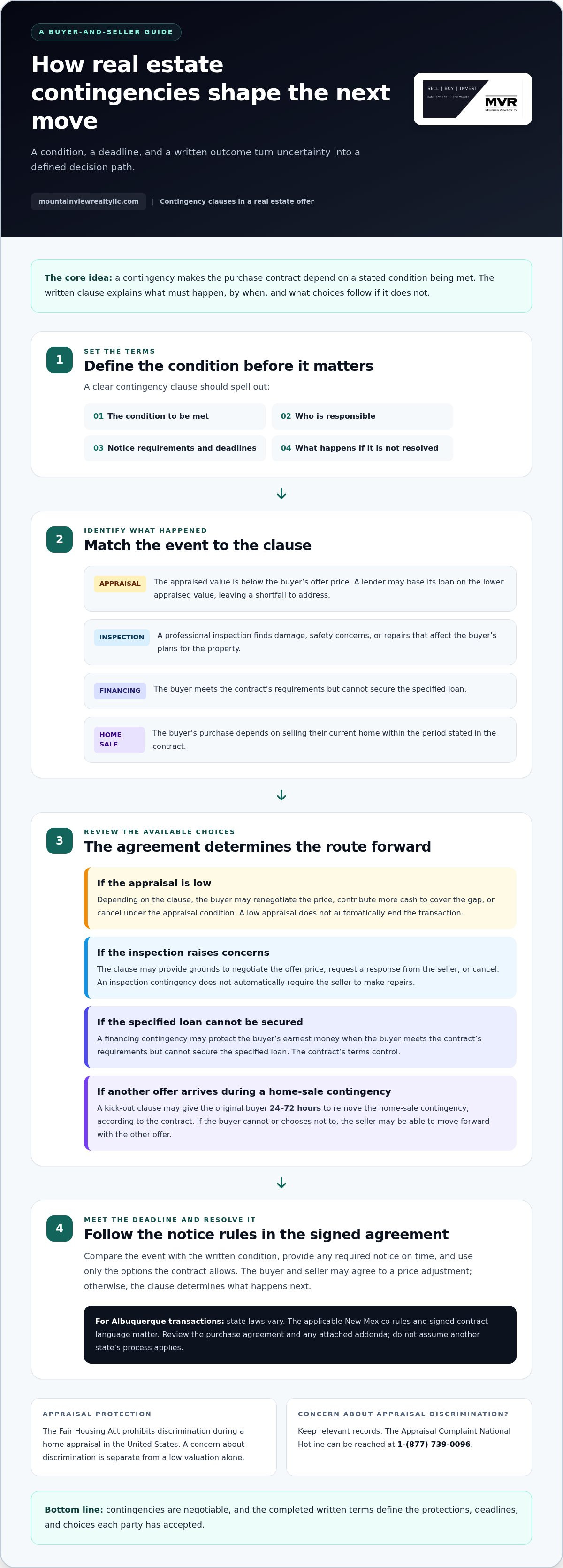
- A financing contingency may protect your earnest money if you meet the contract’s requirements but can’t secure the specified loan.
- Contingent and pending listings reflect different stages of a sale, so understand the status before deciding whether to make an offer.
What Are Mortgage Contingencies?
Mortgage contingencies address what happens if a buyer’s financing depends on the home’s appraisal. An appraisal contingency can give the buyer options if the appraised value falls below the offer price.
Appraisal Contingency Basics
An appraisal contingency makes the purchase dependent on the home appraising at a value acceptable under the offer. It matters because a lender may limit a mortgage to a percentage of the home’s appraised fair market value. If the appraisal is below the agreed price, the buyer may need more cash to cover the difference. The written clause sets out the buyer’s options.
Low Appraisals and Contingencies
A low appraisal means the appraised value is below the buyer’s offer price. For example, if the buyer offers more than the appraiser’s value, the lender may base its loan on that lower value. The buyer could then need a larger down payment to cover the difference. Depending on the contract, an appraisal contingency may allow the buyer to renegotiate, cover the gap, or cancel.
What the Clause Should Explain
A real estate contingency clause should identify the condition, how the parties must address it, who is responsible, and what happens if the deadline passes without resolution. For an appraisal contingency, that means stating what happens if the appraisal is below the offer price. Clear terms help the buyer and seller understand whether renegotiation, additional cash, or cancellation is available under their agreement.
Options After a Low Appraisal
A low appraisal does not automatically end a real estate transaction. The buyer and seller may agree to a price adjustment, or the buyer may choose to contribute more cash if the lender’s limit leaves a shortfall. If the contract allows cancellation under the appraisal condition, the buyer can use that option according to its terms. The specific clause determines what choices are available.
Appraisal Discrimination Protections
The Fair Housing Act prohibits discrimination during a home appraisal in the United States. A concern about discrimination is separate from a low valuation alone, so consider what occurred during the appraisal and keep relevant records. People who believe they experienced appraisal discrimination can call the Appraisal Complaint National Hotline at 1-(877) 739-0096. That hotline provides a route to raise an appraisal discrimination concern.
What Is a Contingency in Real Estate?
A contingency makes a purchase contract dependent on a stated condition being met. For buyers, an inspection clause can define what happens if a home’s condition differs from expectations.
Home Inspection and Property Condition
A home inspection contingency makes the buyer’s obligation to purchase depend on a professional inspection and the contract’s terms. It matters because the inspection may reveal damage, safety concerns, or repairs that affect the buyer’s plans for the property. For example, a buyer interested in an older home may discover roof or plumbing problems before closing instead of facing unexpected renovation work afterward.
Depending on the clause, inspection findings may give the buyer grounds to negotiate the offer price, request a response from the seller, or cancel the purchase. The contingency should explain which conditions qualify, how the buyer must notify the seller, and the deadline for doing so. Broad wording and a narrowly defined condition can lead to different outcomes, so the written terms matter.
An inspection contingency does not automatically require the seller to make repairs. It creates a contractual path for addressing findings, with the available choices shaped by the agreement. By comparing the inspection report with the original offer, a buyer can decide whether the property still fits their needs, repair plans, and budget.
Home Sale Contingencies and Kick-Out Clauses
A home sale contingency makes a buyer’s purchase dependent on selling their current home within the period stated in the contract. This can help the buyer avoid carrying two homes, but it adds uncertainty for the seller. If the buyer cannot sell within the agreed timeframe, the transaction may not proceed under that contingency.
A kick-out clause can give the seller a response when another buyer makes an offer. The original buyer may have 24-72 hours to remove the home-sale contingency, according to the contract terms. If they cannot or choose not to, the seller may be able to move forward with the other offer. Unlike a simple home-sale condition, this clause creates a defined decision point when another offer arrives.
For example, a buyer who needs proceeds from their current home may accept a kick-out provision when making an offer. The seller gains a way to consider another buyer, while the first buyer must decide whether they can proceed without the sale condition. The contract’s deadline and notice rules determine how that choice works.
State and Local Contingency Rules
State laws vary, and the signed purchase agreement sets the contingency terms for a transaction. In Albuquerque, the applicable New Mexico rules and the contract language matter. Buyers should not assume that another state’s process applies. Read the form used in the transaction, including any attached addenda, for its specific conditions and deadlines.
Contingencies are negotiable: buyers and sellers can choose which conditions to include, adjust timelines, or waive protections. A standard form can organize the agreement, but the completed terms define what each party has accepted. For instance, an inspection clause should identify the inspection condition, the required notice, and what follows if the buyer raises an issue.
Local practice does not replace the written agreement. Before signing, compare the contingency wording with the offer’s deadlines and the decisions you may need to make. For Albuquerque buyers weighing inspection terms against a sale timeline, local real estate guidance can help clarify how the contract’s conditions affect the transaction.
Common real estate contract contingencies and clauses
A purchase contract can depend on more than one condition. Each clause shapes what happens if a buyer or seller cannot meet an agreed term.
Common Contract Protections
Common contract protections make a transaction conditional on an event, such as loan approval or the sale of another home. They matter because each condition defines a path if plans change. A buyer may have a way to exit if a stated condition fails, while a seller may gain a deadline for deciding whether to continue.
For real estate investors, the contract’s value lies in matching its conditions to the transaction. A buyer evaluating a property for renovation, for example, can consider how inspection findings, financing approval, and deadlines affect the decision to proceed. These clauses don’t create a special investor guarantee; they state the obligations and options both parties accept.
- A home-sale condition can make the purchase depend on selling the buyer’s current home.
- A seller may make an offer contingent on finding a suitable property to purchase.
- A backup offer can give a seller another option if the first contract ends, when the existing contract allows one.
Deadlines matter. Real estate contingency periods are commonly set from 2 weeks to 2 months after the contract date, depending on the transaction. A two-week period may leave little time for financing commitments, inspections, and other due diligence. The contract should state the condition, who must act, the deadline, and the result if the condition remains unmet.
Earnest Money and Contract Exit
Earnest money is the buyer’s deposit connected to the purchase contract. Whether it is returned after cancellation depends on the applicable contingency and the contract’s terms. If a buyer exits under a home sale contingency, the deposit is handled according to the stated condition. Follow the clause’s notice requirements and timeline rather than assume that any cancellation protects the deposit.
For example, if the contract makes the purchase dependent on selling the buyer’s home, the buyer must meet that condition as written. If it isn’t met by the deadline, the transaction may not proceed. The buyer should give notice in writing using a method allowed by the contract. This creates a record of the decision and the basis for ending the agreement.
Most homes stay under contract for 30-60 days between offer acceptance and closing. During that period, the parties work through deadlines and conditions in the agreement. Approval, inspection findings, or a delayed home sale can affect progress. Tracking each obligation against the contract calendar helps buyers and sellers understand which decisions remain and when they’re due.
Financing contingencies and earnest money
A financing contingency connects a buyer’s purchase obligation to obtaining a mortgage under the contract’s terms. It can also affect whether earnest money is at risk if financing falls through.
Financing Contingency Basics
A financing contingency gives buyers time to obtain a loan and may allow them to exit if the required financing is unavailable. It matters because signing an offer and depositing earnest money don’t mean the lender has approved the mortgage. The clause should identify the financing condition, applicable deadline, and steps required if approval does not come through.
For example, a contract might make the purchase depend on a loan with a stated maximum interest rate and term. One example uses a rate of no more than 7% and a 30-year loan term. Those terms show why buyers should compare the contingency with the mortgage they are seeking, rather than treating any loan approval as sufficient.
Mortgage Financing Contingencies
A mortgage contingency sets out what happens if the lender does not approve the buyer’s loan as described. It matters because pre-approval is not final approval: underwriting still has to review the loan. A lender may assess the buyer’s finances and the property before deciding whether to fund the mortgage. The contingency connects that decision to the buyer’s contractual obligations.
A mortgage contingency period may typically last 30 to 60 days, depending on the requirements and issue covered by the clause. Buyers should track the deadline alongside lender requests, underwriting updates, and any property-related conditions. If an inspection identifies repairs, that finding does not itself equal a loan denial. The contract’s financing language determines which financing problems can support an exit.
Buyer Financing Contingencies
A buyer financing contingency protects the buyer’s ability to proceed when the specified financing cannot be obtained. It matters because waiving this condition can put earnest money at risk if the lender denies the loan late in the transaction. Buyers should understand the clause before removing it, especially if their mortgage approval still depends on underwriting.
If financing falls through, the buyer should follow the contract’s notice process and deadlines. For example, the buyer may need to give written notice using a method the agreement permits. Keeping lender communications and the notice record together helps document how the financing condition was handled. The contract controls whether the buyer can leave without penalty and recover earnest money.
Pre-approval can help buyers understand a likely loan amount before making an offer, but it does not replace final underwriting. A financing clause should reflect the loan the buyer intends to obtain, including its stated terms and required approval. That connection matters: a clause tied to different financing may not address the buyer’s actual situation.
Making offers on contingent or pending homes
A contingent listing has an accepted offer, but the sale depends on outstanding conditions. A pending listing usually means major contingencies have been satisfied or waived, and closing is approaching.
That distinction helps buyers decide whether to pursue a home and helps sellers weigh new offers. A listing status alone doesn’t reveal which conditions remain or when they must be resolved.
Whether the seller can consider another buyer’s offer while contingencies remain unresolved depends on the existing contract’s terms. However, the seller may accept a backup offer if the existing contract allows it. A backup offer is a possible next option, not an immediate place in the active transaction.
Buyers can ask whether the seller is considering backup offers and whether the contract permits one. Then assess the remaining conditions, the expected closing schedule, and whether your own financing and timing fit. A pending listing may still fall through: roughly 5-10% of pending home sales do, due to issues such as financing, title problems, or buyer cold feet. Once contingencies clear, pending homes typically close within 2-4 weeks.
Those figures are general context, not a prediction for a specific Albuquerque property. The status and contract terms matter more than the label. A pending home with cleared conditions differs from a contingent home still awaiting financing or an inspection result.
In a seller’s market, an offer with contingencies may be less competitive than one without them. That doesn’t mean waiving protections is right for every buyer. Compare the conditions you need with the seller’s priorities, and consider how much risk you can take on if a problem arises.
Sellers can accept or reject a contingent offer, or negotiate its terms, including the conditions and deadlines. If the contract permits, they may also consider a backup offer while the first agreement remains active.
For sellers, comparing offers means looking beyond the proposed price. A shorter or more flexible timeline may matter, but each offer’s financing, inspection, and home sale conditions can affect the path to closing. For buyers, ask whether the remaining contingency fits your ability to wait and proceed if the seller receives another offer.
Before making a backup offer, read its terms carefully. It should make clear when it could become active and how the parties will handle the deposit and deadlines. Clear written terms help both sides understand their position if the first transaction ends.
Mountain View Realty: CashOffer+
Mountain View Realty LLC offers CashOffer+ for homeowners weighing how to sell while managing a complex transaction. If the conditions or timeline of a contingent offer don’t fit your plans, you can consider another selling path rather than relying only on that offer.
Other options include Home Trade-In, Renovate & Sell, and Short Sale. Each suits a different selling situation, so the right fit depends on your priorities, property, and next move. Discussing your circumstances can help clarify which route aligns with your plans, whether you’re coordinating a purchase or considering a sale.
Contact Mountain View Realty LLC to discuss your options.
Make Your Next Offer With Clear Priorities
Before your next real estate decision, identify what you need from the transaction and where you can adapt. For one buyer, flexibility around timing may matter most. Another may prioritize keeping a financing condition in place. Knowing your priorities helps you assess whether the terms fit your plans instead of reacting only to the property or another party’s timeline.
Use that perspective when reviewing contingency clauses in a real estate offer. Consider what you can comfortably commit to, which conditions are essential, and what outcome you could accept if circumstances change. A clear plan can help you approach a purchase or sale with purpose while leaving room to weigh different paths.
If you’re considering a real estate move in the Albuquerque area, Mountain View Realty can discuss options that fit your priorities. A thoughtful conversation can help you decide what to explore next.
Move forward at a pace that feels informed and right for you.
Frequently Asked Questions
What’s an Offer With Contingencies Mean?
It means the buyer’s offer includes conditions that shape whether they’ll proceed with the purchase. For a seller reviewing an Albuquerque offer, weigh the proposed price alongside the buyer’s financing, requested conditions, and ability to meet deadlines. A higher price may not be the strongest fit if its terms create uncertainty about timing. Consider how each offer aligns with your plans for the property and preferred path to closing.
What happens when a contingency isn’t met?
If a contingency isn’t met, the contract’s language determines the available choices and consequences. The parties may need to decide whether to continue under revised terms or end the transaction. For instance, the buyer and seller might discuss extending a deadline if both want more time. Refer to the signed agreement during that discussion, since any change should be handled in a way both parties accept.
How does including a contingency protect buyers?
Including a contingency lets buyers make a purchase decision with a defined condition in mind. If a buyer is concerned about a particular property issue, they can focus the contract language on that concern rather than rely on a broad assumption about protection. Before making an offer, consider what information would change your decision and how the proposed terms address it. This connects the condition to your actual priorities.
How often do pending deals fall through?
Pending deals can fall through, but a general rate can’t predict the outcome of an individual property sale. The likelihood depends on the transaction’s circumstances, including whether financing, title review, or the buyer’s plans encounter a problem. If you’re interested in a home, focus on what you can learn about its current status and your readiness to act if it becomes available. Keep your search plans flexible.
Is it ever a good idea to waive contingencies?
Waiving a contingency may suit a buyer who understands the added exposure and has a plan to manage it. Before deciding, identify the specific condition you’d remove and the financial or property issue you might then have to handle. Consider whether another offer term could address the seller’s priorities without removing that protection. The choice should reflect your circumstances, not pressure to make an offer look stronger.
Should I look at a house that’s contingent?
Yes, viewing a contingent home can help you decide whether it remains a serious option. Use the visit to assess how the layout, condition, and location fit your needs, just as you would with another property. A tour doesn’t commit you to buying. If the home still interests you afterward, consider whether its status and your plans make further discussion worthwhile.
What Is a Contingency Clause?
A contingency clause is a specific contract provision that links an obligation to a stated condition. It explains how one issue affects the parties’ next decisions. Its practical value depends on precise wording. Broad language can leave room for different interpretations, while clear terms help everyone understand which event matters and how it affects the agreement.
What is a contingency clause in a real estate offer?
It’s a term in a purchase offer that makes part of the buyer’s commitment depend on a stated condition. Read it alongside related contract terms, not in isolation. For example, a condition’s deadline may interact with the closing date or another obligation. Reviewing those terms together helps you see whether the schedule is workable and where requirements may affect one another.

Article by
Robb Krautbauer
Robb Krautbauer is the Owner and Qualifying Broker of Mountain View Realty, serving Albuquerque, Rio Rancho, Santa Fe, and surrounding New Mexico communities. With more than a decade of real estate experience, Robb specializes in luxury homes, strategic home marketing, and helping homeowners navigate important life transitions with confidence.
Known for combining luxury-level marketing, AI-powered technology, and innovative selling strategies, Robb helps clients maximize their home's value while creating a smooth, personalized selling experience. Whether assisting luxury homeowners, retirees, families downsizing, or real estate investors, his focus is always on delivering expert guidance, honest advice, and exceptional results.
When he's not helping clients achieve their real estate goals, Robb enjoys studying market trends, emerging technology, and investment strategies that keep Mountain View Realty at the forefront of the industry.
Disclaimer
**Disclaimer:** The information provided in this article is for general educational purposes only and should not be considered legal, tax, financial, or professional advice. Real estate laws, market conditions, and regulations change over time and may vary based on your individual circumstances. Before making any real estate decision, consult with qualified legal, tax, or financial professionals. If you have questions about buying or selling real estate in New Mexico, contact Mountain View Realty for guidance specific to your situation. © 2026 Mountain View Realty. All rights reserved. The content on this website may not be reproduced without written permission.


