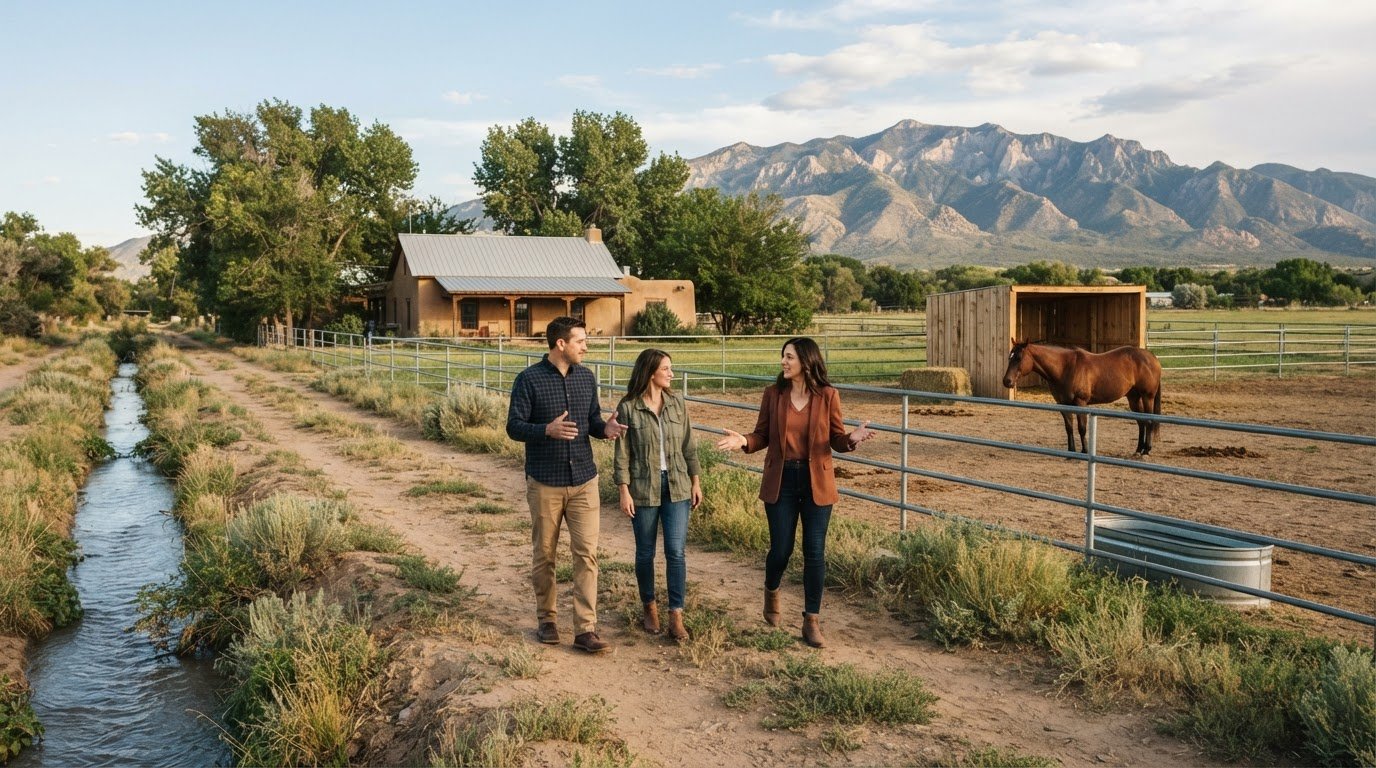
Horse Property for Sale in Corrales NM: Compare Home Prices and Acreage
Finding a horse property for sale in Corrales NM that is just minutes away from our core service areas in Albuquerque requires looking beyond the basic listing price. Zoning regulations, usable acreage, and existing equestrian facilities all dictate how well a property will suit your horses and daily routine.
It is easy to focus exclusively on open acreage or a riding arena during your search. However, online listings rarely tell the whole story, making it essential to review local zoning codes before comparing properties as potential homes for your animals.
Mountain View Realty LLC has put together this guide to help you assess Corrales zoning, compare local land and home listings, and evaluate asking prices against your space requirements. You will also learn what to look for in listing details so you can build an informed shortlist with the help of Mountain View Realty LLC and decide which properties merit a closer look.
Key Takeaways
- Assess Corrales zoning alongside acreage so you can judge whether a property aligns with your horse-keeping plans.
- Compare usable land and existing features, not just the parcel’s total acreage.
- Separate vacant-land listings from homes with horse facilities when weighing your options.
- Compare asking prices in context: a home’s size and horse-related features can shape how it fits your budget.
- Use listing details to narrow your choices, then focus on the properties that best match your space and lifestyle priorities.
Are there zoning rules for horses in Corrales?
Whether you can keep horses in Corrales depends on the zoning and land-use provisions for the specific parcel. Don’t treat “horse-friendly” wording in a listing as a zoning determination. Check whether the parcel’s designation and applicable provisions align with your intended use before weighing its equestrian features.
Start by defining what you plan to do. Keeping horses at home, adding an arena, and using land for other horse-related activities are different plans to assess against the parcel’s applicable provisions. Write down your intended uses, then compare each with the zoning designation and land-use documents for the address. This is more useful than asking only whether a property is “for horses.”
For each listing, organize the review around these points:
- Parcel identity: Match zoning information to the property’s exact address and boundaries.
- Intended use: Describe whether you plan to keep horses, add facilities, or use existing improvements.
- Applicable provisions: Read the land-use language relevant to those plans, rather than relying on marketing descriptions.
- Existing features: Record arenas, corrals, and other improvements separately from zoning information.
- Future changes: Consider whether your plans include adding or changing structures or site features.
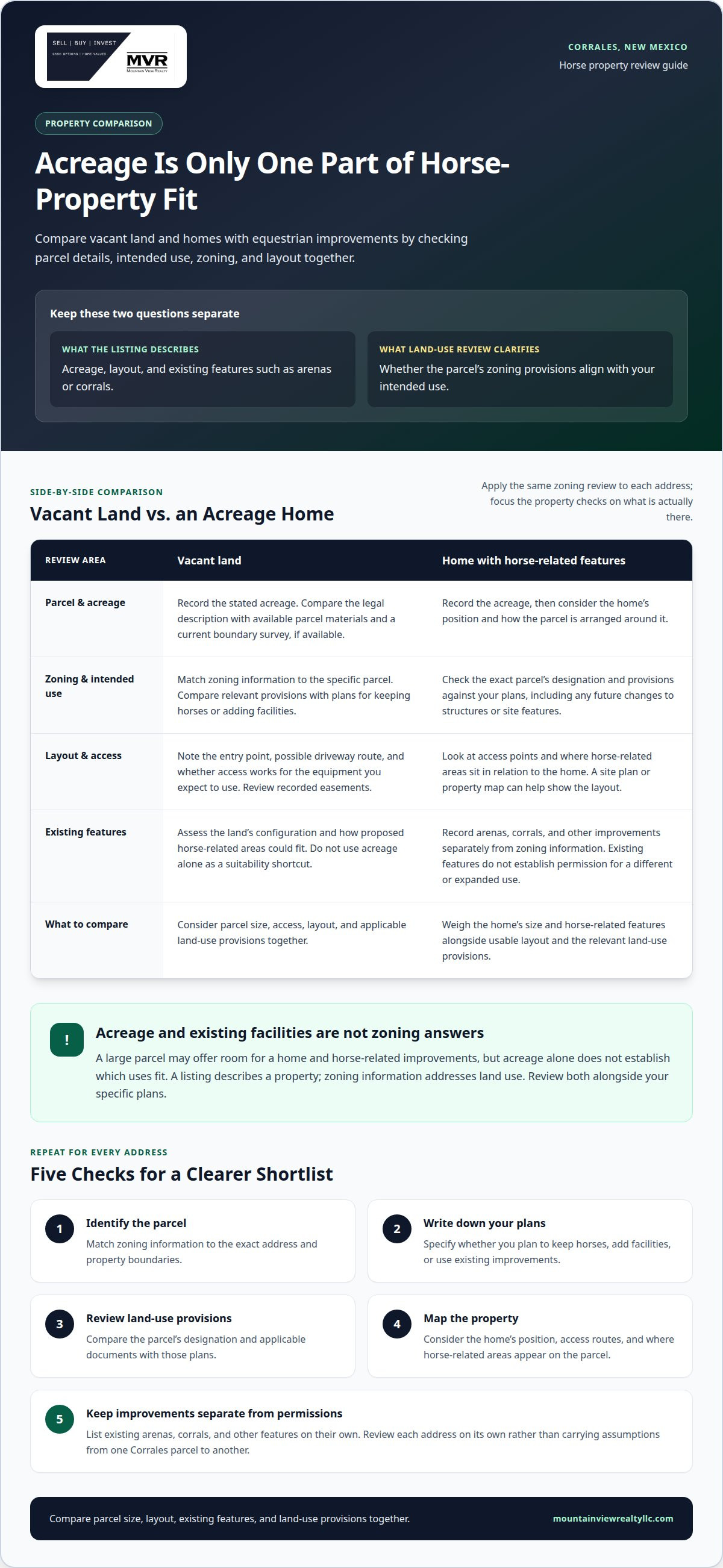
A listing describes a property; zoning information addresses land use. An existing arena or corral is useful context, but it doesn’t establish whether a different or expanded use fits the parcel’s provisions. Acreage alone can’t tell you which activities are allowed, either. Review the listing, parcel information, and your intended use together for each property.
Make a comparison sheet with one row per address and separate columns for planned activities, zoning designation, relevant provisions, and existing improvements. This makes unanswered questions visible before a property tops your shortlist and helps prevent assumptions from carrying over between Corrales parcels. Review each address on its own.
The key is to assess the specific parcel alongside your specific plans. Use the zoning designation and relevant land-use documents to guide your assessment, then compare those details with the listing description. This gives you a grounded way to judge whether an acreage home, vacant parcel, or property with equestrian improvements matches your intended use.
Acreage and zoning for horses
In Corrales, evaluate acreage and zoning together. A large parcel may offer room for a home and horse-related improvements, but acreage alone doesn’t establish which uses fit the property. Start with the parcel’s zoning designation and applicable land-use documents. Compare those details with your intended setup, such as keeping horses, adding facilities, or using existing improvements.
This provides a practical way to compare vacant land with homes that already have improvements. A listing’s acreage tells you the parcel size, not whether its layout suits your plans. Consider where a home, access routes, and horse-related areas could fit.
Use a consistent review for each Corrales address:
- Record the parcel’s stated acreage and the listing’s description of its current use.
- Find the zoning designation attached to the specific property.
- Read the applicable land-use documents for provisions relevant to your intended horse use.
- Compare those provisions with the property’s layout and existing improvements.
- Keep notes by address, so listings don’t blur together during comparisons.
Distinguish marketed features from land-use details that shape your decision. A listing may describe acreage as suitable for horses, but that doesn’t replace a review of zoning documents. Existing structures show what’s there, not every possibility for future use. Apply the same steps when comparing vacant land and acreage homes.
Think about usable layout as well as total size. Note the home’s position, access points, and where horse-related areas appear on the parcel. A site plan or property map can help you visualize those relationships. If the listing gives acreage but little layout detail, treat that figure as one comparison point, not a complete picture. For 100 Desert Luna Rd, for instance, the 3.41-acre figure gives you a parcel-size reference; zoning review and the land’s configuration add context.
Before comparing prices, write down your intended use for each property and match it against the zoning documents and listing details. Don’t use acreage as a shortcut for suitability. Consider parcel size, layout, current improvements, and applicable land-use provisions together to focus on Corrales properties whose documented characteristics align with your plans.
Corrales land for sale
Vacant land calls for a different review than a home with established horse facilities. In Corrales, start with the parcel’s legal description and a current boundary survey, if available. These records help distinguish the lot shown in marketing materials from the land conveyed in a purchase. Keep parcel documents with the listing address as you assess whether the site fits your plans.
Next, assess access. Note how a vehicle would enter, where a driveway could run, and whether the route works for the equipment you expect to use. Review recorded easements that affect access or limit how parts of the land can be used. These details can influence where a home, storage, or horse facilities could go, even before construction is considered.
Use this land-focused checklist for each Corrales parcel:
- Boundaries: Compare the legal description with available survey or parcel materials.
- Access: Identify the entry point and any recorded access easements.
- Utilities: List the services shown in property materials and the connections you would need to plan.
- Ground conditions: Note slope, low areas, vegetation, and visible drainage patterns during a site visit.
- Existing improvements: Record fences, gates, outbuildings, or other features shown or observed.
Review utilities separately. Vacant land may need service connections planned before a home or other structure can function as intended. Keep utility information distinct from the asking price and parcel description. If Corrales listing materials show a service connection, record its location and the source of that detail rather than assuming it serves the entire lot.
Site conditions also matter. Walk the property where access is available and note changes in elevation, existing vegetation, and places where water appears to collect. These observations can guide further investigation into grading, drainage, and potential improvements. A clear-looking patch in a listing photo doesn’t prove the whole site is ready for your plans.
Create a separate record for each Corrales address, noting boundary materials, access, utilities, observed ground conditions, and existing improvements. This adds practical context to the asking price and helps identify which parcel questions need attention before you decide. You’ll have a more complete comparison based on each site, not just its general description.
Home prices and property sizes
Corrales asking prices vary by home type and property features. These prices describe individual listings, not a standard price for a horse property.
For each listing with horse-related features, compare the stated acreage, bedrooms, bathrooms, and interior square footage by address. The examples include vacant land, homes with corrals, and homes with arenas, so there’s no single size profile. Keep acreage separate from indoor square footage, and use the listed bedroom and bathroom counts rather than inferring them from the home’s size.
Home prices provide context, but useful comparisons also account for property type and listed features. Consider the figures alongside each listing’s described improvements and size details. A higher asking price alone doesn’t show how well a property matches your intended use.
Create a comparison table with one row per property. Include these fields:
- Address and listing status: Keep the property identity and status together.
- Asking price: Record the current amount shown in the listing.
- Parcel acreage: Separate land area from the home’s interior size.
- Bedrooms and bathrooms: Record the stated counts for each residence.
- Horse-related features: Note the facilities or land descriptions in the listing.
To buy, first narrow your options and review each listing. Then decide how you’ll fund the purchase and prepare an offer before moving through the transaction and closing process. Costs vary with the purchase, financing, inspections, and transaction services involved. Budget for these separately from the asking price, since no single cost figure applies to every buyer or property.
Use listing status as another comparison factor. An asking price doesn’t tell you whether a home is still available, so review the status for each address before treating it as an active option. Then compare size, features, and price across properties with similar characteristics. This helps you assess Corrales homes beyond a single figure and keep your shortlist aligned with your space needs and horse-related priorities.
Horse-property listings in Corrales
Horse-related listings in Corrales highlight different features. One may describe an arena, another corrals, while vacant land may emphasize acreage. For a horse property for sale in Corrales NM, compare each listing’s specific details with your priorities rather than assuming every property supports the same use. Identify essential features first, then note what each address actually describes.
This gives you a specific listing update to track, but it doesn’t establish the property’s suitability for horses. Keep price changes separate from details such as acreage, arena space, and corrals. That makes the listing easier to compare with other Corrales options.
Build a comparison sheet for each address, keeping listing descriptions separate from your own observations. Record details such as:
- Horse-related features: Note whether the listing describes an arena, corrals, or horse-friendly land.
- Property type: Distinguish vacant land from an existing residence.
- Size details: Track stated acreage and home square footage in separate fields.
- Price updates: Record the asking price and any dated reduction, as shown for 23 Sagebrush Cir.
- Personal priorities: Mark which listed features matter most for your plans.
This method keeps one appealing feature from overshadowing the rest. A horse property for sale in Corrales NM may suit a buyer seeking an arena, while another buyer may value corrals or vacant land. Use the listing description to sort options, then consider how each property’s features fit your needs. Don’t treat one improvement as a substitute for reviewing the full listing.
Keep each update connected to its address. Similarly, an arena-focused home and vacant land are different purchase options. Your comparison becomes more useful when it accounts for those differences before you weigh asking prices.
Before narrowing your shortlist, rank essential features separately from preferences. Compare that list with each address’s description and update history. If an arena is essential, prioritize listings that explicitly describe one. If land matters more, focus on parcel details. This address-by-address approach helps you identify which Corrales listings deserve a closer look.
Mountain View Realty: CashOffer+
Mountain View Realty LLC offers CashOffer+ to homeowners considering a sale as they plan their next move. If you own a property and are weighing how to sell before pursuing a Corrales horse property, you can consider this off-market cash offer alongside a traditional listing. The right approach depends on your priorities, property, and preferred transaction structure.
Other selling options include Home Trade-In, Renovate & Sell, and Short Sale. Each suits a different selling situation, so consider what matters most before choosing a direction. If you’re deciding whether to prepare your current home for sale or explore another route, a conversation can help clarify your options.
Contact Mountain View Realty LLC to discuss your selling plans and next steps.
Make Your Next Move With a Clear Plan
Before pursuing a property, write down the features you consider essential and the trade-offs you can accept. This short list can keep your decisions focused as listings appear or your priorities change. Separate needs related to your horses from preferences about the home, then consider how each property meets both.
Finding a horse property for sale in Corrales NM is also an opportunity to plan your move from your current home. Think through timing, how you’ll sell, and how much flexibility you want during the transition. A clear plan makes it easier to discuss your options and choose a path that fits your circumstances.
You can take the next step at your own pace. A conversation can help you consider how your sale fits into your broader property search.
With a thoughtful plan, you can move forward with greater clarity and confidence.
Frequently Asked Questions
What Qualifies as a Horse Property in Corrales?
A Corrales property may be marketed for horses because it has acreage, corrals, an arena, or a horse-friendly description. Those features don’t establish that every intended use is allowed. A home with corrals, for example, differs from vacant land described as horse-friendly. Compare the listing’s stated features with the parcel’s layout and zoning information. A useful shortlist distinguishes existing facilities from features you would need to plan for.
What should I check besides the house when buying a horse property?
Look beyond the residence to the parcel layout, access, fencing, drainage, water arrangements, and any horse facilities. Compare the listing description with maps and property documents for the specific address. A 2,000-square-foot home, for example, says nothing by itself about usable land or facility placement. Keep separate notes for house condition and horse-related considerations. This makes it easier to compare properties in Corrales with options around Albuquerque.
Which properties have irrigated pasture, water rights, wells, or ditch access?
A horse-friendly label or acreage figure doesn’t establish irrigated pasture, water rights, a well, or ditch access. Treat each as a separate property feature and look for relevant listing details and property records. The Corrales examples discussed include land and horse-related improvements, but those descriptions alone don’t establish these water features. For each address, record the water source and any documented access or rights separately from acreage and facilities.
What are Corrales zoning and livestock rules for keeping horses on residential property?
Corrales zoning and land-use provisions are parcel-specific, so don’t assume a residential address allows every horse-related use. Start with the parcel’s zoning designation and review relevant land-use documents for your intended use. Then compare those provisions with the property’s layout and improvements. Corrals in a listing describe an existing feature, but don’t, on their own, explain the rules that apply to the parcel.
What should buyers check about water access, fencing, drainage, and equestrian facilities before buying?
Assess each feature at the property. Identify the described water source, walk the fence lines, and note where surface water collects after rainfall. For an arena or corral, consider its location relative to access routes, the home, and the rest of the parcel. Record any gaps between your intended use and the existing setup. A written checklist for each address helps keep your observations distinct as you compare Corrales properties.
What are the steps and costs to buy a horse property in Corrales, NM?
Define your intended horse use, review the parcel’s zoning and applicable land-use provisions, then compare acreage, layout, existing facilities, boundaries, access, utilities, and site conditions.
How many acres, bedrooms, and bathrooms does each available horse property have?
The horse-friendly parcel at 53 Archibeque Ln is one acre, and the parcel at 100 Desert Luna Rd is 3.41 acres.

Article by
Robb Krautbauer
Robb Krautbauer is the Owner and Qualifying Broker of Mountain View Realty, serving Albuquerque, Rio Rancho, Santa Fe, and surrounding New Mexico communities. With more than a decade of real estate experience, Robb specializes in luxury homes, strategic home marketing, and helping homeowners navigate important life transitions with confidence.
Known for combining luxury-level marketing, AI-powered technology, and innovative selling strategies, Robb helps clients maximize their home's value while creating a smooth, personalized selling experience. Whether assisting luxury homeowners, retirees, families downsizing, or real estate investors, his focus is always on delivering expert guidance, honest advice, and exceptional results.
When he's not helping clients achieve their real estate goals, Robb enjoys studying market trends, emerging technology, and investment strategies that keep Mountain View Realty at the forefront of the industry.
Disclaimer
**Disclaimer:** The information provided in this article is for general educational purposes only and should not be considered legal, tax, financial, or professional advice. Real estate laws, market conditions, and regulations change over time and may vary based on your individual circumstances. Before making any real estate decision, consult with qualified legal, tax, or financial professionals. If you have questions about buying or selling real estate in New Mexico, contact Mountain View Realty for guidance specific to your situation. © 2026 Mountain View Realty. All rights reserved. The content on this website may not be reproduced without written permission.


