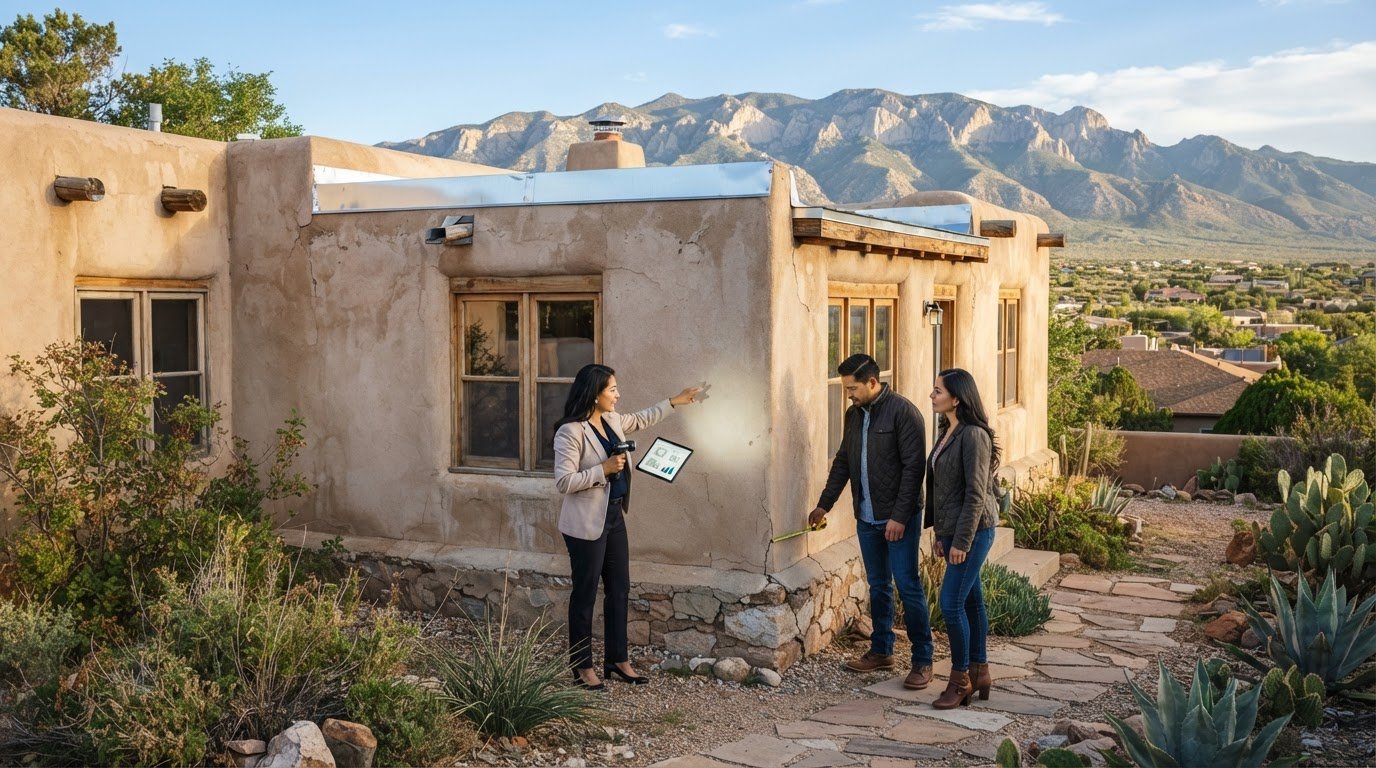
How to Buy a HUD Home in New Mexico and Assess Repair Risks
A HUD home purchase starts with a listing on HUD Home Store and an offer submitted through HUD’s online system with a real estate agent registered with HUD. If you’re learning how to buy a HUD home in New Mexico, know that these homes are sold as-is, so assessing repair needs is part of the decision. After an offer is accepted, closing typically takes 30-45 days.
It’s easy to assume every foreclosed home follows the same process, but learning how to buy a HUD home in New Mexico means understanding HUD’s listing and bidding steps. The property’s condition can also affect your budget and plans, so review the details before committing.
This guide explains what a foreclosed home is and how HUD sales differ from traditional foreclosures. You’ll learn where to find New Mexico listings, how to assess an as-is property, and what to expect from an accepted offer through closing, including key steps and timing.
Key Takeaways
- Understand how HUD-owned homes differ from other foreclosures, including how the offer process works.
- Find New Mexico listings through HUD Home Store and plan to work with a HUD-registered real estate agent.
- Assess the home’s condition carefully: HUD properties are sold as-is, so repair needs can affect your budget and decision.
- See whether the Good Neighbor Next Door program may fit your occupation and plans to live in the home.
- Prepare for the steps between an accepted offer and closing, including earnest money, inspections, and financing.
What HUD homes are and how they differ from traditional foreclosures
HUD homes are properties the U.S. Department of Housing and Urban Development sells after foreclosure on a Federal Housing Administration-insured mortgage. HUD sells both single-family and multifamily properties. Traditional foreclosures may instead be sold by a lender or at auction, under terms set by the seller.
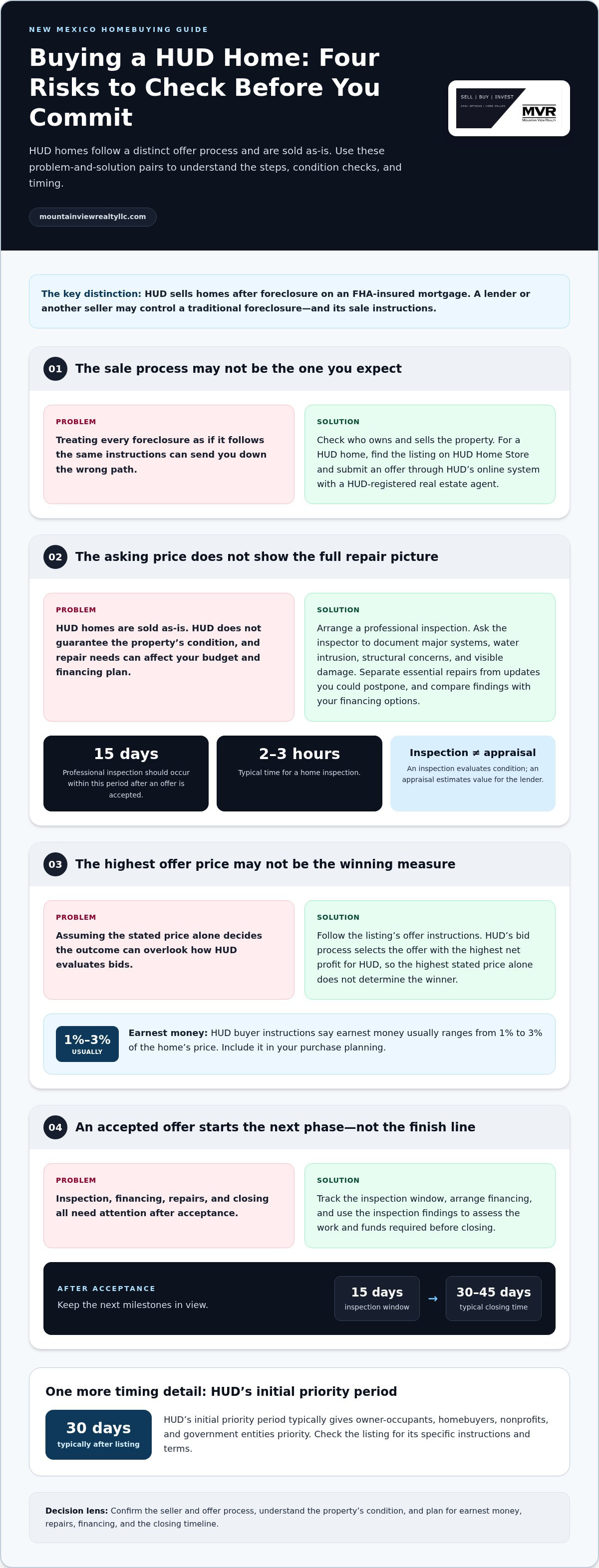
HUD’s buyer instructions call for offers through its online system with a HUD-registered real estate agent. Earnest money usually ranges from 1% to 3% of the home’s price.
- Identify who owns and sells the property. A HUD home is acquired through an FHA foreclosure and sold by HUD. With a traditional foreclosure, a lender or another seller may control the sale. That distinction matters: a HUD offer follows HUD’s bid process, while a lender-owned or auction property follows its own sale instructions. Check the listing’s seller and terms before deciding how to proceed.
- Search the appropriate listings. Use HUD Home Store to look for HUD-owned homes in New Mexico. Other federal agencies also sell properties, but their listings aren’t automatically HUD homes. For a traditional foreclosure, identify whether the home is offered by a lender or through an auction. Keeping these categories separate helps you follow the correct purchase process and avoid relying on instructions for a different type of sale.
- Arrange a tour, inspection, and appraisal. Follow the property listing’s access instructions to arrange a tour. HUD homes are sold as-is, so inspect the home rather than relying only on photographs or a brief visit. HUD’s purchase guidance states that buyers are responsible for arranging inspections and financing repairs. A professional inspection should occur within 15 days after an offer is accepted; a typical home inspection takes 2-3 hours. An appraisal estimates value for the lender, while an inspection evaluates condition. Use both to assess the property and your offer.
- Prepare and submit your offer. Work with a HUD-registered agent to submit an offer through HUD’s online system. HUD’s initial priority period typically lasts 30 days after listing and gives owner-occupants, homebuyers, nonprofits, and government entities priority. HUD’s bid process selects the offer with the highest net profit for HUD, so the highest stated price alone doesn’t determine the winner. Include earnest money in your purchase planning and follow the listing’s specific offer instructions.
As-is property inspections and repair risks
HUD sells these homes as-is, so don’t treat the asking price as your full budget until you’ve assessed the condition and likely repairs. A careful inspection can help identify visible wear and issues that may affect safety, use, or financing.
-
Assess Property Condition and Repair Risks
Arrange a professional inspection after your offer is accepted. HUD’s sale terms make the buyer responsible for assessing the property, and HUD does not guarantee its condition. Ask the inspector to document major systems, signs of water intrusion, structural concerns, and visible damage. Use the report to distinguish urgent repairs from maintenance or improvements. A tour can help you observe the home, but it cannot replace a professional assessment.
-
Plan a Repair Budget
Build your repair plan around documented findings, not a broad estimate for New Mexico homes. Costs depend on the work, materials, labor, and property condition. Separate essential repairs from updates you could postpone, then compare the expected total with your available funds. A home needing system work as well as cosmetic updates calls for a different budget than one needing only minor finish work. Set aside a reserve for unexpected repairs, and don’t assume the listing price includes them.
- Compare the property’s condition with your mortgage options before committing. FHA loans commonly reference a 3.5% minimum down payment, while VA loans may require zero down. The loan and property must meet applicable requirements, so review inspection findings alongside your financing plan. A home needing substantial work may affect your available loan choices and funds for repairs.
- For a HUD multifamily property, organize inspection findings by unit and shared area. Record issues in individual living spaces separately from concerns involving common areas or building systems. This helps show whether repairs are isolated or could affect the property more broadly. Compare the findings with your intended use and financing plan. Whether you’re considering a single-family home or a multifamily property, base your decision on its condition and the work you’re prepared to manage.
If repair needs affect plans for your current home, explore New Mexico home-sale options as part of your transition.
Good Neighbor Next Door eligibility and discount
Check whether your occupation and intended use meet the criteria for HUD’s Good Neighbor Next Door program. Eligible buyers may receive a substantial discount, but the property must meet the program’s location and listing requirements.
- Confirm your occupation qualifies. The program is for eligible U.S. law enforcement officers, K-12 teachers, firefighters, and emergency medical technicians. A qualifying job alone isn’t enough: the property must also be a HUD home in a designated revitalization area. Review the listing and program requirements together before deciding whether to pursue a home. This helps you focus on properties that match both your role and housing plans.
- Look for qualifying listings. Search HUD home listings for properties identified as part of Good Neighbor Next Door. The discount doesn’t apply to every HUD home, and location matters. Compare eligible listings by neighborhood, condition, and intended use. If a home needs repairs, consider whether the work fits your plans to live there as your primary residence.
- Understand the discount before making an offer. Eligible participants may pay 50% off the list price of a qualifying HUD home in a designated revitalization area. This is a discount from the listed price, not a general reduction on all government-owned homes. Review the specific property’s listing and calculate your budget from its price, repair needs, and financing costs. Don’t assume another federal agency’s property qualifies under this HUD program.
- Plan to occupy the home as your primary residence. Good Neighbor Next Door participants must commit to living in the property for at least 36 months. Treat that commitment as a central part of your decision, not a detail to address after choosing a home. Consider how the location fits your work, household needs, and expected plans during that period. An investment property or second home does not match the stated primary-residence requirement.
- Account for the 36-month structure. The discount is tied to the required period of primary-residence occupancy. That time period connects the price benefit with the required period of primary-residence occupancy. Before pursuing a listing, weigh the discount against the home’s condition, location, and your ability to live there for the full commitment. A strong financial opportunity still needs to suit your day-to-day housing needs.
- Compare the program with your other options. HUD has different programs and buyer categories, so identify which one fits your circumstances. The Good Neighbor Next Door discount depends on eligible occupations, designated areas, and use as a primary residence. If you don’t meet those criteria, you can still consider other HUD listings under their applicable purchase process. Focus on homes whose terms fit your eligibility and plans.
How Can I Find Listings of HUD Homes for Sale?
Start with HUD Home Store, where you can search for HUD-owned homes in New Mexico. A HUD-registered agent can help you review listings and prepare an offer.
-
Find a HUD-Experienced Agent
Choose an agent familiar with HUD homes and New Mexico foreclosure purchases. Ask how they guide buyers through listing terms, property access, and bid preparation. HUD transactions use a specific online offer process, rather than ordinary negotiations with a private seller. Share your preferred locations, financing plans, and intended use so your agent can focus the search on relevant properties.
-
Locate a HUD-Registered Agent
Confirm that your real estate agent is registered with HUD before pursuing a HUD property. Buyers must use a HUD-registered agent to purchase these homes. Registration and experience with HUD transactions are separate considerations, so look for both. Your agent can help interpret listing instructions, prepare the required offer details, and submit a bid through HUD’s system. This support can make the purchase steps easier to manage.
- Search HUD Home Store for New Mexico properties. Filter listings by location to explore homes in Albuquerque, Rio Rancho, Santa Fe, Corrales, or other New Mexico communities. Review each listing’s status, property details, and sale instructions before arranging a tour. Keep a comparison record of the address, property type, condition, and relevant bid information. If you’re researching how to buy a HUD home in New Mexico, this organized approach helps you compare options without confusing HUD homes with other foreclosures.
HUD properties are one type of foreclosure listing. Lenders and other sellers may list foreclosed homes through separate listing or auction processes. Identify the seller and follow that property’s instructions. HUD’s registered-agent requirement applies to HUD purchases, while other foreclosure sales may follow different procedures. Keep those listings separate in your notes so you don’t use HUD’s bid process for a home sold by someone else.
- Prepare your financing and offer details. Discuss mortgage options with your lender, then share your plan with your agent. The property’s condition, your financing, and the listing terms all factor into your bid. Your agent can submit the offer through HUD’s online system and help track its status. HUD’s computer selects the winning offer based on the highest net profit for HUD, so the offer amount alone doesn’t determine the outcome.
Before submitting, compare the address, offer amount, financing details, and required documents with the listing instructions. If you’re learning how to buy a HUD home in New Mexico, this final review can catch missing details before you submit the bid. Keep a copy of the listing and offer together so you can refer to the same terms as the sale progresses.
HUD home closing timelines
After HUD accepts an offer, act promptly on earnest money, financing, and closing documents. The timeline depends on meeting the deadlines in the property’s sale instructions.
HUD home buyers typically have 48 hours to submit earnest money after an offer is accepted. HUD home closings typically take place within 30-45 days after offer acceptance; a winning bid’s closing period is typically 30 to 60 days after acceptance.
HUD doesn’t set one closing-cost total for every New Mexico purchase. Charges depend on your loan, the property, and the transaction, so review the itemized closing statement and budget for the amounts it lists.
- Track the bid deadline and listing terms. Submit your offer through HUD’s online system with your HUD-registered agent. The listing’s instructions set the deadline and required submission details. During the initial priority period, eligible owner-occupants, homebuyers, nonprofits, and government entities have priority for the first 30 days after listing. A computer selects the winning offer based on HUD’s highest net profit, so acceptance depends on more than the headline bid.
- Prepare earnest money before acceptance. Arrange access to the funds so you can meet HUD’s 48-hour submission window after acceptance. Keep the amount and payment instructions tied to the sale documents, rather than relying on an estimate from another foreclosure purchase. This short deadline falls before the longer closing period. Planning ahead helps you avoid a preventable delay as you move from accepted bid toward becoming a homeowner.
- Coordinate financing and property review. Contact your lender promptly after acceptance and provide the property and offer details needed for the mortgage process. Keep inspection findings and repair plans in view, since an as-is home may need work that affects your available funds. A HUD purchase can involve both property preparation and loan steps. Put requests, documents, and deadlines on one timeline so everyone can stay organized.
- Use the closing range to organize the final steps. HUD closings typically take place within 30-45 days after offer acceptance. Another stated estimate places closing 30 to 60 days after a winning bid is accepted. These ranges describe the process from different points: one begins at offer acceptance, the other at accepted bid. Keep the date in your HUD sale documents as the working target, and coordinate lender requirements, title work, and signing around it.
- Review every closing charge before signing. Compare the itemized statement with your purchase terms and financing documents. Note which charges relate to the loan, title and transfer work, property expenses, or prepaid amounts. Ask your lender or closing agent to explain any line you don’t understand. Reviewing the statement carefully helps clarify the funds due at closing and whether the total fits your budget.
Mountain View Realty: CashOffer+
Mountain View Realty LLC offers CashOffer+ to homeowners considering a cash sale as part of a move. If buying a HUD home means selling your current property, compare this option with your plans, timing, and home condition. The right approach depends on what matters most in your transition.
Other options include Home Trade-In, Renovate & Sell, and Sell & Stay. These offer different approaches for homeowners planning a move, considering repairs before selling, or hoping to remain in their home after a sale. They relate to your current property, not HUD’s home-buying process.
If you’re weighing a home sale as part of your next move, contact Mountain View Realty LLC to discuss your options.
Choose the next step that fits your plans
Buying a HUD property is one part of a larger housing decision. Before proceeding, consider how the home’s condition, financing, and intended use fit your priorities. A clear plan can help you decide whether to pursue a particular property, keep looking, or adjust your approach.
If you’re considering how to buy a HUD home in New Mexico while planning a move from your current home, weigh both decisions together. Think about what needs to happen first, which choices can stay flexible, and what would make you comfortable moving forward. Not every listing is the right opportunity. A considered decision is more useful than a rushed one.
Mountain View Realty LLC can help you think through home-sale options alongside your next move. Reach out to discuss the approach that best fits your plans.
A thoughtful plan can help you move forward with greater clarity and confidence.
Frequently Asked Questions
What is a foreclosed home?
A foreclosed home is a property sold after the borrower defaults on a mortgage and foreclosure proceedings follow. A lender, auction seller, or government agency may handle the sale. A HUD home is a specific type of government-owned property acquired through an FHA foreclosure. Identify who owns and sells the home, then review its sale terms, since these details determine how to make an offer.
Are HUD Homes Always Cheaper?
No. A HUD home’s price alone doesn’t show whether it’s a better value. Compare its condition, location, financing needs, and likely repair work with other homes you’re considering. A lower asking price, for example, may not fit your budget if repairs are needed before move-in. In Albuquerque, compare similar homes in the same area rather than relying on the HUD label.
How Does a Home Become a HUD Home?
A home becomes HUD-owned when foreclosure on an FHA-insured mortgage results in the Federal Housing Administration acquiring the property. HUD then lists it for sale. This differs from a foreclosure in which a private lender sells the home. Knowing who owns and sells a property helps you understand which listing instructions and offer process apply.
I am interested in buying a HUD home, where can I find information about HUD homes?
Start with HUD Home Store to view property listings and sale information. HUD also provides homebuying information, and the Consumer Financial Protection Bureau offers buyer resources. For a specific home, review its description, sale terms, and status together. This gives you a clearer basis for deciding whether to pursue it and preparing for the purchase process.
Who Is Eligible to Buy HUD Homes?
HUD homes may be available to different types of buyers, depending on the listing terms and applicable sale period. Owner-occupants, homebuyers, nonprofits, and government entities receive priority during the initial period. Nonprofits seeking FHA discounts must obtain FHA approval. Check the buyer categories shown for the property before preparing an offer, particularly if you’re buying as an investor or through an organization.
Where can I find HUD homes for sale in New Mexico?
Search HUD Home Store and set the location to New Mexico. Narrow results by city or area, then review each listing’s status and instructions. For an Albuquerque search, compare homes by location, type, and condition. A HUD-registered agent can help interpret the listing and guide you through submitting an offer.
Who is eligible to buy a HUD home during the owner-occupant priority period?
During the initial priority period, owner-occupants, homebuyers, nonprofits, and government entities may purchase HUD homes. The period typically lasts 30 days from listing. Check the specific listing’s buyer-category instructions before submitting an offer, since those terms govern the sale. Nonprofits seeking FHA discounts also need FHA approval.
Can I use FHA, VA, USDA, or conventional financing to buy a HUD home?
FHA and VA financing may be options for a HUD-home purchase. FHA loans commonly reference a 3.5% minimum down payment, while VA loans may require zero down. USDA and conventional financing depend on the loan and property criteria involved. Before making an offer, discuss the home’s condition and your financing plan with your lender so you understand how the loan requirements apply.

Article by
Robb Krautbauer
Robb Krautbauer is the Owner and Qualifying Broker of Mountain View Realty, serving Albuquerque, Rio Rancho, Santa Fe, and surrounding New Mexico communities. With more than a decade of real estate experience, Robb specializes in luxury homes, strategic home marketing, and helping homeowners navigate important life transitions with confidence.
Known for combining luxury-level marketing, AI-powered technology, and innovative selling strategies, Robb helps clients maximize their home's value while creating a smooth, personalized selling experience. Whether assisting luxury homeowners, retirees, families downsizing, or real estate investors, his focus is always on delivering expert guidance, honest advice, and exceptional results.
When he's not helping clients achieve their real estate goals, Robb enjoys studying market trends, emerging technology, and investment strategies that keep Mountain View Realty at the forefront of the industry.
Disclaimer
**Disclaimer:** The information provided in this article is for general educational purposes only and should not be considered legal, tax, financial, or professional advice. Real estate laws, market conditions, and regulations change over time and may vary based on your individual circumstances. Before making any real estate decision, consult with qualified legal, tax, or financial professionals. If you have questions about buying or selling real estate in New Mexico, contact Mountain View Realty for guidance specific to your situation. © 2026 Mountain View Realty. All rights reserved. The content on this website may not be reproduced without written permission.


