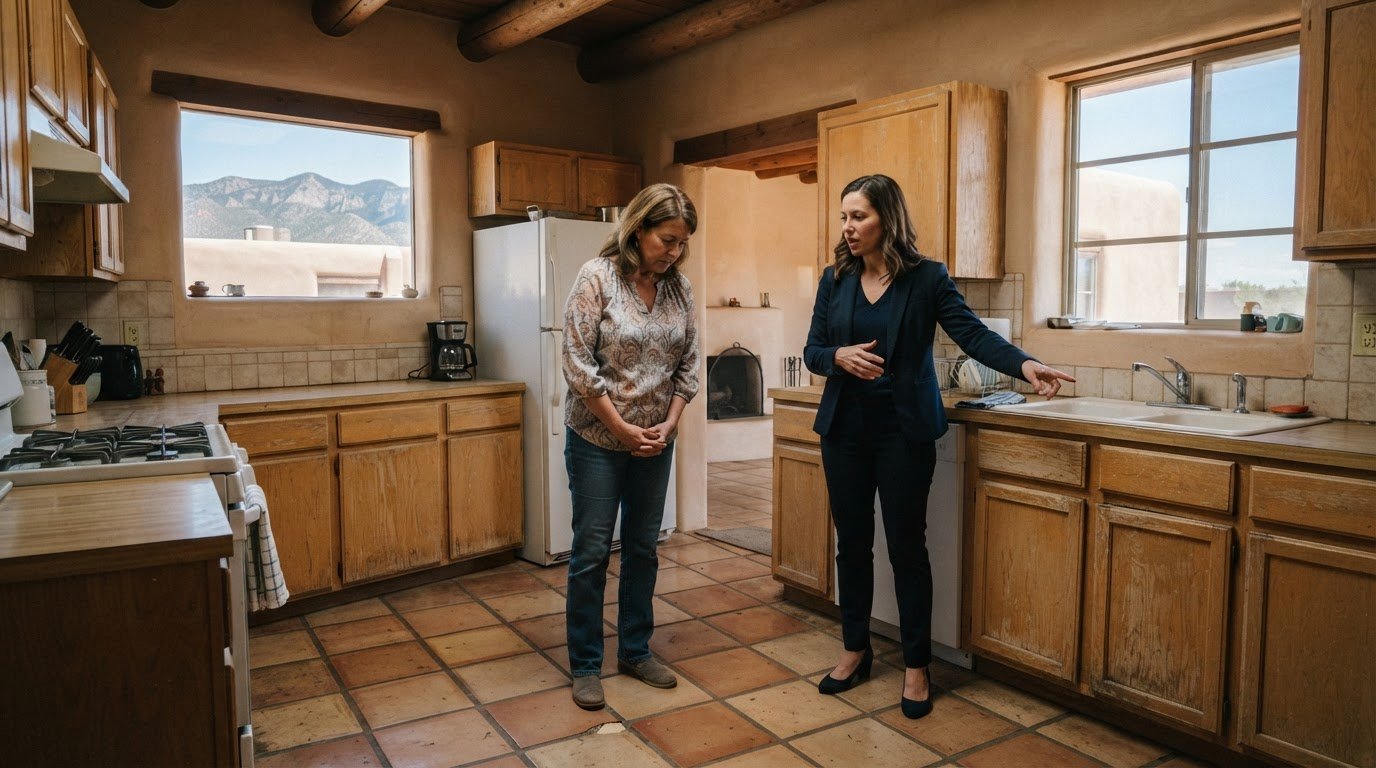
How to Compare Options for Selling Your House in Albuquerque
In Albuquerque, buyer activity and sale speed typically peak from March through June. The options for selling your house in Albuquerque include a traditional listing, a cash offer, or an as-is sale. The right fit depends on your timeline, the home’s condition, and how much you want to keep from the sale.
It’s natural to focus on the offer price, but that number alone doesn’t show your likely proceeds or how long the sale may take. A traditional listing may suit sellers who can prepare the property and wait for a buyer. A cash offer or as-is sale may better fit a need for a simpler process or fewer repairs.
This guide explains how to compare those routes, weigh timing against your plans, and estimate net proceeds after likely sale costs. You’ll also learn which expenses and trade-offs to consider, so you can choose based on your priorities rather than the calendar or headline offer alone.
Key Takeaways
- Compare a cash offer with a traditional listing by weighing timing, preparation, and estimated take-home proceeds, not just the offer price.
- Spring and early summer, from March through June, typically bring the highest buyer activity in Albuquerque, but your plans and property condition also matter.
- An as-is sale may be worth considering when repairs, an inherited property, or a needed relocation make preparing the home difficult.
- Estimate your net proceeds by accounting for sale costs, potential repairs, and the expenses of holding the home while it’s on the market.
- Explore different sale approaches, including CashOffer+, Home Trade-In, Renovate & Sell, and Sell & Stay, to find a path that fits your priorities.
Comparing a cash offer with a traditional listing
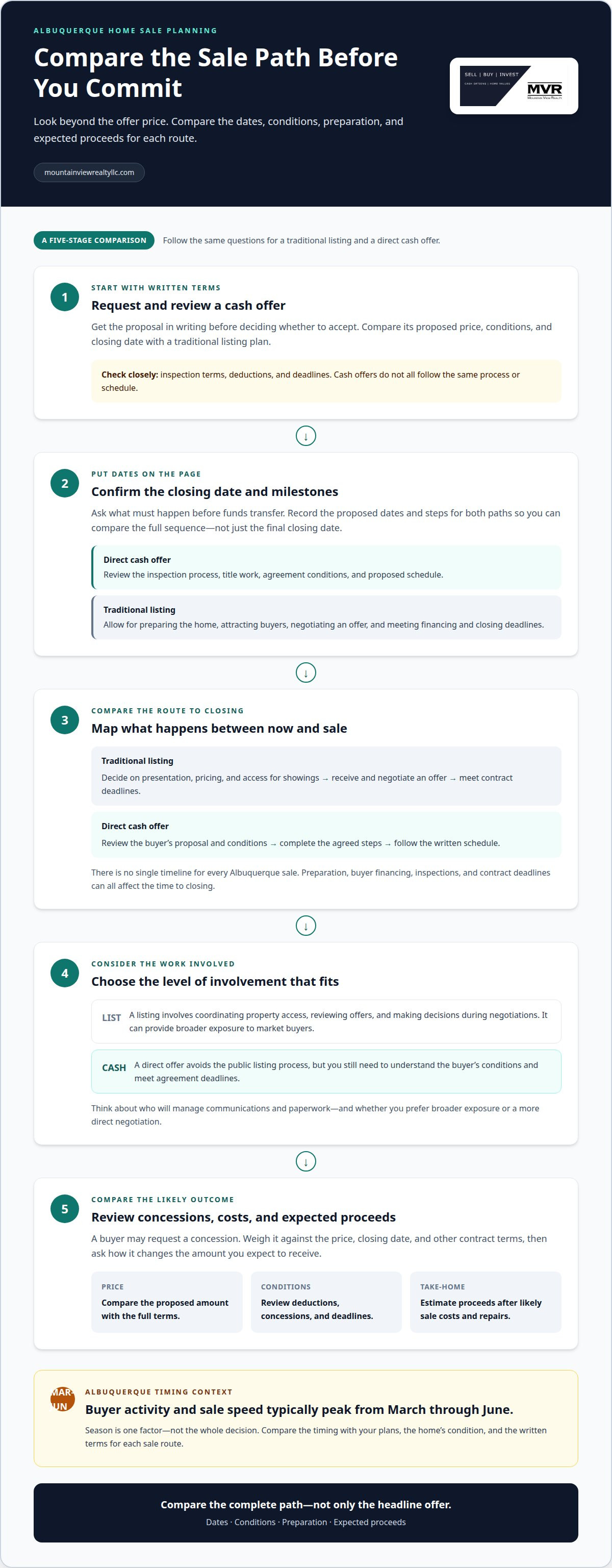
Compare the sale methods by their milestones, terms, and demands on your time. A traditional sale moves through preparation, listing, buyer negotiations, and closing. A cash sale follows the written offer conditions and agreed schedule.
There is no single timeline for every Albuquerque home sale. The method, property preparation, buyer financing, inspections, and contract deadlines all affect the time from decision to closing.
-
Request a Cash Offer
Request a written cash offer before deciding whether to accept it. Compare its proposed price, conditions, and closing date with a traditional listing plan. Review inspection terms, deductions, and deadlines before signing. Base your comparison on the written terms instead of assuming every cash offer has the same process or schedule.
-
Confirm Closing Dates and Timeline
Ask for the proposed closing date and the steps required before funds transfer. For a cash offer, review the inspection process, title work, and any agreement conditions. For a traditional sale, account for preparing the home, attracting buyers, negotiating an offer, and meeting financing and closing deadlines. Record each milestone to compare the full sequence.
- Compare each path to closing. A traditional listing starts with decisions about presentation, pricing, and access for showings. Once a buyer makes an offer, negotiations and contract deadlines shape the next steps. A direct cash offer starts with the buyer’s proposal and its conditions. If you need to coordinate a move with a job start, compare the written dates for each method with that commitment.
- Consider how much involvement each method requires. With a listing, expect to coordinate property access, review offers, and make decisions during negotiations. A direct offer avoids the public listing process, but you still need to understand the buyer’s conditions and meet the agreement’s deadlines. Consider who will manage communications and paperwork, and whether you prefer broader exposure or a more direct negotiation.
- Review concessions and negotiated terms before accepting an offer. A buyer may request a concession, which you can weigh against the price, closing date, and other contract conditions. Ask how it changes the amount you expect to receive. Also confirm when the sale becomes pending and which deadlines apply, so you understand what each party must complete before closing.
When is the best time to sell a house in Albuquerque?
The best time to sell depends on your plans, the home’s readiness, and conditions among comparable Albuquerque listings. Use these steps to decide whether to list now or prepare for a later window.
- Start with your move date and work backward. Allow time to prepare the home, choose a pricing approach, and arrange buyer access. If a job change, purchase, or family transition sets your schedule, decide which dates are flexible before choosing a listing launch. A preferred season matters less if it conflicts with a firm move date or forces rushed preparation.
- Assess whether the home is ready to compete with similar listings. Compare its condition, presentation, and features with nearby Albuquerque properties likely to attract the same buyers. If repairs or staging could improve how it shows, include those tasks in your timeline. A listing launch works best when photos, property details, and showing plans are ready together.
- Consider the benefits and obligations of a traditional agent listing. An agent can help shape pricing, prepare marketing, coordinate buyer communications, and manage offer discussions. The listing agreement defines the services and terms of that relationship. Review its duration, responsibilities, and cancellation provisions before signing, then decide whether the support fits the time and involvement you want to provide.
- Decide how much control you want over the sale. Sellers review offers and choose whether to accept or negotiate, subject to the contract. They also make decisions about pricing, access, and preparation. If you plan to manage the process directly, decide who will handle advertising, buyer inquiries, showings, and paperwork. This clarifies the workload before choosing between an agent listing and selling by owner.
- Compare a cash sale with listing through an agent. A direct offer may suit a seller who values a simpler process, while a listing gives the home exposure to market buyers. Consider the property’s condition, your desired closing date, preparation needs, and estimated proceeds. For a timing discussion grounded in your priorities, review Albuquerque sale timing guidance as part of your planning.
Reasons homeowners consider an as-is sale
An as-is sale may make sense when repairs, vacancy, or a move make preparing the home difficult. Weigh the property’s condition, required paperwork, and available sale paths before deciding.
- List the practical reasons you may prefer an as-is sale. An inherited Albuquerque home may need updates before listing, while a vacant property can require ongoing care. Difficult tenants, foreclosure concerns, relocation, limited repair funds, or unwanted belongings may also make a less preparation-heavy route appealing. Identify your main pressure first. This clarifies whether your priority is reducing work, choosing a closing date, or avoiding contractor coordination.
Separate urgent needs from optional repairs. A roof issue, dated kitchen, or cluttered room can affect buyer interest, but the impact depends on the home and its neighborhood. Major renovations may not return their full cost, so compare the project’s cost and time with selling in the home’s current condition. An appraisal can inform value, but it doesn’t determine the best sale method by itself.
- Organize the property’s records and disclosures before accepting an offer. Federal law requires sellers to disclose lead-based paint information for homes built before 1978, according to the U.S. Environmental Protection Agency. That requirement matters even when the sale is as-is. Gather available records about known repairs, property condition, and ownership so the transaction paperwork can reflect what you know.
In Albuquerque, FSBO sellers are responsible for required federal, state, and local disclosures. An as-is agreement does not remove the need to handle applicable paperwork. Keep documents together, including mortgage information and records relevant to the home. Clear paperwork helps buyers understand the property and assess any contingencies in an offer.
- Match your sale timeline to your reason for selling. A homeowner relocating for work may value a predictable closing date; someone handling an inherited house may want to avoid managing repairs from a distance. A cash offer can reduce the need to prepare for a broad market listing, while a traditional sale may expose the property to more buyers. Compare timing with the home’s condition and your preferred level of involvement.
For a house with visible repair needs, describe its condition clearly and consider how buyers may respond. A buyer using financing may include appraisal or inspection steps in the contract, which can affect negotiations and timing. Decide which terms matter most before reviewing offers, such as the closing date, repair requests, or certainty about the property’s current condition.
- Consider whether a renovation-backed sale suits a home with marketable potential. Renovate & Sell may fit if improvements could help position the property for sale and you don’t want to coordinate the renovation alone. Compare the proposed work with the home’s condition, likely buyer appeal, and your available time. A full remodel may not be necessary; targeted updates can address the issues buyers notice most.
A home needing fresh paint and basic cleanup presents a different decision from one with major deferred maintenance. Review the expected work before choosing between selling as-is and improving the home. Focus on repairs that may change buyer perception, rather than renovating every room. This keeps the decision tied to the property and your goals.
- Choose the route that addresses your main constraint. If time, access, or repair capacity is the concern, an as-is approach may reduce preparation demands. If the home’s condition and neighborhood support broader marketing, compare that route with a renovation-backed sale. Write down your priorities, then compare offers by terms, contingencies, closing date, and expected net proceeds.
Before signing, read the sale contract and confirm which belongings, fixtures, or repairs are included. A clear agreement helps prevent confusion about the property’s condition and what transfers at closing. Keep mortgage payoff details and disclosure records accessible to help paperwork move forward without avoidable delays.
Costs to include when estimating net proceeds
Estimate net proceeds by subtracting selling expenses, mortgage payoff, liens, and property taxes from the expected sale price. Include taxes, liens, and payoff amounts, since they reduce the funds remaining after closing.
-
List Agent Commissions and Selling Costs
Start with agent commissions, closing costs, repairs, and any buyer concessions included in the offer. Listing an Albuquerque home with an agent typically costs 5 to 6 percent in commissions, and sellers typically pay total closing costs of 6-7% of the sale price. These estimates describe different cost categories, so avoid adding them together without checking what each includes.
List transaction expenses tied to your home. Cleaning, debris removal, landscaping, inspection credits, and renovations can affect your final proceeds. Also include mortgage payments, insurance, utilities, property taxes, and maintenance while the home remains unsold.
-
Account for Taxes, Liens, and Mortgage Payoff
Gather the current mortgage payoff amount, known liens, and property tax information before estimating your proceeds. The mortgage payoff reduces the sale funds available to you, while liens and unpaid property taxes can also create amounts to address at closing. Use the current payoff figure rather than the original loan amount, since payments have changed the balance.
For a practical estimate, subtract those obligations after accounting for expected selling costs. Review the closing statement to see how taxes, liens, and lender payoff affect the final distribution. Don’t count the full sale price as available cash. The useful figure is what remains after deductions.
- Build an estimate for each sale method using the same expected price and mortgage balance. A traditional listing may involve commissions, preparation, and buyer negotiations; a cash offer may have different terms and costs. Comparing estimates line by line shows whether a higher offer still leaves more after expenses. Include financing-related delays in carrying costs if the timeline changes your monthly obligations.
- Separate firm amounts from estimates. Use actual loan payoff information and known property expenses where available, then mark projected repairs, concessions, and holding costs as estimates. For example, include cleanup and landscaping for a home that needs them before comparing offers. This makes the net calculation more useful than relying on the asking price alone.
- Update your estimate when an offer changes. A revised sale price, repair credit, closing date, or concession affects the net amount. Update each relevant line rather than rebuilding the calculation from memory. Keep the latest figures together so the offer’s effect on your proceeds remains clear through closing.
Selling directly to cash-buying companies and investors
A direct cash sale may reduce the work involved in preparing and showing a home, while an investor may weigh repairs and resale potential when making an offer. Selling by owner can avoid an agent commission, but the seller takes on pricing, marketing, buyer communication, negotiation, and closing coordination. Compare both the expected net and your role in each process.
- Compare convenience with the amount you expect to keep. A direct buyer may offer a simpler route for a home that needs work or has limited access for showings. A traditional listing can reach a broader group of buyers, but requires preparation and coordination. A vacant home that needs clearing may make reduced preparation a priority; a well-presented home may be easier to market through a listing.
- Assess an investor’s offer against the property’s likely market value and condition. A comparative market analysis can help frame a price range by examining similar homes and relevant features. Consider how needed repairs, neighborhood appeal, and the buyer’s proposed terms affect the comparison. Don’t use a general investment rule as a substitute for evaluating your home and the written offer.
- Map the FSBO process before deciding to sell without an agent. Set a price using comparable sales, prepare accurate property details, arrange photos and advertising, handle buyer inquiries and showings, then negotiate offers and coordinate contract deadlines. In Albuquerque, FSBO sellers also manage required disclosures and sale paperwork. Compare potential commission savings with the time and costs of handling these tasks yourself.
- Review iBuyer or auction documents before agreeing to a sale. For an iBuyer offer, examine the proposed price, inspection terms, repair adjustments, transaction charges, and closing conditions. For an auction, understand how bidding, any reserve, buyer requirements, and the auction agreement affect the outcome. In either case, identify applicable charges and how a change in condition or missed deadline could affect your proceeds.
- Choose a process that suits your capacity and priorities. A seller comfortable managing marketing and buyer communications may prefer the control of FSBO. Someone who wants fewer showings may favor a direct offer, while a listing may suit a property ready for broader exposure. Compare each route using the same expected sale price, costs, mortgage payoff, and target closing date.
Mountain View Realty
Mountain View Realty LLC helps Albuquerque homeowners compare sale strategies against their timeline, property condition, and financial priorities. If you’re weighing a traditional listing against a cash offer, or deciding whether repairs make sense, a conversation can clarify the trade-offs.
Options include CashOffer+, Home Trade-In, Renovate & Sell, and Short Sale. Each addresses a different selling situation, from exploring a direct offer to considering improvements or a short sale. Discuss what matters most in your circumstances and which approach may fit.
Contact Mountain View Realty LLC to discuss your home-sale options.
Choose the path that fits your next move
The right sale strategy should support what comes after the transaction, not just solve today’s selling decision. Before committing, identify your main priority: protecting your time, limiting preparation, coordinating a move, or improving the home’s presentation. That gives you a practical way to assess the options for selling your house in Albuquerque and decide which trade-offs you can accept.
Mountain View Realty offers CashOffer+, Home Trade-In, and Renovate & Sell for sellers with different needs. A conversation can connect your priorities with a suitable path, whether you’re considering a direct offer, planning a transition between homes, or weighing improvements before selling.
When you’re ready, discuss your situation and compare strategies that fit your plans.
You can move forward with a clearer plan, one decision at a time.
Frequently Asked Questions
Can I stay in the house after closing?
Yes, Sell & Stay is an option for homeowners who want to remain after the sale. Before agreeing, make sure the written terms specify how long you can stay, your responsibilities for the home, and the date you must leave. If you’re coordinating a move with family, these details can help you plan housing, belongings, and the transition after ownership changes.
Can you help if I am behind on payments or facing foreclosure?
Mountain View Realty offers Short Sale as a potential path for homeowners facing payment difficulty. Gather lender notices, mortgage details, and information about upcoming deadlines, then discuss the property and your circumstances with the team. This can clarify which sale approach to consider and what information may be needed to evaluate it. A Short Sale is not a promise that foreclosure will stop.
Do I need to make repairs or clean out the house?
Not for CashOffer+: it includes an off-market cash offer with no repairs, cleaning, or showings required. That may suit a seller managing an inherited home, relocation, or a property with deferred maintenance. If you choose a different sale path, the home’s condition and buyer expectations can shape preparation decisions. An as-is sale still requires applicable disclosures and clear written terms about the property.
How does the Albuquerque housing market affect my options?
Albuquerque market conditions influence buyer interest, pricing, and how a listing competes with nearby homes. There were 3,014 homes for sale as of October 3, 2026, and the median asking price was $375,500 in September 2026. Those figures provide context, not a price recommendation for a specific property. Neighborhood, condition, comparable sales, and your preferred timing all help shape a suitable strategy.
What are the main options for selling a house in Albuquerque, New Mexico?
The options for selling your house in Albuquerque include a traditional listing, a direct cash offer, and a sale with renovation support. Mountain View Realty also offers CashOffer+, Home Trade-In, Renovate & Sell, Sell & Stay, Short Sale, and List with a Twist. Each approach serves different priorities. Compare preparation needs, timing, and plans after closing before choosing a route.
How do Albuquerque real estate agent commissions and seller closing costs compare?
Listing an Albuquerque home with an agent typically costs 5 to 6 percent in commissions, while sellers typically pay total closing costs of 6-7% of the sale price. These are separate cost categories, so review what each estimate includes before combining them. Your net proceeds also depend on items such as mortgage payoff, property taxes, repairs, and any buyer concessions in the accepted offer.
What are current Albuquerque home prices and market conditions for sellers?
Albuquerque’s median asking price was $375,500 in September 2026, and 686 new listings entered the market that month. The asking price reflects seller expectations, not necessarily the final amount a home will sell for. To frame your own pricing, compare nearby properties with similar condition and features, then weigh how your home’s presentation and location may affect buyer interest.
What New Mexico disclosures and legal requirements apply when selling a house in Albuquerque?
Albuquerque sellers must handle applicable federal, state, and local disclosures. Federal law requires sellers to disclose lead-based paint information for homes built before 1978, according to the U.S. Environmental Protection Agency. FSBO sellers are responsible for required disclosures as well. New Mexico does not require a real estate attorney to participate in a home sale, though sellers still need to complete the sale paperwork.

Article by
Robb Krautbauer
Robb Krautbauer is the Owner and Qualifying Broker of Mountain View Realty, serving Albuquerque, Rio Rancho, Santa Fe, and surrounding New Mexico communities. With more than a decade of real estate experience, Robb specializes in luxury homes, strategic home marketing, and helping homeowners navigate important life transitions with confidence.
Known for combining luxury-level marketing, AI-powered technology, and innovative selling strategies, Robb helps clients maximize their home's value while creating a smooth, personalized selling experience. Whether assisting luxury homeowners, retirees, families downsizing, or real estate investors, his focus is always on delivering expert guidance, honest advice, and exceptional results.
When he's not helping clients achieve their real estate goals, Robb enjoys studying market trends, emerging technology, and investment strategies that keep Mountain View Realty at the forefront of the industry.
Disclaimer
**Disclaimer:** The information provided in this article is for general educational purposes only and should not be considered legal, tax, financial, or professional advice. Real estate laws, market conditions, and regulations change over time and may vary based on your individual circumstances. Before making any real estate decision, consult with qualified legal, tax, or financial professionals. If you have questions about buying or selling real estate in New Mexico, contact Mountain View Realty for guidance specific to your situation. © 2026 Mountain View Realty. All rights reserved. The content on this website may not be reproduced without written permission.


