
How to Read an ALTA Settlement Statement and Check Your Costs
An ALTA Settlement Statement is the closing ledger for a real estate transaction, listing amounts paid and credited for the buyer and seller. To understand how to read an ALTA settlement statement, trace the charges, credits, and adjustments that determine each party’s final amount due or proceeds. It’s an accounting of the closing, not a document to skim for one bottom-line figure.
The statement can be dense: loan charges, title costs, taxes, and prorations may appear together, and the details vary by transaction. Reviewing each entry helps you understand what an amount represents and flag discrepancies that need explanation before signing.
This guide explains how the statement is organized, which loan and transaction details to compare, and how prorated taxes and other shared costs affect the final figures. It also explains how the ALTA statement differs from a Closing Disclosure, so you can compare the documents and see how the numbers fit together.
Key Takeaways
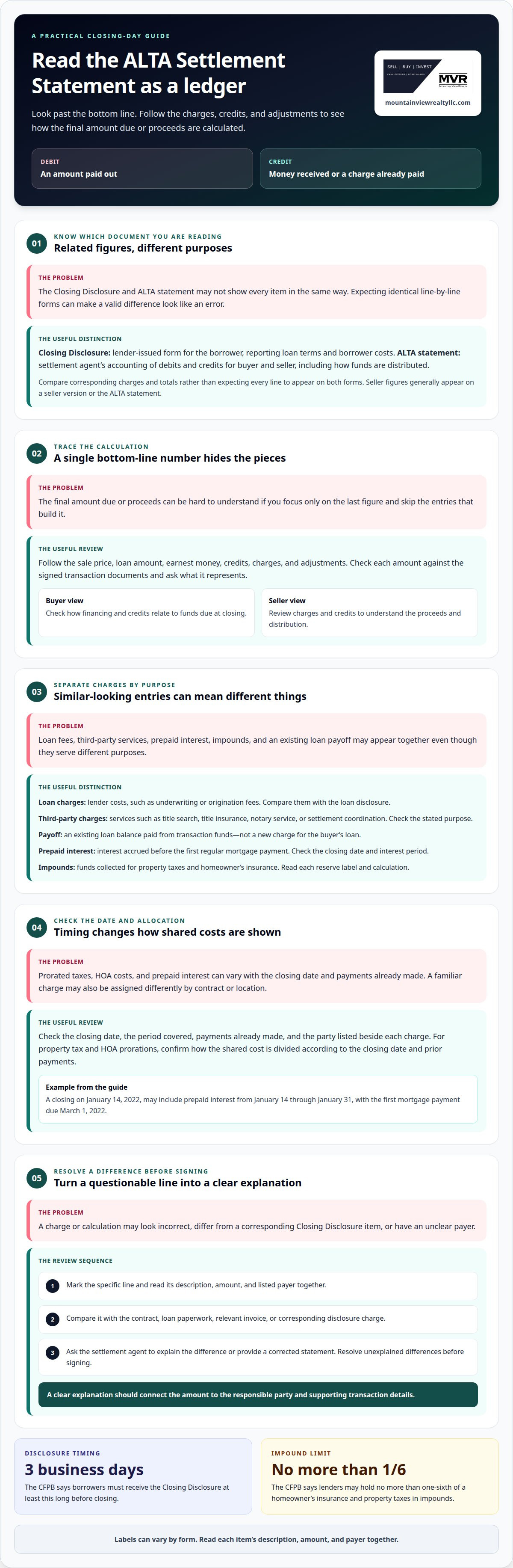
- Read the ALTA statement as a closing ledger: debits show amounts paid, while credits show funds coming in or charges already paid.
- Compare the ALTA statement with the Closing Disclosure and understand why their roles and line items may differ.
- Review the sale price, loan amount, earnest money, and credits to see how the final amount due or proceeds are calculated.
- Understand how property tax and HOA prorations divide shared costs according to the closing date and payments already made.
- Look beyond the bottom line to see how loan terms, settlement charges, and adjustments shape the transaction.
What is the difference between the Closing Disclosure and the ALTA Statement?
The Closing Disclosure and ALTA Settlement Statement show related closing figures but serve different purposes. The Closing Disclosure reports loan terms and borrower costs; the ALTA statement records debits and credits for both sides of the transaction.
Title and Closing Charges
Title and closing charges cover services such as reviewing ownership records, issuing title insurance, and coordinating settlement. The ALTA statement may list these as separate charges rather than one total. A title search reviews property records; insurance and settlement coordination may appear as their own line items. Recording and other government charges can also be listed separately.
The Closing Disclosure is the lender-issued form for the borrower, while the ALTA statement is the settlement agent’s accounting for buyer and seller. The Closing Disclosure replaced the HUD-1 Settlement Statement and Truth-in-Lending Statement on October 3, 2015. The Consumer Financial Protection Bureau says borrowers must receive the Closing Disclosure at least 3 business days before closing.
The timing gives the borrower an opportunity to review the disclosed loan terms and costs. The ALTA statement provides a broader accounting of the transaction, including seller figures, which generally appear on a seller version or the ALTA statement rather than the borrower’s disclosure. It also shows how funds are distributed at settlement. When both documents are used, compare corresponding charges and totals instead of expecting every line to appear on both forms.
Common terms help explain the figures: a debit is an amount paid out, while a credit is money received or a charge already paid. “POC” generally means “paid outside closing,” and “HOA” refers to a homeowners association. Labels can vary by form, so consider each item’s description, amount, and payer together.
Variable Fees and Allocations
Variable fees and allocations are charges whose amount or assigned payer may depend on the property’s location and the purchase contract. A familiar line item may not be divided the same way in every transaction. Title and escrow charges, recording or transfer fees, and negotiated costs can vary across counties and agreements.
State and county rules affect government charges, while the contract may assign specific costs to the buyer or seller. In New Mexico, review the transaction documents and the party listed beside each charge rather than assuming that another state’s customary split applies. This also helps distinguish a local charge from a negotiated allocation.
If a charge or calculation looks incorrect, mark the specific line and compare it with the contract, loan paperwork, or relevant invoice. Ask the settlement agent to explain the discrepancy or provide a corrected statement. Resolve unexplained differences before signing, especially if an ALTA amount differs from the corresponding Closing Disclosure charge. A clear explanation should connect the amount to the responsible party and supporting transaction details.
Reading loan terms and transaction details
Loan-related entries show how the purchase price, financing, and closing adjustments determine the buyer’s funds due. Review the figures alongside the loan documents and closing date.
Purchase Price and Loan Details
The purchase price and loan details show the agreed sale amount and the financing applied to it. The loan amount is not the same as the total price or the cash needed to close. Compare the purchase price and loan amount with the signed transaction documents, then check that the stated loan type and interest rate are consistent.
Monthly principal and interest help show the scheduled loan payment, while prepaid interest covers the period between funding and the next payment cycle. For example, a transaction closing January 14, 2022, may include prepaid interest from January 14 through January 31, with the first mortgage payment due March 1, 2022. The closing date explains why the interest line varies between transactions.
Loan Charges and Third-Party Fees
Loan charges are lender costs, such as underwriting or origination fees; third-party charges pay for services connected with settlement. Each entry has a different purpose and recipient. A title search, title insurance, notary service, or settlement coordination may appear as a separate charge rather than a combined loan fee.
Match each loan charge to the loan disclosure and each service charge to its stated purpose. A payoff is different: it records an existing loan balance being paid from transaction funds, not a new charge for the buyer’s loan. If an ALTA amount differs from the corresponding disclosure, identify the line and ask the settlement agent to explain before signing.
Prepaid Interest and Impounds
Prepaid interest covers interest accrued before the first regular mortgage payment, while impounds are funds collected for property taxes and homeowner’s insurance. These entries increase the amount due at closing, but they are not the same kind of charge as a lender fee.
The Consumer Financial Protection Bureau says lenders may hold no more than one-sixth of a homeowner’s insurance and property taxes in impounds. Separate reserve amounts may also appear, so read the label and calculation for each deposit.
For a focused review, compare the closing date, interest period, loan amount, and escrow entries across the ALTA statement and loan documents. A clear explanation of these transaction figures can help sellers understand how a sale fits their next move. New Mexico home-sale planning can help frame that decision.
What is an ALTA Settlement Statement and how to read the one?
Use the statement to trace transaction entries from their supporting documents to each party’s closing balance. Check that the figures and assigned responsibilities match the signed agreements.
Buyer and Seller Debits and Credits
Review the buyer and seller columns separately before looking at the overall totals. This can reveal whether a charge is assigned to the intended party and whether a related adjustment appears on the other side. A line’s label may not tell the whole story, so consider its description, amount, and party assignment together.
For each entry, identify the document or agreement that supports it. A negotiated allocation should match the purchase agreement or a later written amendment. If the same cost appears under both parties, determine whether the entries represent separate shares or a duplicate. The settlement agent can explain how the figures were entered.
Price, Loan, Deposits, and Credits
These entries show how agreed funds and prior payments factor into the final settlement calculation. Check them carefully, because a deposit receipt or contract amendment may change the balance shown at closing.
Match the earnest money amount to the receipt or escrow record, including any changes to how it is applied. Then trace each concession to the written agreement authorizing it. A credit should have a clear purpose and assigned party. If the contract was amended, confirm that the latest agreed terms, not an earlier version, appear on the statement.
Distinguish money already delivered from funds still due at closing. This helps prevent a prior payment from being counted twice or left out of the final calculation.
Settlement Agent Disbursements
Disbursement details show who receives funds and where they go after closing. Review them carefully: even a correct total can be routed incorrectly if a recipient or payoff instruction is wrong.
Check that named payees match the transaction paperwork, such as lender payoff statements, commission instructions, or written settlement agreements. For a seller, the proceeds calculation should include authorized deductions before the remaining funds are released. For a buyer, the amount delivered should match the closing instructions. Direct questions about payment routing to the settlement agent.
Miscellaneous Charges and Credits
Miscellaneous lines cover transaction-specific entries that do not fit a major category. Review them closely, because a short label may not explain an adjustment’s purpose or supporting record.
Look for a clear description and a related invoice, written agreement, or settlement instruction. For example, a repair allowance should match the parties’ documented agreement, while a service charge should identify the service. If the description is too broad to explain the entry, ask for clarification before accepting the final figures.
Property tax and HOA prorations
At closing, prorations divide shared expenses between the parties according to the closing date, billing period, and amounts already paid. Property taxes and HOA dues may appear as a buyer charge and seller credit, or the reverse. Utility adjustments depend on billing records and transaction terms.
Property Tax Prorations
A property tax proration assigns each party the share associated with their ownership period. The tax bill’s due date may not match the date ownership changes, so the ALTA statement can show an adjustment even if the bill has not yet been paid.
To understand the entry, identify the tax period, calculation amount, and closing date. Then determine whether the seller paid the tax or whether it remains due. If the seller paid beyond the closing date, the buyer may owe the seller a share. If taxes remain unpaid for the seller’s ownership period, the seller may receive a debit at closing.
The daily calculation depends on the bill’s covered period and the method agreed for the transaction. For example, a statement may divide the tax amount across the relevant period and assign each party the portion tied to their ownership days. The closing date determines where the division falls. Compare the adjustment with the tax period and payment status in the supporting records.
Keep tax prorations separate from mortgage escrow deposits. A lender’s escrow collection funds future bills; a property tax proration settles the parties’ shares for a specific period. Reviewing these separately helps you avoid treating one amount as a duplicate of the other.
HOA Dues and Fee Prorations
HOA prorations allocate association dues or other covered charges according to the billing period and closing date. They matter because a payment made by one party can cover days when the other party owns the property.
Check the association’s billing period, payment status, and the party assigned to each entry. If the seller paid dues covering time after closing, the statement may credit the seller and charge the buyer. If dues remain unpaid, the seller’s share may be deducted from sale proceeds. The contract and association records clarify how those amounts are handled.
That line represents an amount owed, not a routine proration of dues already paid. Read its description and compare it with the association’s balance information.
Utilities and other shared charges also need a clear period and basis. A meter reading, bill, or contract term can help explain the adjustment. If an entry lacks a clear period, amount, or responsible party, ask the settlement agent how it was calculated before closing.
What an ALTA settlement statement is
The American Land Title Association created the standardized ALTA Settlement Statement form used in real estate closings. A title or escrow company typically prepares it for the transaction. The standard layout provides a familiar structure, while the entries reflect the property and deal being completed.
There is no single version for every transaction. A mortgage purchase, refinance, and cash purchase can have different entries because each involves different funding and settlement steps. For example, a cash purchase has no new lender’s loan amount to include. The transaction type helps explain why one form may contain sections absent from another.
A combined ALTA statement has approximately 13 sections, depending on how they are counted. Rather than assuming every form follows an identical layout, first orient yourself to the transaction-specific information at the top. Confirm the property, parties, and relevant dates match the closing documents you received. That simple orientation helps prevent reviewing the wrong draft or a version prepared for a different transaction stage.
The settlement date and disbursement date are separate fields with different roles. Compare both with the timing in the closing paperwork, especially if signing and fund distribution happen at different times. If dates change between drafts, the title or escrow company can explain which version reflects the current closing arrangements.
The form’s value lies in its consistent framework, not in every transaction having identical entries. ALTA’s standardized structure gives parties a common document to review, while the title or escrow company completes it for the specific purchase, refinance, or cash transaction. In Albuquerque, this distinction keeps the review focused on the terms of the local sale.
Mountain View Realty LLC
Mountain View Realty LLC helps Albuquerque sellers consider how a home sale fits their financial and personal priorities. Understanding the ALTA statement can clarify expected proceeds and help inform the next step in a move or sale.
If timing or preparation affects your plans, options such as Home Trade-In, Renovate & Sell, CashOffer+, and Short Sale offer different paths to consider. They address distinct selling situations, from exploring a trade-in to preparing a home for market or considering a short sale. The right option depends on your goals, property, and transaction circumstances.
For a conversation about your home-sale options and how they fit your plans, contact Mountain View Realty LLC.
Use Your Closing Insight to Plan What Comes Next
A completed transaction can mark a transition, not just an ending. Your next decision may involve timing, a move, or preparing a property for sale. Take time to consider what matters most before choosing a direction. The care you brought to reviewing the paperwork can also help you approach that decision with clarity.
Knowing how to read an ALTA settlement statement gives you a clearer view of the financial side of a real estate transaction. Use that understanding as one part of a broader plan, alongside your priorities for the property and your next chapter. A thoughtful conversation can connect those priorities to practical selling options without rushing the process.
Move forward at a pace that feels right for you. A considered next step begins with understanding your options.
Frequently Asked Questions
How do I explain the settlement statement to my client?
Walk through the client’s own copy in the order the transaction unfolded. Start with the agreed terms, identify payments already made, then discuss changes added during negotiations. Separate confirmed contract terms from figures updated during closing preparation. This helps the client ask about specific entries and keeps the conversation focused on their transaction rather than general examples.
What Should You Look For?
Begin with the document version and property details. Make sure the names and property description match the closing paperwork, then note whether you’re reviewing a draft or final version. If a revised copy arrived, compare changed entries with the prior version. Keep questions tied to specific lines so answers can be recorded alongside the correct document, not left to memory.
What does ALTA stand for in real estate?
ALTA stands for the American Land Title Association. In the document’s name, it identifies the organization associated with the standardized form. The letters are not a fee code or type of mortgage. The association’s name may be spelled out on the form, while transaction details such as the property and parties identify the closing record.
What does the seller’s closing statement look like?
A seller may receive a separate statement focused on the seller’s side rather than a combined page showing both parties. The layout varies, but it typically organizes the seller’s transaction figures and shows the resulting proceeds. Use that copy to plan how sale funds fit into a move, such as coordinating a purchase or relocation. Treat the proceeds shown as transaction figures, not a substitute for broader financial planning.
What else should you read before closing?
Review the latest signed amendments and written agreements made after the original purchase contract. For example, a repair agreement or change to the possession date may affect closing instructions. If the property belongs to a homeowners association, review relevant association documents and current account information. Keeping the newest signed versions together helps distinguish accepted terms from earlier drafts or informal discussions.
What is a settlement statement in Florida real estate?
In Florida, a settlement statement records the transaction’s closing amounts, while state and county charges can affect the entries. Florida charges documentary stamp tax of $0.70 per $100 on deeds statewide. Miami-Dade County adds a $0.45 documentary stamp surtax. These figures are Florida-specific; they shouldn’t be applied to a New Mexico property transaction.
What is an ‘excess deposit’ at closing?
An excess deposit is earnest money left after the buyer’s deposit has been applied to the amounts due for the transaction. The final paperwork should show how the remainder is handled under the closing terms. Review the deposit receipt and settlement instructions together to distinguish a remaining balance from a deposit applied to another buyer obligation.
What is an ALTA settlement statement and what is it used for?
An ALTA Settlement Statement is a standardized form for organizing settlement figures in a real estate transaction. It gives the parties a closing record to keep with their purchase and sale documents. After closing, save the final copy with payment confirmations and other transaction records. This makes it easier to refer to the completed sale if a later question arises about a figure or closing instruction.

Article by
Robb Krautbauer
Robb Krautbauer is the Owner and Qualifying Broker of Mountain View Realty, serving Albuquerque, Rio Rancho, Santa Fe, and surrounding New Mexico communities. With more than a decade of real estate experience, Robb specializes in luxury homes, strategic home marketing, and helping homeowners navigate important life transitions with confidence.
Known for combining luxury-level marketing, AI-powered technology, and innovative selling strategies, Robb helps clients maximize their home's value while creating a smooth, personalized selling experience. Whether assisting luxury homeowners, retirees, families downsizing, or real estate investors, his focus is always on delivering expert guidance, honest advice, and exceptional results.
When he's not helping clients achieve their real estate goals, Robb enjoys studying market trends, emerging technology, and investment strategies that keep Mountain View Realty at the forefront of the industry.
Disclaimer
**Disclaimer:** The information provided in this article is for general educational purposes only and should not be considered legal, tax, financial, or professional advice. Real estate laws, market conditions, and regulations change over time and may vary based on your individual circumstances. Before making any real estate decision, consult with qualified legal, tax, or financial professionals. If you have questions about buying or selling real estate in New Mexico, contact Mountain View Realty for guidance specific to your situation. © 2026 Mountain View Realty. All rights reserved. The content on this website may not be reproduced without written permission.


