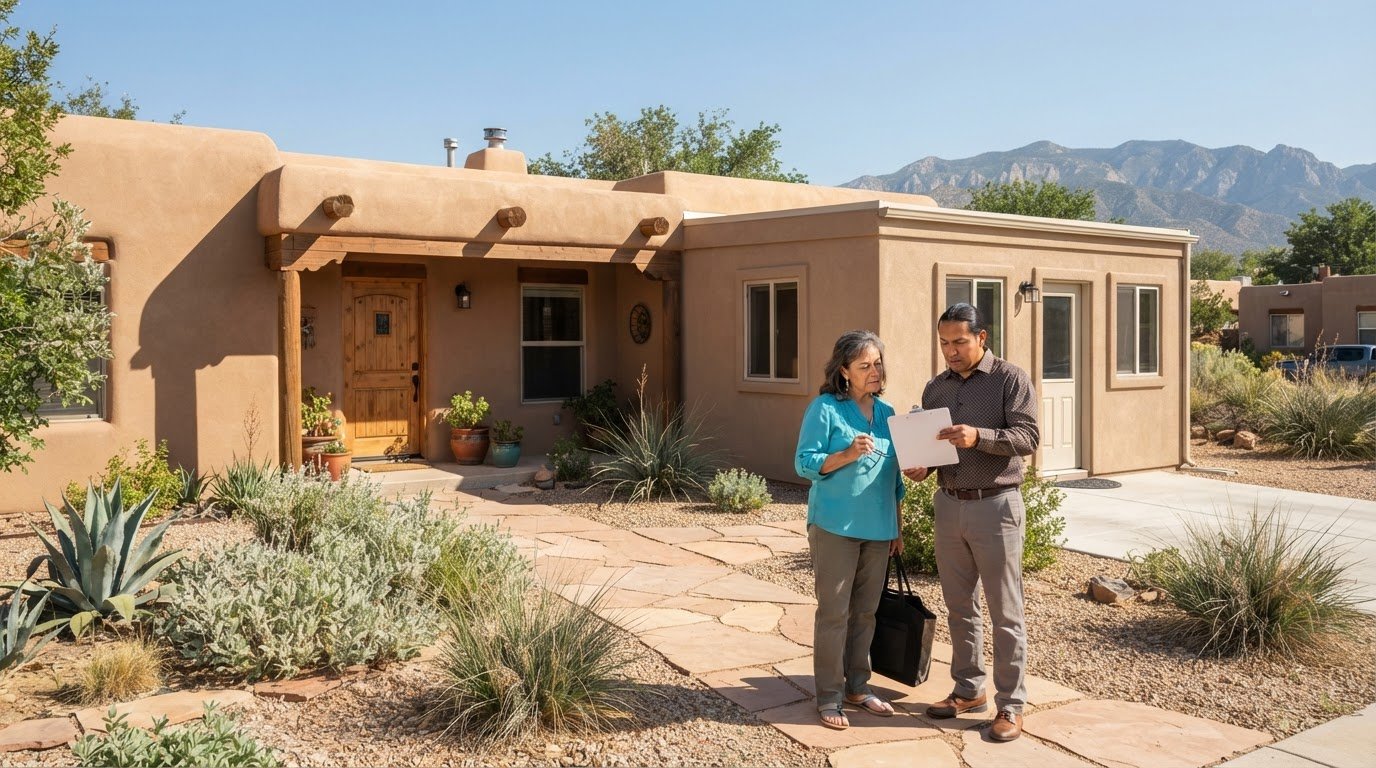
How to Sell a Home With an Unpermitted Addition in Albuquerque
An unpermitted addition doesn’t automatically prevent a sale, but it can affect the home’s value and the buyers who can finance it. Selling a home with an unpermitted addition in Albuquerque is possible, but disclose known work and be ready to answer questions about permits, safety, and appraisal. An appraiser may exclude the added space from the home’s valuation.
It’s understandable to worry that one unapproved project could derail your plans. Start by identifying what work may have required a permit, sharing what you know with buyers, and weighing whether to address the issue or sell as-is.
This guide explains how to identify unpermitted work, what disclosure and appraisal concerns may arise, and how those factors can affect buyer interest and value. You’ll also learn how to compare practical options and decide what to do next.
Key Takeaways
- Compare the home’s permit records with visible changes, and note any work that may need closer review.
- Gather details about known additions so you can disclose them clearly to prospective buyers.
- Weigh whether to address permit concerns before listing or present the property as-is with the issue disclosed.
- Consider how an appraiser’s treatment of the added space could affect valuation and a buyer’s financing.
- Evaluate the addition’s condition, compliance questions, and buyer interest when deciding how to position the home.
What is unpermitted work?
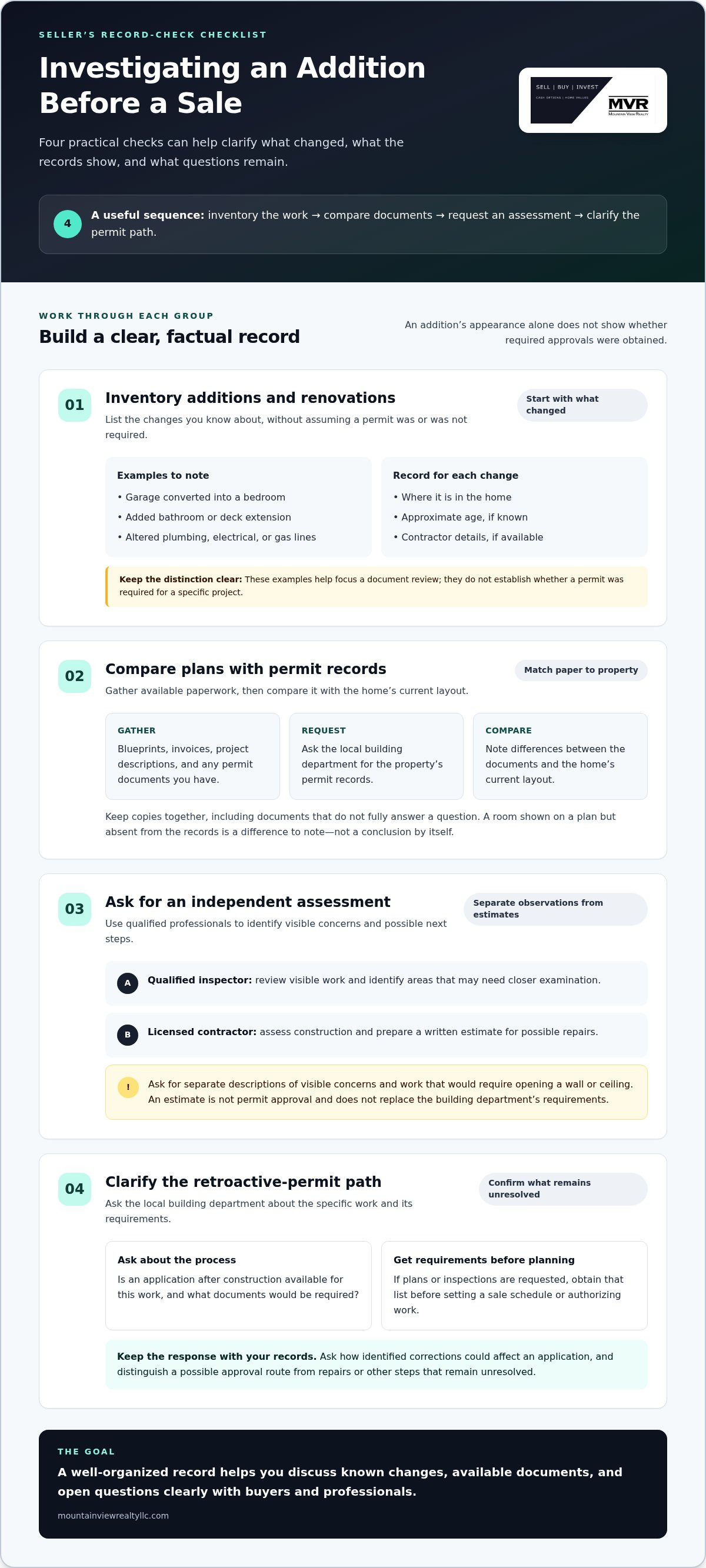
Start with the paperwork, not the addition’s appearance. For a sale, treat work as potentially unpermitted when you can’t match it to permit records or approval documents. A finished room alone doesn’t show whether required approvals were obtained. Make a clear record of what changed and which documents you have.
- Inventory additions and renovations. List changes such as a garage converted into a bedroom, an added bathroom, a deck extension, or altered plumbing, electrical, or gas lines. These examples help focus your document review; they don’t establish that a permit was required for your specific project. Record the location of each change, its approximate age if known, and any contractor who worked on it. Avoid labeling a space approved or permitted until you find supporting paperwork.
- Compare plans with permit records. Gather blueprints, invoices, project descriptions, and any permit documents you have. Request the property’s permit records from the local building department, then compare the descriptions with the home’s current layout. Note differences, such as a room shown on a plan but absent from the records. Keep copies together, including documents that don’t fully answer a question. This creates a practical record for discussing the property with buyers and professionals.
- Ask for an independent assessment. Have a qualified inspector review the visible work and identify areas that may need closer examination. Then ask a licensed contractor to assess the construction and prepare a written estimate for possible repairs. Request separate descriptions for visible concerns and work that would require opening a wall or ceiling. The estimate can help you compare options, but it isn’t a permit approval or a substitute for the department’s requirements.
- Clarify the retroactive-permit path. Ask the local building department whether an application after construction is available for the work in question and what documents it requires. If plans or inspections are requested, obtain that list before setting a sale schedule or authorizing work. Ask how any identified corrections would affect the application, and keep the responses with your property records. That way, you can distinguish a possible approval route from repairs or other steps that remain unresolved.
Seller disclosure duties and nondisclosure risks
For an Albuquerque sale, describe known additions and permit records accurately in writing. New Mexico disclosure forms and purchase terms guide how property details are shared, so don’t present an assumption about permits as a confirmed fact.
-
Disclose Unpermitted Work
Write down known changes, such as an added bathroom or converted garage, and gather the documents you have. Separate what you know firsthand from what plans, invoices, or permit records show. Don’t describe work as approved unless the records support that claim. Specific information helps buyers understand the property and decide what questions to address before proceeding.
-
Assess Safety and Code-Compliance Risks
Arrange a qualified review of concerns such as a moved wall, altered gas line, or changed electrical wiring before making claims about safety. An inspection can identify visible issues, while concealed construction may need further examination. If the review identifies a concern, describe the finding accurately and keep the report. Don’t say work is up to code unless inspection or approval records support that conclusion.
-
Consider Insurance and Buyer Risks
Review the property’s insurance documents and accurately describe known conditions when discussing coverage. Whether a policy applies to a particular problem depends on its terms and the circumstances of a claim, so don’t promise a buyer that an addition is covered. Buyers may weigh repair needs and permit questions when deciding whether to proceed. Keep written information about the addition available so discussions stay grounded in facts.
-
Separate Required Disclosures From Permit Questions
Keep lead-related disclosures distinct from records about an addition. According to the U.S. Environmental Protection Agency, federal law requires disclosure of lead-based paint hazards in homes built before 1978, regardless of state rules. For other property details, use the applicable sale documents and state only what you know. For example, distinguish “no permit document found in the records reviewed” from a claim that no permit was ever issued.
Listing the home as-is and disclosing unpermitted work
You can sell a home with unpermitted work, including through an as-is sale. Selling a home with an unpermitted addition in Albuquerque calls for clear information about the work and its status. Treat “as-is” as a description of the sale, not a reason to conceal known additions or avoid direct communication.
-
Identify Unpermitted Work
List changes that lack matching permit records, then describe each plainly. Unpermitted work is construction or renovation completed without a required permit; examples include an added room, deck extension, or converted garage. Keep dates, invoices, plans, and contractor details together. Don’t present an addition as approved or counted living space unless the available records support that description. Note which details come from documents and which come from your recollection.
-
List the Home As-Is
Ask your real estate agent to explain the as-is condition and known permit issue in listing materials and buyer discussions. Share relevant records so buyers can distinguish documented facts from unresolved questions. Don’t describe added space as approved or recognized square footage unless the records support that claim.
An as-is sale can still include an inspection or permit review in the buyer’s offer. Those terms may allow the buyer to renegotiate or cancel if a review raises concerns. Set clear expectations about the addition instead of relying on “as-is” alone. Buyers may consider future inspections, repairs, permit work, or removal when evaluating the property. Factor those possibilities into pricing and negotiations.
-
Address Potential Code-Compliance Work or Removal
Compare the options of seeking retroactive approval, correcting the work, or removing the addition. A building department may require repairs before approving work, and an inspector may need parts opened or removed to examine construction. Work completed 15 or 20 years ago may not meet current code requirements, so age alone doesn’t establish compliance.
Estimate removal and correction costs before deciding what to address. These are market estimates, not a quote for your property; the scope and construction affect the work involved. Keep written estimates and department correspondence available for buyers to review.
- Prepare a clear buyer record. Gather the listing disclosure, permit documents, contractor estimates, and written responses from the local building department. These give prospective buyers a factual basis for evaluating the addition. If a buyer requests repairs or removal, compare the request with the records and sale terms before responding. Document what both parties agree to address so the addition’s status stays clear during negotiations.
Buyer financing and appraisal concerns
In New Mexico, buyers can make an offer contingent on an inspection or permit review. Put the specific addition, review terms, and possible responses in writing, then have a lawyer review the language.
- Prepare for the appraisal. An appraiser may exclude unpermitted square footage from the home’s valuation. For example, a 2,400-square-foot house with a 400-square-foot unpermitted addition could be valued like a comparable 2,000-square-foot home. The appraiser’s treatment of that space can affect the buyer’s loan because the lender considers the appraised value when evaluating financing.
Give buyers accurate records about the addition and don’t present its area as approved living space. Plans, permits, and renovation details can help clarify what the appraiser is evaluating, but they don’t guarantee the added area will count. If the appraisal comes in below the offer price, the buyer and seller may need to revisit the price or other terms.
- Discuss financing early. Unpermitted work can make mortgage lenders more cautious, especially when it raises questions about safety, code compliance, or whether the home matches its records. Many conventional lenders may still finance homes with unpermitted work, though the appraisal can be more complicated. A buyer’s loan offer may change if an appraisal or review raises concerns.
Electrical changes, an added bathroom, or a converted garage can prompt questions about permits and repairs. Buyers using financing may need time to understand how the addition affects the property and loan. Share known information consistently so the appraisal and lender review don’t rely on a different description than the listing.
- Compare buyer types and offers. A cash buyer or investor may rely less on mortgage approval and may be familiar with properties that need renovation. That doesn’t mean every cash offer is stronger. Compare the price, contingencies, requested repairs, and closing terms, as well as the buyer’s ability to proceed.
A financed buyer might request a price reduction after an appraisal or inspection. Treat this as a negotiation example, not a standard adjustment. Ask why the buyer made the request, then compare it with documented repair estimates and the addition’s condition.
- Respond to objections with evidence. If a buyer questions the addition, respond with relevant permit records, inspection findings, or written estimates rather than broad assurances. Separate known repair needs from questions about approval. Under the agreed contingency terms, a buyer may request repairs, a price change, or cancellation. Consider each request against the contract and the likely effects of appraisal, financing, and renovation work.
Keep the discussion focused on the home’s documented condition. For example, if an electrical concern prompts a repair request, compare it with the inspection findings and estimate. Clear records help both parties assess the issue without assuming the addition’s square footage is approved or valuable.
How unpermitted additions may affect home value
- Separate the home’s value from the addition’s apparent value. Buyers may appreciate extra space, but an unpermitted room doesn’t automatically add the value of approved living area. An appraiser may exclude that square footage, leaving the home’s valuation closer to comparable properties without the addition. When pricing a house with unpermitted work, remember that useful space and recognized market value aren’t always the same.
Homes with unpermitted work tend to sell for less than similar homes that are fully permitted. One market estimate puts the difference at 10% to 20% compared with a fully permitted equivalent. Treat that as a broad estimate, not an automatic discount for every Albuquerque property. The addition’s condition, documentation, usefulness, and buyer demand all shape how offers reflect the issue.
- Assess how much value the improvement would add if approved. A practical pricing analysis starts with comparable permitted homes, then considers what the addition contributes and what concerns it creates. Market estimates suggest an adjustment of 10% to 20% of the value an improvement would add if fully permitted. This is different from reducing the entire home’s value by that percentage. Keep the two comparisons distinct during pricing and negotiation.
For example, an extra bedroom may attract interest, but buyers can still question its legal status, safety, or effect on financing. If the addition cannot be counted as a bedroom, pricing the home as though that room doesn’t qualify may be more realistic. Don’t add the room’s full estimated value to the asking price without considering these limits.
- Compare the cost and value of possible solutions. Retroactive permitting may support a different value discussion if the work qualifies and required corrections are completed. Weigh that option against selling as-is, correcting specific issues, or removing the addition. The comparison is not simply the cost of adding space. Consider how documented approval, repairs, buyer confidence, and likely market response could affect your net proceeds.
Keep estimates and permit records together. A buyer may use unresolved compliance concerns to negotiate, while documented approval can clarify what the improvement represents. Neither outcome changes the importance of condition or comparable sales. Consider each option in relation to the whole property, not just the addition’s size.
- Set a negotiation range based on evidence. Use comparable sales, inspection findings, permit status, and written repair estimates to explain your asking price. If a buyer raises liability concerns or proposes a reduction, connect the request to specific work or documentation rather than debating the addition’s value in isolation. At closing, clear records help show what was disclosed and which terms the parties accepted.
For a local pricing discussion, review your home’s valuation strategy.
Mountain View Realty: CashOffer+
Mountain View Realty offers CashOffer+ for sellers weighing how to move forward with an unpermitted addition. This off-market cash offer lets sellers sell as-is without repairs, cleaning, or showings. Compare that option with the potential value of addressing the addition before the sale.
If you want to improve the home before marketing it, Renovate & Sell is another path to consider. The right approach depends on your priorities, the addition’s condition, and how you want to manage the sale. Reviewing options alongside permit records and repair estimates can help clarify your next step.
Contact Mountain View Realty LLC to discuss which selling path fits your home and priorities.
Choose a path that fits your next move
Selling a home with an unpermitted addition in Albuquerque is more than a property decision. It can affect your timing, finances, and plans for what comes next. Before committing to repairs or a sale strategy, decide what matters most: minimizing renovation work, preparing the home for market, or coordinating your next move.
That priority can guide a focused conversation about your options. Mountain View Realty offers Home Trade-In for sellers considering how to connect a current home sale with another purchase. You can also discuss how the addition’s documentation and condition fit into a broader selling plan. The goal is to choose a practical next step with the details in view, not to rush into one approach.
Every home’s circumstances are different. A clear plan can help you move forward with greater confidence.
Frequently Asked Questions
How Do Unpermitted Additions Affect Home Value?
An unpermitted addition can reduce buyer confidence and may not contribute its full apparent value to an appraisal. For example, buyers may value an extra bedroom differently if it cannot be counted as approved living area. In Albuquerque, compare the home with similar permitted properties, then account for the addition’s condition, documentation, and likely repair needs. Those factors may influence both asking price and negotiation.
How do permits work, and why do you need them?
A building permit is an approval process for specified construction or renovation work. It allows the local building department to review plans and inspect work where required. Permits create a record of what was approved, helping clarify an addition’s status during a sale. For example, an approved bathroom project may have plans and inspection records for buyers to review.
Should you: fix it, permit it, or sell as-is?
Choose a path based on the addition’s condition, permit status, repair scope, and your selling priorities. If the work appears safe and eligible for retroactive approval, explore that option with the local building department. If it needs costly corrections, compare repair estimates with an as-is sale. For example, a seller with an unfinished garage conversion may weigh completing it against disclosing its status and adjusting the sale strategy.
Does New Mexico law require sellers to disclose unpermitted additions or missing permits?
Sellers are legally obligated to tell potential buyers about known unpermitted work. Describe the addition accurately and share available records; don’t imply that an unknown permit status means the work was approved. Keep disclosures consistent with what you know about the property. Separately, according to the U.S. Environmental Protection Agency, federal law requires disclosure of known lead-based paint hazards in homes built before 1978.
How can I check permit records for a home addition in Albuquerque?
Contact the local building department and request permit records for the property. Provide the address and any available parcel details, then compare the records with plans, invoices, and the home’s current layout. For example, if a rear room appears on a contractor’s drawing but not in the permit records, ask the department whether it has a record of approval or later inspections. Keep copies of the response for buyer discussions.
Can an unpermitted addition be permitted retroactively in Albuquerque, and what inspections are required?
Some jurisdictions allow applications for permits after construction, but the local building department can explain whether that option applies in Albuquerque. The process may involve inspections and plans prepared by an architect or engineer. Inspectors may need access to concealed framing, wiring, or plumbing, which could mean opening finished surfaces. If deficiencies are found, they must be corrected before approval can be completed.
What does it cost to legalize an unpermitted addition in Albuquerque?
That estimate concerns permitting, not every possible repair. Costs can also depend on plan preparation, inspections, correction work, and whether concealed construction needs examination. A finished basement and an added bathroom may involve different review and repair needs. Get a written estimate that separates permit-related charges from construction work.
Can Albuquerque require removal or correction of an unpermitted addition?
Yes. Unpermitted work can lead to required permits, fines, repairs, or removal of the unapproved construction. If the local building department identifies code issues, it may require corrections such as rewiring, structural reinforcement, or plumbing replacement. An inspector may also need part of an addition opened to examine hidden work. Ask the department what actions apply to the property and retain its written requirements.

Article by
Robb Krautbauer
Robb Krautbauer is the Owner and Qualifying Broker of Mountain View Realty, serving Albuquerque, Rio Rancho, Santa Fe, and surrounding New Mexico communities. With more than a decade of real estate experience, Robb specializes in luxury homes, strategic home marketing, and helping homeowners navigate important life transitions with confidence.
Known for combining luxury-level marketing, AI-powered technology, and innovative selling strategies, Robb helps clients maximize their home's value while creating a smooth, personalized selling experience. Whether assisting luxury homeowners, retirees, families downsizing, or real estate investors, his focus is always on delivering expert guidance, honest advice, and exceptional results.
When he's not helping clients achieve their real estate goals, Robb enjoys studying market trends, emerging technology, and investment strategies that keep Mountain View Realty at the forefront of the industry.
Disclaimer
**Disclaimer:** The information provided in this article is for general educational purposes only and should not be considered legal, tax, financial, or professional advice. Real estate laws, market conditions, and regulations change over time and may vary based on your individual circumstances. Before making any real estate decision, consult with qualified legal, tax, or financial professionals. If you have questions about buying or selling real estate in New Mexico, contact Mountain View Realty for guidance specific to your situation. © 2026 Mountain View Realty. All rights reserved. The content on this website may not be reproduced without written permission.


