
How to Sell a Tenant-Occupied House in Albuquerque and Set Clear Terms
Selling a house with tenants in Albuquerque is legal, but selling the property does not end the lease. The existing lease remains valid, and the new owner must honor its terms. Build your sale strategy around both the tenant’s rights and the buyer’s plans.
It’s understandable to wonder whether an occupied home will limit your options or complicate showings. You can market the property to buyers who want a rental investment, or consider offers based on the lease and your preferred timing. Plan property access with at least 24 hours’ advance notice, and keep communication clear so tenants know what to expect.
This guide covers how to market an occupied home, weigh month-to-month and fixed-term leases, and follow New Mexico requirements. It also explains what to address before closing, including the security deposit and tenant records. A clear plan helps you compare your options while respecting the lease.
Key Takeaways
- Position an occupied home for buyers who value its rental potential, with clear information about the lease and showing arrangements.
- Use the lease type and remaining term to shape the sale timeline and set realistic expectations for buyers.
- Keep New Mexico’s landlord-tenant requirements in view, especially when planning access or considering a tenancy’s end.
- Compare offers by more than price: consider lease terms, buyer plans, timing, and the proposed closing conditions.
- Plan for security deposits and tenant records to transfer at closing, and understand the rules for returning any deposit balance after a tenant moves out.
Marketing occupied rental properties to investors
For a tenant-occupied sale, the lease, property condition, and access arrangements all shape the marketing strategy. Presenting these details clearly helps investors assess the rental and decide whether the tenancy fits their plans.
-
How a Real Estate Professional Helps Compare Selling to an Investor or Waiting
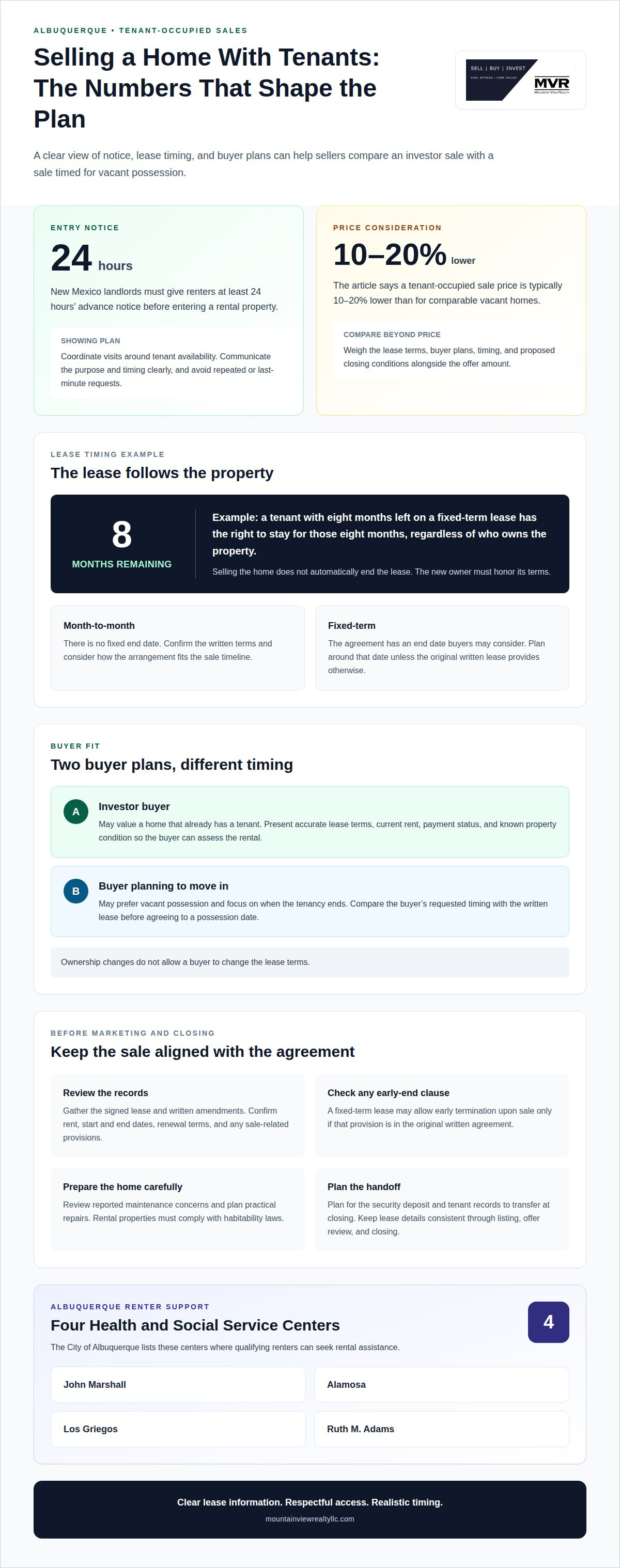
Compare an investor sale with waiting until the lease ends, using the lease term, rent payment history, and your preferred timing. An investor may value a home that already has a tenant, while a buyer planning to move in may prefer vacant possession. Selling with tenants can narrow the buyer pool, and the sale price is typically 10-20% lower than for comparable vacant homes.
Tax consequences depend on your circumstances and the details of the sale. Include tax planning in your decision before accepting an offer rather than assuming the timing or buyer type determines the outcome.
-
How a Real Estate Professional Handles Notice Before Property Entry
Set a showing plan that respects the tenant’s right to notice. New Mexico landlords must give renters at least 24 hours’ advance notice before entering a rental property. Coordinate proposed visits around the tenant’s availability, and communicate the purpose and timing clearly. Avoid arranging repeated or last-minute showings that make access harder to manage.
Before marketing begins, coordinate the notice process with the tenant and listing schedule. Organize showing requests and keep a record of communications so the sale proceeds with the tenant’s home and privacy in mind.
-
How a Real Estate Professional Prepares the Rental Home for Marketing
Address safety and property condition before arranging photography or buyer visits. New Mexico landlords must provide rental properties that comply with habitability laws. Review reported maintenance concerns and plan practical repairs that improve presentation without disrupting the tenant’s home unnecessarily.
If rent payments become difficult, communicate respectfully and keep the sale process separate from discussions about assistance. The City of Albuquerque lists four Health and Social Service Centers where qualifying renters can seek rental assistance: John Marshall, Alamosa, Los Griegos, and Ruth M. Adams. Clear communication can keep showing arrangements from becoming a larger concern.
-
How a Real Estate Professional Markets the Rental Property
Present accurate rental details, including the lease terms, current rent, payment status, and known property condition. Investors use this information to assess whether the tenancy suits their plans. Do not suggest that ownership changes allow a buyer to change the lease terms.
The process starts with organizing lease and rent information, planning showings with proper notice, and preparing the home for marketing to buyers who understand the tenancy. In Albuquerque, selling a house with tenants works best when the listing sets clear expectations about occupancy and access from the outset.
Month-to-month and fixed-term lease differences
- First, determine whether the tenant has a month-to-month arrangement or a fixed-term lease. This shapes the sale timeline and the buyer’s likely plans. A month-to-month arrangement has no fixed end date, while a fixed-term lease has an agreed period and an end date buyers will consider when evaluating offers.
Gather the signed lease and any written amendments. Confirm the current rent, start and end dates, renewal terms, and any provisions related to a sale. A complete record helps distinguish written terms from informal conversations. Listing the property does not automatically require the tenant to move out.
- Use the lease end date to compare selling to an investor with waiting. An investor may be willing to buy a home with a tenant in place, while a buyer planning to live there may focus on when the tenancy ends. For example, a lease with eight months remaining gives the tenant the right to stay for those eight months, regardless of who owns the property.
That timing can affect the buyer pool and closing discussions. A seller aiming to transfer the home vacant may need a different timeline from one willing to sell with the tenant in place. Compare the expected timing with your own plans rather than assuming one approach suits every buyer.
- Check the original lease for a clause about early termination after a sale. A fixed-term lease may allow early termination upon sale, but the clause must be part of the original written agreement. A later verbal discussion does not replace those terms. Keep signed amendments with the lease so the complete agreement is available during negotiations.
Do not promise vacant possession based only on a possible lease clause. The offer should reflect the tenancy and any valid written provision. If the agreement does not provide for an early end, plan around the stated lease period rather than giving buyers an unsupported move-out date.
- Explain the lease clearly during buyer discussions. The existing lease remains valid after the sale, and the new owner must honor its terms. State whether it is month-to-month or fixed-term, share relevant dates, and disclose written renewal or sale provisions. This helps investors assess the rental and other buyers understand the timing.
Use consistent lease details in listing materials, offer review, and closing coordination. If a buyer proposes a different possession date, compare it with the tenant’s agreement before accepting. A clear, consistent record reduces confusion among the seller, buyer, and tenant and keeps the transaction aligned with the lease.
New Mexico landlord-tenant laws
When a rental home sells, the existing lease remains valid, and the new owner must honor its terms. Landlords should follow the applicable notice and legal process before ending a tenancy or seeking to remove a tenant.
For legal process information, Albuquerque landlords can contact the Metropolitan Court Self Help Center at 505-841-9817. The Landlord & Tenant Hotline, at 1-833-545-4357, also provides information for tenants, landlords, and property managers.
- Carry the existing lease through the sale. A change in ownership does not erase the tenant’s agreement or alter its terms. Give the buyer clear information so the transfer reflects the tenant’s current rights and obligations. The buyer becomes responsible for honoring the agreement.
New Mexico landlords must provide rental properties that comply with habitability laws. Before marketing or transferring the home, address reported conditions that affect habitability. Organize maintenance communications and repair records so the buyer can understand the property’s condition and any work in progress.
- Follow the required termination process before seeking a court eviction. In Albuquerque, a landlord must give a tenant a three-, seven-, or thirty-day notice stating the reasons for lease termination before going to court to evict them. The appropriate notice depends on the reason, so match it to the issue rather than choosing a deadline at random.
A notice alone does not remove a tenant. Albuquerque landlords must file a court case, attend a hearing, and obtain a judge’s eviction order. A landlord cannot legally evict a tenant without a court order. Do not change the locks or treat the sale as permission to bypass this process.
- Keep lease enforcement separate from the sale timeline. New Mexico landlords must follow the proper eviction process when removing a tenant for violating lease terms. A reported violation alone does not authorize removal. Follow the required process and keep relevant communications and records available for the transaction.
If a tenant raises a housing concern, address it through the proper maintenance and legal channels. The sale does not cancel the landlord’s habitability responsibilities. Clear records help the buyer understand unresolved issues and the steps already taken.
- Check whether the property is part of a manufactured-home community. In Albuquerque, an owner intending to sell, lease, or transfer a manufactured-home community must notify each resident household at least seven days before listing the property for sale. This requirement is associated with Albuquerque Ordinance 2024-043 and § 14-26-4.
For procedural guidance, the Metropolitan Court Self Help Center provides court forms, information, and assistance with court processes for renters and landlords. Call 505-841-9817. The Landlord & Tenant Hotline at 1-833-545-4357 offers information for tenants, landlords, and property managers. These resources can help clarify process questions during a sale.
Offer evaluation and negotiation
- Compare the full terms of each offer, not just the price. Note the proposed closing date, financing method, inspection terms, and possession date. For example, a higher offer with a longer closing timeline may suit you differently from a lower offer with a date that fits your plans. Keep the tenant’s lease in view, and make sure the offer accounts for occupancy and the buyer’s understanding of the rental arrangement.
- Clarify how each buyer plans to use the property. An investor may expect the tenant to stay, while an owner-occupant may seek a different possession arrangement. Have buyers state their plans in the written offer rather than relying on conversation. Compare those plans with the lease dates and terms. A buyer’s intended use can make one offer more practical than another, even when the prices are similar.
- Review contingencies and deadlines with the tenant’s access needs in mind. An inspection may require a property visit, and an appraisal may require another appointment. Check proposed dates and coordinate access using the required notice process. Avoid accepting a timeline that assumes immediate, unrestricted entry. Clear scheduling gives the buyer time to complete due diligence and gives the tenant advance information about visits.
- Evaluate financing and proof of funds alongside the offer’s other terms. A financed offer and a cash offer may differ in conditions and timing. Review the documents included with each proposal and note the steps the buyer must complete before closing. For example, compare the financing contingency deadline with the requested closing date to identify where negotiation may be needed.
- Negotiate specific terms to resolve practical concerns. If the proposed possession date conflicts with the lease, discuss revising it or structuring the sale around the existing tenancy. If the buyer needs additional access, agree on a workable schedule that respects notice requirements. Put changes in the written contract. Before signing, compare the final terms with the lease, the tenant’s occupancy, and your preferred closing plan.
Security deposit and tenant-document transfer after closing
Prepare the deposit accounting and tenant file before closing. An organized handoff gives the new owner clear records for managing the existing tenancy.
-
How a Real Estate Professional Handles the Security Deposit Transfer
Reconcile the security deposit with the lease and payment records. When a rental property sells, the security deposit transfers to the new owner. Include the amount in closing coordination so both parties can account for it. Do not treat the deposit as sale proceeds available for another purpose. A clear written record shows what the buyer receives.
-
How a Real Estate Professional Handles the Transfer of Tenant Documents
Organize the tenant file for transfer with the property. Include the current lease, signed amendments, renewal documents, and available rent payment records. Add written notices and maintenance communications that clarify the tenancy’s status. Transfer relevant records securely and protect tenant information. The buyer should receive documents that explain existing terms and ongoing matters.
- Compare the deposit record with the lease before closing. Confirm the stated amount and note any documented changes. If payment records show installments or a partial refund, include the supporting entries. For example, the lease may state one amount while later records show an approved adjustment. Resolve the difference in the closing file rather than leaving the new owner to guess at the balance.
- Give the buyer an organized accounting, not just a transfer amount. List the deposit held, any documented deductions, and the resulting balance. Keep receipts or written explanations for recorded changes with the tenant file. This gives the new owner a practical starting point for future accounting and distinguishes the tenant’s deposit from rent, sale proceeds, or other transaction funds.
- Record the buyer’s receipt of the documents and deposit information. Closing records should show what was transferred and when. Include the lease and the tenant’s current contact details in the handoff, then give the tenant the new owner’s relevant contact information. Clear communication helps avoid confusion about where future rent questions or maintenance requests should go.
- Keep the move-out deadline in view if the tenancy later ends. According to the New Mexico Legislature, landlords must return a tenant’s security deposit, or the remaining balance, within 30 days after the tenant moves out. The new owner should have the deposit amount and supporting records needed to handle that responsibility. Preserve the transfer documents for reference.
Mountain View Realty LLC: List with a Twist
Mountain View Realty LLC can help you choose a sale approach that fits the property, lease, and your priorities when selling a house with tenants in Albuquerque. For an occupied home, List with a Twist may suit sellers looking for a tailored listing strategy rather than a one-size-fits-all approach. CashOffer+ is another option, while Home Trade-In or Renovate & Sell may fit different plans for the property. The right direction depends on your goals, the home’s condition, and the tenancy terms. Whatever path you choose, the lease and tenant’s rights remain central to the transaction.
Contact Mountain View Realty LLC to discuss your property and priorities and find a sale approach that fits.
Choose the Sale Path That Fits Your Priorities
If you're selling a house with tenants in Albuquerque, start by defining what a successful transition means to you. Your preferred timing, comfort with continued occupancy, and plans for the property can guide the sale. These priorities give you a practical way to weigh options without letting one offer term dictate every decision.
Consider the broader transition, too. You may be coordinating a sale with an investment plan, a move, or a family decision. A focused conversation can help connect those goals with a practical approach for the home. Mountain View Realty LLC offers different sale pathways, and a discussion can center on which direction best fits your circumstances.
You do not need to settle every decision before taking the next step. Bring your priorities and questions to the conversation, then consider your options carefully.
A thoughtful plan can make the next chapter clearer and more manageable.
Frequently Asked Questions
Is It Legal to Sell a Rented Property?
Yes. A tenant’s presence does not prevent an owner from selling the property. For a smoother transaction, state the occupancy clearly in the listing and offer documents, then align the buyer’s planned use with the tenancy. An investor may be ready to take over an occupied rental, while a buyer with different plans needs to understand the lease before agreeing to possession terms.
What Happens After the Sale?
The buyer becomes the owner, so communication about the tenancy should shift clearly to them. Before closing, coordinate how the tenant will learn whom to contact about rent, repairs, and other property matters. A practical handoff can identify when the first payment to the buyer is due and provide the buyer’s preferred contact details, reducing uncertainty during the transition.
What are my rights?
Your rights depend on your role and the written rental agreement. Tenants can refer to the lease for rent, occupancy, and other agreed terms, while owners must respect applicable tenant protections. If a sale creates uncertainty, identify the specific issue, such as a requested visit or proposed occupancy change, and keep communications in writing.
Can you sell a tenant-occupied house in Albuquerque, New Mexico?
Yes. You can market and sell an occupied home in Albuquerque. Present the tenancy accurately so interested buyers can decide whether the property fits their intended use. A buyer considering a rental investment will need a clear picture of the current arrangement, while another buyer may focus on how the lease affects future plans for the home.
Do Albuquerque landlords have to notify tenants before selling the property?
For a standard home sale, distinguish communication about the sale from notice of a property visit. A showing notice does not tell a tenant they must move. A separate rule applies to manufactured-home communities: an owner intending to sell, lease, or transfer one must notify each resident household at least seven days before listing the property for sale.
Does selling a house in New Mexico end or transfer the existing lease?
A sale transfers ownership, not new lease terms. The buyer takes the property subject to the existing agreement and must honor its terms. Before closing, both parties can use the signed lease and amendments to clarify renewal language, included appliances, and other written conditions. This helps prevent informal assumptions from being mistaken for agreed terms.
Can a landlord in Albuquerque show a rental property to prospective buyers, and what notice is required?
Yes. Before entering for a showing, New Mexico landlords must give renters at least 24 hours’ advance notice. For practical coordination, provide the proposed visit time and purpose clearly, then keep the appointment communication available to everyone arranging access. If a buyer requests a different time, schedule it through the same notice process rather than assuming the original arrangement covers another visit.
Can Albuquerque tenants be required to move out before a home sale?
A sale alone does not require a tenant to leave. If the tenant is willing to move earlier, the parties can discuss timing and document any agreed change rather than relying on a conversation. Without an agreement, the buyer and seller should plan around the tenancy. A landlord seeking eviction must follow the required legal process, not treat closing as a substitute.

Article by
Robb Krautbauer
Robb Krautbauer is the Owner and Qualifying Broker of Mountain View Realty, serving Albuquerque, Rio Rancho, Santa Fe, and surrounding New Mexico communities. With more than a decade of real estate experience, Robb specializes in luxury homes, strategic home marketing, and helping homeowners navigate important life transitions with confidence.
Known for combining luxury-level marketing, AI-powered technology, and innovative selling strategies, Robb helps clients maximize their home's value while creating a smooth, personalized selling experience. Whether assisting luxury homeowners, retirees, families downsizing, or real estate investors, his focus is always on delivering expert guidance, honest advice, and exceptional results.
When he's not helping clients achieve their real estate goals, Robb enjoys studying market trends, emerging technology, and investment strategies that keep Mountain View Realty at the forefront of the industry.
Disclaimer
**Disclaimer:** The information provided in this article is for general educational purposes only and should not be considered legal, tax, financial, or professional advice. Real estate laws, market conditions, and regulations change over time and may vary based on your individual circumstances. Before making any real estate decision, consult with qualified legal, tax, or financial professionals. If you have questions about buying or selling real estate in New Mexico, contact Mountain View Realty for guidance specific to your situation. © 2026 Mountain View Realty. All rights reserved. The content on this website may not be reproduced without written permission.


