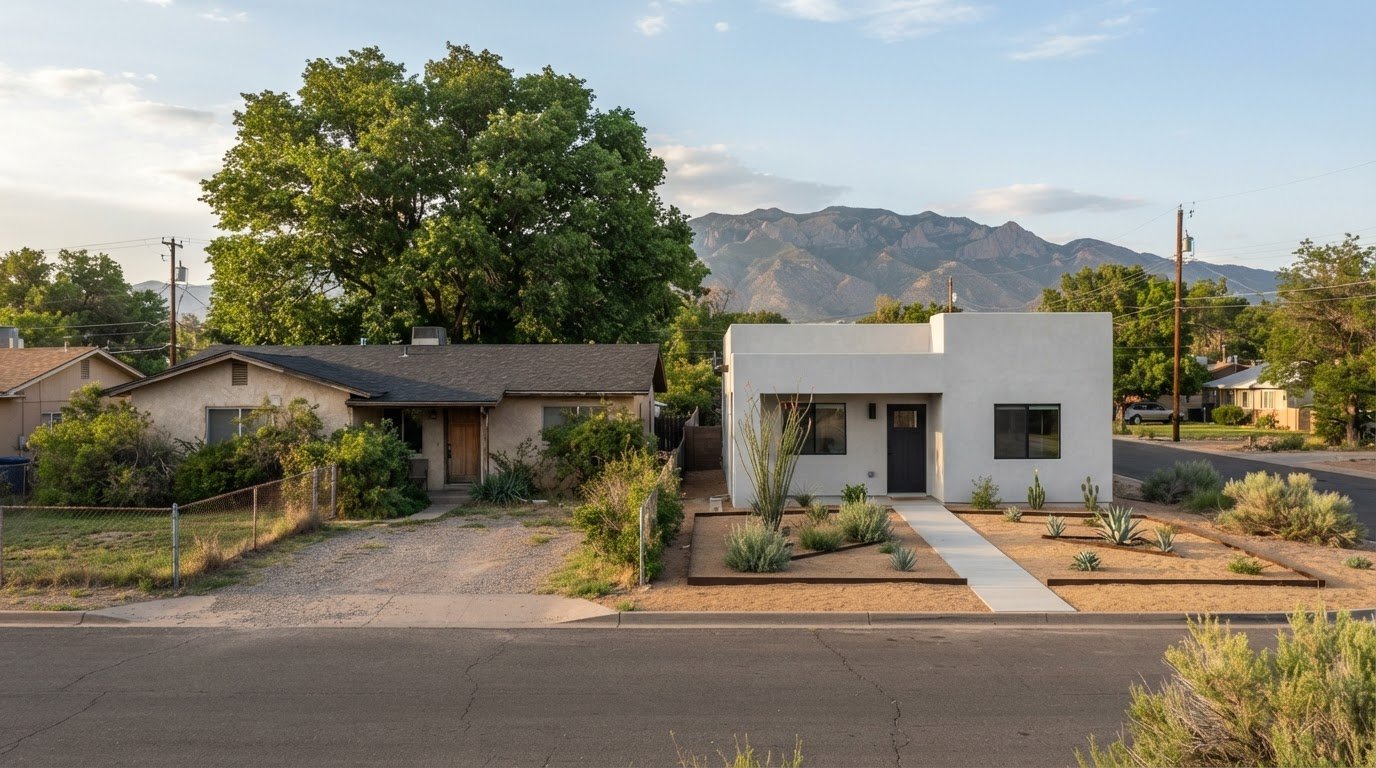
New Build vs Existing Home in Albuquerque: Costs and Tradeoffs
A newer home isn’t automatically the easier choice. The pros and cons of a new build versus an existing home in Albuquerque depend on your priorities. An existing home may offer a quicker move and an established neighborhood, but an aging roof, plumbing, or HVAC system can bring repair costs. A new build may need less early maintenance, yet construction delays and developing landscaping can affect your move and everyday comfort.
Weigh the purchase price alongside potential upkeep, your move date, and the kind of neighborhood you want. This comparison can help you assess those tradeoffs, including what a builder’s warranty may cover and why an existing home’s inspection and repair history matter.
Use the decision guide below to match each option to your budget, timeline, and lifestyle. The right fit is the one that supports your plans, not simply the home with the newest finishes.
Key Takeaways
- Compare the full ownership picture, including likely upkeep and repair needs, not just the purchase price.
- Use the home’s age, condition, and warranty terms to understand where maintenance responsibilities may differ.
- Weigh an established neighborhood’s character against a newer community’s evolving landscaping and amenities.
- Match your choice to your moving timeline, preferred home features, and tolerance for construction uncertainty.
- Consider what matters most to you before deciding whether a new build or an existing home is the better fit.
What’s the Difference Between New Constructions vs Existing Homes?
A new build offers current design and systems, while an existing home comes with a history, an established setting, and a condition shaped by past ownership. In Albuquerque, compare the home itself with the move-in timeline, surrounding development, and costs that continue after closing.
Construction Timelines and Temporary Housing
With a new build, your move depends on construction, not just a closing date. New construction homes typically take three to six months to build, and permits, material availability, or weather can delay completion by weeks or months. If your current housing ends before the home is ready, you may need temporary housing. An existing home may be ready sooner, while unfinished streets, young trees, and limited shade can affect daily life in a developing community.
Construction can also involve decisions that need to be made before move-in. A tract home in a planned community usually offers limited customization, while a custom home is built to the buyer’s specifications on their own lot. A spec home is already built and ready to sell, which can shorten the wait compared with choosing a home still under construction. Consider how much input you want on the floor plan and other details.
Prices, Property Taxes, and Homeowners Insurance
There is no single average price per square foot that describes new and existing homes across Albuquerque. Neighborhood, lot, size, condition, finishes, and floor plan all affect the comparison, so focus on similar homes in the same area. Property taxes and homeowners insurance also vary with value, location, construction, age, condition, and coverage choices. Neither is automatically lower for every new build or resale home.
A mortgage may finance either type of purchase, but custom construction can involve a different financing process from buying a completed property. Include possible housing overlap, selected finishes, and ongoing ownership costs in your budget instead of judging the options by list price alone.
| Option | Move-in timing | Customization | Setting | Cost considerations |
|---|---|---|---|---|
| New construction | Build schedule may shift | Varies by home type | Landscaping may still develop | Finishes, lot, taxes, and insurance matter |
| Existing home | Often ready sooner | Existing layout and features | Established surroundings | Condition, updates, taxes, and insurance matter |
Choose by weighing your preferred move date, how much input you want on the floor plan, and your comfort with construction delays or an older home’s existing condition. Comparing similar Albuquerque properties side by side makes these tradeoffs clearer.
Maintenance, repairs, and builder warranties
Maintenance needs depend on a home’s age, condition, and coverage, not simply on whether it is new or resale. Compare the builder warranty’s terms with an existing property’s systems and repair history.
Builder Warranties and New-Home Inspections
Some builders offer warranties that span years or decades, but coverage can differ by component and builder. Appliances and systems in a newly constructed home should be worry-free for at least the first few years, and some items may be covered by the builder’s warranty. Review the written terms for covered components, exclusions, and the process for reporting a problem.
For a new home in Albuquerque or Bernalillo County, the applicable permit, building-code, and inspection process depends on the jurisdiction and project scope. Permit records and inspection results document approvals and inspected construction stages. A buyer’s inspection provides a separate view of the finished home and can identify visible concerns, but it cannot ensure that no repair issue will emerge later.
Existing-Home Repairs and Renovations
An older home may need attention to its roof, HVAC, plumbing, or electrical systems. Repairs can range from routine upkeep to replacement, so consider the home’s age and condition when estimating likely maintenance. A thorough inspection can reveal visible issues, though repair needs may still surface after purchase.
Renovations add another layer to the decision. Updating a kitchen differs from replacing a major system, and each can affect your budget and move-in plans. A repair history can help explain past work, while an inspection can identify concerns that may need further evaluation. Treat both as useful information, not proof that future repairs are ruled out.
When comparing homes, sort inspection findings into immediate safety or function concerns, near-term replacements, and optional updates. This makes the tradeoff easier to see: a new home may require less early maintenance, while an existing home may call for more hands-on planning. Character and location can still make an older property appealing, but you’ll need to account for potential repairs.
- Warranty: Note the covered systems, limits, and reporting steps.
- Inspection: Separate observed conditions from items needing further evaluation.
- Repair planning: Distinguish essential work from improvements you can schedule later.
If updates are part of your plans before selling, planning a sale around needed renovations can help you consider the work alongside your timeline.
What Are the Cons of Buying an Existing Home?
An established Albuquerque neighborhood can offer mature trees, familiar streets, and a strong sense of place. The tradeoffs: the home’s existing layout, energy performance, and surroundings may not match every buyer’s preferences for modern features or planned amenities.
Mature landscaping is a visible advantage of many older properties. Established trees and yards can provide shade and privacy from move-in day, unlike newly planted landscaping that takes time to grow. But the planting plan, irrigation setup, and outdoor spaces reflect earlier owners’ choices and may not suit your needs. Changes can take added work.
Neighborhood character is harder to change than a kitchen or floor plan. An existing Albuquerque home may be near older commercial areas, established streets, or historic architecture. That setting can feel distinctive, but you have less control over nearby construction, street design, and the mix of homes around you. Weigh the home and its block together when a specific setting matters.
School and commute preferences can narrow your search. The address determines which routes and neighborhood services fit your daily routine. For example, a household focused on a particular school area may have fewer homes to consider than one with flexible preferences. Compare the actual location with your travel needs instead of assuming every established neighborhood offers the same access.
Energy upgrades can add expense and time to an older home. Retrofitting a property to improve energy efficiency may require both, especially if the work involves several features. Modern windows or better insulation may fit your plans, but include those upgrades in your renovation budget and timeline. A home’s character may appeal while its systems still require practical tradeoffs.
In established neighborhoods, amenities already have a fixed pattern. Parks, shops, and other destinations may be convenient from one Albuquerque property and less so from another. New developments can take a decade to establish neighborhood features, so an existing area may offer a more complete setting today. In return, you choose among the homes and amenities already there rather than shaping a new community as it develops.
Before choosing, weigh the specific property against your priorities: established landscaping, historic character, energy upgrades, school-area needs, and access to daily destinations. An existing home can offer a setting a new development cannot replicate, but its surroundings and features leave fewer opportunities for a fresh start.
Choosing based on budget, timeline, and lifestyle
Set your priorities before comparing Albuquerque listings or builder plans. Your budget, preferred move-in date, design choices, and daily routines can point toward different homes, even when both seem suitable.
Start with the total cost of ownership, not just the purchase price. For a resale home, account for its condition and any planned repairs or upgrades. For new construction, consider the selected finishes, appliances, and options that shape the final home. A custom plan may offer more control over the layout, while a resale property lets you see the finished rooms before deciding.
FHA, VA, and conventional mortgage loans can be used for both new-build and existing homes. Some custom construction may require a construction loan that converts to a permanent mortgage. Closing costs and negotiation opportunities depend on the transaction. Buyers may have more room to negotiate resale prices, closing costs, or repair credits than with new construction.
Your timeline can make the decision clearer. A resale purchase follows its contract and closing schedule, while a home still under construction adds a build schedule that can shift. If you need to move by a firm date, a completed home or resale property may fit better. If you can adapt your plans, building may give you more time to shape details such as the windows and floor plan.
Think through a typical day, too. A buyer who wants a specific kitchen layout or appliance package may value new-build choices. Someone who prefers established surroundings and a finished yard may favor an existing home. Neither preference is universal. Decide which features are essential and which can change later.
- Set priorities: Separate must-haves from optional finishes or upgrades.
- Map the schedule: Compare your needed move date with closing and construction timing.
- Review the budget: Include planned repairs, selected options, and expected closing costs.
- Test the lifestyle fit: Picture daily routines in the actual home and neighborhood.
Compare construction and resale as complete choices, not just different purchase processes. A buyer with a firm move date and flexible design preferences may value a completed home. Someone who can accommodate a changing schedule may place more value on selecting custom details. The stronger option balances the home you want with the timeline and financing you can manage.
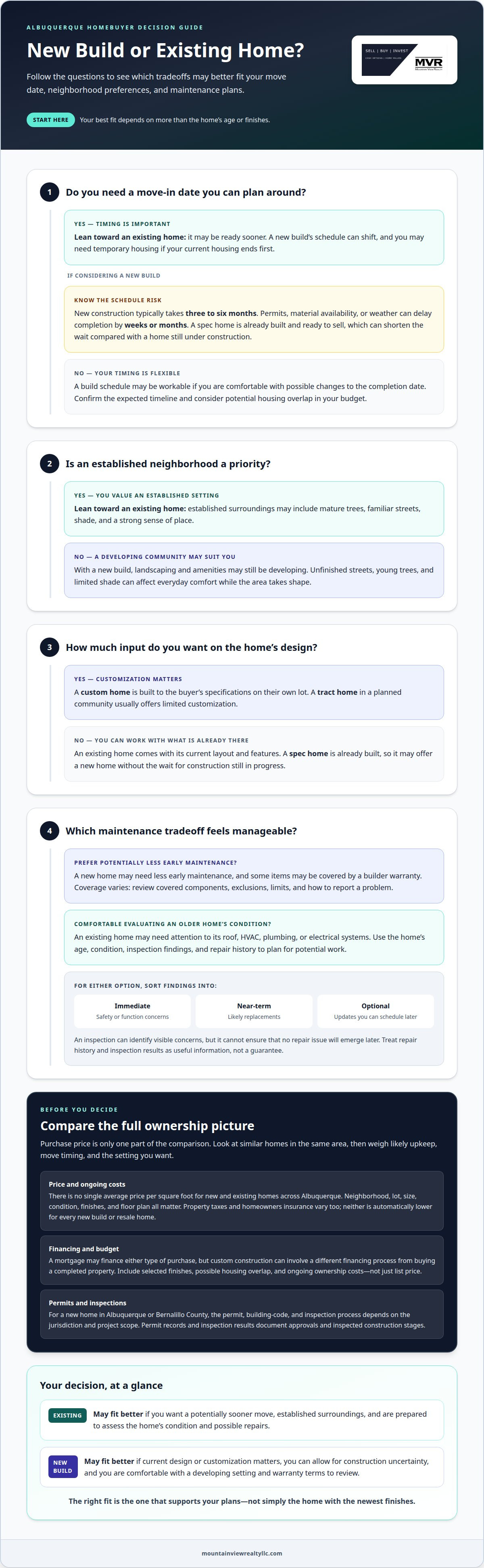
Buyer preferences for new versus existing homes
Buyer preferences matter, but a popular choice doesn’t automatically suit every Albuquerque household. Zillow’s 2024 Consumer Housing Trends Report found that 55% of buyers preferred new construction. Separate Zillow research conducted in 2024 found that 52% of prospective U.S. buyers planning to purchase within the next year preferred new construction. These findings describe different groups, so they signal interest rather than a single rule for choosing.
What draws buyers to a new home? A current floor plan, new appliances, and fewer immediate updates can make construction appealing. Some new homes meet current energy codes, and some earn ENERGY STAR certification. These details may matter if energy efficiency is a priority, but certification applies to some homes, not every new build. A new address may also mean living in a neighborhood where amenities are still developing.
Existing homes appeal for different reasons. You can see the finished property and its surroundings instead of picturing a future layout or landscape. An established neighborhood may already have the mature trees, street pattern, or local destinations you value. Older homes may need energy upgrades, and retrofitting for improved efficiency can take time and add expense. The specific home’s condition matters more than age alone.
You can’t compare utility costs reliably by age alone. They depend on the home’s size, insulation, windows, heating and cooling systems, and household use. Ask for available utility history for the specific Albuquerque property, then consider whether planned upgrades could change future expenses. Energy-code compliance doesn’t give an exact utility bill, and an older home’s age doesn’t reveal its current performance.
Use preferences to identify what to investigate. If a new build appeals, separate essential design choices from features that are simply attractive. If an existing home stands out, examine its layout, energy features, and likely maintenance. In either case, compare the actual home and neighborhood with your routine, not with assumptions about what buyers usually want.
Try this decision test: name the three features you most want in your daily life. One buyer might choose a modern kitchen, efficient systems, and a flexible floor plan. Another may prioritize mature surroundings, distinctive character, and established local amenities. If both home types meet your core needs, compare their condition, timing, and total ownership costs before deciding.
Mountain View Realty LLC: Home Trade-In
Mountain View Realty LLC’s Home Trade-In is an option to consider when planning a move and weighing your current home alongside your next one. It can help frame a conversation about the timing and priorities of a sale and purchase. The right approach depends on what matters most to you, such as your moving plans, the property’s condition, or how you want to sell.
Other options include CashOffer+, Renovate & Sell, and Sell & Stay. Each suits a different selling situation, so you can discuss which path fits your plans instead of treating every move the same way.
Contact Mountain View Realty LLC to discuss your home sale and next move.
Choose the Home That Fits Your Next Chapter
Make your next step a clear decision, not a rushed one. Before committing, write down what you need your next home to support, from daily routines to your preferred move timing. Use those priorities to focus your search and decide which tradeoffs feel manageable.
A thoughtful comparison of new-build and existing-home pros and cons in Albuquerque looks beyond finishes and first impressions. Consider how each property fits your plans and how comfortable you are with its remaining unknowns. If you’re also selling a home, think about how that transition fits with your purchase. A coordinated plan can bring the sale and move into one practical conversation.
You don’t need every detail settled before discussing your options. Mountain View Realty LLC can help you consider a next step that aligns with your priorities.
A thoughtful plan can help you move forward with greater clarity and confidence.
Frequently Asked Questions
What Are the Pros of Buying a New Construction Home?
A new construction home can offer modern systems, a layout chosen to suit your needs, and fewer immediate update projects. For example, a buyer who prioritizes an open living area may prefer selecting a plan over adapting an existing layout. Some newly built homes meet current energy codes, and some earn ENERGY STAR certification. Weigh these benefits against the construction timeline and the choices involved in specifying finishes.
What are the pros and cons of buying a new-construction home versus an existing home in Albuquerque?
A new build may appeal if you value newer systems and the chance to select design features. An existing home may suit you better if you want to see the finished property and established surroundings before buying. In Albuquerque, compare specific homes rather than assuming one type is always less expensive or easier to own. Consider condition, location, move timing, and future plans together.
What are typical builder incentives, warranties, and upgrade costs in Albuquerque?
Builder incentives and upgrade costs vary with the builder, property, and options selected. A written offer can clarify which incentives apply and whether they affect the purchase terms or selected finishes. Warranty coverage also depends on its written terms and covered components. Compare each incentive, warranty, and upgrade choice with the home’s overall fit instead of assuming every new construction purchase includes the same benefits.
How do Albuquerque neighborhoods, commute times, and amenities compare for new-build and resale homes?
New-build neighborhoods may still be developing landscaping and community features, while resale areas let you see existing streets and nearby destinations. Commute time depends on the property address, your destination, and travel schedule, so compare each home with your actual routine. Map the route to work, school, or regular errands from both addresses. Also consider whether you prefer established amenities or a neighborhood still taking shape.
What inspections should buyers get for new construction and existing homes in Albuquerque?
Arrange an inspection suited to the property’s stage and condition. For a completed new home, an independent inspection can examine visible workmanship and installed systems. For an existing property, attention to the roof, heating and cooling, plumbing, and electrical components can clarify maintenance needs. Share findings with an appropriate professional if a concern needs further evaluation, and keep the resulting reports with your purchase records.
How long does buying a new-build home take compared with buying an existing Albuquerque home?
Construction adds time to the purchase timeline when a home is not yet complete. New construction homes typically take three to six months to build, and permits, materials, or weather can extend that schedule. Buying an existing home does not include a build period, though closing timing depends on the contract, financing, and transaction steps. Account separately for construction and purchase schedules when planning your move and housing arrangements.

Article by
Robb Krautbauer
Robb Krautbauer is the Owner and Qualifying Broker of Mountain View Realty, serving Albuquerque, Rio Rancho, Santa Fe, and surrounding New Mexico communities. With more than a decade of real estate experience, Robb specializes in luxury homes, strategic home marketing, and helping homeowners navigate important life transitions with confidence.
Known for combining luxury-level marketing, AI-powered technology, and innovative selling strategies, Robb helps clients maximize their home's value while creating a smooth, personalized selling experience. Whether assisting luxury homeowners, retirees, families downsizing, or real estate investors, his focus is always on delivering expert guidance, honest advice, and exceptional results.
When he's not helping clients achieve their real estate goals, Robb enjoys studying market trends, emerging technology, and investment strategies that keep Mountain View Realty at the forefront of the industry.
Disclaimer
**Disclaimer:** The information provided in this article is for general educational purposes only and should not be considered legal, tax, financial, or professional advice. Real estate laws, market conditions, and regulations change over time and may vary based on your individual circumstances. Before making any real estate decision, consult with qualified legal, tax, or financial professionals. If you have questions about buying or selling real estate in New Mexico, contact Mountain View Realty for guidance specific to your situation. © 2026 Mountain View Realty. All rights reserved. The content on this website may not be reproduced without written permission.


