
Sale-leaseback: Is Selling Your Property and Leasing It Back Worth It
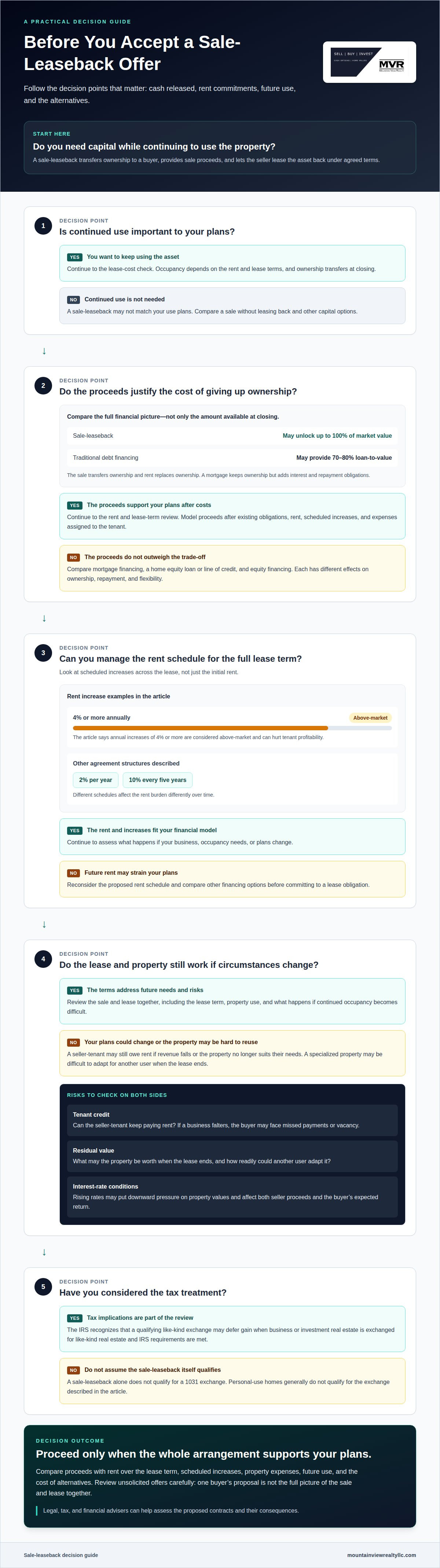
A sale-leaseback can turn property, land, machinery, or vehicles into capital while allowing the seller to keep using the asset. It may unlock up to 100% of a property’s market value, while traditional debt financing may provide a loan-to-value ratio of 70-80%. Whether a sale-leaseback is a good idea depends on how the proceeds compare with the cost and commitment of leasing the asset back.
Look beyond the cash available at closing. A sale can free up capital, but you give up ownership and take on rent. The lease term, future rent increases, and what happens if your plans or needs change all matter.
This article explains how sale-leasebacks work and why businesses use them for different high-value assets. You’ll also learn how proceeds compare with mortgage financing and which risks deserve attention before making a decision, including lease obligations and the property’s future value.
Key Takeaways
- Sale-leasebacks can apply to real estate, land, machinery, and vehicles, so assess the asset’s role in your plans before considering a sale.
- Weigh the cash released against ongoing rent, lease terms, and the possibility that your needs may change.
- Review unsolicited offers carefully: rent pricing and shifts in interest rates can affect both the seller’s proceeds and the buyer’s investment.
- Compare a sale-leaseback with mortgage financing and other capital options, including their financial, tax, and legal implications.
- The Internal Revenue Service recognizes a 1031 exchange as a strategy that may defer capital gains in a sale-leaseback.
What is a sale-leaseback?
A sale-leaseback lets a property owner sell to a buyer and then lease the property back. The seller receives proceeds while continuing to use the property.
Accessing Equity While Staying
A homeowner can sell a house and lease it back, accessing equity without moving right away. This may suit someone who wants to stay at home while using the proceeds for other needs. The seller becomes a tenant, and continued occupancy depends on the agreed rent and lease terms. Because ownership transfers at closing, those terms deserve close attention.
Liquidity From Property Equity
Selling can turn property equity into funds for other priorities. For example, a homeowner might use the proceeds to support a planned transition without moving immediately. The trade-off is giving up ownership and paying rent. Before deciding whether a sale-leaseback fits, consider how much cash you need, the ongoing lease payments, and how long you expect to stay.
Sale Price and Property Valuation
The sale price reflects the property’s market value and appeal to potential buyers. Commercial buyers may weigh location, condition, permitted use, and whether other occupants could use the building. A flexible retail space, for example, may appeal to a broader range of users than a specialized facility. These features influence buyer interest and proposed terms.
Tenant Credit and Residual Value
Tenant credit refers to the seller-tenant’s ability to keep paying rent under the lease. If a business falters, the buyer may face missed payments or a vacant property. Residual-value risk concerns the property’s worth when the lease ends. A highly specialized building may be difficult to adapt for another user, which can affect its future appeal and value.
Tax treatment is another factor to consider. According to the Internal Revenue Service, a sale-leaseback alone does not qualify for a 1031 exchange. An exchange may defer gain when qualifying business or investment real estate is exchanged for like-kind real estate and IRS requirements are met; personal-use homes generally do not qualify. Owners should weigh this alongside occupancy needs, rent obligations, and the property’s future use. The central question is whether proceeds and continued use support the owner’s plans better than keeping the property or choosing another approach.
Risks of accepting an unsolicited direct sale-leaseback offer
An unsolicited offer can make a sale-leaseback seem simple: sell the property, receive capital, and stay as a tenant. But a direct proposal comes from one buyer, and its terms determine both the sale and future occupancy. Assess the proceeds alongside the rent and lease commitments, not just the amount offered at closing. Buyers, too, need to evaluate the property and the tenant’s ability to meet those commitments.
Rent pricing can change the arrangement’s long-term value. Annual rent escalations of 4% or more are considered above-market and can hurt a tenant’s profitability. Agreements may instead set increases at 2% per year or 10% every five years. Each structure affects the rent burden differently over time. Sellers should understand the effect of the scheduled increases across the lease, rather than focusing only on the initial rent.
Interest rates can affect both sides of a proposed sale. Rising rates may put downward pressure on property values, changing the proceeds a seller might receive and the return a buyer seeks. An offer may reflect financing conditions as well as the property’s features and lease income. For sellers, a direct offer made in one market environment may not represent the property’s value under different conditions.
The lease creates risks that continue after closing. A seller-tenant may still owe rent if business revenue falls or the property no longer suits their needs. A buyer may face missed rent or vacancy if the tenant’s business falters. The buyer also takes on residual-value risk: a specialized property may be difficult to adapt for another user when the lease ends. Both parties should understand how the contracts address these situations.
Before accepting a corporate offer, examine the sale price and lease together. Consider the rent schedule, the term, the property’s future use, and the seller’s plans if continued occupancy becomes difficult. Buyers should weigh tenant credit and future demand alongside expected rent. Legal, tax, and financial advisers can help assess the proposed contracts and their consequences. A measured review of your real estate sale options can help put an unsolicited proposal in context.
Sale-leaseback proceeds compared with mortgage financing
A sale-leaseback and a mortgage address different capital needs. Selling transfers ownership in exchange for proceeds; mortgage financing lets you retain the property and borrow against it. A sale can provide capital without adding a loan balance, but rent replaces ownership. A mortgage preserves ownership while creating interest and repayment obligations. Compare control, future payments, and continued use of the property, not just the cash available at closing.
Other financing choices also affect ownership and future obligations. A home equity loan or line of credit may provide funds while leaving title with the owner, subject to repayment terms. Equity financing can bring in capital without a property loan, but may affect business ownership. Each structure has different implications for decision-making and flexibility. Compare how you’ll use the funds and what obligations will remain.
Build a financial model around the proposed sale and lease. Include proceeds after existing obligations, rent over the lease term, scheduled increases, and expenses assigned to the tenant. For a mortgage, include interest, repayments, and potential refinancing needs. Consider how each option performs if revenue changes or your plans shift. This reveals the effect on cash flow more clearly than comparing the initial proceeds alone.
Tax treatment varies by structure. A sale may have tax consequences, while deductions and other treatments depend on the transaction and the owner’s circumstances. A tax adviser can assess the sale, lease, and financing alternatives together. Legal counsel can review the documents, including occupancy, payment duties, and remedies. A financial adviser can evaluate projected cash flow and the business purpose of the funds.
In New Mexico, requirements depend on the property and transaction. The sale and lease documents, the property’s use, and applicable state and federal rules all matter. Local legal counsel can explain how those requirements apply to the proposed structure.
If the seller-tenant misses rent, the lease terms and applicable law govern the consequences. A right to buy the property back exists only if the transaction documents provide for it and define the conditions.
Before choosing, compare the total obligations and the control each option leaves with the owner. A sale-leaseback may suit a plan that needs capital and continued occupancy, while financing may be a better fit for an owner focused on retaining title. Choose the structure that supports the property’s purpose, cash-flow needs, and longer-term plans.
How sale-leasebacks work
A sale-leaseback combines a property sale with a lease that lets the seller continue using the property. Residential and commercial agreements differ in their purpose and lease terms.
Sale-Leaseback Transaction Process
The process involves both a sale contract and a lease contract, so the seller becomes a tenant after closing. One agreement sets the sale terms; the other defines rent, occupancy, and the lease period. Reviewing them together clarifies how selling the property affects continued use.
Commercial sale-leasebacks commonly involve longer commitments, with most leases lasting 10 or more years. For a business, the structure can provide capital while it continues operating from the property. A triple net lease may also make the tenant responsible for property taxes, maintenance, building insurance, and utilities.
Residential Sale-Leaseback Process
A residential sale-leaseback lets a homeowner sell a house and remain there as a tenant under an agreed lease. The lease sets the rent and how long the seller can stay. The timing matters: a short rent-back can postpone a move, while a longer term calls for planning around ongoing rent.
Residential leasebacks can range from a few weeks to a year or more, depending on what the parties agree to. Examples of possible periods include 30, 60, or 90 days. Those examples aren’t a standard schedule; the written agreement defines the actual occupancy period and payment terms.
At closing, the buyer becomes the owner, and the seller remains in the home as a tenant. The seller may pay the buyer upfront for the leaseback term. The agreement should clarify when rent is due, who covers agreed costs, and what happens when the term ends. Clear terms help both parties plan for a move or continued occupancy.
Insurance also changes with the transaction. A seller who rents the home back should maintain renters insurance for personal belongings, because the buyer’s policy covers the structure, not the seller’s belongings. For example, a seller staying for 60 days still needs to consider personal property coverage during that period.
How is the sale price determined in a sale-leaseback?
A sale-leaseback price reflects the property and the income the buyer expects from the lease. Buyers consider how the asset fits their investment plans; sellers need to weigh the proceeds against the cost of continued occupancy. The sale price is therefore linked to the lease structure. Reviewing both together helps explain why offers for the same property can differ.
Buyers may assess the property’s condition, location, permitted use, and likely demand from future occupants. They also consider the work or investment the building may need. A property requiring substantial updates, for example, may prompt different assumptions from one that is well maintained. These details can affect expected costs and the buyer’s view of the property’s value.
The lease can affect a buyer’s offer as much as the property itself. Buyers consider the rent, payment schedule, lease length, and tenant’s ability to meet obligations. They may also account for expenses assigned to the tenant and the property’s likely appeal after the lease ends. Sellers should understand how each proposed term affects the buyer’s expected income.
Market evidence helps put an offer in context. Comparable sales can inform value, while differences in condition, use, or occupancy may limit direct comparisons. For commercial property, a buyer may also examine income potential. The most useful comparisons involve similar assets and account for lease terms, rather than relying on a broad average.
Interest from more than one buyer can offer useful evidence of demand. A competitive process may produce different proposals, allowing the seller to compare price and contract terms. Offers can vary in lease conditions, timing, and other requirements. Review each proposal in full: a higher price may come with obligations that do not suit the seller’s needs.
For an Albuquerque property, local demand and comparable sales help frame a reasonable discussion of value. Condition, location, and likely use matter. A home and a specialized commercial building attract different buyer considerations, so the valuation approach should fit the property.
Compare each offer’s price with the lease rent, term, expense responsibilities, and flexibility. Considering these together helps sellers judge whether the proceeds and occupancy terms work for them. The headline price alone doesn’t show the transaction’s full financial effect.
Mountain View Realty LLC: Short Sale
Mountain View Realty LLC helps Albuquerque homeowners weigh selling options beyond a sale-leaseback. The right path depends on whether you want to stay in the home, move, or address a challenging mortgage situation. A leaseback transfers ownership and makes you a tenant, so it may not suit every homeowner’s priorities or plans.
If staying in the property matters most, weigh the lease term, rent, and flexibility against your needs. If a long-term tenant commitment doesn’t suit you, a sale without a leaseback may be a better fit. Mountain View Realty LLC offers homeowners several selling approaches to consider based on their property and next steps.
- Short Sale: If the mortgage balance and likely sale proceeds create a difficult gap, a Short Sale may be worth discussing. It offers a different path from selling and leasing the home back.
- CashOffer+: This may suit homeowners who want to consider a cash offer as an alternative to a leaseback. Weigh the offer against your need for proceeds and your plans after the sale.
- Home Trade-In: If you plan to sell one home and buy another, this option may help you consider both parts of the transition together.
- Renovate & Sell: If the property needs work before going to market, this option may be relevant alongside a sale-leaseback. The choice depends on the home and your selling priorities.
Each option suits a different situation. If continued occupancy matters, focus on the lease terms and rent. If you’re ready to move, you may prefer a sale that doesn’t leave you as a tenant. Homeowners facing a difficult mortgage balance can consider whether a Short Sale fits their circumstances better than a direct sale-leaseback offer.
Mountain View Realty LLC helps sellers weigh strategies against their priorities, rather than treating a leaseback as the only path. Start with your property, plans for occupancy, and what you want the sale to accomplish. Then explore which selling approach best supports your next move.
Contact Mountain View Realty LLC to discuss which selling option may suit your situation.
Choose the path that fits your next move
Whether a sale-leaseback is a good idea depends on how you want to use your home and what you need from the sale. If you’re asking, “Is a sale-leaseback a good idea for my next move?”, consider how staying in place compares with moving and paying rent. Give those priorities as much weight as the financial terms.
A leaseback is one way to plan a home sale. Mountain View Realty LLC also offers CashOffer+, Home Trade-In, and Renovate & Sell. These options can suit different priorities, from considering an off-market cash offer to coordinating a move or preparing a property for sale. Ask yourself, “Is a sale-leaseback a good idea for my plans, or would another selling approach fit better?”
Bring your questions about timing, occupancy, and your property to a conversation with Mountain View Realty LLC. Comparing options can help you choose a path that supports your plans. If a leaseback doesn’t fit, another selling strategy may work better.
Take your next step at your own pace, with a clear view of the options ahead.
Frequently Asked Questions
What Are the Benefits?
A sale-leaseback can provide capital while letting the seller continue using the property. For an Albuquerque homeowner, it may help fund another priority without an immediate move. A business may use the proceeds for operations or expansion rather than take on additional debt. The trade-off matters: the seller gives up ownership and takes on rent, so the benefit depends on how the proceeds and lease fit future plans.
How does a sale-leaseback work for homeowners and businesses?
Both arrangements pair a property sale with a lease, but occupancy needs differ. A homeowner may lease the house back for an agreed period, while a business may need continued use of its premises to operate. In either case, the sale and lease documents should align on the closing date, rent, expenses, occupancy, and what happens when the lease ends. These details shape the seller’s obligations after ownership transfers.
What are the typical costs and fees of a sale-leaseback?
There’s no standard cost for every sale-leaseback; expenses depend on the property and negotiated contracts. Account for transaction and legal work, tax and financial advice, and rent and property expenses during the lease. Net proceeds also depend on the agreed price and any obligations settled at closing. Include these items in your comparison rather than relying on the offer amount alone.
What are the tax consequences of a sale-leaseback in the United States?
Tax consequences depend on the transaction’s structure and the owner’s circumstances. The Internal Revenue Service recognizes a 1031 exchange as a strategy that may defer capital gains in a sale-leaseback. Deferral is not the same as eliminating tax, and the exchange strategy has to fit the transaction. A tax adviser can assess the proposed sale, lease, and exchange treatment together before the parties commit.
How does a sale-leaseback compare with refinancing or a home equity loan?
Refinancing or a home equity loan lets an owner retain the property while borrowing against it. A sale-leaseback transfers ownership in return for sale proceeds and lease obligations. Debt brings interest and repayment terms; a lease creates ongoing rent. Compare available cash, future payments, and retained control. An owner who values continued ownership, for example, may want to examine borrowing before considering a sale.
What are the main risks of a sale-leaseback for the seller and tenant?
For the seller-tenant, rent may become difficult to manage if income changes or plans shift, but the lease still governs occupancy and payments. For the buyer, missed rent can lead to vacancy, and a specialized property may be harder to lease again. Both sides also face uncertainty if the property’s future value differs from expectations. Albuquerque demand and the property’s flexibility for other uses can help inform that assessment.
What lease terms and protections should sellers negotiate in a sale-leaseback?
Pay close attention to the rent schedule, increases, lease length, renewal options, and responsibility for expenses. The agreement should also spell out maintenance duties, insurance arrangements, late-payment procedures, and what happens if the tenant needs to leave early. If you might want to buy the property later, the sale documents must address that possibility. Clear terms help prevent misunderstandings about occupancy or costs.
How can you calculate whether a sale-leaseback is financially worthwhile?
Compare the usable sale proceeds with the full cost of renting for the agreed term. Include obligations settled at closing, scheduled rent increases, property expenses, and any income or business use the released capital supports. Then compare those figures with borrowing costs and repayments under a mortgage or home equity loan. A cash-flow model can show whether the proceeds meet your goals without making future payments unmanageable.

Article by
Robb Krautbauer
Robb Krautbauer is the Owner and Qualifying Broker of Mountain View Realty, serving Albuquerque, Rio Rancho, Santa Fe, and surrounding New Mexico communities. With more than a decade of real estate experience, Robb specializes in luxury homes, strategic home marketing, and helping homeowners navigate important life transitions with confidence.
Known for combining luxury-level marketing, AI-powered technology, and innovative selling strategies, Robb helps clients maximize their home's value while creating a smooth, personalized selling experience. Whether assisting luxury homeowners, retirees, families downsizing, or real estate investors, his focus is always on delivering expert guidance, honest advice, and exceptional results.
When he's not helping clients achieve their real estate goals, Robb enjoys studying market trends, emerging technology, and investment strategies that keep Mountain View Realty at the forefront of the industry.
Disclaimer
**Disclaimer:** The information provided in this article is for general educational purposes only and should not be considered legal, tax, financial, or professional advice. Real estate laws, market conditions, and regulations change over time and may vary based on your individual circumstances. Before making any real estate decision, consult with qualified legal, tax, or financial professionals. If you have questions about buying or selling real estate in New Mexico, contact Mountain View Realty for guidance specific to your situation. © 2026 Mountain View Realty. All rights reserved. The content on this website may not be reproduced without written permission.


