
Selling a Home to Family in Albuquerque at a Fair Price
Selling a home to a family member in Albuquerque is possible, but who must sign depends on how the property is titled and who has authority to act. For an inherited home, New Mexico’s Uniform Probate Code, Section 45-3-715, authorizes a personal representative to sell estate assets. A written sales agreement and a sound basis for fair value can help keep expectations clear.
Selling a home to a family member in Albuquerque may feel simpler and keep the property close. But good intentions alone do not settle questions about ownership, inheritance, price, or how other relatives may feel.
This guide explains how title and legal authority shape a sale, how an independent valuation can support a fair price, and what to consider when heirs are involved. You’ll also learn how to weigh family expectations against your options and make a considered decision about the home.
Key Takeaways
- Use an independent valuation to give relatives a clear, objective basis for discussing the sale price.
- Consider how a below-market sale could affect gift-tax treatment before settling on a family price.
- When heirs share a home, clarify how the sale and proceeds fit with the family’s future estate plans.
- Set expectations early about who is involved, how decisions will be made, and what happens to the proceeds.
- Understand which closing expenses may apply; New Mexico imposes no real estate transfer tax or documentary stamp tax on deeds.
Determining legal ownership and authority
Before agreeing to a family sale, establish who owns the Albuquerque property and who has authority to sign. For an inherited home, the title and estate documents determine whose approval the transaction requires.
Confirming Legal Ownership
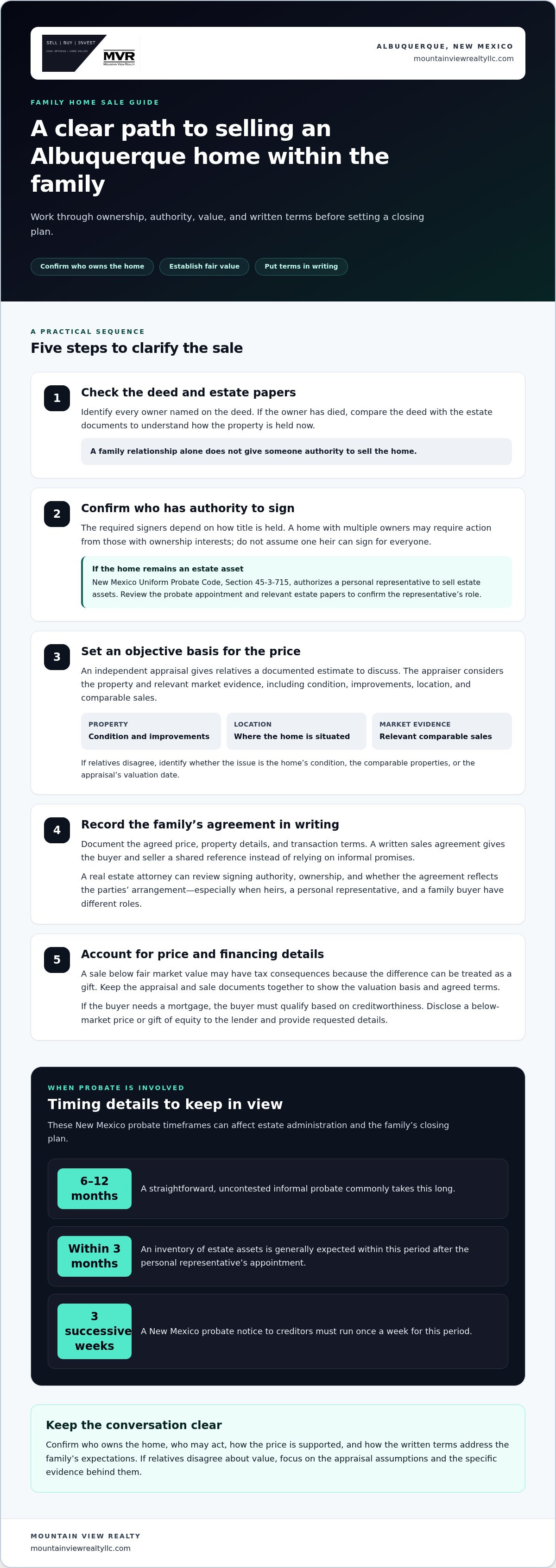
Legal ownership is the interest recorded for the property. A family relationship alone does not give someone authority to sell it. Review the deed and identify every named owner. If the home belonged to a relative who has died, compare the deed with the estate documents to understand how the property is held now.
In New Mexico, who must sign a real estate contract for an inherited home depends on how title is held and who has authority to act. A home with multiple owners may require action from those with ownership interests, while an estate sale may involve a personal representative. Do not assume one heir can sign for everyone.
The New Mexico Uniform Probate Code, Section 45-3-715, authorizes a personal representative to sell estate assets. That authority matters when the home remains an estate asset rather than having passed into an heir’s individual ownership. Review the probate appointment and any relevant estate papers to identify the representative and the scope of their role.
Formal probate can establish who is authorized to handle estate property. In New Mexico, a straightforward, uncontested informal probate commonly takes six to twelve months. An inventory of estate assets is generally expected within three months of a personal representative’s appointment. These steps can help clarify the property’s status before relatives set a closing plan.
Probate also involves notice to creditors. In New Mexico, a probate notice to creditors must run once a week for three successive weeks. This is separate from deciding which relative may buy the home, but it can affect estate administration and timing. Keep the personal representative’s responsibilities in mind when discussing a proposed sale.
Federal estate tax is a separate question from ownership and signing authority. The federal estate tax exemption is $15 million per individual as of 2026, according to the Internal Revenue Service. That figure does not determine who owns a particular Albuquerque home or who may sign its sales contract. Keep estate-tax planning distinct from confirming title.
Sales Agreements and Legal Advice
A written sales agreement records the family’s terms instead of leaving them as informal promises. For a sale between relatives, put the agreed price, property details, and transaction terms in writing. A clear agreement gives the buyer and seller a shared reference and helps prevent misunderstandings about what they accepted.
Legal advice can help you navigate New Mexico rules and the details of an estate sale. A real estate attorney can review who has authority to sign, how ownership is held, and whether the agreement reflects the parties’ arrangement. This is especially useful when an heir, personal representative, and family buyer have different roles in the transaction.
Fair market value and independent appraisals
An independent appraisal gives relatives an objective estimate of the home’s value. It can separate the price discussion from family history, financial needs, or assumptions about what the property is worth. For an Albuquerque home, the appraiser considers the property and relevant market evidence, not just the family’s preferred sale price.
Use the appraisal as a documented starting point, then review its assumptions. Property condition, improvements, location, and comparable sales can all affect the conclusion. If relatives disagree, identify whether the dispute is about the home’s condition, the comparable properties, or the appraisal’s valuation date. That makes the discussion more specific than debating a single figure.
A hypothetical Albuquerque home valued at $360,000 illustrates how a shared property interest can be calculated. This is an illustration, not an appraisal or a prediction of local property values. An actual appraisal and the ownership documents determine what applies to a particular sale.
A sale below fair market value may have tax consequences because the difference can be treated as a gift. The IRS permits an annual gift tax exclusion, but the exclusion amount is not the home’s value or the agreed sale price. Keep the appraisal and sale documents together to clearly document the terms and valuation basis.
For a mortgage purchase, the family buyer must qualify based on creditworthiness. A below-market price or gift of equity may affect how the lender evaluates the transaction, so the buyer should disclose the arrangement and provide requested details during the loan process. The appraisal provides evidence of value but does not replace the lender’s credit review.
Albuquerque market conditions add context, not a substitute for valuing the specific home. As of August 2026, inventory was roughly 3.9 months of supply, and homes averaged around 34 days on market. Those figures describe broader conditions at that time. They do not establish the fair value or likely marketing period for an individual property.
A sale price alone does not determine the property’s future tax bill. For an Albuquerque or Bernalillo County home, review the parcel’s assessment and tax records instead of estimating taxes from the family’s agreed price.
Before settling on a price, compare the appraisal with the home’s condition and current market context. This gives relatives a clearer basis for discussing any difference between fair value and the terms they have agreed on.
Selling an inherited home among family members
An inherited Albuquerque home can leave relatives with different priorities. One heir may want to keep it, while another needs proceeds or wants to settle the estate. Before choosing a buyer or listing the home, clarify what the family is considering: a purchase by one relative, a sale to an outside buyer, or continued shared ownership. Each option affects the home and the family differently.
If a relative wants to buy, separate the buyer’s decision from the heirs’ decisions about the property. A written outline of who plans to sell, who may buy, and how proceeds would be handled can reveal disagreements early. For example, discuss whether the buyer would acquire the whole home or whether some owners prefer to retain an interest. The estate’s ownership records and legal authority still determine what can proceed.
A family buyer is not the only option. Listing the home exposes it to the broader market, while a direct sale to a relative keeps the transaction within the family. Compare the options based on each heir’s priorities, the property’s condition, and the family’s preferred timing. A private sale is not automatically fair, and a listing is not automatically best. The right choice depends on the family’s goals and circumstances.
Consider tax treatment before the family settles on a plan. New Mexico has no state estate tax or inheritance tax. Heirs may receive a step-up in basis on inherited property, resetting its cost basis to the property’s value on the date of death. That basis can matter if an heir later sells. Keep inheritance records and sale documents together for tax and estate-planning discussions.
The proceeds affect more than the person who signs the sale documents. Consider how the family will account for shared ownership, any agreed distribution, and costs related to preparing or transferring the home. If one heir has maintained the property while others have not, discuss that history openly rather than assume everyone sees it the same way. Clear records help keep the conversation specific.
Consider how today’s decision fits into future estate planning. A relative who keeps the home may later need to decide how it should pass to the next generation. A sale can simplify ownership, but the family may also want to discuss where the proceeds will go and how they affect existing plans. A New Mexico estate-planning professional can address those implications alongside the chosen sale approach.
Family communication and expectations
A family sale involves more than agreeing on a buyer and price. In Albuquerque, relatives may have different plans for the home, its contents, and the proceeds. A clear conversation gives everyone a chance to explain their priorities before differences affect decisions. Keep the discussion focused on the property and transaction, not on whether agreement proves family loyalty.
Start with a shared description of the proposed sale. Explain whether one relative hopes to buy the home, whether other family members support a sale, and what outcome matters most to each person. Ask relatives to name their concerns directly. One may focus on timing, another on the property’s condition, and someone else on how proceeds will be handled.
Record the points that need a decision. A simple written agenda can keep a family meeting about the Albuquerque property focused:
- Who is participating in the discussion, and what role does each person have?
- Is the family considering a relative’s purchase, an outside buyer, or continued shared ownership?
- Which terms still need agreement, such as timing, property contents, or sale conditions?
- Who will document each decision and share it with the people involved?
Separate preferences from decisions. A relative might say, “I’d like to keep the dining table,” even though the family has not agreed how to handle household belongings. Record the request, then determine who has authority to resolve it. This can prevent an informal comment from being mistaken for a final agreement.
Use plain language when discussing sale terms. If a family buyer proposes a price or closing date, state whether it is a proposal or an agreed term. Follow up on important conversations with a written summary. List the agreed points and open questions, then share the summary with the participating relatives.
Agree on how to handle unresolved differences. The family could pause a decision, schedule another discussion, or identify a neutral professional to clarify a real estate issue. Keep personal disagreements separate from practical questions about the Albuquerque home. If a relative feels unheard, invite them to explain the specific concern before the group moves forward.
Set expectations for updates. Decide who will communicate with the family buyer, share transaction documents, and report changes. A named contact and written record help relatives stay informed. Clear communication cannot guarantee agreement, but it can help the family make decisions with fewer surprises.
What closing costs and transfer fees apply to a home sale in Albuquerque?
In Albuquerque, closing costs depend on the transaction terms, the property, and any financing. One clear statewide point: New Mexico imposes no real estate transfer tax or documentary stamp tax on deeds. That eliminates those particular deed-related charges, but it does not mean every sale closes without other expenses.
Distinguish transfer taxes from the costs of completing a transaction. A deed transfers ownership, while other closing items may relate to services, existing obligations, or agreements between the parties. For a family sale, discuss these items before signing so the buyer and seller understand which costs each will handle.
Review the proposed closing statement in light of the Albuquerque property. It should show the amounts collected or paid at closing and how each item affects the seller’s proceeds or the buyer’s funds. If an entry is unfamiliar, ask what it covers and whether the purchase agreement assigns it to the buyer or seller.
A mortgage can add lender-related steps to a family purchase. The buyer’s loan process and the seller’s payoff obligations may affect the funds needed to close. If the Albuquerque home has an outstanding mortgage, for example, the seller’s proceeds may go toward paying it off. Closing figures should reflect the actual loan and transaction terms.
Account for property taxes in the closing calculation. Review the parcel’s current tax information and the parties’ agreement on how to allocate the amount. The Albuquerque buyer and seller can clarify the division in their written terms instead of assuming one family member will pay for a period when another owned the home.
Other transaction expenses depend on the services used and the agreed terms. A family sale may involve title or settlement services, document preparation, inspections, or agreed repairs. These are not transfer taxes. Before finalizing the closing statement, confirm which services are part of the transaction and how their charges are allocated.
For an inherited home, include estate-related responsibilities in the closing review. The personal representative may need to account for the sale proceeds as part of estate administration. Keep the signed agreement, final closing statement, and payment records together. These documents show how the Albuquerque property transferred and how the funds were distributed.
Before closing, compare the signed agreement with the final statement. Confirm the buyer, seller, property, agreed price, loan payoff, tax allocation, and each listed charge. Resolve discrepancies before signing. A clear written record helps relatives understand the financial result and reduces the risk of an unexpected closing item becoming a family dispute.
Mountain View Realty LLC: CashOffer+
Mountain View Realty LLC offers CashOffer+ as an option to consider alongside a sale to a relative. It may suit Albuquerque homeowners who want to compare a direct family transaction with another selling path. The right choice depends on your priorities, including the agreed terms, timing, and how you want to handle the property.
If you’re weighing options, Mountain View Realty LLC can help you consider CashOffer+, Home Trade-In, or Renovate & Sell in light of your plans. Each provides a different approach to selling, so focus on what best fits your situation and the decisions your family has already made.
Contact Mountain View Realty LLC to discuss your home and selling options.
Choose the next step with confidence
If you’re considering selling a home to a family member in Albuquerque, look beyond the transfer itself. Think about what you want the family relationship and the property’s future to look like after closing. That perspective can help you weigh options that may feel very different in the moment.
Before moving forward, give yourself room to distinguish firm decisions from family preferences. Write down the outcome you hope to reach, the questions that remain, and whose input matters. This pause can keep the next conversation focused on a workable path instead of pressure to agree immediately.
There’s no need to force a decision before you understand what matters most. A thoughtful next step can make a complex family transaction feel more manageable.
With a clear sense of your priorities, you can move forward at a pace that feels right for your family.
Frequently Asked Questions
What are the realistic real estate options for the home?
Compare each option by what it leaves the family with, not just by who receives the deed. Consider expected proceeds after existing obligations, who will handle upkeep, and whether anyone needs to remain in the home. A family buyer’s offer may suit relatives who value continuity, while another option may better fit owners who prioritize ending shared responsibilities.
What happens when one sibling wants to sell and another doesn’t?
A sibling who wants to keep the property can make the discussion more concrete with a purchase proposal. It should explain how the purchase would be funded, when the sibling could take responsibility for the home, and what happens if the plan cannot proceed. This gives the other owners a specific choice to evaluate instead of an open-ended request to delay a sale.
What are the steps to sell a home to a family member in Albuquerque, New Mexico?
Once the basic sale terms are agreed, decide what transfers with the Albuquerque home and what does not. Write down whether appliances, furniture, or other personal property are included. Set expectations for possession, key handoff, utilities, and any agreed work before move-in. These details can prevent last-minute confusion, even when buyer and seller know each other well.
How is the home’s fair market value determined for a family sale in New Mexico?
Review the valuation report’s effective date and assumptions, not just its final estimate. Check whether it accurately describes the home’s condition and accounts for unusual features. If a major repair or improvement takes place after the valuation, ask whether the analysis still reflects the home being sold. Understanding the report makes it easier to explain the estimate to relatives.
What are the tax consequences of selling a home to a relative below market value?
A below-market difference may be treated as a gift, but that is separate from the tax result of a later sale by the buyer. Keep records of the amount paid, the home’s documented value, and any inheritance details. These help a tax professional assess the transfer and later tax calculations without relying on family recollections or an informal estimate.
Could a below-market home sale count as a gift under IRS rules, and what gift tax forms are required?
A below-market home sale may create a gift for tax purposes. The IRS permits an annual gift tax exclusion, but whether a gift-tax return is required depends on the transfer and applicable federal rules. Keep the valuation and sale documents, then have a tax professional identify the filing requirements and forms that apply to the specific transaction.
What New Mexico disclosures and purchase documents are required when selling a home to a family member?
Use the written agreement to specify practical details, including included appliances, excluded belongings, possession arrangements, and agreed repairs. Gather records supporting those terms, such as repair receipts or relevant property documents. Disclosure requirements can depend on the home and transaction. A New Mexico real estate attorney can help identify applicable requirements before the family signs.
Does an Albuquerque home sale require a title company, attorney, or real estate agent?
The right professional support depends on the transaction. A straightforward cash purchase may require different coordination than a mortgage-financed sale or an inherited property with several decision-makers. Consider who will prepare and review documents, coordinate the transfer, and explain legal questions. An agent can help assess selling options, while questions about ownership or contract terms call for an attorney’s advice.

Article by
Robb Krautbauer
Robb Krautbauer is the Owner and Qualifying Broker of Mountain View Realty, serving Albuquerque, Rio Rancho, Santa Fe, and surrounding New Mexico communities. With more than a decade of real estate experience, Robb specializes in luxury homes, strategic home marketing, and helping homeowners navigate important life transitions with confidence.
Known for combining luxury-level marketing, AI-powered technology, and innovative selling strategies, Robb helps clients maximize their home's value while creating a smooth, personalized selling experience. Whether assisting luxury homeowners, retirees, families downsizing, or real estate investors, his focus is always on delivering expert guidance, honest advice, and exceptional results.
When he's not helping clients achieve their real estate goals, Robb enjoys studying market trends, emerging technology, and investment strategies that keep Mountain View Realty at the forefront of the industry.
Disclaimer
**Disclaimer:** The information provided in this article is for general educational purposes only and should not be considered legal, tax, financial, or professional advice. Real estate laws, market conditions, and regulations change over time and may vary based on your individual circumstances. Before making any real estate decision, consult with qualified legal, tax, or financial professionals. If you have questions about buying or selling real estate in New Mexico, contact Mountain View Realty for guidance specific to your situation. © 2026 Mountain View Realty. All rights reserved. The content on this website may not be reproduced without written permission.


