Selling a House During Bankruptcy in New Mexico: Sale Rules
You can sell a home during bankruptcy, but a Chapter 13 sale generally requires court and trustee approval before closing. Selling a house during bankruptcy in New Mexico also involves disclosing the proposed terms and explaining how the proceeds will be handled. The sale can move forward, but it needs to fit the bankruptcy case.
It’s understandable to focus on finding a buyer and agreeing on a price. In Chapter 13, though, the Motion to Sell and Statement of Sale matter too: they help show the court and creditors the proposed terms, costs, mortgage payoff, and distribution of any remaining funds.
This guide explains how approval works, what sale information must be disclosed, how proceeds may be handled, and how a discharge can affect your options. It also explains how the rules differ between an active case and a completed bankruptcy, so you can plan your home sale with a clearer understanding of the process.
Key Takeaways
- A Chapter 13 homeowner can sell, but court and trustee approval generally need to be part of the plan before closing.
- Residence history and when you bought the home can affect which homestead exemption applies.
- A bankruptcy discharge may change your control of the home, but a mortgage lien can remain.
- Sale filings explain the proposed terms, while the final sale statement accounts for costs, mortgage payoff, and remaining funds.
- Understanding how proceeds may affect your repayment plan can help you weigh whether a sale fits your goals.
What If I Want To Sell My Home During Chapter 13 Bankruptcy?
You can sell a home during Chapter 13, but the sale generally needs court approval. Residence history and New Mexico’s homestead exemption can affect how much equity is protected.
For context, watch this overview of bankruptcy considerations:
A Chapter 7 homeowner may sell, but the bankruptcy trustee reviews the assets and determines whether property can be sold to pay creditors. Exempt or abandoned property typically returns to the homeowner’s control after the case closes and discharge.
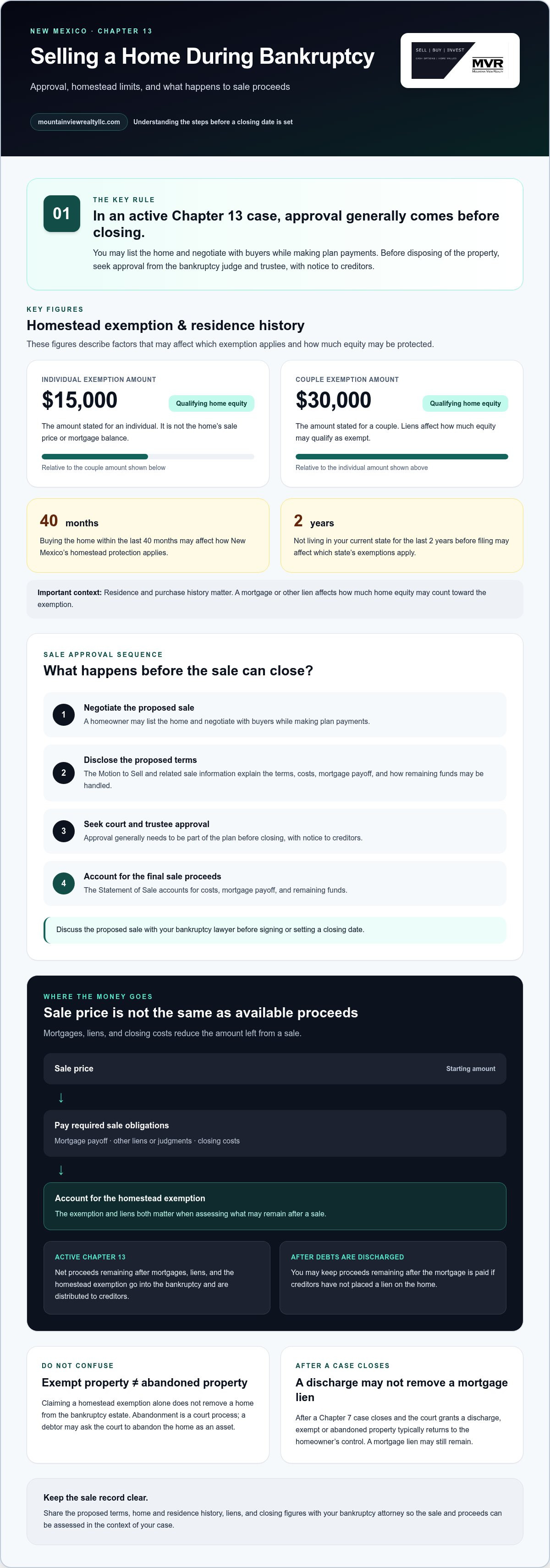
In Chapter 13, you may list the home and negotiate with buyers while making plan payments. Before disposing of the property, seek approval from the bankruptcy judge and trustee, with notice to creditors. Discuss the sale with your bankruptcy lawyer before signing or setting a closing date.
Residence Requirements and Homestead Limits
Residence requirements help determine which state’s exemptions apply to your bankruptcy case. New Mexico’s homestead protection may be limited if you bought the home within the last 40 months or haven’t lived in your current state for the last 2 years before filing.
Your residence and purchase history matter when assessing how much home equity may be exempt. A recent move or purchase can affect how New Mexico’s exemption applies, so include that history when discussing your filing and proposed sale with your bankruptcy attorney.
New Mexico Property Exemptions
Property exemptions protect certain assets from creditor claims in bankruptcy, subject to the rules that apply to the case. New Mexico exemptions include a homestead exemption for qualifying home equity, while Chapter 13 can allow a homeowner to keep the property through a repayment plan.
For a home with a lien, only its unencumbered portion counts toward the exemption value, according to the U.S. Government Publishing Office. A mortgage or other lien affects how much equity may qualify as exempt.
Homestead Exemption Amounts
The homestead exemption amount stated for bankruptcy purposes is $15,000 for an individual and $30,000 for a couple. These figures describe the amount of qualifying home equity protected by the exemption, not the home’s sale price or mortgage balance.
Chapter 13 may allow a homeowner to protect equity exceeding the exemption amount while keeping the home. The exemption and the home’s liens both matter when considering what could remain available to creditors after a sale.
Homestead Exemptions and Abandoned Property
Abandonment is a court process that can remove a home from the bankruptcy estate and allow a sale before the case closes. A debtor may ask the court to abandon the home as an asset. Claiming an exemption alone does not accomplish this.
When a homeowner receives a homestead exemption, they retain possession and may sell the home after bankruptcy closes. In an active Chapter 13 case, however, a proposed sale still requires the applicable court and trustee approval. The distinction between exempt property and abandoned property can shape when the sale can proceed.
Selling a home after bankruptcy discharge
After a Chapter 7 case closes and the court grants a discharge, exempt or abandoned property typically returns to your control. A mortgage lien may still remain, so the discharge alone doesn’t necessarily clear the home for sale.
Selling Before Filing Bankruptcy
Selling before filing changes what you own when the bankruptcy case begins, but you still need to disclose relevant financial information. Tell your bankruptcy attorney about the home, any accepted offer, and where the proceeds went. This helps the attorney account for the sale in your filing.
Don’t assume sale proceeds are automatically protected or available for personal use. The outcome depends on the bankruptcy case, applicable exemptions, debts, and liens. Keep clear closing records and document the funds received so your attorney can assess how the sale may affect creditors.
Using Sale Proceeds to Pay Creditors
Using sale proceeds to pay creditors means applying funds left after required sale payments toward debts or a Chapter 13 repayment plan. In an active Chapter 13 case, sale proceeds become part of the bankruptcy estate and must be paid to the trustee for distribution to creditors.
A sale may also affect your repayment plan if the proceeds could pay it in full. Discuss how the funds may be used with your attorney before spending or transferring them. The net proceeds, plan obligations, and court instructions all shape what happens next.
Distribution of Home-Sale Proceeds
Distribution is the process of accounting for sale funds and directing them to the proper obligations. In a Chapter 13 sale, net proceeds remaining after mortgages, liens, and the homestead exemption are paid go into the bankruptcy and are distributed to creditors.
After debts are discharged, you may keep proceeds remaining after the mortgage is paid if creditors have not placed a lien on the home. That differs from an active case, where bankruptcy requirements may still control the proceeds. Give your attorney the closing figures to help determine what remains and how it should be handled.
Liens, Judgments, and Sale Proceeds
A lien or judgment secured against your home can reduce the amount available from a sale. These claims may need to be cleared before closing, and their payoff reduces the proceeds left afterward.
The sale price is not the same as the funds available to you if a mortgage or other secured claims must be paid. Identify liens and judgments early in the sale process. Their status affects the closing figures and the amount that may remain for the bankruptcy estate or homeowner.
Mortgages and Closing Costs
Mortgages, liens, and closing costs reduce sale proceeds before the remaining funds are calculated. The amount left depends on the sale price minus the mortgage payoff, applicable liens, and closing costs.
A mortgage lien usually remains on a home after a Chapter 7 discharge, even if the borrower’s personal obligation to repay the mortgage is discharged. This means the lien still matters when selling. For a clearer view of the transaction, gather the mortgage payoff and expected closing figures, then review them with your attorney. For help weighing a sale, explore New Mexico home-sale options.
Court and trustee approval
In Chapter 13, a homeowner generally needs approval before selling a home. The bankruptcy court and trustee review the proposed transaction, while creditors receive notice and may object. Approval matters before closing because a signed purchase agreement alone doesn’t authorize the sale.
Start by discussing your plan with your bankruptcy attorney. The request goes to the assigned judge, with notice to the trustee and creditors. The filing can describe the property, buyer, price, and closing date, and explain how the sale fits the repayment plan and how the proceeds will be handled.
A homeowner may list the property and negotiate with buyers while making Chapter 13 payments. Still, don’t treat an accepted offer as final court approval. A sale contract should make the transaction subject to the bankruptcy judge’s approval, and the closing should be scheduled after the court approves the sale motion.
Broker arrangements may also need court review. A Chapter 13 debtor may need permission to hire a real estate broker, and the court may review the agreement and commission. This review helps the court assess whether the proposed terms are fair for the transaction and market.
Timing matters after filing. Under Federal Rules of Bankruptcy Procedure 6003, the bankruptcy court cannot issue an order granting a motion to sell property during the first 21 days after a Chapter 13 case is filed. That waiting period affects when approval can be granted, so the proposed closing timeline should account for it.
- Before marketing: Discuss the sale and any broker agreement with your bankruptcy attorney.
- After receiving an offer: Provide the proposed contract and sale details for the court filing.
- Before closing: Wait for the required approval and follow the order’s directions.
In Chapter 7, the review works differently. The trustee reviews the debtor’s assets and determines whether estate property can be sold to pay creditors. Under 11 USC § 363, the Chapter 7 trustee has the exclusive power to sell estate property. A homeowner should therefore distinguish a Chapter 7 trustee sale from a debtor’s proposed Chapter 13 sale.
A bankruptcy case can affect whether and how a home is sold to address debts included in the case. In Chapter 13, the trustee may ask the judge to direct some or all sale proceeds toward the repayment plan. The order’s terms guide how the transaction proceeds, so review them before setting a closing date.
Selling a home during an active case involves the buyer’s offer, court filings, creditor notice, and the trustee’s role. A buyer can negotiate while the case is active, but the bankruptcy court’s order determines whether the sale can close and under what conditions.
Disclosure of sale terms and proceeds
Clear disclosure connects the home sale to the bankruptcy case’s financial picture. It shows how the transaction changes the assets available and what may remain after required payments. Report not only that the sale occurred, but also how the funds moved from contract through distribution.
Keep records that support the figures used in your case. A settlement statement, payoff records, and payment documentation help distinguish the amount received at closing from the amount ultimately available. Organizing these records also makes it easier to explain differences between an early estimate and the final transaction.
Think of the proceeds as a sequence, not one lump sum. The contract price is reduced by obligations tied to the property and transaction expenses. Any remaining amount must then be considered under the bankruptcy case, including exempt equity and funds available to creditors. This distinction helps separate sale revenue from usable proceeds.
Disclosure can also clarify how the transaction fits the Chapter 13 plan. A homeowner may need to show how the sale affects future payments or the plan’s remaining balance. The practical question is whether the available funds change the plan’s funding needs, not simply whether the home has sold. That context helps connect the sale to the case’s broader financial obligations.
Keep your explanations consistent across documents and conversations. If the final figure differs from an earlier estimate, use the closing records to explain why. Changes may reflect updated payoff information, transaction expenses, or other closing adjustments. Accurate context helps the case reflect the actual financial result.
Disclosure also matters before filing for bankruptcy. A home sale or transfer before filing can affect the financial information reviewed in your case. Keep records of the transaction and where its proceeds went, then share them with your bankruptcy attorney as you prepare the filing. Clear records help explain the sale as part of your financial history.
Treat proceeds as traceable funds, not an informal estimate. Keep the documents together, distinguish gross sale revenue from the amount left after payments, and explain how any remaining funds relate to the case. This gives the bankruptcy process a clear account of the sale without confusing the contract price with the amount available to creditors.
Motion to Sell and Statement of Sale
The Motion to Sell and Statement of Sale serve different roles in a Chapter 13 home sale. The motion describes the proposed transaction before it happens. The statement records the completed sale using actual closing figures. Treating them as separate documents helps distinguish estimates from final amounts.
A proposed Motion to Sell should identify the property, buyer, sale price, and proposed closing date. It should also include an appraisal and explain how the proceeds are expected to be distributed. These details show the planned transaction and its expected financial effect.
The appraisal provides context for the proposed price. The buyer and property details identify the transaction, and the closing date sets out its timing. Information about how the buyer was found can help your attorney prepare the filing. These details make the motion specific to the proposed sale.
- Property and buyer: Identify the home and the person or entity proposing to purchase it.
- Proposed price: State the agreed or anticipated sale amount alongside the appraisal.
- Planned timing: Give the proposed closing date.
- Expected allocation: Describe how the proceeds are expected to be distributed.
The Statement of Sale serves a different purpose: it reports the completed transaction. It should state the final sale price, closing costs, mortgage payoff, and any remaining funds. These actual figures replace projections with the recorded results of closing.
Use the final settlement records to prepare the statement. If the closing price or costs differ from the motion’s estimates, report the completed figures. For example, an updated mortgage payoff can change what remains after closing. The statement should reflect the final documents, not an earlier estimate.
Think of the two filings as records of a proposed transaction and a completed one. The Motion to Sell describes the expected terms; the Statement of Sale records what closing produced. Keep each figure in the right document so estimates are not mistaken for final amounts.
Mountain View Realty: CashOffer+
Mountain View Realty LLC offers CashOffer+ for homeowners considering a direct sale instead of a traditional listing. If your home is part of an active bankruptcy case, coordinate the proposed sale with your bankruptcy attorney and follow the court’s approval process before closing.
Your priorities may point to another option. Home Trade-In may suit a move where timing between homes matters. Renovate & Sell may fit a property that could benefit from improvements before sale, while Short Sale may be relevant when mortgage debt exceeds the home’s value. Each option addresses a different situation, so start by discussing your home and goals.
Contact Mountain View Realty LLC to discuss which home-sale option may fit your plans.
Plan Your Next Move With Clarity
A home sale can shape what comes next, from your housing plans to the funds available for other priorities. Before setting a timeline, consider your real estate goals alongside your bankruptcy schedule. This gives you a clearer basis for deciding when to sell and what type of transaction fits your next chapter.
Selling a house during bankruptcy in New Mexico involves both a property decision and a financial transition. A thoughtful plan can help you understand each step. Mountain View Realty helps Albuquerque homeowners consider selling options that fit their priorities.
Your next step can be measured and informed. With the right people involved, you can approach the move ahead with greater confidence.
Frequently Asked Questions
Can you sell a house while in Chapter 13 bankruptcy in New Mexico?
Yes. A Chapter 13 homeowner may consider selling a home with no equity or a second property that has become difficult to afford. The decision involves more than finding a buyer. Compare the home’s carrying costs, likely sale proceeds, and your housing needs, then discuss how a sale fits your current case before committing to a timeline.
Do you need bankruptcy court or trustee approval to sell a home in New Mexico?
Yes, approval is generally required during Chapter 13. Keep in mind that bankruptcy approval and foreclosure protection are separate matters. A bankruptcy filing triggers an automatic stay that stops collection actions, including foreclosure, but a lender may initiate or resume foreclosure proceedings that had been stalled. Court approval of a sale doesn’t itself resolve the mortgage or prevent later lender action.
How does a bankruptcy trustee handle sale proceeds after a New Mexico home sale?
In Chapter 13, proceeds remaining after required property payments and exemptions become part of the bankruptcy estate for creditor distribution. Keep the closing records available so the amounts can be traced. In Chapter 7, the trustee reviews the debtor’s assets and determines whether estate property can be sold to pay creditors. The chapter matters because trustee involvement differs between these cases.
What steps are required to sell a New Mexico house during bankruptcy?
Start with a clear record of the property and proposed transaction. Gather the purchase offer, appraisal, expected closing date, and information about how the buyer found the home. Keep copies of communications and updated transaction documents together. These records help your attorney present an accurate picture of the sale and explain changes between the initial offer and closing.
What are the risks of selling or transferring a home before filing bankruptcy in New Mexico?
A pre-filing sale or transfer can receive court review for up to a year or more. The practical priority is being able to explain the transaction and trace the proceeds. Keep the signed agreement, closing records, and proof of payments or transfers. Give these to your bankruptcy attorney when preparing the filing rather than relying on memory.
How does selling a home affect a Chapter 13 repayment plan in New Mexico?
A sale can change how the repayment plan is funded. If the proceeds allow you to pay off the plan, the bankruptcy may be discharged shortly after the sale. If they do not cover the plan, its remaining terms still matter. Before using sale funds for other needs, understand how the court order directs their use.

Article by
Robb Krautbauer
Robb Krautbauer is the Owner and Qualifying Broker of Mountain View Realty, serving Albuquerque, Rio Rancho, Santa Fe, and surrounding New Mexico communities. With more than a decade of real estate experience, Robb specializes in luxury homes, strategic home marketing, and helping homeowners navigate important life transitions with confidence.
Known for combining luxury-level marketing, AI-powered technology, and innovative selling strategies, Robb helps clients maximize their home's value while creating a smooth, personalized selling experience. Whether assisting luxury homeowners, retirees, families downsizing, or real estate investors, his focus is always on delivering expert guidance, honest advice, and exceptional results.
When he's not helping clients achieve their real estate goals, Robb enjoys studying market trends, emerging technology, and investment strategies that keep Mountain View Realty at the forefront of the industry.
Disclaimer
**Disclaimer:** The information provided in this article is for general educational purposes only and should not be considered legal, tax, financial, or professional advice. Real estate laws, market conditions, and regulations change over time and may vary based on your individual circumstances. Before making any real estate decision, consult with qualified legal, tax, or financial professionals. If you have questions about buying or selling real estate in New Mexico, contact Mountain View Realty for guidance specific to your situation. © 2026 Mountain View Realty. All rights reserved. The content on this website may not be reproduced without written permission.


