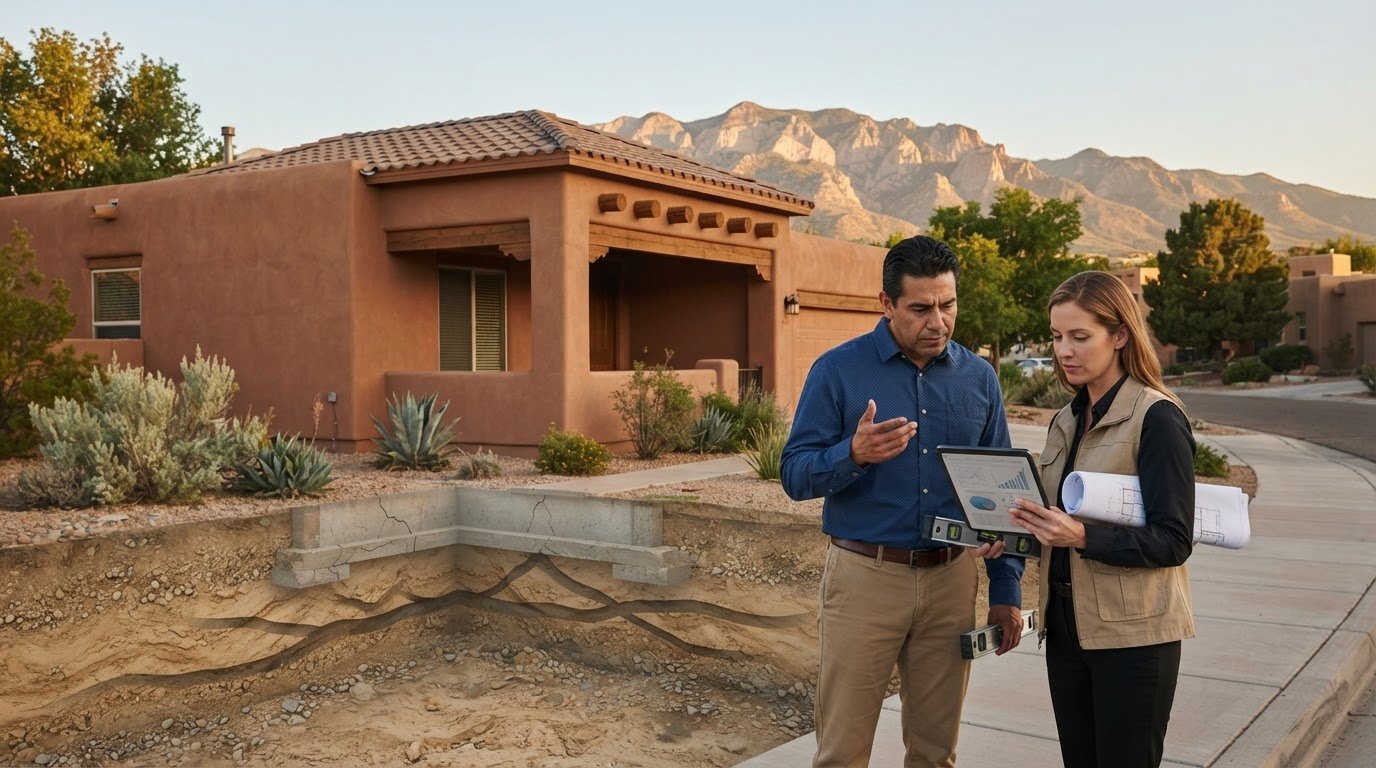
Selling a House with Foundation Issues in Albuquerque: A Strategic Guide
We understand your home is likely your largest asset. You want to walk away with your equity intact. This guide will show you how to navigate Albuquerque’s unique soil challenges and choose the most profitable path for your transition. We'll explore the local science of collapsible soils, help you distinguish cosmetic cracks from structural failures, and provide a clear decision-making framework for repair versus as-is selling. Our goal is to turn a stressful situation into a successful, low-stress closing that respects your timeline and your bottom line.
Key Takeaways
- Understand how Albuquerque's collapsible soils and seasonal weather cycles specifically impact your home's structural integrity.
- Learn to identify the difference between normal settling and serious structural red flags like sticking doors or sloping floors.
- Discover why selling a house with foundation issues Albuquerque requires a strategic choice between making professional repairs or selling as-is.
- Compare specialized exit strategies like Renovate & Sell or CashOffer+ to protect your hard-earned equity and simplify the closing process.
- Gain peace of mind by leveraging an investor’s eye to navigate complex property disclosures and local market dynamics.
Understanding Albuquerque’s Soil and Foundation Challenges
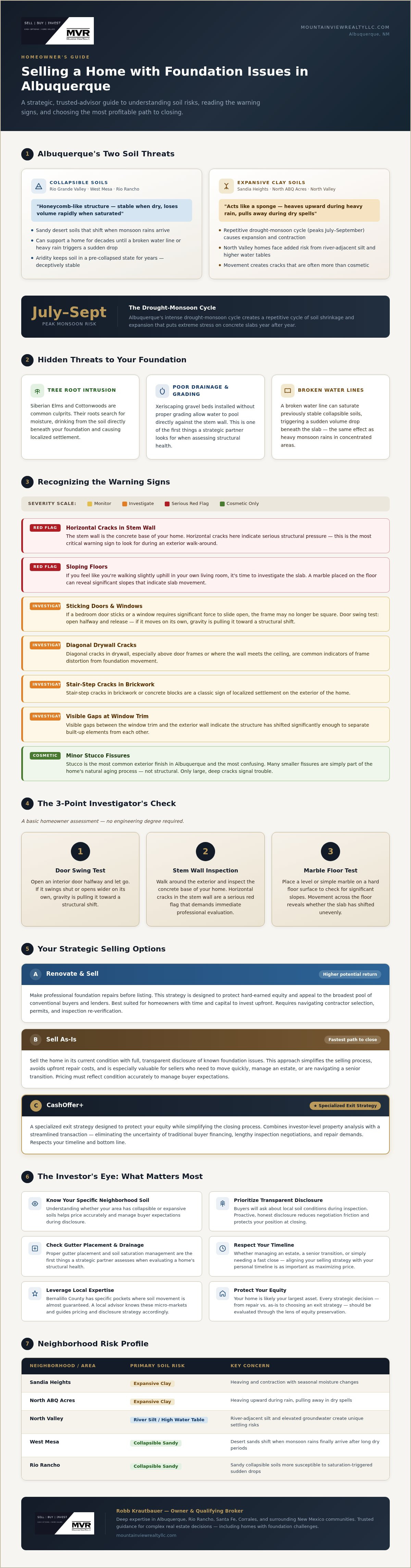
Albuquerque's landscape is beautiful, but the ground beneath your home tells a complex story. The Rio Grande Valley is famous for collapsible soils, which are a primary reason for home settling in our region. These soils have a loose, honeycomb-like structure that remains stable when dry but loses volume rapidly when saturated. For anyone selling a house with foundation issues Albuquerque buyers will likely ask about these local conditions during the inspection period.
To better understand the impact of structural concerns during a sale, watch this helpful video:
Our climate puts extreme stress on concrete slabs. The intense drought-monsoon cycle, typically peaking between July and September, creates a repetitive cycle of soil shrinkage and expansion. In areas like Sandia Heights and North ABQ Acres, homeowners often deal with expansive clay soils. These clays act like a sponge, heaving upward during heavy rains and pulling away from the foundation during dry spells. This movement creates cracks that are often more than just cosmetic.
Regional location matters significantly. Older homes in the North Valley face unique risks due to river-adjacent silt and higher water tables. In contrast, builds on the West Mesa or in Rio Rancho are more susceptible to collapsible sandy soils that shift when desert rains finally arrive. Understanding these geographic nuances is a key part of the investor's eye approach we use to evaluate property value and protect your equity.
Collapsible vs. Expansive Soils in New Mexico
Bernalillo County has specific pockets where soil movement is almost guaranteed. Collapsible soil is particularly deceptive. It can support a house for decades until a broken water line or heavy rain triggers a sudden drop. Aridity contributes to this by allowing the soil to stay in a pre-collapsed state for years. When you're selling a house with foundation issues Albuquerque market dynamics require you to know which soil type is affecting your specific neighborhood. This knowledge helps you price the home accurately and manage buyer expectations.
The Impact of Local Vegetation and Drainage
While xeriscaping is popular in the high desert, it often leads to drainage mistakes. Homeowners often install gravel beds without proper grading. This allows water to pool directly against the stem wall. Large trees, like Siberian Elms or Cottonwoods, also pose a threat. Their roots search for moisture, often drinking from the soil directly beneath your foundation and causing localized settlement. Proper gutter placement and soil saturation management are the first things a strategic partner looks for when assessing a home's structural health.
Recognizing the Warning Signs of Foundation Damage
Every home in New Mexico experiences some degree of movement. It's a natural result of our arid climate and shifting sands. However, there's a significant difference between minor settling and a structural failure that could derail your sale. Identifying these signs early is crucial when selling a house with foundation issues Albuquerque buyers might be wary of. You need to know exactly what you're looking at before you list.
Interior red flags often start with your doors and windows. If a bedroom door suddenly sticks or a window requires significant force to slide open, the frame may no longer be square. You might also notice diagonal cracks in the drywall, particularly above door frames or where the wall meets the ceiling. Sloping floors are another major indicator. If you feel like you're walking slightly uphill in your own living room, it's time to take a closer look at the slab.
Exterior warnings are often more obvious but frequently misunderstood. Stair-step cracks in brickwork or concrete blocks are a classic sign of localized settlement. You might also see visible gaps between the window trim and the exterior wall. In Albuquerque, stucco is the most common exterior finish, and it's also the most confusing. While large, deep cracks can signal trouble, many smaller fissures are simply part of the home's aging process.
The 3-Point 'Investigator's Check' for Homeowners
You don't need to be an engineer to perform a basic assessment. Start with the door swing test. Open an interior door halfway and let go. If it swings shut or opens wider on its own, gravity is pulling it toward a structural shift. Next, walk around the exterior and inspect the stem wall. This is the concrete base of your home. Horizontal cracks here are a serious red flag. Finally, place a level or even a simple marble on a hard floor surface to check for significant slopes. If these tests confirm your fears, getting a complimentary home valuation can help you understand how these issues impact your bottom line.
Common Cosmetic Issues Mistaken for Damage
Not every crack is a catastrophe. In our high-desert sun, stucco often develops a spider-web effect of tiny hairline cracks. This is usually just the finish coat reaching the end of its lifespan, not a sign of a sinking house. Similarly, drywall seams can separate slightly during our summer monsoons as humidity levels fluctuate. These are typically maintenance items that a fresh coat of paint or minor patching can resolve. Distinguishing these from structural failures keeps you from overspending on unnecessary repairs while protecting your equity.
The Financial Reality: Repair Costs vs. Home Equity
Selling a house with foundation issues Albuquerque homeowners face is primarily a financial strategy game. You aren't just paying for concrete; you're protecting your equity. While New Mexico construction costs remain approximately 11 percent lower than the national average, specialized structural work still requires a significant investment. Understanding these costs is the first step in calculating your potential walk-away proceeds.
To help you visualize the financial landscape, we have outlined the typical costs associated with New Mexico foundation projects below:
| Repair Type | Estimated Cost Range | Primary Benefit |
|---|---|---|
| Minor Crack Injection | $200 to $800 | Prevents moisture intrusion |
| Standard Foundation Repair | $1,780 to $13,350 | Stabilizes general settling |
| Major Structural Piering | $20,000 or more | Addresses significant failure |
| Municipal Permits | $75 to $150 | Ensures legal compliance |
Beyond the raw repair bill, you must consider the "disclosure stigma." Even after a professional fix, the history of structural movement can influence your Albuquerque home value estimate. With current mortgage rates near 6.71 percent, buyers are more strategic and scrutinize property condition reports more than ever before. You must decide if the cost of repair will yield a high enough return at the closing table.
Repairing Before the Sale: Pros and Cons
Fixing the foundation before listing opens your home to the widest possible audience. Most importantly, it allows the property to qualify for FHA and VA loans. These government-backed programs have strict structural requirements and are vital for many families in our metro area. However, repairs come with the risk of sunk costs. You might spend $15,000 on piers but only see a $10,000 increase in your final sale price. If you choose this path, always ensure the contractor provides a transferable warranty to reassure future buyers.
Selling As-Is: The Investor’s Perspective
Many owners prefer to sell house as is in Albuquerque to avoid the headache of managing contractors. When you sell as-is, you typically take a price reduction. This discount often exceeds the actual cost of the repair because the buyer is assuming the risk and the labor. This path targets cash buyers and investors rather than traditional families. It's a trade-off where you accept a lower price in exchange for a certain, fast closing without the stress of ongoing construction. We help you calculate exactly how much equity you're trading for that convenience.
Strategic Options: Fix It, Sell As-Is, or CashOffer+?
Deciding your next step is the most critical part of protecting your financial future. You aren't limited to a simple "fix or list" choice. Every homeowner's situation is unique, and we believe your exit strategy should be too. If your property has significant equity, our Renovate & Sell path might be the most profitable. This allows you to address structural concerns using our resources, ensuring you capture the highest possible market price. Alternatively, you may want to compare a home trade-in vs traditional sale Albuquerque homeowners often use to simplify their transition.
When selling a house with foundation issues Albuquerque residents often worry about the deal falling through at the last minute. Structural problems are the leading cause of "buyer fallout" during the inspection period. CashOffer+ provides a reliable Plan B by removing these hurdles entirely. It’s a strategic choice for those who value certainty over the traditional, often volatile, market process. We help you match your specific life transition, whether it's downsizing or settling an estate, to the path that preserves your peace of mind.
The CashOffer+ Advantage for Foundation Issues
The primary benefit of CashOffer+ is the elimination of traditional barriers. You won't have to deal with invasive inspections, picky appraisers, or stressful repair negotiations. Buyers in the traditional market often get spooked by structural reports, even if the issues are minor. By choosing this path, you reduce the risk of your home sitting on the market for months. This is particularly valuable for seniors moving to a senior living community who need a guaranteed timeline and a seamless, high-net-worth experience.
Deciding Based on Your Equity Position
Your equity is the foundation of your decision. If you have high equity, investing in the property through our Renovate & Sell program can significantly boost your return. However, if you're in a low-equity position, the Albuquerque short sale process might be the right call to protect your credit and move forward. We specialize in creating a custom home selling options Albuquerque plan. This ensures you aren't forced into a one-size-fits-all solution that doesn't respect your hard-earned investment.
Navigating the Sale with an Expert's Eye
Experience is the difference between a deal that closes and one that collapses. When selling a house with foundation issues Albuquerque homeowners need a partner who understands both the technical and financial stakes. Robb Krautbauer brings 15 years of real estate investing experience and a decade as a licensed agent to every transaction. Having helped over 200 families in the Albuquerque metro, he applies an investor’s eye to your home’s structural puzzles. We don't just see a crack; we see a strategic path to protecting your equity.
Our approach is honest, strategic, and educational. We believe in proactive property disclosures. By educating potential buyers rather than surprising them, we build the trust necessary to reach the closing table. We also utilize our signature List with a Twist strategy. This allows us to market complex properties using lifestyle storytelling that focuses on the home's unique value while transparently addressing its needs. This sophisticated approach ensures that your home isn't just another fixer-upper on the market, but a strategic opportunity for the right investor or family.
Protecting Your Equity and Reducing Stress
We’re committed to telling you what you need to hear, not just what you want to hear. This transparency is the core of our concierge-level guidance. Take our work in Sandia Heights, for example. In an area known for granite-influenced terrain, we successfully navigated a complex sale by anticipating structural questions before they became deal-breakers. We provide the resources and professional network to ensure your sale stays on track, regardless of the soil beneath the slab. You get the authority of a seasoned expert with the approachability of a local guide.
Your Next Move: A No-Pressure Plan
You shouldn't have to guess about your home’s value or your best exit strategy. We invite you to a confidential consultation where we can review all your options, from Renovate & Sell to a direct CashOffer+. We’ll provide a complimentary valuation that specifically accounts for your property’s structural health. This is a no-pressure environment designed to give you a clear, actionable plan for your next move. Let’s look at the numbers together and find the most profitable path forward for your family. Grab a time on my calendar today for a plan tailored to your goals.
Robb Krautbauer, Owner & Qualifying Broker
Securing Your Financial Future in Albuquerque
Albuquerque’s unique soil doesn't have to be a liability for your home sale. You now understand the difference between cosmetic stucco fissures and structural shifts. You also know that exit strategies like Renovate & Sell or CashOffer+ can protect your equity. Selling a house with foundation issues Albuquerque homeowners face requires a blend of local insight and strategic marketing. Whether you choose to fix the issues or sell as-is, the goal is a seamless transition to your next chapter.
We bring 15 years of real estate investing experience and a track record of helping over 200 families in the metro area. From our signature $1.7M luxury marketing success to helping seniors transition to new homes, we prioritize your peace of mind. You deserve a partner who offers a diverse menu of solutions tailored to your needs. We are here to act as your strategic consultant, providing the clarity you need to move forward with confidence.
Grab a time on my calendar, no pressure, just a plan for your next move.
Your journey is personal, and we're invested in your success. Let’s turn this challenge into a controlled, profitable closing.
Robb Krautbauer, Owner & Qualifying Broker
Frequently Asked Questions
Is it common for Albuquerque homes to have foundation cracks?
It is very common for homes in the Albuquerque metro area to exhibit some form of foundation cracking. Our local geology, specifically the collapsible soils found in the Rio Grande Valley and the expansive clay in areas like Sandia Heights, naturally shifts over time. The intense cycle of summer monsoons followed by long dry spells causes the ground to expand and shrink. This movement often results in minor fissures that don't always indicate a structural failure.
Can I sell a house with foundation issues to a traditional buyer?
You can sell a house with foundation issues to a traditional buyer, but it often requires more preparation. Most traditional buyers rely on financing, and lenders for FHA or VA loans have strict structural requirements. If a professional inspection reveals significant damage, the buyer's loan might be denied unless repairs are completed. Selling a house with foundation issues Albuquerque buyers can trust involves full disclosure and often providing a transferable warranty to provide peace of mind.
How much does foundation repair typically cost in New Mexico?
Foundation repair costs in New Mexico typically range from $1,780 to $13,350 per project. While construction costs here are generally about 11% lower than the national average, specialized structural work in the Albuquerque metro can be higher depending on the severity. Minor crack injections might cost a few hundred dollars, but installing piers to stabilize a sinking slab can exceed $20,000. Permits alone usually add $75 to $150 to the total bill for these projects.
Will a foundation issue automatically fail a home inspection?
Home inspections aren't technically a pass or fail test, but a foundation issue will be flagged as a significant material defect. The inspector will document the cracks or slopes in their report, which then becomes a primary negotiation point. Most buyers will request a follow-up evaluation by a structural engineer. While the issue doesn't stop the sale, it often triggers requests for repairs or price credits before the buyer's lender will approve the final funding for the purchase.
What is the difference between settling and a foundation problem?
Settling is a natural process where a new home sinks slightly into the soil during its first few years. This usually results in tiny hairline cracks that don't grow. A foundation problem is a structural failure that is often progressive and caused by poor drainage or collapsible soil. You can tell the difference by looking for stair-step cracks in brick, doors that no longer latch, or gaps between the walls and the ceiling that widen over time.
Should I fix my foundation before selling my Albuquerque home?
The decision depends on your equity and how quickly you need to move. Fixing the foundation can maximize your sale price and attract traditional families, especially through our Renovate & Sell program. However, if you want to avoid the stress of construction, selling as-is through a strategy like CashOffer+ might be better. When selling a house with foundation issues Albuquerque market experts navigate, we help you look at all the paths to ensure you don't sacrifice your equity.
Are foundation repairs covered by New Mexico homeowners insurance?
Most New Mexico homeowners insurance policies do not cover foundation repairs caused by normal soil movement, settling, or collapsible earth. Coverage is typically limited to sudden and accidental events, such as a major pipe burst that undermines the slab. Since most Albuquerque issues stem from long-term drought-monsoon cycles and soil expansion, the cost usually falls on the homeowner. It's always best to review your specific policy with your insurance agent to confirm your coverage limits and exclusions.

Article by
Robb Krautbauer
Robb Krautbauer is the Owner and Qualifying Broker of Mountain View Realty, serving Albuquerque, Rio Rancho, Santa Fe, and surrounding New Mexico communities. With more than a decade of real estate experience, Robb specializes in luxury homes, strategic home marketing, and helping homeowners navigate important life transitions with confidence.
Known for combining luxury-level marketing, AI-powered technology, and innovative selling strategies, Robb helps clients maximize their home's value while creating a smooth, personalized selling experience. Whether assisting luxury homeowners, retirees, families downsizing, or real estate investors, his focus is always on delivering expert guidance, honest advice, and exceptional results.
When he's not helping clients achieve their real estate goals, Robb enjoys studying market trends, emerging technology, and investment strategies that keep Mountain View Realty at the forefront of the industry.
Disclaimer
**Disclaimer:** The information provided in this article is for general educational purposes only and should not be considered legal, tax, financial, or professional advice. Real estate laws, market conditions, and regulations change over time and may vary based on your individual circumstances. Before making any real estate decision, consult with qualified legal, tax, or financial professionals. If you have questions about buying or selling real estate in New Mexico, contact Mountain View Realty for guidance specific to your situation. © 2026 Mountain View Realty. All rights reserved. The content on this website may not be reproduced without written permission.


