
Selling a Tenant-Occupied Home in Albuquerque: What Buyers Need to Know
Selling a tenant-occupied home in Albuquerque starts with separating showing access from ending a tenancy. Plan to give the tenant 24 hours’ advance notice before each showing. If the tenancy is month-to-month and you want it to end, written notice is generally required at least 30 days before the periodic rental date.
A tenant’s lease doesn’t automatically prevent a sale, but it can affect the buyer pool and timing. Keeping the tenant in place may suit an investor, while an owner-occupant may have different needs. This guide explains how lease terms affect a sale, how to coordinate showings respectfully, and what rental details and documents to share with buyers. You’ll also learn how to present the property as an income-producing opportunity so buyers can evaluate the tenancy alongside the home.
Key Takeaways
- Plan showings around the tenant’s access rights and communicate clearly to help keep the sale process orderly.
- Prepare lease, rent, security-deposit, and tenant-notice records so buyers can understand the existing arrangement.
- Use the lease term to shape your timeline: a fixed-term agreement can affect when a buyer can take possession.
- Present rental history and current lease terms to help investor buyers assess the property as an income-producing opportunity.
- Consider whether a Home Trade-In or another sale path better fits your timing and next-home plans.
1. How much notice must a New Mexico landlord give a tenant when selling the house?
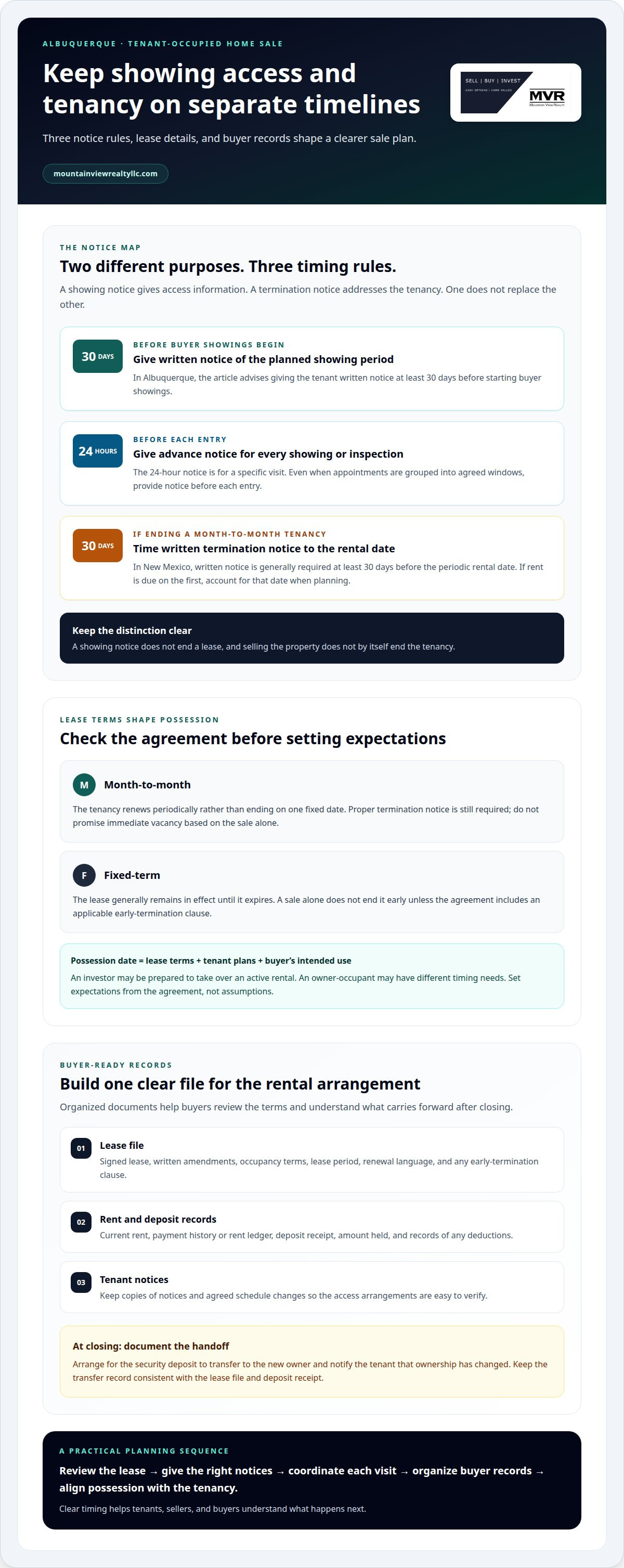
In Albuquerque, give the tenant written notice at least 30 days before starting buyer showings. Give 24 hours’ advance notice before each showing or inspection. These notices have different purposes: the first alerts the tenant to the showing period, while the second identifies a specific visit.
Before listing and showing the home, review the lease and provide written notice of planned showings. Coordinate appointment times and give the required notice before each visit. Keep copies of notices and agreed schedule changes so everyone has a clear record of access arrangements.
A month-to-month tenancy in New Mexico generally requires written termination notice at least 30 days before the periodic rental date. Selling the rental property does not itself end the tenancy. For example, if rent is due on the first, the termination schedule should account for that rental date rather than simply counting from the day a sale decision is made.
Notice to enter is separate from notice to terminate. Provide 24 hours’ advance notice before each showing or inspection. Grouping appointments into agreed windows can help organize visits, but the landlord should still give notice for each entry. The tenant and landlord can discuss practical timing and record any agreed changes.
A fixed-term lease generally remains in effect until it expires. The owner cannot end it early solely because the property is being sold, unless the lease includes an applicable early-termination clause. Review the agreement before setting a possession date or describing the home as vacant. Its terms affect when a buyer can occupy the property.
New Mexico has no statewide just-cause requirement for ending a tenancy, but a sale does not cancel an existing lease. A month-to-month tenancy still requires proper termination notice, while a fixed-term agreement generally continues through its end date. A showing notice does not terminate the lease, and notice of a sale is not notice of termination.
When selling a tenant occupied home in Albuquerque, plan around the lease, the 30-day written notice before buyer showings, and the 24-hour notice before each entry. The buyer’s expected possession date should reflect whether the tenant will remain or has agreed to move out.
Selling a tenant occupied home in Albuquerque can proceed while the tenant remains in the property. Keep communication about showings and occupancy clear, and align the sale timeline with the tenancy. A practical schedule for access helps avoid confusion about when the home will be available to the buyer.
2. Disclosing leases, deposits, and rent to buyers
Buyers need a clear picture of the rental arrangement before deciding what to offer. Disclose that the home is occupied, then share the lease, rent amount, payment history, security deposit details, and notices given to the tenant. These records help buyers understand both the property and the rental arrangement that may continue after closing.
Organize the records so buyers can understand the terms without piecing together separate files. Include the signed lease, written amendments, rent ledger, deposit receipt, and tenant notices. If the lease and payment records differ, explain the context and retain the documents that support the explanation.
- Lease documents: Include the signed agreement and written changes affecting rent, occupancy, or the lease period.
- Rental records: Provide the current rent and payment history in a format buyers can review.
- Deposit records: Record the amount held and any deductions already made, with supporting paperwork.
At closing, arrange for the security deposit to be transferred to the new owner and notify the tenant that ownership has changed. Document the transfer so the buyer can see what funds were received and who holds the deposit after the sale. Keep the recorded amount consistent with the lease file and deposit receipt.
Use the documentation to distinguish a change of ownership from the end of a tenancy. A sale does not, by itself, mean the tenant has moved out or that move-out accounting has begun. If the tenancy later ends, keep its final accounting separate from the closing records. This helps clarify whether the deposit was transferred or returned.
Before buyers review the documents, reconcile the rent ledger, lease, and deposit records. For example, if a written amendment changed the rent stated in the lease, include that amendment. A clear file lets buyers assess the actual rental terms and reduces uncertainty about the records being handed over.
Clear documentation can make an occupied property easier to evaluate. A seller preparing for a tenant-occupied home sale can organize lease and deposit records for buyer review, helping explain the rental arrangement and ownership transition.
3. Month-to-month and fixed-term lease considerations
The lease type affects the sale plan, buyer expectations, and possession timing. Before deciding how to market the home, review the agreement’s end date, renewal language, occupancy terms, and any early-termination clause. These details help determine whether the property is best presented to buyers prepared to take over an active rental or to buyers planning a future move-in.
A month-to-month arrangement renews periodically rather than ending on one fixed date. This can make timing discussions different from those for a fixed-term lease, but it does not mean the seller can promise immediate vacancy. The buyer’s intended use, the tenant’s plans, and the agreement’s terms all shape a realistic possession timeline.
A fixed-term lease sets a specific period of occupancy. If it expires after the anticipated closing, the buyer should know the date before making plans for personal use or renovations. Review any clause addressing early termination, sale, or renewal, and include written amendments that may have changed the original agreement.
When a buyer takes over a tenant-occupied New Mexico property, New Mexico law, Section 47-8-21, identifies the buyer as successor in interest and makes the buyer liable for obligations under the rental agreement. That statutory reference matters to transaction planning: the buyer should receive the complete agreement and related written changes, not just a summary of rent.
Selling with the tenant in place can suit an investor whose plans align with the existing rental. The buyer can evaluate the lease period and expected income as part of the purchase. A vacant sale may better suit an owner-occupant, but it requires a workable plan for possession. Don’t advertise the property as vacant unless the timing and move-out arrangement support that description.
If the seller and tenant discuss an early move-out, keep the arrangement voluntary and document the agreed terms. Record details such as the proposed move-out date and any agreed assistance in writing. This gives both parties a shared reference and helps the seller communicate accurately with prospective buyers.
Compare the closing timeline with the lease before accepting terms that depend on possession. If the buyer expects to occupy the home while the lease remains active, account for that conflict in the plans. If the buyer intends to keep the property as a rental, the existing terms can inform the decision. Let the lease guide the transaction rather than assuming a sale changes it.
4. Can tenants refuse showings?
A tenant’s response to a showing depends on the lease, the notice given, and applicable entry rules. In Albuquerque, provide 24 hours’ advance notice before each showing. Keep the notice and appointment details in writing, and coordinate a practical time with the tenant. This creates a clear record if access later becomes disputed.
New Mexico has no statewide statute giving a residential tenant the right to match a third-party purchase offer. A tenant may still ask to buy the home, and the seller can consider the proposal. Unless an agreement gives the tenant a purchase right, renting the property does not itself create a statewide right of first refusal.
Keep a tenant’s interest in buying separate from their rights under the existing lease. A conversation about a purchase does not change rent, payment dates, or occupancy terms. If both sides negotiate a purchase, put the agreed terms in a separate written agreement. Until the sale closes, continue following the rental agreement and documenting payments as usual.
Showing conflicts can arise when appointments disrupt the tenant’s schedule or the parties disagree about entry. Reduce friction by giving required notice, sharing specific appointment windows, and recording agreed schedule changes. Don’t treat a missed appointment as permission to enter later without notice. Clear communication supports the showing plan and the tenant’s use of the home.
Eviction is not a shortcut to vacant possession. New Mexico has no statewide just-cause requirement for ending a tenancy, but a sale alone does not terminate the lease or remove the tenant. A month-to-month tenancy still requires proper termination notice. A fixed-term agreement generally continues until expiration unless an applicable early-termination clause allows otherwise.
After closing, the buyer takes over the landlord’s obligations under the rental agreement as successor in interest under New Mexico law, Section 47-8-21. The sale does not erase the tenant’s existing lease. The new owner must receive the relevant lease and payment records, while the tenant should receive notice of the ownership change.
For sellers, the main risks include disputed access, unclear lease terms, and a buyer expecting vacant possession when the tenant can remain. Prevent these issues by aligning the listing, showing schedule, and sale agreement with the actual lease. State clearly whether the property will transfer occupied, and don’t promise a move-out date the tenant hasn’t agreed to.
Tenants may raise concerns about entry or ask about buying the home, but those issues do not automatically stop a sale. Keep notices, written responses, and payment records together. If a tenant requests a different showing time, for example, confirm the revised appointment in writing and keep the original notice with the update.
5. Marketing a tenant-occupied home to investors
An occupied Albuquerque rental can appeal to investors seeking a property with an existing tenant and income. Its sale price is typically 10-20% lower than a comparable vacant home. That market estimate makes clear positioning important: present the lease and rental performance so buyers can judge the opportunity, not just the occupancy.
Build the marketing story around verifiable details. Share the current rent, payment records, rental history, and lease terms. Explain written changes to the agreement, including any clause affecting occupancy or early termination. Investors can then assess the income alongside the property’s condition and their ownership plans.
Organize the records before presenting the home. A useful investor package can include the lease, amendments, rent ledger, deposit documentation, and notices affecting the tenancy. Keep the figures consistent across listing materials and transaction documents. If the rent ledger shows a different payment pattern than the lease, explain the records rather than implying predictable income.
Describe the buyer’s position accurately. Under New Mexico law, a buyer takes over obligations under the existing rental agreement after closing. The lease’s end date and any early-termination clause therefore matter to an investor’s plans. Don’t suggest immediate vacant possession unless the tenant’s departure is agreed and the sale terms support it.
Investor marketing should distinguish current income from future potential. Present actual rent and payment history as documented, and describe possible changes as a buyer’s decision, not an established return. Property condition, lease terms, and the buyer’s plans all shape how the opportunity may be evaluated. This distinction protects credibility.
Consider the likely buyer pool. Investors may value an occupied property because the rental arrangement is already in place. Buyers planning to live in the home may prefer vacant possession, which could require waiting for the lease to end or negotiating an agreed move-out. Choose marketing language that matches the actual occupancy plan.
An estate sale involving a rented Albuquerque home may require additional family coordination. Keep one current set of lease and payment records for decision-makers and prospective buyers. If the estate’s representatives consider tenant assistance or a negotiated move-out, document the agreed terms and timeline before describing the property as vacant.
A strong investor presentation is specific: show the current income, explain the lease, and describe the property accurately. This lets buyers evaluate the rental on its actual terms and compare it with their investment goals.
Mountain View Realty: Home Trade-In
Mountain View Realty LLC’s Home Trade-In may be worth discussing if you’re planning a sale and a move. Your tenant’s lease can shape the timing, so your next-home plans and sale strategy may need to work together. The right path depends on your priorities, the lease, and whether you plan on selling a tenant occupied home in Albuquerque.
Mountain View Realty LLC also offers options such as CashOffer+, Renovate & Sell, and Sell & Stay. Each offers a different path for sellers. A conversation can connect your tenant-related timing concerns with a sale approach that fits your plans.
Contact Mountain View Realty LLC to discuss your home sale and next steps.
Choose a Sale Path That Fits Your Next Move
A thoughtful plan for selling a tenant-occupied home in Albuquerque can account for the current tenancy and what you want to do next. Your priorities may include keeping the rental income in place, preparing the home for sale, or coordinating the sale with a move. Decide which outcome matters most, then build the sale strategy around it.
Mountain View Realty LLC offers options including CashOffer+, Home Trade-In, and Renovate & Sell. Each can suit different seller priorities. A conversation can connect your tenant-related timing concerns with a sale approach that fits your plans.
There’s no need to decide before you understand your options. A clear plan can help you move forward with purpose and confidence.
Frequently Asked Questions
How much notice must a New Mexico landlord give a tenant when selling the house?
In Albuquerque, give written notice at least 30 days before beginning buyer showings, plus 24 hours’ advance notice before each showing. Those notices serve different purposes. For a month-to-month tenancy, ending the rental agreement generally requires written notice at least 30 days before the periodic rental date. A landlord should plan showings and any termination separately, because notice of a sale does not itself end the tenancy.
Can I sell a property with a tenant living in it?
Yes. A homeowner can sell an Albuquerque property while a tenant lives there, including to an investor who plans to continue the rental. The lease and occupancy arrangement affect which buyers may find the home suitable. For instance, an investor may value current rent and an existing tenant, while an owner-occupant may prefer vacant possession. The sale documents should accurately describe the occupancy plan.
Do New Mexico tenants have the right to stay after the home is sold?
A tenant may remain under the existing lease after a sale. A fixed-term agreement generally continues through its expiration, while a month-to-month tenancy requires proper termination notice. The buyer takes over obligations under the rental agreement as successor in interest under New Mexico law, Section 47-8-21. For example, a tenant with a lease extending beyond closing does not lose that arrangement simply because ownership changes.
What does selling a tenant-occupied property mean?
It means the owner sells a home while a renter still occupies it, rather than delivering it vacant. The buyer acquires the property along with the tenant’s rental arrangement and related obligations. If the lease remains active at closing, for example, the new owner steps into the landlord’s position under that agreement. The sale may appeal to investors seeking a rental and other buyers prepared to accept the tenancy.
Can my landlord evict me because he wants to sell?
No, the sale alone does not end your tenancy or automatically require you to leave. A fixed-term lease generally remains in effect through its end date unless an applicable early-termination clause allows otherwise. For a month-to-month rental, the landlord must give proper written termination notice. If you receive a sale notice, distinguish it from a termination notice and review the dates and terms in your rental agreement.
Can tenants refuse showings?
Albuquerque landlords should give 24 hours’ advance notice before each showing. A tenant who cannot attend at the proposed time can communicate a scheduling concern and suggest another appointment. Keep notices and responses in writing to reduce misunderstandings about access. A showing request does not change the lease or end the tenancy. If a disagreement arises, the written lease and the applicable entry rules matter.
Can you sell a property with an active lease?
Yes. An active lease does not prevent a sale, but it affects the buyer’s obligations and expected possession date. A buyer who takes ownership of a tenant-occupied New Mexico property becomes successor in interest and assumes obligations under the rental agreement. The buyer must account for the existing lease rather than treating the home as immediately available for personal occupancy.
Do tenants get the first choice to buy?
New Mexico has no statewide statute giving residential tenants the right to match a third-party purchase offer. A tenant can still ask the owner about buying, and the parties may negotiate a separate purchase agreement. Without an agreement granting a purchase right, renting the home does not automatically give the tenant priority over other buyers. Any purchase option already written into the lease should be considered separately.

Article by
Robb Krautbauer
Robb Krautbauer is the Owner and Qualifying Broker of Mountain View Realty, serving Albuquerque, Rio Rancho, Santa Fe, and surrounding New Mexico communities. With more than a decade of real estate experience, Robb specializes in luxury homes, strategic home marketing, and helping homeowners navigate important life transitions with confidence.
Known for combining luxury-level marketing, AI-powered technology, and innovative selling strategies, Robb helps clients maximize their home's value while creating a smooth, personalized selling experience. Whether assisting luxury homeowners, retirees, families downsizing, or real estate investors, his focus is always on delivering expert guidance, honest advice, and exceptional results.
When he's not helping clients achieve their real estate goals, Robb enjoys studying market trends, emerging technology, and investment strategies that keep Mountain View Realty at the forefront of the industry.
Disclaimer
**Disclaimer:** The information provided in this article is for general educational purposes only and should not be considered legal, tax, financial, or professional advice. Real estate laws, market conditions, and regulations change over time and may vary based on your individual circumstances. Before making any real estate decision, consult with qualified legal, tax, or financial professionals. If you have questions about buying or selling real estate in New Mexico, contact Mountain View Realty for guidance specific to your situation. © 2026 Mountain View Realty. All rights reserved. The content on this website may not be reproduced without written permission.


