
What a Low Appraisal Means for Your Albuquerque Home Offer
A low appraisal doesn’t automatically end a home purchase. If you’re deciding what to do if a home appraisal is low in Albuquerque, you can ask the seller to renegotiate, challenge the value with relevant comparable sales, or cover the difference in cash. The right option depends on your contract, finances, and willingness to proceed at the agreed price.
It’s understandable to feel unsettled when the appraisal comes in below your offer. The lender may not finance the full purchase price, leaving a gap for you and the seller to resolve before closing.
This guide explains what a low appraisal means, how to present relevant comparable sales, and what to weigh before renegotiating or covering the gap with your own funds. You’ll also see how your contract can shape your next steps, so you can make an informed decision in Albuquerque.
Key Takeaways
- A low appraisal can leave a gap between the lender’s valuation and your agreed purchase price, but it doesn’t automatically end the deal.
- Review the appraisal for factual errors and gather relevant nearby sales that may support a reconsideration of value.
- You can negotiate a price change, agree on a middle ground, or consider paying some or all of the gap in cash.
- Before deciding to walk away, review your contract’s appraisal terms and deadlines to understand your options.
- CashOffer+ may be a useful alternative if you’re selling and want to explore a path that doesn’t depend on a buyer’s lender appraisal.
1. What is a home appraisal?
A home appraisal is an independent estimate of a property’s value on a specific date. Mortgage lenders typically use it to help determine the property’s value and how much they’ll lend. The lender orders the appraisal, while the borrower generally pays for it. In a purchase, the appraisal usually takes place after both parties sign the agreement.
An appraisal isn’t a home inspection. The appraiser estimates value based on the property’s features and relevant market evidence. An inspector focuses on condition and potential defects. An appraisal may note a safety issue, but its primary purpose is to assess value for the lender.
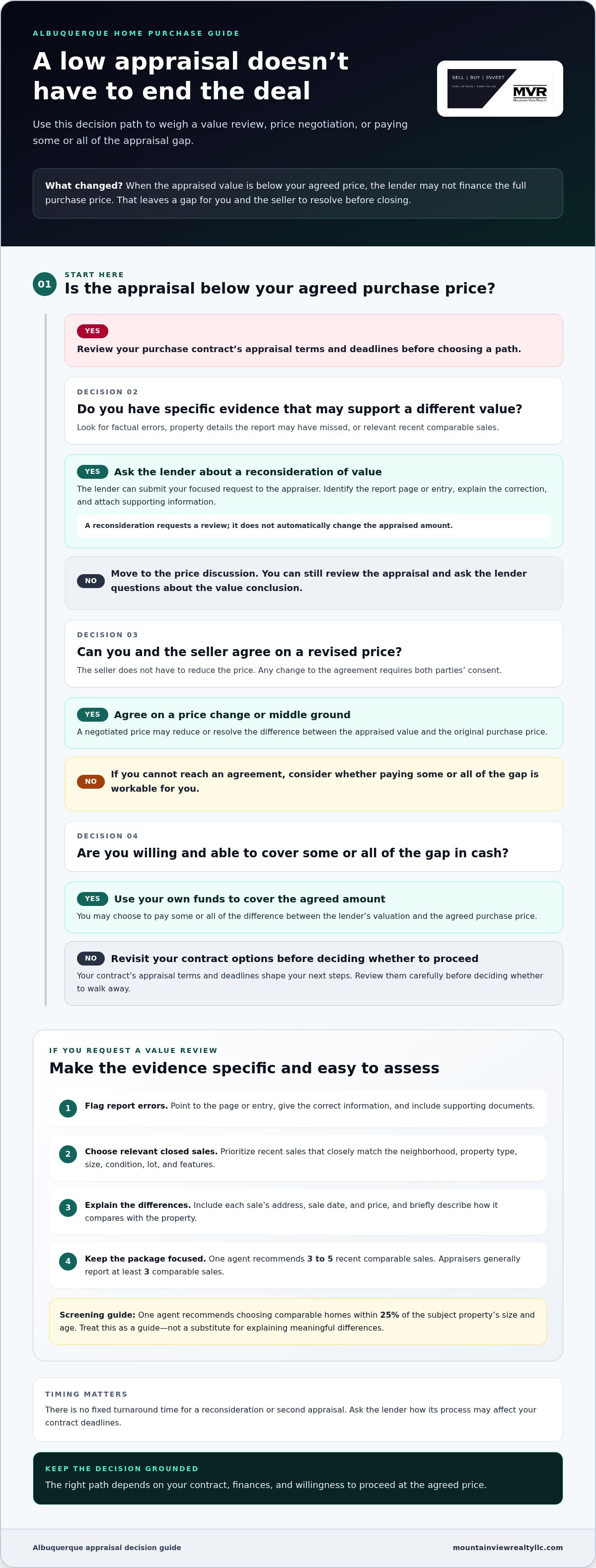
If the appraised value is below the offer, you can ask the lender to submit a reconsideration of value. This asks for a review, not an automatic change to the appraised amount. You can point out factual errors, provide relevant property information, or ask for more detail about how the appraiser reached the conclusion.
There isn’t one standard appraisal fee for every Albuquerque property. The fee can vary with the property’s complexity, location, and the work required. Because the borrower generally pays, review the lender’s fee information for your transaction.
Useful evidence for a reconsideration is specific and tied to the property’s value on the appraisal date. Point out incorrect details about the home and provide recent comparable sales the report may have overlooked. Appraisers generally report at least three comparable sales, so explain why a proposed sale better matches the home’s location, size, condition, or features.
Keep your request focused. Identify the report page or entry, explain the correction, and attach supporting documents. A sale from a nearby area may be less relevant if the location or property type differs. The lender can submit the reconsideration request for the appraiser to review.
You can also ask for more explanation of the value conclusion. Ask the lender to pass along a clear question, such as how the appraiser adjusted for differences in condition or location. A review may address an overlooked sale or report error. A second appraisal is separate and may reach a similar conclusion.
There’s no fixed turnaround time for a reconsideration or second appraisal in Albuquerque. Timing depends on the lender’s review process, the appraiser’s workload, and whether a new appraisal must be scheduled and completed. Ask the lender how the request affects your contract deadlines.
If you believe discrimination affected the appraisal, the Appraisal Subcommittee says you can contact the Appraisal Complaint National Hotline at 1-877-739-0096. A low value alone doesn’t establish discrimination, so describe the specific concern and supporting details when making a complaint.
2. Preparing a property and providing comparable sales
A clear, organized presentation helps the appraiser understand the home’s condition and features. Before an appraisal or second appraisal, clean the property, address minor maintenance issues, and make practical, small improvements. Poor maintenance may contribute to a lower value, while a clean home can make a better impression. Keep receipts or notes on completed work, such as a repaired fixture or refreshed paint, so you can describe updates accurately.
Prepare a concise property summary with distinctive features, recent improvements, and details that could be easy to miss during a visit. For example, identify a finished area or describe a recent system upgrade. Don’t overstate an improvement’s effect; give the appraiser details to consider alongside other evidence.
Comparable sales, often called “comps,” are recent sales of homes that resemble yours. Select sales that reflect the same neighborhood and market conditions as closely as possible. Location matters: a nearby home may still be a weak comparison if it differs in property type, condition, lot, or setting. One agent recommends choosing comparable homes within 25% of the subject property’s size and age. Treat that as a screening guide, not a substitute for explaining meaningful differences.
When sharing additional comparable properties, assemble a focused package rather than a long list. One agent recommends providing 3 to 5 recent comparable sales when challenging a low appraisal. For each sale, include the address, sale date, price, and a brief explanation of how it resembles your home. Note differences, too. A smaller home with a similar layout may be relevant, but its size difference should be clear.
- Match the neighborhood and property type as closely as possible.
- Prioritize recent closed sales over asking prices.
- Explain major differences in size, condition, lot, or features.
- Flag factual errors in the appraisal with the correct information.
For a second appraisal, prepare the home as you would for the first visit: clean it, address minor issues, and organize records of improvements. Share relevant comparable sales and property details through the lender’s process so the appraiser receives clear, specific information.
Keep the timing consistent, too. An appraisal reflects value on a specific date, so sales should help explain the market as of that date. A comparative market analysis from a local real estate agent can provide a useful pricing perspective, but it isn’t a formal appraisal. Focus on evidence that clarifies the home’s condition, features, and neighborhood, not simply on restating the hoped-for price.
3. Renegotiating the purchase price
A low appraisal can leave a buyer and seller deciding how to handle the difference between the lender’s valuation and the agreed price. The seller doesn’t have to reduce the price; any revised agreement requires both parties’ consent. If you’re deciding what to do if a home appraisal is low in Albuquerque, start with a clear proposal and a careful review of your purchase contract.
Yes, an Albuquerque buyer can ask the seller to renegotiate after a low appraisal. The seller can accept, counter with another amount, or decline. The buyer can then weigh the available choices against the contract terms and personal budget.
Before making a request, decide what outcome you want and which alternatives you can accept. A buyer might ask for a price reduction, offer to contribute some cash, or suggest that both sides share part of the difference. A seller can consider the proposal alongside their plans for the home and the terms of the transaction.
Keep the discussion specific. State the agreed price, the appraised value, and the change you’re proposing. If comparable sales support your position, include them and briefly explain why they match the property. Don’t present asking prices as completed sales or rely on a general claim that the home is worth more.
Consider the trade-offs before responding. A buyer should understand how a price change affects the loan and cash needed to close. A seller can consider whether accepting a lower amount better fits their goals than continuing under the current terms. No single formula applies to every negotiation.
For example, a buyer may propose a partial reduction and cover the remaining difference, while the seller counters with a smaller adjustment. The parties can also discuss sharing the gap, but any split is negotiated, not automatic. Put agreed changes in writing so the final terms are clear.
For sellers weighing what to do if a home appraisal is low in Albuquerque, compare the proposal with the outcome you want from the sale. Buyers should consider whether the home remains a sound fit at the revised cost. If discussions don’t lead to an agreement, review the contract’s appraisal, financing, and notice provisions before deciding what comes next. Keep the lender informed about proposed price changes, since they may affect financing and closing details.
4. What does a low appraisal mean?
A low appraisal means the lender’s valuation is below the purchase price. That difference can affect the financing available, but it doesn’t automatically cancel the agreement. The buyer and seller can negotiate, the buyer can consider paying the gap, or the buyer may be able to withdraw under the contract’s appraisal terms.
An appraisal contingency is a contract provision that may give the buyer a way to respond when the valuation falls short. Depending on its wording, the buyer may be able to cancel and recover the earnest money deposit. The contingency’s terms, deadlines, and notice requirements matter, so read the signed agreement before acting.
Start by locating the appraisal section and finding the deadline for raising the issue. Then follow the contract’s process for giving notice. For example, if the agreement requires written notice by a certain date, a phone conversation alone may not meet that requirement. Keep copies of any notice and related communication.
An appraisal contingency may also leave room to negotiate rather than cancel. A buyer can ask the seller to reduce the price, propose a partial adjustment, or share the gap. If the seller declines, compare the remaining choices with the contract deadline and your available funds.
Without an appraisal contingency, walking away carries more risk. The buyer could forfeit the earnest money deposit or face legal action from the seller. The exact consequences depend on the signed contract and circumstances, so don’t assume a low valuation alone gives you permission to end the deal.
Before deciding, review these details in the agreement:
- The appraisal contingency’s wording and any stated value threshold.
- The deadline for notifying the seller or taking another step.
- Any financing provisions that apply if the lender won’t fund the full price.
- The contract’s instructions for handling earnest money after cancellation.
For example, a buyer whose offer exceeds the appraisal may have a contingency that permits cancellation if the value falls below an agreed threshold. Another agreement may give the buyer time to negotiate or submit a reconsideration request. The outcome depends on the contract’s actual language, not a general rule for every Albuquerque purchase.
Keep the lender informed while reviewing your options. The lender can explain how the appraisal affects the loan amount, while the contract sets out the buyer’s rights and required steps. Before a deadline passes, decide whether to negotiate, proceed with additional cash, request a review, or use a cancellation option in the agreement. Following the written terms helps protect your choices.
5. Paying an appraisal gap in cash
Paying an appraisal gap means bringing cash to closing to cover the difference between the agreed purchase price and the appraised value. The lender’s valuation can limit the mortgage amount, even if you offered more. If you’re deciding what to do if a home appraisal is low in Albuquerque, first understand the total cash required, not just the gap.
Ask your lender for an updated estimate based on the appraisal. It should show how the valuation affects the loan and your expected funds for closing. Your down payment and closing costs also affect the total. A revised estimate can help you separate the appraisal gap from other costs already involved in the purchase.
Then consider where the additional cash would come from. Review your available savings and planned expenses, such as moving or home repairs. If covering the gap would use money set aside for those needs, consider whether proceeding still fits your broader financial plans.
Before agreeing to pay, work through these steps:
- Subtract the appraised value from the purchase price to calculate the gap.
- Ask your lender how the appraisal changes the loan and cash due at closing.
- Review your budget, planned expenses, and desired savings after closing.
- Confirm the payment details and any revised terms in writing.
Cash can help you proceed at the agreed price, but it doesn’t change the appraised value or settle other contract terms. Make sure you understand how the added funds affect your purchase, and keep communication with the lender and seller clear.
For example, a buyer may have enough savings to cover the gap but prefer to keep funds for repairs or other priorities. Another buyer may decide the home is still worth the additional contribution. The decision depends on the buyer’s finances and plans, not on the gap alone.
Understanding what to do if a home appraisal is low in Albuquerque means comparing the cash option with negotiation and the appraisal terms in your agreement. If the required funds feel uncomfortable, review the other available paths before committing. A clear estimate and careful budget review can help you make a deliberate choice.
Mountain View Realty: CashOffer+
Mountain View Realty LLC’s CashOffer+ gives Albuquerque homeowners a cash-sale option to consider when a buyer’s lender appraisal complicates a transaction. Cash buyers don’t need lender appraisals, though some choose to order one. A cash offer may be worth exploring if you’re selling and want a path that doesn’t depend on the buyer securing a mortgage.
Compare an offer with your priorities, including timing, certainty, and the terms of your current sale. If your situation involves more than an appraisal gap, Home Trade-In, Renovate & Sell, or Short Sale may also be relevant. Each option addresses a different selling need, so focus on what fits your circumstances.
Contact Mountain View Realty LLC to discuss whether CashOffer+ or another selling option fits your next move.
Choose the next move that fits your priorities
A low appraisal can prompt a bigger decision than whether to adjust one purchase price. It can be a chance to reconsider how you want to sell, how much flexibility you need, and the role timing plays in your plans. As you weigh what to do if a home appraisal is low in Albuquerque, focus on the outcome that matters most to you, not just the immediate gap.
For sellers considering a different path, Mountain View Realty offers CashOffer+, Home Trade-In, and Renovate & Sell. Each provides a distinct way to approach a sale, depending on your priorities for the property and transition. A thoughtful conversation can help you compare these options with continuing your current transaction.
You don’t have to make the next decision in a rush. Set out your preferred outcome, the terms you can accept, and the trade-offs you’re prepared to consider. That gives you a clearer starting point for choosing your next step.
With a clear plan, you can move forward with greater confidence.
Frequently Asked Questions
What happens if the appraisal is lower than the offer?
The lender may base its loan decision on the appraised value rather than the higher offer price. That can leave the buyer needing to reassess how much cash is available for the purchase. For example, review the lender’s updated figures alongside your purchase budget, not just the offer amount. The appraisal doesn’t set a new sale price; any change requires agreement between buyer and seller.
What is a home appraisal?
A home appraisal is an appraiser’s opinion of a property’s value on a particular date. That date matters because market conditions and comparable sales can change over time. The appraiser evaluates the property as part of the lender’s valuation process. A county tax assessment serves a different purpose and may not reflect current market value, so it shouldn’t replace an appraisal.
What does a low appraisal mean?
A low appraisal means the appraiser’s value opinion is below the price the buyer and seller agreed to. For a buyer, the practical concern is whether financing and available funds still support the purchase. For a seller, it raises the choice of continuing under the current terms or discussing a change. The appraisal itself doesn’t determine which option either party must choose.
Can you challenge a low appraisal?
Yes. A buyer can ask the lender to submit a reconsideration of value. Keep the request focused on reviewable information, such as an incorrect property detail or a relevant sale the report overlooked. Don’t rely only on a different opinion of value. A clear explanation connecting each correction or sale to the property helps the appraiser assess the request.
Do sellers have to lower the price after a low appraisal?
No. A seller isn’t required to accept a lower price because the appraisal came in below the offer. The seller may accept a proposed change, counter with different terms, or keep the original price. The buyer’s next move depends on financing, available funds, and the contract. Record any revised price or other agreement in writing so both parties understand the terms.
What can I do if I believe my appraisal is too low?
Read the report and identify the specific point that concerns you. Check property details, the valuation date, and whether a relevant comparable sale appears to be missing. Then ask the lender about submitting a reconsideration with supporting information. If your concern involves possible discrimination, the Appraisal Subcommittee says you can contact the Appraisal Complaint National Hotline at 1-877-739-0096.
What can be done about a low appraisal?
Possible responses include asking the lender to submit a reconsideration, discussing revised terms with the seller, or deciding whether additional cash fits your finances. A second appraisal is another option to discuss with the lender, but it may produce the same or a similar result and may cost the buyer for another appraisal. Compare each path with your contract deadlines and financing plan.
What do appraisers look for?
Appraisers consider the property’s features, condition, and comparable sales. They also note hazardous conditions affecting the property or nearby areas, along with physical deficiencies that make a home unsafe or unsanitary. Gross living area means above-grade living space, excluding garages and basements. Clear, accurate details about the home help distinguish its features from those of nearby properties used for comparison.

Article by
Robb Krautbauer
Robb Krautbauer is the Owner and Qualifying Broker of Mountain View Realty, serving Albuquerque, Rio Rancho, Santa Fe, and surrounding New Mexico communities. With more than a decade of real estate experience, Robb specializes in luxury homes, strategic home marketing, and helping homeowners navigate important life transitions with confidence.
Known for combining luxury-level marketing, AI-powered technology, and innovative selling strategies, Robb helps clients maximize their home's value while creating a smooth, personalized selling experience. Whether assisting luxury homeowners, retirees, families downsizing, or real estate investors, his focus is always on delivering expert guidance, honest advice, and exceptional results.
When he's not helping clients achieve their real estate goals, Robb enjoys studying market trends, emerging technology, and investment strategies that keep Mountain View Realty at the forefront of the industry.
Disclaimer
**Disclaimer:** The information provided in this article is for general educational purposes only and should not be considered legal, tax, financial, or professional advice. Real estate laws, market conditions, and regulations change over time and may vary based on your individual circumstances. Before making any real estate decision, consult with qualified legal, tax, or financial professionals. If you have questions about buying or selling real estate in New Mexico, contact Mountain View Realty for guidance specific to your situation. © 2026 Mountain View Realty. All rights reserved. The content on this website may not be reproduced without written permission.


